
Transitioning from the classroom to the workforce is a monumental milestone, but for millions of graduates, it also marks the beginning of a decades-long relationship with student debt. The transition into the repayment phase can feel overwhelming, particularly when navigating a landscape of shifting federal regulations, varying interest rates, and complex repayment terminology. However, approaching student loan repayment as a strategic component of your broader personal finance journey—rather than a burden to be ignored—can save you thousands of dollars and years of stress.
Taking the first step requires a shift from a reactive mindset to a proactive one. Whether you are in your six-month grace period or are looking to restructure your current payment strategy, the following roadmap provides a structured approach to gaining control over your student debt.

Taking Inventory: Understanding Your Debt Landscape
Before you can effectively pay down your debt, you must have a crystalline understanding of what you owe. Many students graduate with a mix of federal and private loans, often spread across multiple servicers. The first step in your repayment journey is a comprehensive audit of your financial obligations.
Identifying Loan Types: Federal vs. Private
Federal loans and private loans are governed by different rules, offer different protections, and require different strategies. Federal loans, funded by the U.S. government, typically offer fixed interest rates and unique benefits such as income-driven repayment (IDR) plans and loan forgiveness programs. Private loans, issued by banks or credit unions, are credit-based and often lack the flexible safety nets of federal debt.
To find your federal loans, you should access the Federal Student Aid (FSA) website using your FSA ID. This portal acts as a central nervous system for your federal debt, listing every loan you have taken out, the current balance, and the assigned loan servicer. For private loans, you may need to pull a credit report to see which lenders have reported balances under your name.
Locating Your Servicer and Accessing Portals
While the Department of Education owns federal loans, they are managed by third-party companies known as loan servicers. It is common for your servicer to change over the life of the loan. Once you identify your servicer (e.g., Nelnet, Mohela, Aidvantage), you must create an account on their specific platform. This is where you will manage your monthly payments, update your contact information, and download tax forms.
A common pitfall for new graduates is missing communications because they are still using an old university email address. Ensure your servicer has your current personal email and physical address to avoid missing critical deadlines or changes to your account status.
Calculating the Total Cost of Borrowing
Knowing your monthly payment is important, but knowing your total cost of borrowing is essential for long-term planning. List every loan individually, noting its balance, its interest rate, and whether that interest is subsidized or unsubsidized. Unsubsidized loans accrue interest while you are in school and during grace periods; if this interest is not paid, it “capitalizes,” or is added to your principal balance, meaning you will eventually pay interest on your interest. Visualizing the total weight of your debt helps in prioritizing which loans to tackle first when you have extra capital.
Navigating Repayment Plans and Federal Options
One of the most significant advantages of federal student loans is the variety of repayment plans available. Unlike a standard car loan or mortgage, your student loan payment can often be adjusted based on your economic circumstances.
The Standard Repayment Plan
By default, most borrowers are placed on the Standard Repayment Plan. This plan divides your balance into fixed monthly payments over a 10-year period. While this often results in a higher monthly payment compared to other plans, it is the most cost-effective way to pay off federal loans if you do not qualify for forgiveness. Because the timeline is shorter, you pay significantly less in total interest over the life of the loan.
Income-Driven Repayment (IDR) and the SAVE Plan
For those whose debt is high relative to their income, Income-Driven Repayment (IDR) plans are a vital tool. These plans, such as the Saving on a Valuable Education (SAVE) plan, calculate your monthly payment based on your discretionary income and family size rather than your total loan balance.
The SAVE plan, in particular, has revolutionized the repayment landscape by increasing the amount of income protected from the payment calculation and ensuring that if a borrower’s calculated payment doesn’t cover the monthly interest, the remaining interest is waived. This prevents the “ballooning balance” effect that plagued previous generations of borrowers. After a certain period—typically 20 to 25 years—any remaining balance on an IDR plan is forgiven, though this forgiven amount may be treated as taxable income depending on current tax laws.
Deferment and Forbearance: When to Use Them
If you experience extreme financial hardship, such as unemployment or a medical emergency, you may qualify for deferment or forbearance. These options allow you to temporarily stop making payments. However, they should be used as a last resort. In many cases, interest continues to accrue during these periods, and the time spent in deferment generally does not count toward loan forgiveness programs. Before opting for these, investigate whether an IDR plan could lower your payment to $0 while still keeping your loans in “active” status.
Strategies for Accelerated Debt Reduction
Once you have established a baseline repayment plan, you can begin to look at strategies to eliminate the debt faster. For many, the goal is to minimize the interest paid and reclaim their cash flow as quickly as possible.
The Debt Snowball vs. The Debt Avalanche
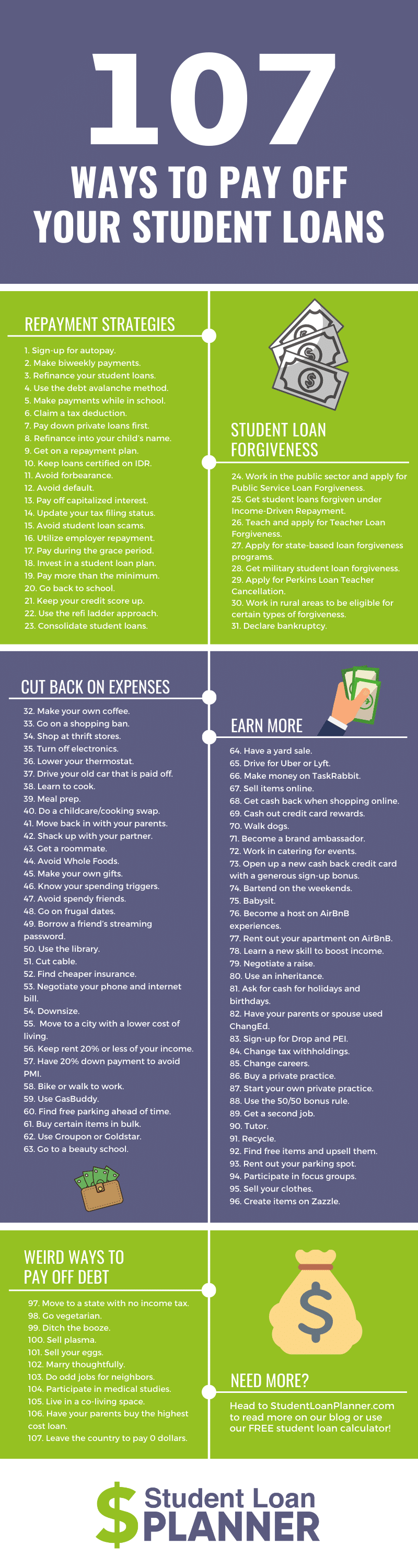
There are two primary schools of thought regarding debt acceleration: the Snowball and the Avalanche methods.
The Debt Avalanche method is mathematically superior for saving money. In this strategy, you make the minimum payments on all loans and put every extra dollar toward the loan with the highest interest rate. By neutralizing the most expensive debt first, you reduce the total interest paid over time.
The Debt Snowball method focuses on psychological wins. You pay off the smallest balances first, regardless of the interest rate. The feeling of “crossing off” a loan provides a dopamine boost that can help maintain the motivation needed for a multi-year repayment journey. Both methods are valid; the best one is the one you can stick to consistently.
Making Extra Payments Effectively
If you decide to pay more than the minimum, you must be strategic. Some loan servicers will default to applying extra payments to the next month’s bill, essentially just pushing your due date forward. To maximize the impact, you should instruct your servicer to apply the overage to the principal balance of your highest-interest loan. This reduces the base amount upon which interest is calculated, compounding your savings over time.
Refinancing Private Student Loans
While federal loans offer protections that should rarely be traded away, private student loans are different. If you have a stable income and a strong credit score, you may be able to refinance your private loans at a lower interest rate with a different lender. Lowering your interest rate by even 1% or 2% can result in thousands of dollars in savings. However, be extremely cautious about refinancing federal loans into private ones, as doing so permanently strips you of access to IDR plans, federal forgiveness programs, and government-backed discharge options.
Integrating Loan Payments into a Holistic Budget
Student loans do not exist in a vacuum. They are one part of a complex financial ecosystem that includes housing, food, transportation, and future savings. To start paying student loans effectively, you must integrate them into a sustainable monthly budget.
Creating a Realistic Monthly Cash Flow
A common mistake is treating student loans as the “leftover” expense. Instead, they should be a fixed line item in your budget. Use the 50/30/20 rule as a starting framework: 50% of your income goes to needs (including minimum loan payments), 30% to wants, and 20% to savings and debt overpayments. If your debt-to-income ratio is high, you may need to temporarily adjust these percentages, but the goal is to ensure that your loan payments do not prevent you from building an emergency fund.
Automating Payments for Discounts
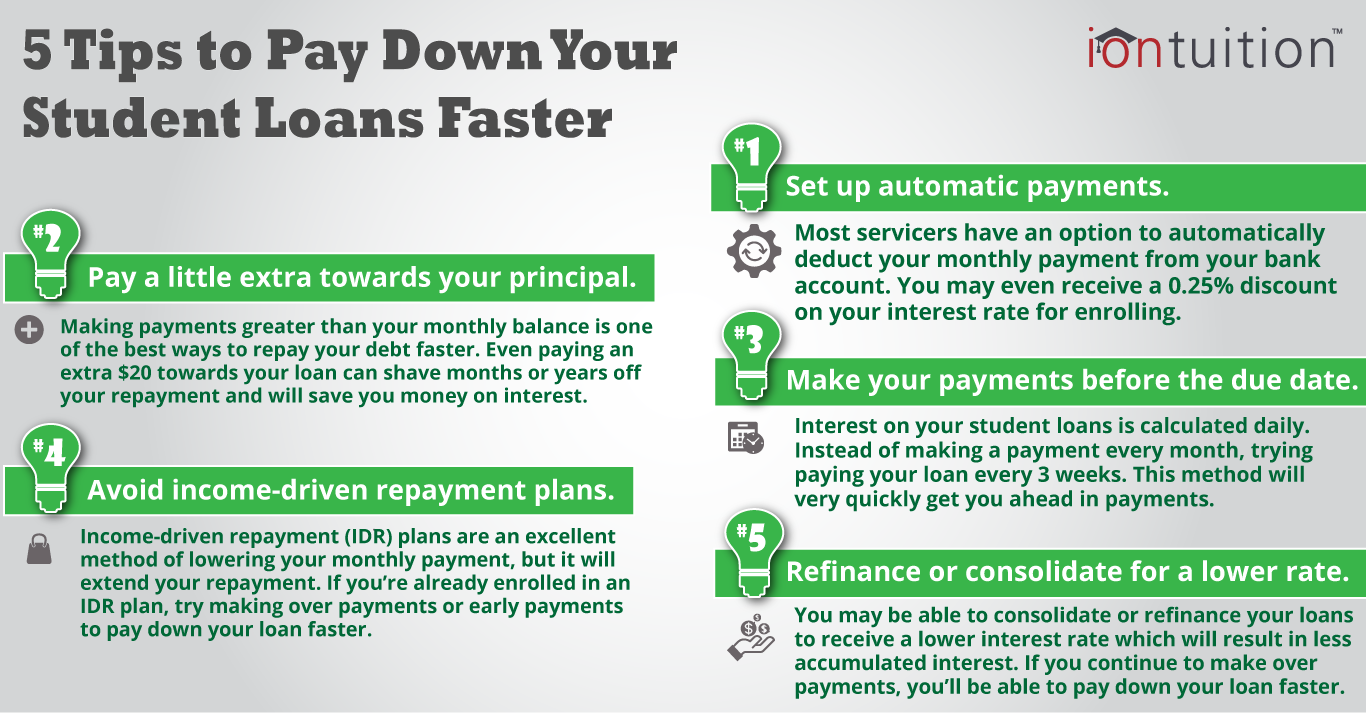
Almost every student loan servicer offers a small interest rate reduction—typically 0.25%—if you sign up for automatic payments. While a quarter of a percentage point sounds negligible, on a $30,000 balance over ten years, it translates to hundreds of dollars. Furthermore, automation removes the risk of late fees and negative marks on your credit report, which can occur if you simply forget a due date during a busy month.
Balancing Debt Repayment with Retirement Savings
There is a frequent debate in personal finance: should you pay off student loans or invest for retirement? The answer usually lies in the interest rate. If your loan interest rate is 4% and the stock market historically returns 7-10%, it may be mathematically wiser to invest while making standard payments.
More importantly, if your employer offers a 401(k) match, that is a 100% return on your money. You should almost never prioritize extra student loan payments over a 401(k) match. Under the SECURE 2.0 Act, some employers are even allowed to make matching contributions to your retirement account based on your student loan payments, allowing you to tackle both goals simultaneously.
Exploring Forgiveness and Employer Assistance Programs
For many, the path to zeroing out a student loan balance involves more than just monthly payments; it involves leveraging institutional and governmental programs designed to ease the burden of education debt.
Public Service Loan Forgiveness (PSLF)
If you work for a government organization or a qualifying 501(c)(3) non-profit, you may be eligible for Public Service Loan Forgiveness. PSLF forgives the remaining balance on your Direct Loans after you have made 120 qualifying monthly payments under a qualifying repayment plan while working full-time for a qualifying employer.
The key to PSLF is meticulous record-keeping. You must submit an Employment Certification Form (ECF) annually or whenever you change jobs to ensure you are on track. Because the forgiveness is currently tax-free at the federal level, PSLF is one of the most powerful financial tools available to public servants.
Employer-Sponsored Student Loan Contributions
A growing number of private-sector companies now offer student loan repayment assistance as a fringe benefit. Some companies will contribute a set amount—for example, $100 per month—directly toward your student loans. As of recent tax law changes, these contributions can often be made tax-free up to a certain limit ($5,250 per year through 2025). When job hunting or during annual reviews, check if your HR department offers this benefit; it is essentially a “salary bump” specifically targeted at your debt.
Tax Deductions for Student Loan Interest
Finally, do not overlook the tax benefits of paying your loans. The IRS allows you to deduct up to $2,500 of the interest you paid on your student loans during the year, even if you do not itemize your deductions. This can reduce your taxable income, potentially resulting in a higher tax refund or a lower tax bill. Your servicer will provide Form 1098-E at the beginning of each year if you paid at least $600 in interest.
Starting to pay student loans is as much about organization and education as it is about the actual transfer of funds. By understanding your specific loan types, choosing the right repayment plan, and applying strategic overpayments, you can move from a state of financial uncertainty to one of calculated progress. The road may be long, but with a clear map and a disciplined approach, the finish line is well within reach.
aViewFromTheCave is a participant in the Amazon Services LLC Associates Program, an affiliate advertising program designed to provide a means for sites to earn advertising fees by advertising and linking to Amazon.com. Amazon, the Amazon logo, AmazonSupply, and the AmazonSupply logo are trademarks of Amazon.com, Inc. or its affiliates. As an Amazon Associate we earn affiliate commissions from qualifying purchases.