
In an increasingly complex financial landscape, mastering the art of budgeting is not merely an optional discipline but a fundamental pillar of personal and business financial health. A budget plan serves as your financial roadmap, offering clarity on where your money comes from, where it goes, and how it can be strategically allocated to achieve your aspirations. Whether you’re aiming to pay off debt, save for a down payment, build an emergency fund, or simply gain a greater sense of control over your finances, a well-crafted budget is the most potent tool in your arsenal. This comprehensive guide will demystify the budgeting process, providing actionable steps and insightful strategies to empower you on your journey towards financial freedom.
Understanding the Imperative of Budgeting
Many people view budgeting as a restrictive chore, a tedious exercise in deprivation. However, this perspective couldn’t be further from the truth. A budget is, at its core, a tool for empowerment, enabling you to make informed decisions and align your spending with your values and goals.
What is a Budget Plan and Why is it Essential?
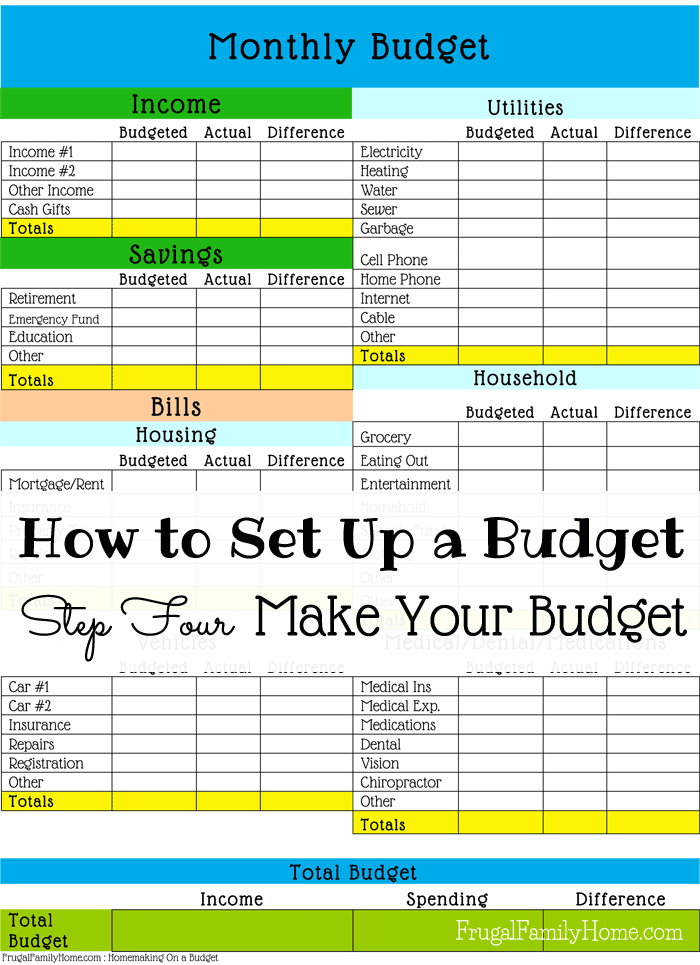
A budget plan is a detailed summary of your projected income and expenses over a specific period, typically a month. It provides a snapshot of your financial health, highlighting surplus or deficit funds. Its essentiality stems from several critical benefits:
- Financial Control: It gives you a clear picture of your cash flow, helping you understand where every dollar goes and preventing financial surprises.
- Goal Attainment: By allocating funds specifically for savings and investments, a budget makes financial goals—from retirement to a new home—tangible and achievable.
- Debt Reduction: It identifies areas where spending can be reduced, freeing up capital to aggressively tackle outstanding debts.
- Reduced Stress: Knowing you have a plan in place for your money significantly alleviates financial anxiety and fosters peace of mind.
- Improved Decision-Making: A budget provides the data needed to make intelligent spending and saving choices, preventing impulse purchases and wasteful expenditures.
Common Misconceptions About Budgeting
Overcoming common misconceptions is crucial to embracing budgeting effectively. It’s not about:
- Deprivation: A budget isn’t a straitjacket; it’s a framework that allows for intentional spending, including on leisure and wants, within your means.
- Complexity: While some methods are detailed, budgeting can be as simple or as intricate as you need it to be. The best budget is one you can stick to.
- One-Time Task: Budgeting is an ongoing process that requires regular review and adjustment, not a set-it-and-forget-it exercise.
- Only for the Broke: Even high-income earners benefit immensely from budgeting, as it helps optimize wealth accumulation and prevent lifestyle creep.
The Psychological Benefits of Financial Control
Beyond the tangible financial gains, budgeting offers profound psychological advantages. The act of taking control of your money can significantly boost self-efficacy and reduce stress. It replaces uncertainty with clarity, anxiety with confidence, and aimless spending with purposeful allocation. This sense of mastery over your finances often translates into other areas of life, fostering a greater sense of overall well-being and stability. It allows you to transform abstract financial dreams into concrete, actionable steps, turning aspiration into reality.
The Foundation: Gathering Your Financial Data
Before you can construct an effective budget, you need a clear and accurate understanding of your current financial situation. This involves meticulously tracking your income and, more critically, cataloging every expenditure. This data collection phase is the bedrock upon which a realistic and functional budget will be built. Skipping this step or underestimating its importance often leads to budgets that are quickly abandoned due to their impracticality.
Tracking Your Income Sources
Start by identifying all sources of income that you regularly receive. This might seem straightforward, but ensure you account for everything, including:
- Primary Salary/Wages: Your regular paychecks from your main job(s). If you’re paid bi-weekly, calculate your monthly income.
- Side Hustle Earnings: Income from freelancing, gig work, consulting, or any secondary employment.
- Investment Income: Dividends, interest, rental income, or capital gains distributions.
- Benefits: Social security, disability payments, child support, or other government/private benefits.
- Other Irregular Income: Bonuses, commissions, or any other income that might not be consistent but should be factored in if regular enough.
It’s often best to use your net income (after taxes and deductions) for budgeting purposes, as this reflects the actual amount you have available to spend and save.
Documenting All Expenses (Fixed vs. Variable)
This is arguably the most crucial and often the most challenging part of data collection. For at least one month (preferably two or three to capture less frequent expenses), meticulously track every single dollar you spend. Categorizing expenses is key:
- Fixed Expenses: These are costs that generally remain the same each month and are difficult to change in the short term. Examples include:
- Rent/Mortgage Payments
- Loan Payments (car, student, personal)
- Insurance Premiums (health, car, home)
- Subscription Services (streaming, gym memberships)
- Utilities (though some might fluctuate slightly, treat core amounts as fixed)
- Variable Expenses: These costs fluctuate from month to month and offer the most flexibility for adjustment. Examples include:
- Groceries
- Dining Out
- Entertainment
- Transportation (fuel, public transport)
- Clothing
- Personal Care
- Utilities (actual usage beyond base rates)
- Miscellaneous Spending
Don’t forget irregular but predictable expenses like annual memberships, car maintenance, or holiday gifts. These should be averaged out monthly or accounted for through a sinking fund.
Leveraging Technology for Data Collection
In the digital age, manual ledger keeping is largely obsolete. Modern financial tools can significantly simplify the data gathering process:
- Banking Apps & Online Statements: Most banks offer robust online platforms that categorize your spending automatically. Review your statements thoroughly.
- Spreadsheets (Excel, Google Sheets): For those who prefer a hands-on approach, custom spreadsheets allow for personalized categorization and analysis.
- Dedicated Budgeting Apps: Tools like Mint, YNAB (You Need A Budget), Personal Capital, or Simplifi link directly to your bank accounts and credit cards, automatically importing transactions and categorizing them. These apps can provide real-time updates on your spending, making it easier to stay on track.
The goal here is accuracy. The more precise your income and expense data, the more effective and sustainable your budget will be. This initial deep dive into your spending habits can be incredibly eye-opening, revealing areas where you might be unknowingly overspending.
Crafting Your Budget: Popular Methodologies
Once you have a clear picture of your income and expenses, the next step is to choose a budgeting methodology that aligns with your financial personality and goals. There isn’t a one-size-fits-all approach; the best budget is the one you can consistently adhere to. Understanding different methods allows you to select or even combine strategies for optimal results.
The 50/30/20 Rule: A Simple Framework
This popular budgeting rule is an excellent starting point for beginners due to its simplicity. It suggests dividing your after-tax income into three broad categories:
- 50% for Needs: This covers essential living expenses like housing (rent/mortgage), utilities, groceries, transportation, insurance, and minimum loan payments.
- 30% for Wants: This category includes discretionary spending that improves your quality of life but isn’t strictly necessary. Examples are dining out, entertainment, hobbies, travel, new gadgets, and subscription services beyond the basic essentials.
- 20% for Savings & Debt Repayment: This portion is dedicated to building your financial future. It includes contributions to an emergency fund, retirement accounts (401k, IRA), investment accounts, and any extra payments on debt beyond the minimums.
The 50/30/20 rule provides a flexible guideline, allowing you to prioritize and ensure that essential needs are met while still having room for leisure and future planning.
The Zero-Based Budgeting Approach
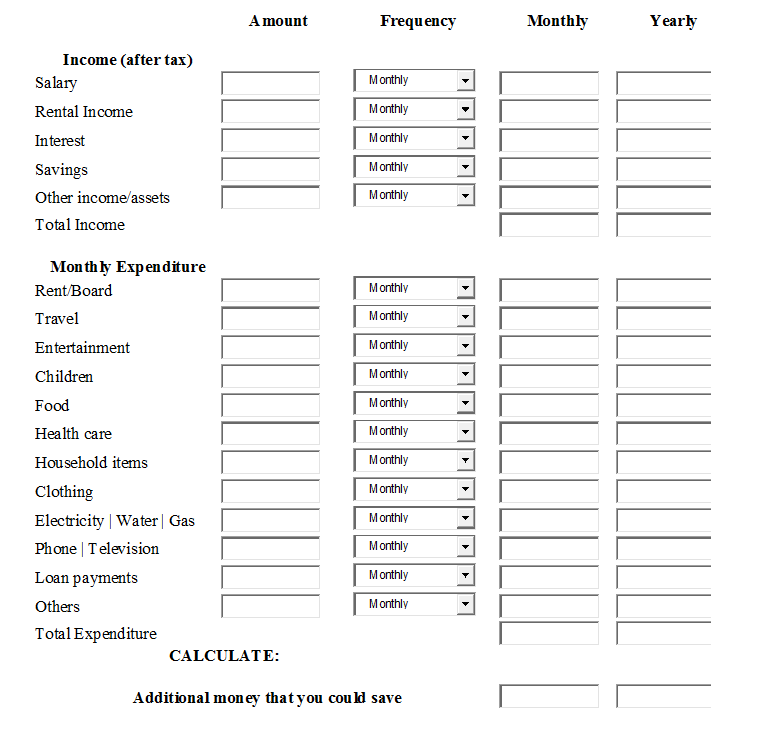
Zero-based budgeting (ZBB) is a more granular and proactive method. The core principle is to assign every dollar of your income a specific job, so when you subtract all your expenses and savings from your income, the result is zero. This doesn’t mean your bank account goes to zero, but rather that all your money has been allocated.
- How it Works: List all your income for the month. Then, assign every dollar to an expense category (rent, groceries, utilities, savings, debt repayment, entertainment, etc.) until your income minus your allocations equals zero.
- Benefits: ZBB provides maximum control over your money, ensures that no dollar is “wasted” or unaccounted for, and forces you to be intentional with every spending decision. It’s particularly effective for those who want to aggressively tackle debt or save for a specific goal.
- Challenges: It requires meticulous tracking and discipline, as it demands frequent adjustments and attention to detail.
Envelope System: A Tangible Method
Historically, the envelope system was a cash-based budgeting method. You would withdraw cash for variable expenses (like groceries, entertainment, dining out) and place it into physical envelopes labeled for each category. Once an envelope was empty, spending in that category stopped until the next budget cycle.
- Modern Adaptation: In today’s digital world, you can adapt the envelope system using budgeting apps that create “digital envelopes” or “jars” for different spending categories. When you spend from a category, the app deducts from that virtual envelope.
- Benefits: This method offers a strong visual and psychological cue for spending limits, making it harder to overspend. It’s excellent for those who struggle with impulse purchases or prefer a more tangible approach to money management.
Pay Yourself First: Prioritizing Savings
While not a complete budgeting system on its own, “Pay Yourself First” is a powerful principle to integrate into any budget. It advocates for prioritizing savings and investments by automatically transferring a predetermined amount from your paycheck to your savings or investment accounts before you pay any bills or spend on discretionary items.
- How it Works: Set up automatic transfers to your savings, retirement, or investment accounts to occur on payday. Treat these transfers as non-negotiable “expenses.”
- Benefits: This strategy ensures that your financial future is always a priority. By removing the money before it hits your main checking account, you’re less tempted to spend it, making savings consistent and effortless over time. It effectively forces you to adjust your lifestyle to your remaining funds, rather than saving what’s left over (which is often nothing).
Implementing and Maintaining Your Budget
Creating a budget is only the first step; its true power lies in consistent implementation and adaptation. A budget is a living document, requiring regular review and flexibility to remain effective and relevant to your evolving financial circumstances.
Setting Realistic Financial Goals (Short-term, Mid-term, Long-term)
Your budget should be intricately linked to your financial goals. Without clear objectives, it’s difficult to stay motivated.
- Short-term Goals (0-1 year): Building an emergency fund ($1,000 starter), paying off a small credit card debt, saving for a holiday.
- Mid-term Goals (1-5 years): Saving for a down payment on a house/car, paying off student loans, funding a large vacation.
- Long-term Goals (5+ years): Retirement planning, children’s education, significant investments.
Assign specific amounts and timelines to each goal. This will allow you to allocate funds within your budget explicitly for these purposes, making your spending purposeful rather than reactive. Visualizing your progress toward these goals can be a powerful motivator.
Regular Review and Adjustment: The Dynamic Nature of Budgets
Life is unpredictable, and your budget needs to reflect that. What worked perfectly last month might need tweaking this month.
- Monthly Check-ins: At the end of each month, compare your actual spending against your budgeted amounts. Identify categories where you overspent or underspent.
- Quarterly/Annual Reviews: Conduct more comprehensive reviews to account for seasonal expenses, income changes, or major life events (e.g., a new job, marriage, birth of a child, house purchase).
- Flexibility is Key: Don’t be afraid to adjust your budget. If you consistently find yourself overspending in one category, either find ways to reduce that spending or increase its allocation if it’s truly necessary, making cuts elsewhere. A rigid, unchangeable budget is a recipe for failure.
Dealing with Budget Busters and Unexpected Expenses
Even the most meticulously planned budget can be derailed by unexpected events. The key is to anticipate them where possible and have a strategy for when they occur.
- Emergency Fund: This is your first line of defense. A well-funded emergency fund (typically 3-6 months of living expenses) prevents unexpected costs (car repairs, medical emergencies, job loss) from completely derailing your budget and plunging you into debt.
- Sinking Funds: For predictable but infrequent expenses (e.g., annual car registration, holiday gifts, home maintenance), create “sinking funds.” This involves setting aside a small amount each month into a separate savings account so the money is available when the expense arises, preventing a sudden shock to your monthly budget.
- Buffer Categories: Include a small “miscellaneous” or “buffer” category in your budget to absorb minor unexpected costs without having to re-adjust major categories.
Automation: Making Budgeting Effortless
Leveraging automation is perhaps the most powerful strategy for long-term budget adherence.
- Automated Savings Transfers: Set up automatic transfers from your checking account to your savings, investment accounts, and sinking funds on payday. This ensures you “pay yourself first” without needing to remember.
- Automated Bill Payments: Automate payments for fixed expenses like rent, mortgage, and loan payments to avoid late fees and ensure financial obligations are always met on time.
- Direct Deposit Allocation: Some employers allow you to split your direct deposit, sending a portion directly to a savings account or investment fund.
By automating as much of your financial life as possible, you reduce the mental effort required for budgeting, making it easier to stick to your plan and build wealth consistently.
Beyond the Basics: Advanced Budgeting Strategies
Once you’ve mastered the fundamental aspects of budgeting, you can explore more advanced strategies to optimize your financial plan, accelerate debt repayment, enhance savings, and integrate budgeting seamlessly with broader wealth-building objectives.
Incorporating Debt Repayment Strategies
For many, a primary goal of budgeting is to become debt-free. Your budget is the engine that drives debt repayment, and specific strategies can supercharge this process.
- Debt Snowball Method: Prioritize paying off your smallest debt first while making minimum payments on others. Once the smallest is paid, roll that payment amount into the next smallest debt, creating a “snowball” effect. This method provides psychological wins and motivation.
- Debt Avalanche Method: Focus on paying off debts with the highest interest rates first. This method saves you the most money in interest over time, making it mathematically more efficient.
- Allocate Extra Funds: Your budget should clearly identify any surplus funds that can be directed towards aggressive debt repayment. Even a small extra payment can significantly reduce the total interest paid and shorten the repayment period.
Building an Emergency Fund
While mentioned earlier, building a robust emergency fund warrants its own focus. This fund is non-negotiable and acts as your financial safety net.
- Goal: Aim for 3-6 months (or even 12 months, depending on your risk tolerance and job security) of essential living expenses saved in a high-yield savings account, separate from your checking account.
- Budget Line Item: Dedicate a specific line item in your budget for regular contributions to this fund, treating it with the same priority as your essential bills.
- Replenishment: If you ever need to tap into your emergency fund, make replenishing it your top financial priority once the crisis has passed.
Aligning Your Budget with Investment Goals
A truly comprehensive budget doesn’t just manage current cash flow; it strategically feeds your investment portfolio.
- Identify Investment Capital: Your budget should clearly show how much disposable income is available for investments after all other obligations and savings (like emergency funds) are met.
- Automate Investment Contributions: Just like saving, automate transfers to your investment accounts (e.g., brokerage accounts, IRAs, 401(k)s beyond employer match) to ensure consistency.
- Review Performance: Periodically review how your investment contributions are aligning with your long-term goals. Your budget provides the fuel; your investment strategy directs the journey.

The Role of Budgeting in Wealth Building
Ultimately, a budget is not an end in itself but a powerful means to an end: building lasting wealth.
- Compound Interest: Consistent savings and investments, fueled by your budget, allow compound interest to work its magic over time, significantly growing your assets.
- Financial Independence: By strategically allocating resources, a budget moves you closer to financial independence, giving you the freedom to make choices not dictated by immediate financial constraints.
- Legacy Planning: For those with long-term aspirations, a budget can help plan for generational wealth transfer or philanthropic endeavors.
Budgeting is a continuous journey of learning, adapting, and growing. It’s a habit that, when cultivated with discipline and insight, transforms your relationship with money from one of anxiety and reaction to one of control and proactive planning. By embracing the methodologies and strategies outlined, you can move beyond simply tracking your expenses to actively designing your financial future, leading to greater security, freedom, and peace of mind.
aViewFromTheCave is a participant in the Amazon Services LLC Associates Program, an affiliate advertising program designed to provide a means for sites to earn advertising fees by advertising and linking to Amazon.com. Amazon, the Amazon logo, AmazonSupply, and the AmazonSupply logo are trademarks of Amazon.com, Inc. or its affiliates. As an Amazon Associate we earn affiliate commissions from qualifying purchases.