
The quest for cheaper flight tickets is a universal pursuit for travellers worldwide. In an era where travel costs can significantly impact personal finances, understanding the intricacies of airline pricing is not just about convenience; it’s a critical component of effective personal finance management. From dream vacations to essential business trips, the price of airfare often dictates the feasibility and enjoyment of the journey. This article delves into the dynamic world of airline ticket pricing, offering insights and actionable strategies to help you identify the “sweet spots” for booking, ensuring your travel budget stretches further without compromising on your travel aspirations. By demystifying the algorithms and market forces at play, we aim to equip you with the knowledge to make financially astute decisions, transforming the often-stressful process of flight booking into an exercise in smart money management.

The Dynamic Landscape of Airline Pricing
Understanding why flight prices fluctuate wildly can feel like deciphering a complex financial code. Airlines operate in a highly competitive and capital-intensive industry, where every seat sold, and at what price, directly impacts their profitability. The prices you see are not arbitrary but the result of sophisticated algorithms and real-time market analysis, all designed to maximize revenue.
The Algorithms Behind the Airfare
Airlines employ advanced “yield management” systems, which are complex algorithms that continuously analyze vast datasets. These systems consider a myriad of factors, including historical demand for specific routes, current booking trends, competitor pricing, seasonality, and even the time of day a search is performed. The goal is to sell the right seat to the right customer at the right price, at the right time. For instance, a business traveler booking a last-minute flight for an urgent meeting is less price-sensitive than a leisure traveler planning a vacation months in advance. The algorithms dynamically adjust prices to capture maximum value from each passenger segment. This explains why two passengers on the same flight might have paid vastly different fares for identical seats. From a financial perspective, understanding this dynamic pricing model empowers consumers to strategically time their purchases, avoiding peak pricing moments.
Factors Influencing Price Fluctuations
Beyond the algorithms, several tangible factors contribute to the constant ebb and flow of flight prices. Fuel costs are a primary driver; even marginal shifts in oil prices can significantly impact operational expenses, which are then passed on to consumers. Operational costs, including aircraft maintenance, crew salaries, airport fees, and taxes, also play a role. The level of competition on a specific route is another critical element; routes serviced by multiple airlines tend to have more competitive pricing than monopolized routes. Furthermore, global economic conditions, geopolitical events, and even public health crises can dramatically alter demand and, consequently, pricing. For the financially savvy traveler, staying abreast of these broader market trends can offer a distinct advantage, allowing for more informed predictions about future price movements and when to commit to a purchase.
Timing is Everything: The ‘Sweet Spot’ for Booking
When it comes to securing the cheapest flight tickets, timing is arguably the most critical factor. There’s a widely debated “sweet spot”—a magical window when prices are typically at their lowest—and navigating this window can lead to substantial financial savings.
The “Goldilocks Zone” – How Many Weeks Out?
General wisdom suggests that there’s an optimal period to book flights: not too early, not too late. Booking too far in advance (e.g., 6-12 months out) can mean paying a premium, as airlines initially release seats at higher prices, knowing that early planners are often willing to pay for peace of mind. Conversely, waiting until the last minute (within a few weeks of departure) is usually a gamble. While airlines might occasionally drop prices for unsold seats, the more common scenario is a sharp increase as demand for remaining seats intensifies, particularly for popular routes.
For domestic flights, the general consensus points to booking between 1 to 3 months before departure. This window allows airlines to gauge demand and adjust prices, often offering their most competitive rates. For international flights, the window expands slightly, typically between 2 to 8 months out. Longer routes involve more complex logistics and higher base costs, meaning airlines need a longer lead time to fill planes effectively, often releasing their best deals further in advance. These are guidelines, not rigid rules, but they provide a solid financial framework for planning your ticket purchases.
The Best Days to Buy and Fly
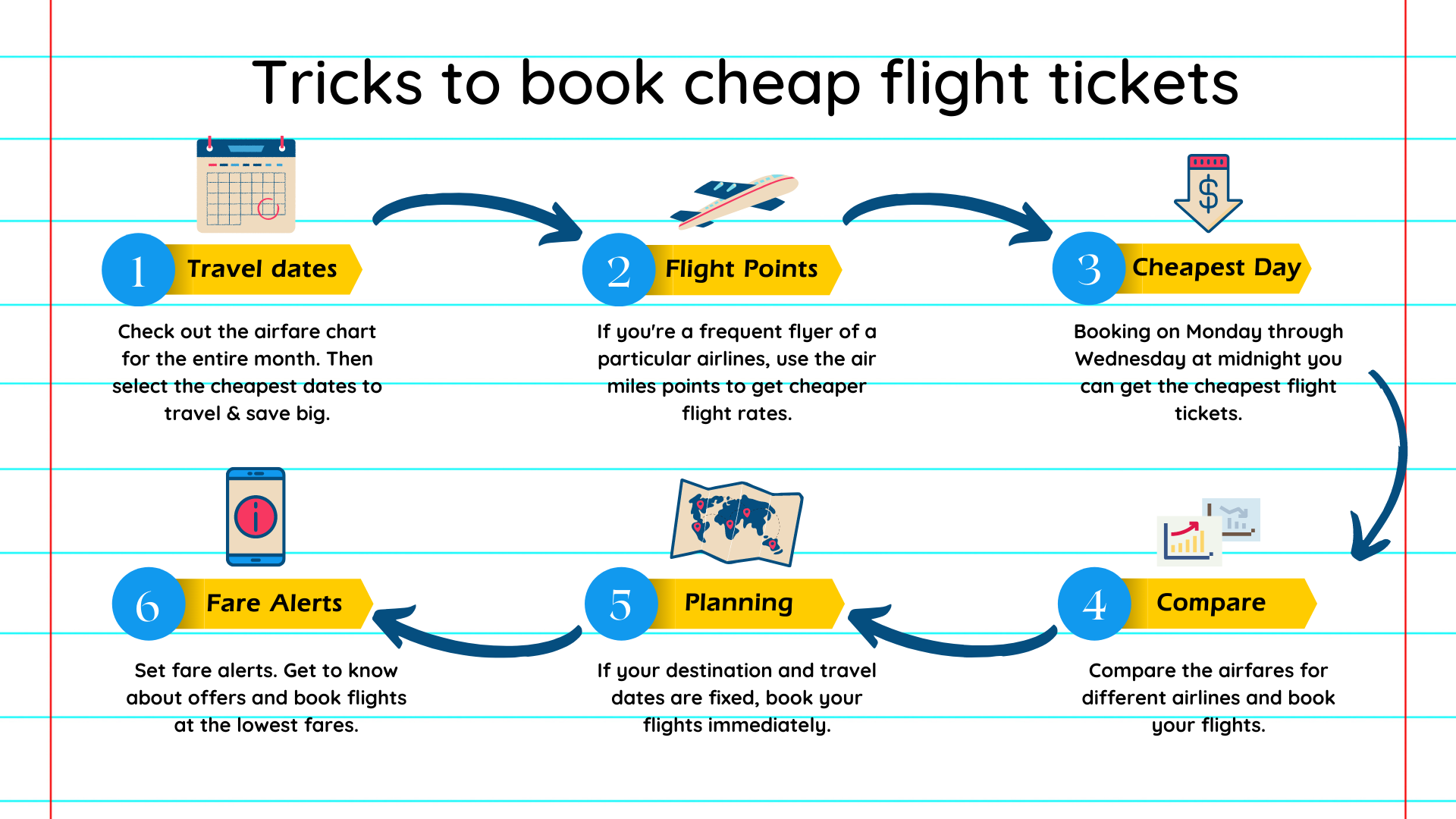
Beyond how many weeks out, the specific day you choose to book and the day you choose to fly can also impact your wallet. Research often indicates that buying tickets on Tuesdays, Wednesdays, and Thursdays can yield slightly lower prices. This is often attributed to competitor price matching: airlines frequently release new sales or adjust prices on Monday evenings, leading rival carriers to respond by Tuesday morning, creating a window of competitive pricing mid-week.
When it comes to flying, avoiding peak travel days can lead to significant savings. Tuesdays, Wednesdays, and Saturdays are generally considered the cheapest days to fly, especially for domestic routes. Weekends, particularly Fridays and Sundays, are popular for leisure and business travel, driving prices up due to higher demand. Early morning flights (red-eyes) or late-night departures also tend to be less expensive, as they are less convenient for most travelers. Structuring your travel dates around these lower-demand periods can make a tangible difference in your overall travel expenses, freeing up funds for other aspects of your trip.
Seasonal and Holiday Impact
Seasonality plays an enormous role in flight pricing. Major holidays (e.g., Christmas, New Year’s, Thanksgiving), school breaks (spring break, summer holidays), and peak travel seasons (summer in Europe, winter in the Caribbean) are almost always more expensive. Demand surges during these periods, and airlines capitalize on it. If your travel dates are flexible, avoiding these high-demand periods can lead to substantial savings.
However, if you must travel during peak season, your best financial strategy is to book much further in advance than the general “Goldilocks Zone” – sometimes 6-12 months out for extremely popular holiday periods. Alternatively, consider flying on the actual holiday itself (e.g., Christmas Day or Thanksgiving Day), as these specific dates often see a dip in demand due to people preferring to celebrate at home, sometimes resulting in lower fares. Strategic planning around these calendar-driven price spikes is essential for budget-conscious travelers.
Strategic Approaches to Finding Lower Fares

While timing is crucial, a proactive and strategic approach to searching and booking can further amplify your savings, transforming you into a truly savvy financial traveler.
Flexibility is Your Financial Friend
One of the most powerful tools in your arsenal for finding cheaper flights is flexibility. If your travel dates, times, or even your destination are somewhat negotiable, you open up a world of potential savings. Using “flexible date” search tools on platforms like Google Flights or Skyscanner allows you to view a calendar of prices for an entire month, quickly identifying the cheapest days to fly. Even shifting your departure or return by a day or two can sometimes result in hundreds of dollars in savings. Similarly, being open to flying into or out of a different, nearby airport can uncover significantly lower fares. This adaptability translates directly into financial benefit, empowering you to arbitrage the market for the best deals.
Leveraging Price Comparison Websites and Alerts
In today’s digital age, numerous tools exist to help you track and compare flight prices. Websites like Google Flights, Skyscanner, Kayak, Expedia, and others aggregate data from hundreds of airlines and online travel agencies (OTAs), providing a comprehensive overview of available fares. It’s advisable to check multiple platforms, as no single site always has the absolute lowest price. More importantly, nearly all these platforms offer “price alert” features. By setting up alerts for your desired route and dates, you’ll receive email notifications when prices drop, allowing you to pounce on a good deal as soon as it appears. This passive monitoring saves you time and ensures you don’t miss out on fleeting opportunities.
The Art of Incognito Browsing and VPNs (Debunking Myths vs. Reality)
A common piece of advice circulating online is to use incognito or private browsing windows when searching for flights. The theory suggests that airlines or OTAs track your search history via cookies and might inflate prices for routes you’ve repeatedly viewed, creating a sense of urgency. While this sounds plausible, evidence supporting a direct causal link between cookie tracking and price increases by airlines themselves is largely anecdotal and often debunked by experts. Airline pricing algorithms are far more complex and driven by real-time demand across the entire market, not individual browsing habits. However, using incognito mode doesn’t hurt; it simply ensures a clean slate for your search, preventing cookies from influencing display preferences or showing you cached prices.
Regarding Virtual Private Networks (VPNs) to mask your location and potentially find cheaper flights originating from other countries, the impact is often negligible for standard consumer flights. While some international booking sites might offer slightly different prices based on the perceived point of sale, this strategy is rarely a reliable or significant source of savings for most travelers and often introduces complexities with payment methods or customer service. Focus instead on the fundamentals of flexible dates and consistent price tracking.
Considering Alternate Airports and Stopovers
Sometimes the most direct route isn’t the most cost-effective. Researching flights into or out of smaller, secondary airports near your destination or origin can often reveal cheaper fares. For example, flying into London Stansted or Luton might be significantly cheaper than Heathrow or Gatwick, even after accounting for ground transport costs. Similarly, choosing flights with a layover instead of a direct flight can also reduce costs, especially for long-haul international routes. While a stopover adds travel time and potential inconvenience, the financial savings can be substantial, making it a worthwhile trade-off for budget-conscious travelers. Always calculate the total cost, including potential extra baggage fees or transport from alternate airports, to ensure true savings.
Beyond Booking: Other Money-Saving Strategies
Securing a cheap flight ticket is a significant win, but a financially savvy traveler knows that managing travel expenses extends beyond the initial purchase. Several other strategies can contribute to overall cost reduction, ensuring a truly economical trip.
Loyalty Programs and Credit Card Perks
For frequent flyers, loyalty programs offer a wealth of financial benefits. Accumulating miles or points through airline-specific programs or general travel reward credit cards can lead to free flights, upgrades, or discounts on future travel. Many travel credit cards also come with enticing sign-up bonuses, offering tens of thousands of miles simply for meeting initial spending requirements. Beyond free flights, these cards often provide perks like complimentary checked bags (saving $60+ per round trip), priority boarding, travel insurance, and lounge access, all of which contribute to a more comfortable and cost-effective travel experience. Strategic use of these financial tools can turn routine spending into valuable travel rewards.
Budget Airlines vs. Full-Service Carriers: Understanding the Trade-offs
Budget airlines have revolutionized air travel by offering incredibly low base fares. However, it’s crucial for the financially astute traveler to understand the full cost implications. While the initial ticket price might seem appealing, budget carriers often charge extra for services that full-service airlines include in their standard fare: checked baggage, carry-on bags (beyond a small personal item), seat selection, in-flight meals, and even printing your boarding pass at the airport. Before booking, calculate the total estimated cost including all potential add-ons. Sometimes, a seemingly more expensive full-service carrier might offer better overall value once all fees are factored in, especially for longer trips where baggage is essential. Weighing these trade-offs carefully is key to true financial savings.
Package Deals and Bundling
For some travelers, particularly those planning a vacation to a specific destination, bundling flights with hotels or car rentals can sometimes offer greater savings than booking each component separately. Online travel agencies (OTAs) often negotiate bulk rates with airlines and hotels, allowing them to offer attractive package deals. While this isn’t always the cheapest option, it’s worth exploring, especially if you have fixed dates and a destination in mind. However, maintaining flexibility with individual bookings often provides more control and potential for savings if your plans are fluid. The key is to compare the bundled price against the sum of individually booked components to ensure you are indeed getting a financial advantage.
Conclusion
The pursuit of cheaper flight tickets is an art form, blending patience, strategic planning, and an understanding of complex financial dynamics. While there’s no single magic bullet, adopting a multi-faceted approach significantly increases your chances of securing the best deals. By understanding the algorithms that drive pricing, timing your purchases within the optimal “Goldilocks Zone,” leveraging flexibility in your travel plans, and employing smart search tools, you can transform the daunting task of flight booking into an empowering exercise in financial acumen. Remember that every dollar saved on airfare is a dollar available for experiences at your destination, or indeed, back in your savings. Be proactive, stay informed, and let your financial intelligence guide you to your next affordable adventure.
aViewFromTheCave is a participant in the Amazon Services LLC Associates Program, an affiliate advertising program designed to provide a means for sites to earn advertising fees by advertising and linking to Amazon.com. Amazon, the Amazon logo, AmazonSupply, and the AmazonSupply logo are trademarks of Amazon.com, Inc. or its affiliates. As an Amazon Associate we earn affiliate commissions from qualifying purchases.