
Booking a multi-city flight can seem daunting, often perceived as more complex and expensive than a standard round trip. However, with strategic financial planning and an understanding of the tools available, it’s possible to craft an itinerary that not only fulfills your travel aspirations but also optimizes your budget. This guide delves into the financial intricacies and smart money strategies essential for booking multi-city flights, transforming a potentially costly endeavor into an exercise in financial prudence.
Understanding the Financial Complexity of Multi-City Itineraries
Multi-city flights inherently introduce layers of financial complexity that single-destination trips do not. Each leg of the journey is a separate transaction from an airline’s perspective, though often bundled by online travel agencies (OTAs) or airline websites. The pricing models for these complex routes are influenced by various factors, making it crucial to grasp them to secure the best value.

Dissecting Fare Structures and Pricing Dynamics
Airlines employ sophisticated algorithms that factor in demand, seasonality, fuel costs, competition, and booking class availability for each segment of a multi-city journey. Unlike a round trip where the outbound and return flights are typically priced as a pair, multi-city flights often combine several one-way fares or special multi-leg pricing schemes. This can sometimes lead to surprising cost variations. For instance, flying from City A to City B, then City B to City C, and finally City C back to City A might be priced differently than three individual one-way tickets, or even a series of separate round-trip tickets. Understanding these dynamics is the first step in unlocking potential savings. Factors like layover duration, specific day of the week, and popular travel times for each segment can significantly swing the total cost. Early booking often secures better rates, as demand-based pricing tends to increase closer to the departure date, especially for popular routes.
The True Cost of Flexibility
One of the primary advantages of a multi-city itinerary is the inherent flexibility it offers in exploring multiple destinations. However, this flexibility often comes with a financial premium. Direct flights between less common city pairs can be significantly more expensive than routes through major hubs. Moreover, modifying even one segment of a multi-city booking can trigger hefty change fees or require repricing the entire itinerary, potentially negating any initial savings. Evaluating the trade-off between absolute flexibility and potential cost savings is key. For instance, consider whether adding an extra stop for a cheaper flight between two cities is worth the additional travel time, or if splurging on a direct route aligns better with your time-is-money philosophy.
Strategic Planning for Cost Efficiency
Successful multi-city flight booking isn’t just about finding the cheapest fare; it’s about intelligent planning that minimizes overall expenditure without compromising the travel experience. This requires a proactive approach to route selection, timing, and comparison.
Optimizing Routes and Destinations
The specific sequence of cities and the choice of entry/exit points dramatically impact the total cost. Instead of rigidly adhering to a predetermined itinerary, be flexible with the order of your stops. Sometimes, reversing a sequence or adding an unconventional layover city can yield substantial savings. For example, flying into a major international hub and then using a budget airline for shorter regional flights can often be more economical than booking a single, complex itinerary with a single full-service carrier. Researching the cost implications of flying into alternative, smaller airports near your desired destination can also uncover cheaper options, though remember to factor in ground transportation costs from these airports.
Timing Your Purchase for Maximum Savings
Timing is paramount in flight booking. While there’s no magic formula, general trends suggest that booking multi-city international flights 3-6 months in advance often provides a sweet spot. Domestic multi-city flights might see optimal prices 1-3 months out. However, these are averages. Using price alert tools from various flight search engines can notify you when fares drop for your specific itinerary, allowing you to pounce on a good deal. Avoid booking during peak holiday seasons or major events unless absolutely necessary, as demand-driven pricing will inevitably inflate costs. Consider traveling during shoulder seasons when demand is lower, leading to more competitive pricing for flights and accommodations.
Unbundling and Rebundling for Budget Airlines
While major airlines offer the convenience of booking complex multi-city trips on a single ticket, often this comes at a premium. A powerful money-saving strategy is to “unbundle” your multi-city journey and book individual legs separately, especially when budget airlines operate between certain cities. For instance, you might book a long-haul flight into Europe with a traditional carrier and then use budget airlines like Ryanair or EasyJet for inter-European segments. This requires careful coordination of arrival and departure times, as missed connections due to delays on a separately booked flight will not be covered by airline policies. Always factor in ample buffer time between independently booked flights (at least 3-4 hours, ideally overnight for international transfers) and consider travel insurance that covers such eventualities.

Leveraging Financial Tools and Programs
The digital age offers an array of tools and programs that can significantly aid in the financial planning and booking of multi-city flights. From powerful search engines to loyalty programs, using these resources strategically can lead to substantial savings.
Advanced Flight Search Engines and Comparison Tools
Websites like Google Flights, Skyscanner, Kayak, Expedia, and Travelocity are indispensable for multi-city flight searches. They allow you to input multiple legs of your journey, compare prices across various airlines and OTAs, and even suggest alternative dates or routes that could be cheaper. Google Flights, in particular, offers a multi-city search function that is intuitive and displays prices in a calendar view, helping identify the cheapest days to fly. Skyscanner’s “Everywhere” search function, while not strictly multi-city, can inspire cheaper onward destinations. Always check prices directly on airline websites after using comparison tools, as sometimes they offer exclusive deals or better fare conditions.
Harnessing Credit Card Rewards and Loyalty Programs
For frequent travelers, credit card points and airline loyalty programs are powerful financial assets. Many travel-centric credit cards offer substantial sign-up bonuses, ongoing rewards for travel-related spending, and perks like lounge access or free checked bags that can offset costs. Accumulating points and miles can enable you to book entire segments or even full multi-city itineraries for free, or with significantly reduced cash outlays. Understand the value of your points: some cards offer better redemption rates for specific airlines or through their own travel portals. Strategic use of companion passes or elite status benefits can further enhance savings and comfort. Always weigh the annual fees of premium travel cards against the benefits you actually utilize.
Travel Insurance: A Prudent Financial Safeguard
While an added upfront cost, travel insurance is a crucial financial safeguard for complex multi-city trips. Delays, cancellations, lost luggage, or medical emergencies in foreign countries can quickly escalate costs, turning a well-planned budget into a financial nightmare. Comprehensive travel insurance can cover non-refundable flight costs, provide compensation for delays, and offer medical assistance abroad. Evaluate policies carefully, ensuring they cover the specific risks associated with your itinerary, such as multi-leg disruptions or activities planned at your destinations. For those booking separate flight segments, “cancel for any reason” (CFAR) insurance can offer an extra layer of protection, though it typically comes at a higher premium.
Navigating Fare Rules and Potential Costs
Beyond the initial ticket price, multi-city flights come with a unique set of fare rules and potential hidden costs that demand careful attention. Ignoring these can lead to unexpected expenses.
Understanding Baggage Fees and Allowances
With multiple airlines often involved in a multi-city itinerary, baggage allowances can vary significantly between carriers. What might be free on your international long-haul flight could incur hefty fees on a budget carrier for a regional segment. Always check the baggage policy for each airline and each segment of your journey. Overweight or oversized luggage fees can quickly accumulate, eroding any savings from a cheap flight. Consider packing light or opting for a single, versatile carry-on to avoid these charges. Pre-paying for checked luggage online is almost always cheaper than paying at the airport counter.
Change Fees, Cancellations, and No-Show Policies
The flexibility of multi-city travel comes with a caveat: changes are often expensive. Most airlines charge significant fees to alter dates or routes on multi-city tickets, and these fees can sometimes exceed the cost of a new ticket, particularly for economy fares. Understand the cancellation policy before booking; some fares are entirely non-refundable. Be especially aware of “no-show” policies: if you miss one leg of a multi-city itinerary (e.g., due to a separately booked connecting flight delay), the airline might automatically cancel all subsequent flights in your booking without a refund. This is a critical financial risk to mitigate with careful planning and potentially travel insurance. Always check if you can purchase a refundable or flexible fare, even if it’s slightly more expensive, if your plans are uncertain.
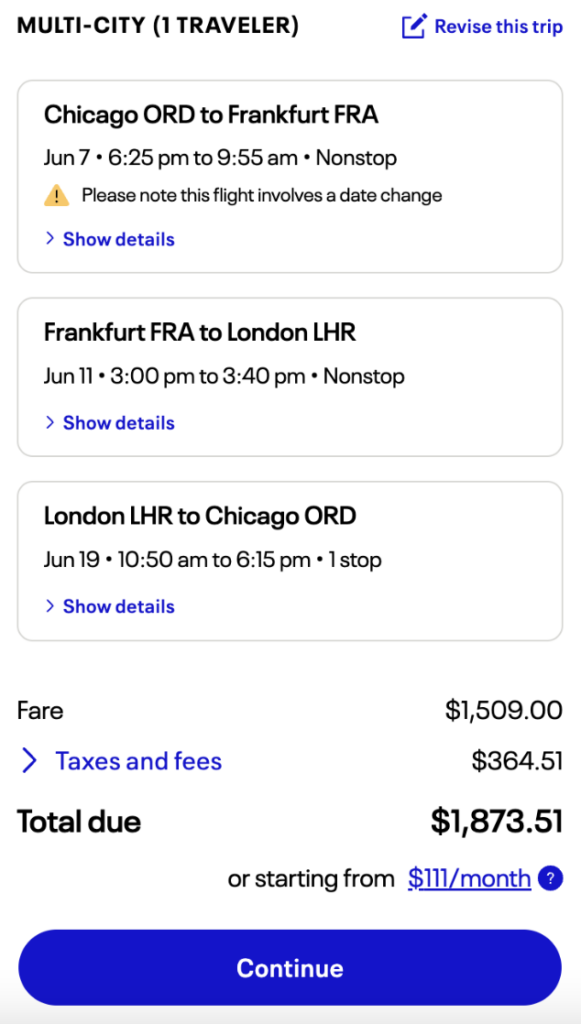
Hidden Costs: Taxes, Fees, and Airport Transfers
Beyond the base fare, multi-city flights often include various taxes and fees that can add a substantial amount to the total. These can include airport departure taxes, security fees, fuel surcharges, and segment taxes. While typically included in the final price displayed by OTAs, it’s wise to understand what you’re paying for. Furthermore, factor in the cost and time of airport transfers between cities, especially if you’re flying into one airport and out of another in the same metropolitan area (e.g., London Heathrow and London Gatwick). These ground transportation costs, plus visa application fees for certain countries, can impact your overall travel budget.
Booking a multi-city flight requires diligent research, strategic financial planning, and an informed approach to airline pricing. By leveraging advanced search tools, understanding fare structures, strategically utilizing financial programs, and being vigilant about potential hidden costs, you can successfully navigate the complexities and embark on a memorable multi-city adventure without overspending.
aViewFromTheCave is a participant in the Amazon Services LLC Associates Program, an affiliate advertising program designed to provide a means for sites to earn advertising fees by advertising and linking to Amazon.com. Amazon, the Amazon logo, AmazonSupply, and the AmazonSupply logo are trademarks of Amazon.com, Inc. or its affiliates. As an Amazon Associate we earn affiliate commissions from qualifying purchases.