
Choosing the “best” bank in the United States is less about identifying a single, universally superior institution and more about aligning a bank’s offerings with an individual’s unique financial needs, habits, and goals. The sprawling U.S. banking landscape features everything from colossal national chains and innovative online-only platforms to community-focused credit unions and specialized financial technology companies. Navigating this diversity requires a clear understanding of what makes a bank excel in specific areas, from customer service to interest rates and digital capabilities.
Defining “Best”: Criteria for Evaluating Financial Institutions
Before diving into specific recommendations, it’s crucial to establish a framework for evaluation. What one person considers “best” often differs significantly from another’s perspective. Here are the key criteria to consider:
Customer Service and Accessibility
A bank’s ability to provide timely and effective support is paramount. This includes the availability and quality of its customer service representatives (via phone, chat, or email), the extent of its physical branch network (if in-person banking is a priority), and the convenience of its ATM access. For many, a robust digital presence can compensate for a lack of physical branches, but the quality of that digital experience is key.
Fees and Account Minimums
Fees can quickly erode savings or add unnecessary costs to daily banking. Scrutinize monthly maintenance fees, overdraft charges, out-of-network ATM fees, and wire transfer costs. Additionally, be aware of any minimum balance requirements to avoid fees or to qualify for certain account benefits. The “best” banks often offer clear, transparent fee structures, or better yet, fee-free options.
Interest Rates and Yields
For savings accounts, money market accounts, and certificates of deposit (CDs), the Annual Percentage Yield (APY) is a critical factor. Banks that offer competitive interest rates allow your money to grow faster. Conversely, for loans (mortgages, personal loans, auto loans), lower interest rates mean less paid over the life of the loan. While checking accounts rarely offer significant interest, some do provide modest yields or cash-back incentives.
Product Range and Features
A comprehensive suite of financial products can simplify money management by consolidating various accounts under one roof. Consider if the bank offers a variety of checking and savings options, investment services (brokerage accounts, IRAs), credit cards, personal loans, mortgages, and business banking solutions. Specialized features like budgeting tools, early direct deposit, or credit-building programs can also add significant value.
Digital Banking Experience
In an increasingly digital world, the quality of a bank’s online banking platform and mobile app is a major differentiator. Look for intuitive interfaces, easy navigation, mobile check deposit, bill pay, peer-to-peer payments (like Zelle integration), robust security features (e.g., biometric login, multifactor authentication), and proactive fraud alerts. A seamless digital experience can make daily financial tasks much more efficient.
Financial Health and Security
All reputable banks in the U.S. are insured by the Federal Deposit Insurance Corporation (FDIC) up to $250,000 per depositor, per institution, in each account ownership category. Credit unions are similarly insured by the National Credit Union Administration (NCUA). Ensure your chosen institution is federally insured. Beyond this, consider the bank’s overall financial stability and reputation.
Top Contenders Across Different Banking Needs
Recognizing that “best” is subjective, we can categorize top banks based on common user priorities:
For Everyday Banking and Broad Accessibility (Large National Banks)
These institutions offer unparalleled convenience due to their vast networks of branches and ATMs, comprehensive product lines, and generally robust digital platforms. They are ideal for individuals who value accessibility and a one-stop shop for all their financial needs, even if it means potentially lower interest rates on savings or more complex fee structures.
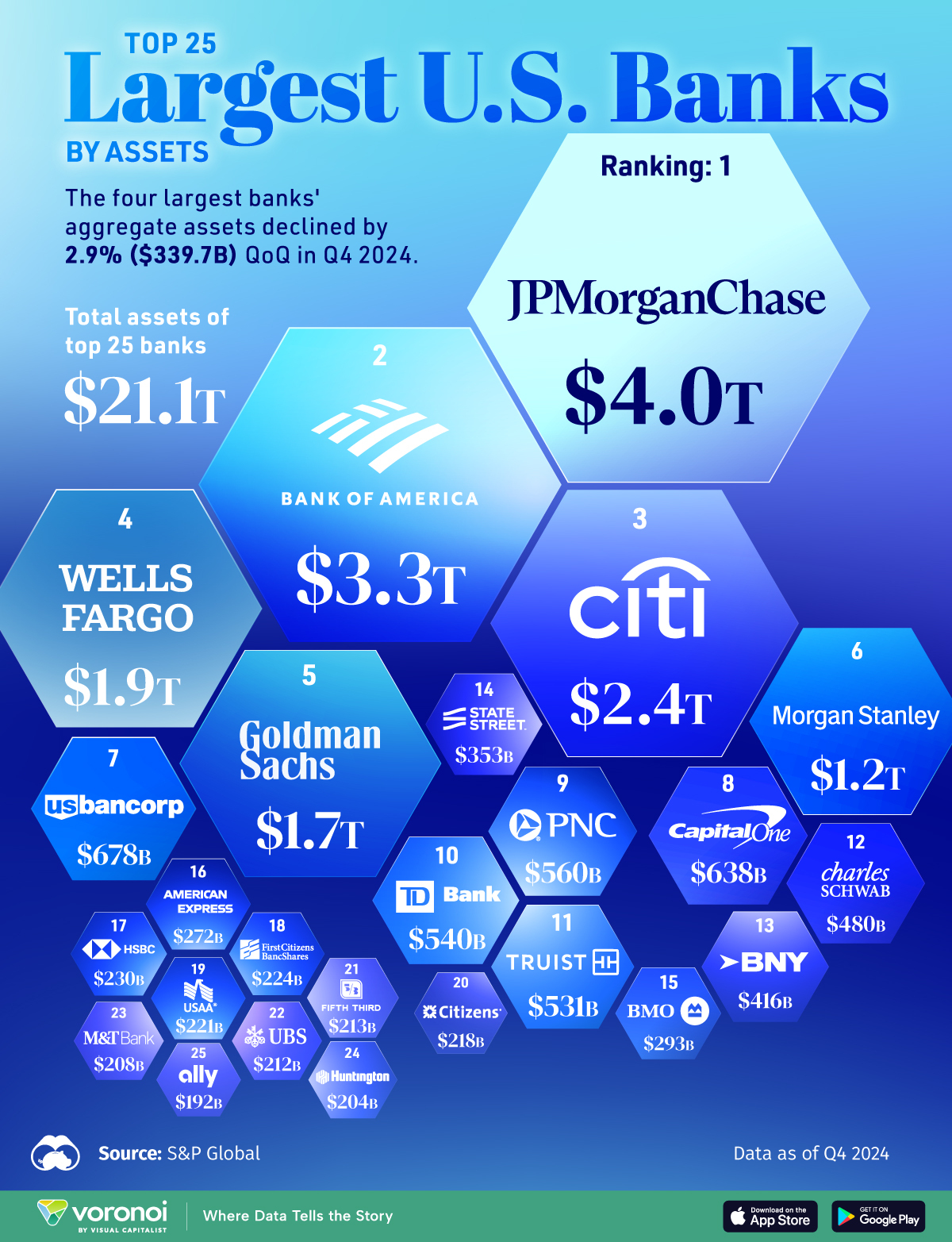
- Chase Bank: As one of the largest banks, Chase offers an extensive ATM and branch network across the country. Its digital banking experience is highly rated, and it provides a full spectrum of products, including popular credit cards, mortgages, and investment services. Chase offers various checking and savings options, often with ways to waive monthly fees.
- Bank of America: Another dominant player, Bank of America boasts a significant physical presence and a strong mobile banking app. It provides a wide array of consumer and business banking products. Preferred Rewards programs can offer substantial benefits for customers with higher combined balances.
- Wells Fargo: With a massive footprint, Wells Fargo offers convenience for many across the U.S. It provides diverse banking, lending, and investment products. While it has faced past regulatory issues, it remains a key option for those prioritizing extensive branch access.
For Digital-First Banking and High Yields (Online Banks)
Online-only banks typically have lower overhead costs, allowing them to offer higher interest rates on savings accounts and checking accounts, along with significantly lower (or no) fees. They are best for tech-savvy individuals comfortable managing their finances primarily through apps and websites, and who rarely need in-person services.
- Ally Bank: Consistently ranks high for its competitive APYs on savings, money market accounts, and CDs. Ally offers fee-free checking, excellent 24/7 customer service, and a highly-rated mobile app with advanced features like budgeting tools and seamless integration with their investment platform.
- Discover Bank: Known for its competitive savings rates and no monthly fees on checking or savings accounts. Discover offers a unique cashback debit card and prides itself on strong, U.S.-based customer service. It also provides a range of credit cards and personal loans.
- Capital One 360: Combines the benefits of an online bank (no fees, competitive rates) with a growing network of Capital One Cafés in select urban areas for limited in-person support. Its mobile app is excellent, and it offers integrated credit card and investment options.
For Community Focus and Personalized Service (Credit Unions & Regional Banks)
Credit unions are not-for-profit financial cooperatives owned by their members, often leading to better interest rates on savings, lower loan rates, and fewer fees compared to traditional banks. Regional banks offer a balance between the vastness of national banks and the intimacy of credit unions, often providing strong local presence and tailored services within their operating areas.

- Local Credit Unions: While no single credit union can be named “best” nationally, joining a local credit union often provides significant advantages. They are known for exceptional, member-focused customer service, competitive loan rates, and often more flexible lending criteria. They are NCUA insured.
- PNC Bank / U.S. Bank: These are examples of strong regional banks that offer a blend of personalized service and a good branch network within their operating territories. They often provide competitive local offerings, particularly for small businesses, and maintain strong digital platforms.
Specialized Banking Solutions and Niche Players
Beyond the major categories, several institutions cater to specific financial needs or demographics:
Investment and Wealth Management Integrated Banking
For individuals who want their banking and investment accounts seamlessly linked, these providers offer convenience and often sophisticated financial tools.
- Fidelity Cash Management: While primarily known as an investment firm, Fidelity offers a robust cash management account that functions like a checking account, often with higher interest rates than traditional banks, no monthly fees, and worldwide ATM fee reimbursements. It’s ideal for those who manage investments with Fidelity.
- Charles Schwab Bank: Similar to Fidelity, Schwab Bank provides banking services integrated with its brokerage accounts. It offers unlimited ATM fee rebates and no foreign transaction fees, making it excellent for travelers and investors alike.
Budgeting and Financial Health Focused Accounts
A new wave of fintech-driven banks prioritizes financial wellness, offering tools to help users save, budget, and build credit.
- Chime, SoFi, Varo: These are examples of popular challenger banks that offer features like early direct deposit, no monthly fees, automatic savings tools, and credit builder programs, often appealing to younger demographics or those looking to improve their financial habits. They operate entirely digitally.
Business Banking
Small businesses have distinct banking needs, from managing cash flow to processing payroll and securing financing.
- Chase Business Checking / Bank of America Business Advantage: These national banks offer comprehensive business banking solutions, including various checking accounts, credit cards, loans, and merchant services, suitable for businesses of all sizes.
- Online Business Banks (e.g., Bluevine, Novo): For smaller businesses or freelancers, online-only options often provide lower fees, higher transaction limits, and integration with popular accounting software, streamlined for digital-first operations.
How to Choose the Right Bank for You
The ultimate “best bank” is one that perfectly aligns with your financial lifestyle.
Assess Your Financial Habits
Are you someone who frequently deposits cash and prefers in-person interactions, or are you entirely comfortable managing everything from your smartphone? Do you maintain high balances, or do you live paycheck to paycheck? How often do you use ATMs, and do you frequently travel internationally? Your answers will guide whether a national bank, an online bank, or a credit union is a better fit.
Prioritize Your Needs
Make a list of your top banking priorities. Is earning the highest possible interest on your savings paramount? Is avoiding fees your absolute priority? Do you need robust budgeting tools, or access to complex investment products? Rank these needs to narrow down your options.
Read the Fine Print
Always review the fee schedules, minimum balance requirements, and terms and conditions for any account you consider. Understand how to waive fees if they exist, and be aware of any limitations on transactions or services.
Check Customer Reviews and Ratings
While individual experiences vary, aggregate customer reviews on platforms like J.D. Power, Consumer Reports, and various financial blogs can offer insights into a bank’s customer service quality, digital reliability, and overall user satisfaction. Look for patterns rather than isolated incidents.
Consider Long-Term Goals
Think about where you want to be financially in 5-10 years. Will the bank you choose today still meet your needs if you buy a home, start a business, or begin seriously investing? A bank that can grow with you, offering a full suite of services, might save you the hassle of switching later.
By systematically evaluating these factors against your personal financial profile, you can confidently identify the “best” bank that will serve as a reliable partner in managing and growing your money.
aViewFromTheCave is a participant in the Amazon Services LLC Associates Program, an affiliate advertising program designed to provide a means for sites to earn advertising fees by advertising and linking to Amazon.com. Amazon, the Amazon logo, AmazonSupply, and the AmazonSupply logo are trademarks of Amazon.com, Inc. or its affiliates. As an Amazon Associate we earn affiliate commissions from qualifying purchases.