
In the intricate world of personal finance, certain numbers serve as fundamental keys to unlocking and managing your money. Among these, the routing number stands as a critical identifier, acting as a digital address for your financial institution. While often overlooked until needed, understanding what a routing number is, where to find it, and how it’s used is essential for anyone navigating modern banking. This guide will demystify the routing number, ensuring you’re well-equipped to handle various financial transactions with confidence and accuracy.
The Essential Identifier: Understanding Your Routing Number
Before we dive into locating it, let’s establish a clear understanding of what a routing number represents and its pivotal role in the financial ecosystem.
Defining the ABA Routing Transit Number (RTN)
A routing number, officially known as an ABA Routing Transit Number (ABA RTN), is a nine-digit code that identifies your bank or financial institution. It’s essentially a unique electronic address for your bank, enabling the secure and accurate transfer of funds between different financial entities. These numbers are assigned by the American Bankers Association (ABA) and managed by the Federal Reserve, ensuring each bank has its distinct identifier. Without these unique codes, the vast network of interbank transactions—from direct deposits to bill payments—would grind to a halt.
Why Banks Need Routing Numbers: Facilitating Transactions
The primary purpose of a routing number is to facilitate seamless and error-free financial transactions. Imagine sending a letter without an address; it would never reach its destination. Similarly, a routing number ensures that when you make a payment, receive a direct deposit, or transfer funds, the money goes to and from the correct bank. It’s the first crucial piece of information in any electronic funds transfer (EFT), guiding the transaction to the right financial institution before your individual account number directs it to your specific account. This system underpins the efficiency and reliability of virtually all automated financial operations.
A Glimpse into its History and Evolution
The concept of routing numbers is not new; it dates back to 1910. Initially, these numbers were developed by the American Bankers Association to sort paper checks, physically directing them to the correct clearinghouses and banks. In an era before computers and digital networks, clerks would manually read and sort checks based on these identifiers. With the advent of electronic banking, particularly the rise of Automated Clearing House (ACH) networks in the 1970s, the routing number took on an even more critical role. It transformed from a paper-sorting tool into the backbone of electronic fund transfers, adapting seamlessly to the digital age while retaining its fundamental purpose of interbank identification. Today, it remains an indispensable component of financial infrastructure, enabling billions of transactions daily.
Pinpointing Your Routing Number on a Physical Check
For many, the most straightforward way to find their routing number is by looking at a physical check. Banks design checks with specific fields for various critical numbers, and knowing where to look can save you time and potential frustration.
The Layout of a Check: Where to Look First
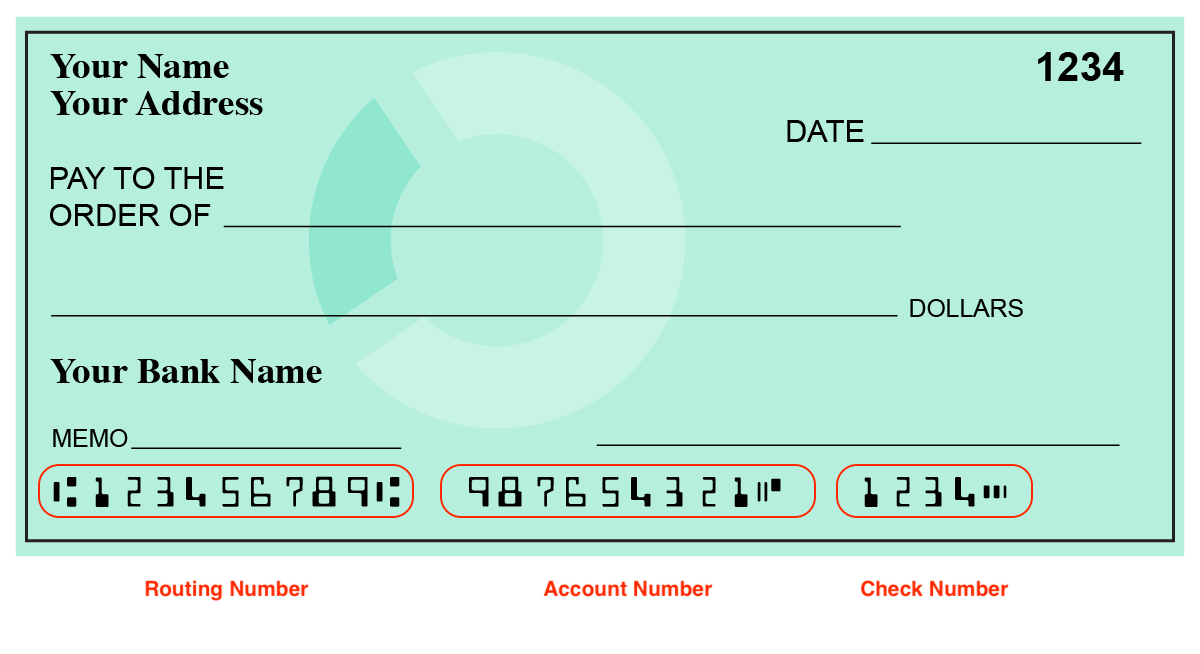
When you examine a standard check, you’ll notice a series of numbers printed along the bottom edge. These are typically printed in magnetic ink character recognition (MICR) font, designed to be read by automated processing machines. Your routing number is almost always the first set of nine digits on the far left. It’s often enclosed by specific symbols (a transit symbol or ON-US symbol, typically looking like a vertical bar followed by dots) that delineate it from other numbers. While the exact symbols might vary slightly by bank, the routing number’s position on the far left, followed by your account number and then the check number, is a near-universal standard.
Distinguishing Your Routing Number from Other Codes
It’s crucial not to confuse your routing number with the other sequences of numbers on your check. Here’s how to differentiate them:
- Routing Number (9 digits): As mentioned, this is typically the first set of numbers on the far left, identifying your bank.
- Account Number (variable length): Immediately following the routing number, this sequence uniquely identifies your specific bank account. Its length can vary significantly between banks, often ranging from 10 to 12 digits.
- Check Number (3-4 digits): This is the last set of numbers on the bottom right of the check. It matches the pre-printed check number in the upper right corner of the check and is used for tracking individual checks.
Always double-check that you’re pulling the correct number for the transaction at hand. Providing an incorrect routing number can lead to delayed payments, returned checks, or even funds being sent to the wrong institution, incurring fees and considerable hassle.
What If You Don’t Have a Check? Alternative Methods
Physical checks are becoming less common in an increasingly digital world. Fortunately, there are several other reliable ways to locate your routing number if you don’t have a checkbook handy:

- Online Banking Portal: This is arguably the most convenient method for most people. Log in to your bank’s online banking website or mobile app. Your routing number is usually displayed prominently on your account summary page, under “Account Details,” or within a “Statements” or “Direct Deposit Information” section.
- Bank Statement: Your monthly bank statement, whether paper or electronic, will almost always include your routing number. Look near your account number or at the top or bottom of the statement.
- Contact Your Bank: If all else fails, a quick call to your bank’s customer service line can provide you with the correct routing number. Be prepared to verify your identity. You can also visit a local branch, and a teller can assist you.
- Bank’s Official Website: Many banks publish their routing numbers on their public websites, often in a “Contact Us,” “FAQ,” or “Direct Deposit Information” section. Be cautious to only use the official bank website to avoid phishing scams.
Common Applications: When and Why You’ll Need Your Routing Number
Knowing where to find your routing number is just the first step; understanding its practical applications is equally important. Your routing number is a key piece of information for a wide array of financial tasks.
Setting Up Direct Deposit and Automated Payments
One of the most frequent uses for your routing number is to set up direct deposit. Whether it’s your paycheck, government benefits, or tax refunds, direct deposit requires your employer or the paying entity to have both your routing number (to identify your bank) and your account number (to identify your specific account). Similarly, when you set up recurring bill payments online—such as for utilities, mortgages, or credit cards—you’ll often be asked for your bank’s routing number to enable automated withdrawals from your account. This ensures that funds are pulled from the correct financial institution.
Initiating Wire Transfers and ACH Transactions
- Wire Transfers: For faster, typically larger, and often international fund transfers, wire transfers are used. For domestic wire transfers, you’ll need your bank’s routing number, along with the recipient’s bank routing number and account number. For international wires, a SWIFT/BIC code is typically used instead of or in addition to a routing number, as SWIFT codes are global identifiers for financial institutions.
- ACH Transactions: The Automated Clearing House (ACH) network is the electronic network used for most routine electronic fund transfers in the United States. This includes direct deposits, direct debits (like automated bill payments), and person-to-person payments (e.g., via Zelle or Venmo, though often facilitated behind the scenes). Every ACH transaction relies on routing numbers to correctly route funds between banks. Whether you’re sending money to a friend via a banking app or allowing a service to automatically debit your account, your routing number is working in the background.
Ordering New Checks and Other Bank Services
If you need to reorder checks from a third-party vendor (not directly through your bank), they will almost certainly require your routing number, along with your account number, to ensure the checks are correctly linked to your account. Beyond checks, various other banking services might require your routing number, such as setting up specific types of investment accounts, applying for loans, or even establishing connections with budgeting apps that require bank verification. It’s the foundational piece of information that links your specific account to the broader financial system.
Safeguarding Your Financial Information: Security and Accuracy
While routing numbers are widely known and generally considered public information, it’s still part of your overall financial identity. Understanding how to use it accurately and securely is paramount.
Verifying Your Routing Number: The Importance of Double-Checking
Accuracy is non-negotiable when it comes to financial transactions. An incorrect routing number can cause significant delays, return fees, and even misdirected funds. Before submitting any payment or direct deposit information, always double-check the routing number. If you’re unsure, use one of the alternative methods mentioned earlier (online banking, bank statement, or direct contact with your bank) to verify. Never rely on unofficial sources or old information that might be outdated.
Understanding Bank-Specific and Branch Routing Variations
It’s a common misconception that a bank only has one routing number. While many large banks use a single routing number for most of their branches and services, some larger banks may have different routing numbers based on the geographic location where you opened your account, the specific type of account (e.g., checking vs. savings for some credit unions), or even for different types of transactions (e.g., one for ACH and another for wire transfers). Online-only banks or credit unions often have a single routing number. Always confirm the specific routing number for your account and the type of transaction you’re making to avoid any discrepancies. Your online banking portal or bank statement is usually the most reliable source for your specific account’s routing number.
Protecting Your Routing Number: Best Practices for Digital and Physical Security
While a routing number alone is not enough for someone to drain your account (they would also need your account number and likely other personal information), it’s still a piece of your financial puzzle. Treat it with care:
- Be cautious online: Only enter your routing number on secure, encrypted websites that you trust and have verified as legitimate. Avoid sharing it over unsecured Wi-Fi networks.
- Physical Security: Shred old checks or bank statements before discarding them to prevent unauthorized access to your routing and account numbers.
- Phishing Scams: Be wary of unsolicited emails or calls asking for your banking information, including routing numbers. Legitimate financial institutions rarely ask for this information via email or phone unless you initiated the contact.
- Public Access: Remember that routing numbers are publicly accessible for banks. The real security concern arises when it’s combined with your account number and other personal data.

What to Do If Your Bank Changes its Routing Information
While infrequent, banks can sometimes change their routing numbers, especially after mergers, acquisitions, or significant system upgrades. If your bank announces a change, it’s crucial to update any entities that have your old routing number on file. This includes your employer for direct deposit, companies for automated bill payments, and any recurring online income sources. Banks typically provide ample notice for such changes and guidance on how to update your information. Failing to update could lead to missed payments or delayed deposits.
Understanding your routing number and its various applications is a foundational element of sound personal finance. It empowers you to confidently navigate direct deposits, online bill payments, and various money transfers, while also instilling an awareness of how to protect this crucial piece of financial information. By taking a few moments to locate and verify your routing number, you gain greater control and security over your financial transactions in an increasingly digital world.
aViewFromTheCave is a participant in the Amazon Services LLC Associates Program, an affiliate advertising program designed to provide a means for sites to earn advertising fees by advertising and linking to Amazon.com. Amazon, the Amazon logo, AmazonSupply, and the AmazonSupply logo are trademarks of Amazon.com, Inc. or its affiliates. As an Amazon Associate we earn affiliate commissions from qualifying purchases.