
In the intricate world of personal finance, a routing number stands as a fundamental identifier, often overlooked yet absolutely critical for the smooth flow of money. It’s a concept many interact with regularly, perhaps without fully understanding its significance, until the moment they need to provide it for a direct deposit, an online payment, or a wire transfer. For most individuals, the simplest and most accessible place to locate this crucial piece of information is directly on their physical checkbook. Understanding what a routing number is, where to find it, and why it matters is not just about financial literacy; it’s about empowering oneself to navigate the banking system efficiently and securely.

This guide delves into the essence of routing numbers, focusing on their presence on checks, exploring alternative methods of retrieval, and highlighting their indispensable role in modern financial transactions. By demystifying this 9-digit code, we aim to equip you with the knowledge needed to manage your money with greater confidence and precision.
Understanding the Cornerstone of Financial Transactions
At its core, a routing number is a 9-digit numerical code used to identify a specific financial institution in a transaction. It’s essentially the bank’s address within the national banking system, ensuring that funds sent to or from an account land at the correct bank. Without it, the vast network of banks and credit unions would struggle to communicate, making financial transfers chaotic, if not impossible.
What Exactly is a Routing Number?
Officially known as an ABA (American Bankers Association) routing transit number, this code was established in 1910 by the ABA to facilitate the processing of paper checks. While its original purpose was rooted in the manual sorting and routing of physical checks between banks, its function has evolved dramatically with the advent of electronic banking. Today, routing numbers are vital for a wide array of electronic transactions, including Automated Clearing House (ACH) transfers like direct deposits and automatic bill payments, as well as wire transfers and even some online payment applications. Each financial institution, and sometimes even different branches or types of accounts within the same institution, can have unique routing numbers.
The Anatomy of a Check: Where to Find It
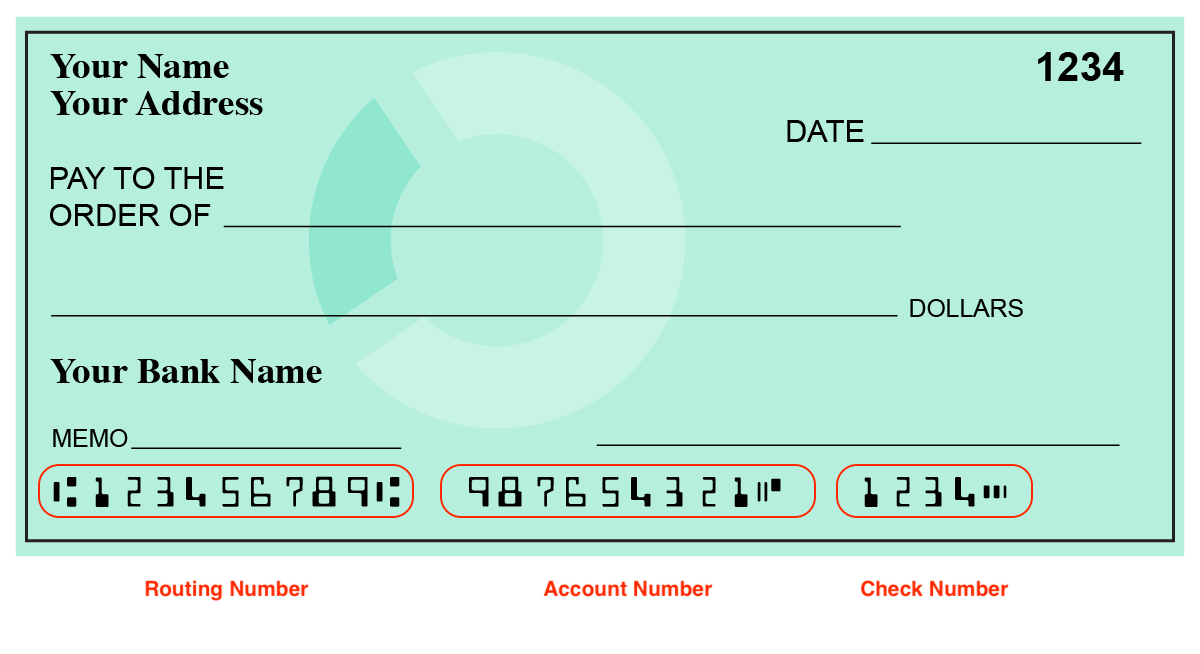
For many, the most common encounter with a routing number is by glancing at a personal check. Physical checks are designed with a standardized layout that makes identifying these crucial numbers straightforward.
On a standard check, you will typically find three sets of numbers printed along the bottom edge in magnetic ink. From left to right, these numbers are:
- The Routing Number: This is the first set of numbers, usually a nine-digit code. It uniquely identifies your bank or credit union.
- Your Account Number: This is the second set of numbers, which specifically identifies your individual checking account at that financial institution. The length of account numbers can vary.
- The Check Number: This is the third set of numbers, which simply identifies the specific check in your checkbook sequence. It also typically appears in the upper right corner of the check.
It’s crucial to correctly distinguish between the routing number and your account number. Mistaking one for the other can lead to failed transactions, delays, and potential frustration. Always double-check which number you are providing, especially for critical transactions.
Why Your Routing Number Matters for Personal Finance
Your routing number is far more than just a sequence of digits; it’s a key to unlocking various financial services and conveniences. For individuals, its importance cannot be overstated:
- Direct Deposits: Whether it’s your paycheck, government benefits, or tax refund, direct deposit relies entirely on your routing number (and account number) to ensure funds are electronically transferred directly into your bank account.
- Automatic Payments: Setting up recurring bill payments for utilities, mortgage, rent, or loan payments often requires your routing number to authorize automated withdrawals from your account.
- Online Banking & Payment Apps: Many online payment platforms and apps, especially those linked directly to your bank account, will require your routing number for initial setup and verification.
- Wire Transfers: For larger or time-sensitive money transfers, particularly domestic ones, the routing number is essential to direct the funds to the correct receiving bank.
Understanding and knowing how to quickly access your routing number is a foundational element of managing your personal finances effectively in the digital age.
Beyond the Check: Alternative Ways to Locate Your Routing Number
While a physical check is often the most direct method, there are several other reliable ways to find your routing number, especially if you don’t have a checkbook handy or prefer digital access.
Online Banking Portals: Your Digital Gateway
In today’s interconnected financial landscape, online banking has become an indispensable tool. Most financial institutions provide their customers with secure online portals or mobile banking apps where they can manage their accounts. Within these platforms, your routing number is usually prominently displayed or easily accessible.
Typically, after logging into your online banking account:
- Look for a section titled “Account Details,” “Account Summary,” “My Accounts,” or similar.
- Clicking on your specific checking account (if you have multiple) will often reveal the routing number along with your account number, current balance, and other relevant information.
- Some banks might require you to click on “Statements” or “Direct Deposit Information” to find it.
This method is fast, secure, and available 24/7, making it a highly convenient option for most users.
Contacting Your Financial Institution Directly
When in doubt, or if you prefer human interaction, contacting your bank or credit union directly is always a reliable option.
- Customer Service Hotline: Call the customer service number usually found on your bank’s website, statement, or the back of your debit card. After verifying your identity, a representative can provide your routing number.
- Visiting a Branch: If you’re near a physical branch, a teller can assist you in finding your routing number and answer any other account-related questions you might have. This can be particularly useful if you need to clarify which routing number to use for a specific type of transaction (e.g., domestic wire vs. ACH).
Ensure you have your account details and identification ready to expedite the process when contacting them.
Bank Statements and Official Documents
Your monthly bank statements, whether paper or electronic, are another official source for your routing number.
- Paper Statements: The routing number is usually printed on your paper statement, often near your account number and other bank information.
- E-Statements: If you receive electronic statements, you can download a PDF version through your online banking portal. The routing number will be visible on the digital statement.
Additionally, other official documents provided by your bank at the time of account opening, such as welcome kits or direct deposit forms, will often list your routing number. Always keep these documents secure, as they contain sensitive financial information.

The Critical Role of Your Routing Number in Modern Finance
The utility of a routing number extends far beyond merely facilitating check processing. It is a vital component in almost every electronic financial transaction, ensuring accuracy and efficiency in the digital age.
Facilitating Direct Deposits and Automatic Payments
The cornerstone of modern personal finance management, direct deposits, and automatic payments hinge entirely on the correct routing and account numbers. Employers, government agencies, and service providers use these numbers to automatically transfer funds into your account or deduct payments from it. This automation saves time, reduces the risk of missed payments, and minimizes the need for physical checks. Without an accurate routing number, these essential services would simply not function, causing delays in receiving income or potential late fees on bills.
Wire Transfers and International Transactions
For moving larger sums of money quickly, especially between different financial institutions, wire transfers are often utilized. Domestic wire transfers require the recipient’s routing number, ensuring the funds are directed to the correct bank. For international wire transfers, the routing number might be complemented or replaced by a SWIFT/BIC (Society for Worldwide Interbank Financial Telecommunication / Bank Identifier Code) code, which serves a similar purpose on a global scale. While SWIFT codes are used for international bank identification, domestic legs of an international transfer may still rely on routing numbers.
Setting Up Online Bill Pay and Payment Apps
The convenience of online bill pay through your bank’s portal or via third-party payment apps like PayPal, Venmo, or Zelle often involves linking your bank account using your routing and account numbers. These apps serve as intermediaries, facilitating payments by drawing funds directly from or depositing them into your designated bank account. Correctly inputting your routing number ensures that these platforms can connect seamlessly with your financial institution, enabling quick and secure transactions.
Safeguarding Your Financial Information: Best Practices
While your routing number is not as sensitive as your full account number or social security number, it is still a piece of confidential financial information that warrants careful handling. Awareness and caution can protect you from potential misuse.
When to Share Your Routing Number (and When Not To)
It’s important to understand the legitimate scenarios where you would need to share your routing number:
- Employers: For direct deposit of your salary.
- Government Agencies: For tax refunds or benefits.
- Utility Companies/Service Providers: For automatic bill payments.
- Legitimate Financial Institutions: When setting up direct transfers or linking accounts.
- Trusted Payment Processors: For services like PayPal or Zelle.
However, be highly suspicious if someone asks for your routing number without a clear, legitimate reason, especially in unsolicited emails, phone calls, or texts. Never share it with unverified individuals or websites. Unlike credit card numbers, a routing number alone cannot typically initiate a withdrawal from your account without your account number and authorization, but combining it with other personal data can increase your vulnerability.
Recognizing and Avoiding Common Scams
Scammers often target individuals by trying to trick them into revealing sensitive financial information. Be vigilant for:
- Phishing Emails/Texts: Messages claiming to be from your bank or a familiar service, asking you to “verify” or “update” your account information, including routing numbers, via a suspicious link.
- Impersonation Scams: Callers pretending to be from official organizations (e.g., IRS, police) demanding financial information.
- “Prize Winner” Scams: Requests for your bank details to deposit a non-existent prize.
Always verify the legitimacy of any request for your financial information by contacting the organization directly using official contact details, not those provided in the suspicious communication.
The Difference Between Routing and Account Numbers (and Why It Matters)
Reiterating this distinction is crucial:
- Routing Number: Identifies your bank.
- Account Number: Identifies your specific account within that bank.
Both are required for most financial transactions. Providing only a routing number is usually insufficient for a scammer to access your funds directly, as the account number is the missing key. However, if a scammer acquires both, they could potentially initiate unauthorized transactions. Always treat both numbers with care and prioritize their security.
Troubleshooting Common Issues and FAQs
Even with a good understanding, questions can arise. Here are answers to some common routing number queries.
What if I Have Multiple Accounts at the Same Bank?
For most standard checking and savings accounts within the same financial institution, the routing number typically remains the same. However, there can be exceptions, particularly for specialized accounts, business accounts, or if your bank has merged with another. The safest approach is always to verify the routing number for each specific account you intend to use for a transaction, either through online banking or by checking a personalized check/statement for that account.
Routing Numbers for Different Account Types (e.g., Checking vs. Savings)
Generally, checking and savings accounts at the same bank will share the same routing number for most electronic transactions (like ACH transfers). However, some banks might use a different routing number for wire transfers versus standard ACH transactions. When in doubt, always confirm with your bank or refer to the specific account’s details in your online banking portal or statement.
What if My Bank Merges or Changes?
If your bank merges with another or undergoes a significant rebranding, your routing number could change. Typically, the bank will communicate any such changes well in advance, providing instructions and new routing numbers if applicable. During a transition period, both the old and new routing numbers might be valid for a while to ensure a smooth transition for direct deposits and automatic payments. It’s essential to stay informed by reading communications from your bank during such events and updating your financial information with employers and billers as advised.
Conclusion
The routing number, a seemingly simple 9-digit code, is an indispensable cog in the machinery of modern finance. From ensuring your paycheck arrives safely to enabling seamless online bill payments, its role is foundational. By understanding what it is, where to find it on your check and through other methods, and recognizing its importance in various transactions, you gain a significant advantage in managing your personal finances effectively. Moreover, knowing how to safeguard this information is crucial for maintaining your financial security. Armed with this knowledge, you can navigate the complexities of the banking world with greater confidence, precision, and peace of mind.
aViewFromTheCave is a participant in the Amazon Services LLC Associates Program, an affiliate advertising program designed to provide a means for sites to earn advertising fees by advertising and linking to Amazon.com. Amazon, the Amazon logo, AmazonSupply, and the AmazonSupply logo are trademarks of Amazon.com, Inc. or its affiliates. As an Amazon Associate we earn affiliate commissions from qualifying purchases.