
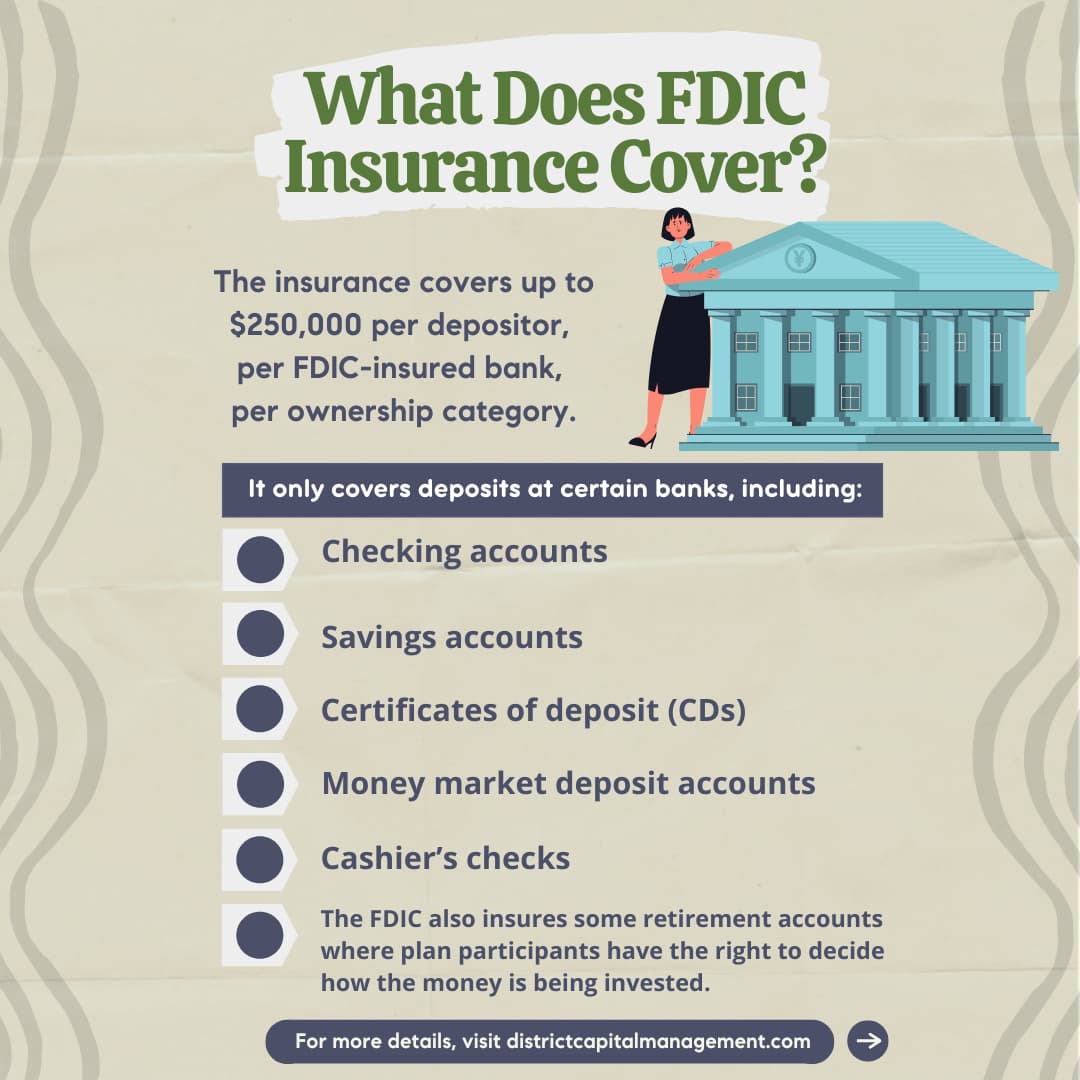
In the landscape of personal and business finance, the assurance of deposit protection is paramount. For many, the Federal Deposit Insurance Corporation (FDIC) is synonymous with security, an invisible shield safeguarding their hard-earned money. This independent U.S. government agency was established in 1933 in response to the Great Depression, specifically to restore confidence in the nation’s banking system by insuring deposits in eligible banks and thrifts. Today, the FDIC protects depositors’ funds up to $250,000 per depositor, per insured bank, for each ownership category.
However, the common perception that all financial institutions offering banking-like services are FDIC-insured is a misconception. While the vast majority of traditional banks operating in the United States do carry FDIC insurance, a significant number of financial entities and investment vehicles fall outside its protective umbrella. Understanding this distinction is not merely an academic exercise; it is a critical component of sound financial planning, especially in an era marked by evolving financial technologies and diverse investment opportunities. This article will demystify which “banks” and financial instruments are not FDIC insured, empowering you to make informed decisions about where and how you safeguard your assets.
The Bedrock of Deposit Protection: Understanding FDIC Insurance
To fully grasp what isn’t FDIC insured, it’s essential to first understand what the FDIC is, how it operates, and what it covers. This foundational knowledge highlights the unique protections afforded to traditional bank deposits.
What is the FDIC?
The Federal Deposit Insurance Corporation (FDIC) is an independent agency of the United States government. Its primary mission is to maintain stability and public confidence in the nation’s financial system. It achieves this in three key ways: by insuring deposits, examining and supervising financial institutions for safety and soundness, and managing receiverships (i.e., resolving failed banks). When a bank fails, the FDIC steps in to protect insured depositors, typically by providing access to their funds or transferring their accounts to a healthy bank. This rapid resolution process prevents widespread panic and ensures the continuity of essential banking services.
How FDIC Insurance Works
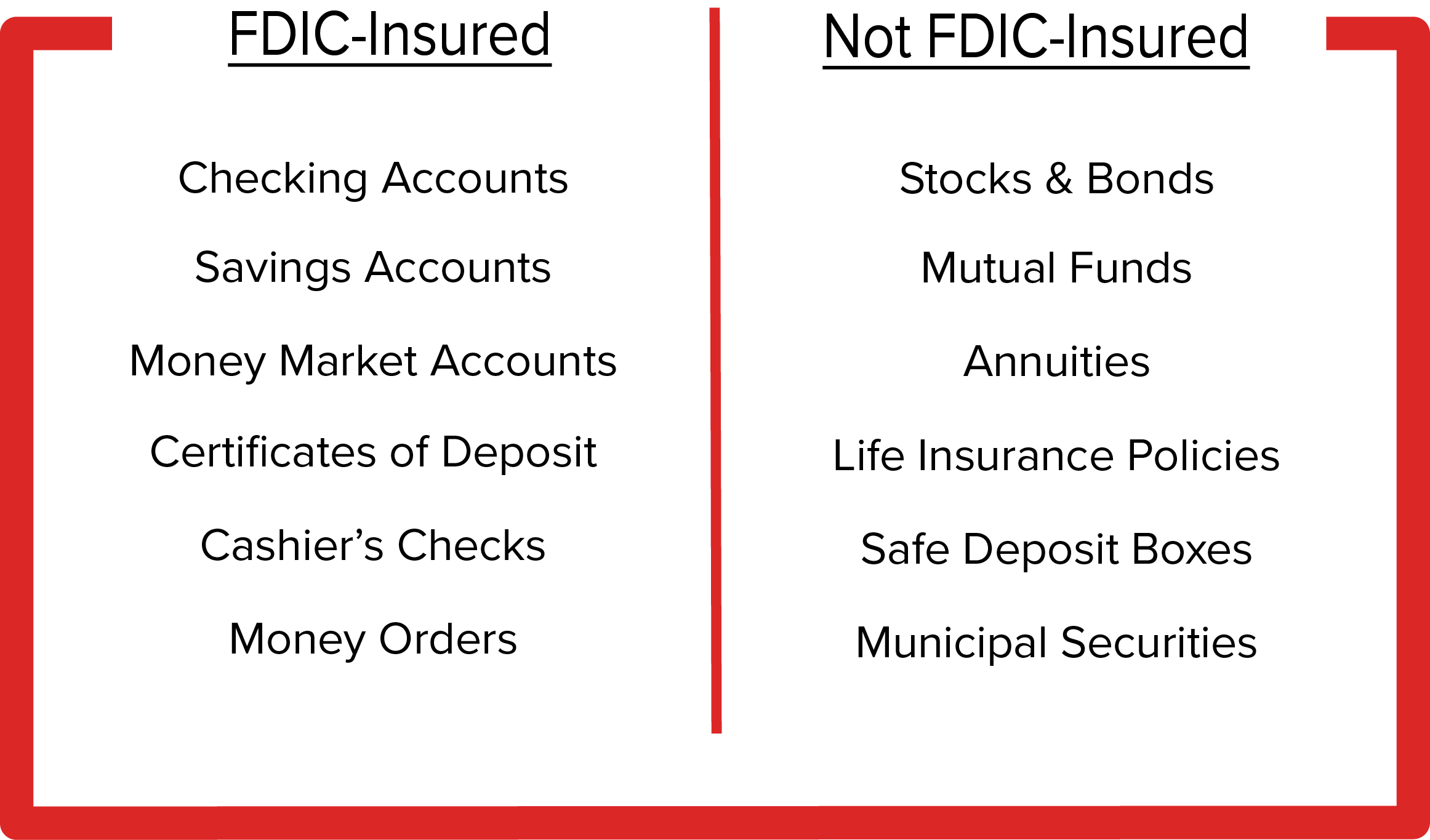
FDIC insurance is automatic for all deposit accounts at an insured institution. You don’t need to apply for it, and there’s no additional cost to you as a depositor; the banks themselves pay premiums to the FDIC. The standard insurance amount is $250,000 per depositor, per insured bank, for each ownership category. This means if you have multiple accounts (e.g., a checking account, savings account, and CD) at the same bank, all under your individual name, the total of those accounts is insured up to $250,000. However, if you have accounts in different ownership categories (e.g., an individual account, a joint account, and an IRA), each category is separately insured up to $250,000 at the same institution. Covered accounts include checking accounts, savings accounts, money market deposit accounts (MMDAs), and certificates of deposit (CDs).
The “Insured Bank” Requirement
Crucially, FDIC insurance only applies to deposits held at FDIC-insured banks and savings associations. These are institutions that are chartered by federal or state governments and have chosen to become members of the FDIC. Not every financial entity that takes your money is an FDIC-insured bank. You can verify whether an institution is FDIC insured using the FDIC’s BankFind tool on its official website, or by looking for the official FDIC sign at bank branches or on their online platforms. If an institution doesn’t display this signage or isn’t listed on BankFind, it’s a strong indicator that your deposits there are not protected by the FDIC.
Non-Bank Financial Institutions and Their Coverage Gaps
Beyond traditional banks, a myriad of financial entities offer services that might appear similar to banking. However, their regulatory frameworks and deposit protections differ significantly.
Credit Unions: NCUA Insurance
Credit unions are member-owned, not-for-profit financial cooperatives. While they offer many of the same services as traditional banks (checking, savings, loans), they are regulated differently. Credit unions are generally not FDIC insured. Instead, most federally chartered and many state-chartered credit unions are insured by the National Credit Union Administration (NCUA), specifically through its National Credit Union Share Insurance Fund (NCUSIF). The NCUA provides the same level of protection as the FDIC: up to $250,000 per depositor, per insured credit union, for each ownership category. Therefore, while credit unions are not FDIC-insured, they offer an equivalent and robust form of federal deposit insurance. It’s important to verify if your credit union is NCUA-insured, which is typically indicated by signs and disclosures.
Investment Firms and Brokerage Accounts
One of the most common areas of confusion lies between bank deposits and investment products. Accounts held at investment firms or brokerage houses, such as those used to buy stocks, bonds, mutual funds, exchange-traded funds (ETFs), or annuities, are not FDIC insured. These are investment products, and their value fluctuates with market conditions. The FDIC protects against the failure of a bank, not against losses in the market value of securities.
Instead, brokerage accounts are typically covered by the Securities Investor Protection Corporation (SIPC). The SIPC is a non-profit corporation that protects customer accounts in the event a brokerage firm fails. SIPC protection covers up to $500,000 per customer, including up to $250,000 for cash held in a brokerage account. However, it’s crucial to understand that SIPC protects against the loss of securities and cash held by a failing brokerage firm, not against a decline in the value of your investments due to market fluctuations. If the value of your stocks drops, SIPC won’t reimburse you. Furthermore, specific investment products like annuities (variable, fixed, or indexed) are typically backed by the issuing insurance company, not the FDIC or SIPC. Cryptocurrencies, often held on specialized exchanges, are also entirely outside the scope of both FDIC and SIPC protection.
FinTech Companies and Payment Apps
The rise of financial technology (FinTech) companies and popular payment applications has introduced new layers of complexity. Companies like Chime, SoFi (as a FinTech, before it became a bank), Robinhood Cash Management, Venmo, or PayPal often offer accounts that look and feel like traditional bank accounts. While these companies themselves are generally not FDIC-insured, many of them partner with one or more FDIC-insured banks.
When you deposit money into an account with a FinTech company that partners with an FDIC-insured bank, your funds are typically “swept” or transferred to that underlying bank, where they then receive FDIC insurance coverage up to the standard limits. The key is to look for explicit disclosures from the FinTech company stating which FDIC-insured bank(s) they partner with and how your funds are held. Without such an arrangement, or if your funds are held directly by the FinTech company in a proprietary account not swept to a bank, they may not be insured. Payment apps, for example, often hold balances that may not be immediately FDIC-insured unless those funds are specifically swept into an FDIC-insured account at a partner bank. Users must carefully review the terms and conditions to understand where their funds are actually held and what protections apply.
Uninsured Entities and High-Risk Scenarios
Beyond recognizable financial institutions, there are other scenarios and entities where deposits or investments are entirely without federal deposit insurance.
Offshore Banks and Foreign Branches
Banks that operate exclusively outside the United States, commonly referred to as offshore banks, are not regulated by U.S. federal agencies and therefore do not carry FDIC insurance. While some foreign banks may have branches or subsidiaries in the U.S. that are FDIC-insured, it’s critical to verify the status of the specific branch or entity where you plan to deposit funds. A foreign bank’s U.S. operations might be FDIC-insured, but its operations abroad generally are not. Depositing money with a purely foreign institution means relying on the deposit insurance scheme (if any) of that particular country, which can vary widely in scope and reliability.
Unlicensed or “Shadow” Banking Operations
Perhaps the riskiest category involves unlicensed, unregulated, or illicit financial operations. These include various “shadow banking” entities that operate outside traditional banking regulations, as well as outright fraudulent schemes like Ponzi schemes or pyramid schemes. Because these entities are not legitimate, regulated banks, they do not qualify for or offer FDIC insurance. Anyone who deposits money with such operations does so at extreme risk, with virtually no recourse for recovery if the entity fails or is revealed to be fraudulent. These operations often promise unusually high returns to attract victims, preying on a lack of understanding about financial regulation and risk.
Specific Investment Products within Banks (Not Deposits)
It’s also important to distinguish between deposit accounts at a bank and investment products sold by a bank. While your checking or savings account at an FDIC-insured bank is protected, certain non-deposit investment products offered or sold by the same bank are not. For example, if you purchase mutual funds, annuities, or securities through a brokerage division of your bank, these are investment products and are not FDIC-insured. Even contents of a safe deposit box are not FDIC-insured; the FDIC insures funds held in accounts, not physical items stored in boxes. It’s crucial to always clarify whether a product or service offered by a bank is a deposit product or an investment product, as their respective protections differ dramatically.
Protecting Your Finances: Key Takeaways and Best Practices
Navigating the complexities of deposit insurance requires diligence and an informed approach. Understanding where your money is truly protected is a cornerstone of robust financial security.
Always Verify Your Institution’s Status
Before depositing any significant sum of money, take the time to verify the institution’s insurance status. For banks, use the FDIC’s BankFind tool. For credit unions, use the NCUA’s Credit Union Locator. Look for official FDIC or NCUA signage prominently displayed at branches and on websites. If there’s any ambiguity or difficulty in finding this information, consider it a red flag.
Understand Account Ownership Categories
If you have substantial savings, knowing how FDIC and NCUA insurance limits apply to different ownership categories can help you maximize your coverage. By structuring your accounts across individual, joint, retirement, and trust categories, or by spreading funds across multiple insured institutions, you can potentially secure coverage well beyond the standard $250,000 per bank/credit union. The FDIC website offers detailed resources on how to structure accounts for maximum coverage.
Differentiate Between Deposits and Investments
Always be clear whether you are making a deposit or an investment. Deposits in insured banks and credit unions are federally protected against institutional failure. Investments, on the other hand, carry market risk and are generally not protected against loss of value. While SIPC offers some protection for brokerage accounts against firm failure, it is not a safeguard against investment losses. Never assume that because an investment product is offered by a bank, it carries the same deposit insurance as a savings account.

Exercise Due Diligence with FinTech and New Technologies
The convenience and innovation of FinTech companies are undeniable, but they necessitate a higher degree of user vigilance. Always read the terms and conditions carefully to identify the underlying FDIC-insured partner bank(s). Understand how your funds are held and whether they are swept to an insured institution. For newer, unregulated assets like cryptocurrencies, be acutely aware that there is typically no federal insurance, and significant risk is involved.
In conclusion, while the FDIC provides an essential safety net for bank depositors, it is not universal. The question of “what banks are not FDIC insured” often leads to a broader discussion of non-bank financial institutions, investment products, and unregulated entities that operate outside traditional banking frameworks. By being informed, asking critical questions, and verifying the insurance status of every institution you entrust with your funds, you can effectively protect your financial assets and navigate the modern financial landscape with confidence.
aViewFromTheCave is a participant in the Amazon Services LLC Associates Program, an affiliate advertising program designed to provide a means for sites to earn advertising fees by advertising and linking to Amazon.com. Amazon, the Amazon logo, AmazonSupply, and the AmazonSupply logo are trademarks of Amazon.com, Inc. or its affiliates. As an Amazon Associate we earn affiliate commissions from qualifying purchases.