
Costco Wholesale Corporation stands as a titan in the retail industry, renowned for its bulk sales, membership model, and distinctive warehouse experience. For anyone interested in business finance, understanding the scale and mechanisms of Costco’s earnings offers a profound insight into successful operational strategies and robust revenue generation. Annually, Costco reports staggering figures that underscore its dominant market position and efficient business model, consistently making billions of dollars across various revenue streams.
The Dual Engines of Costco’s Revenue Model
At the heart of Costco’s formidable financial performance lies a unique and highly effective dual-engine revenue model. Unlike traditional retailers that primarily rely on product markups, Costco strategically combines high-volume merchandise sales with a lucrative membership subscription system. This synergistic approach not only generates substantial revenue but also cultivates unparalleled customer loyalty and predictability in earnings.

Merchandise Sales: High Volume, Strategic Margins
The most visible component of Costco’s revenue comes from the sale of merchandise. From groceries and electronics to apparel and home goods, Costco’s warehouses are designed to move vast quantities of products. The company’s strategy here is distinct: instead of high-profit margins on individual items, Costco operates on extremely thin margins for its merchandise. This “high volume, low margin” philosophy is a cornerstone of its appeal, offering members compelling prices that encourage large-basket purchases and frequent visits.
This approach necessitates immense operational efficiency, aggressive supply chain management, and strong vendor relationships to secure products at the lowest possible cost. By keeping merchandise prices competitive, Costco ensures a continuous flow of traffic through its warehouses and a high rate of inventory turnover, which translates into massive gross sales figures. Annually, merchandise sales contribute the overwhelming majority of Costco’s total net sales, often accounting for well over 95% of this figure, cementing its role as the primary driver of top-line revenue.
Membership Fees: The Profit Powerhouse
While merchandise sales generate the bulk of the gross revenue, it is the annual membership fees that form the core of Costco’s operating income and net profit. Members pay a recurring fee for the privilege of shopping at Costco warehouses and online. These fees, which range from basic Gold Star memberships to executive-level options offering additional benefits like cashback rewards, represent an almost pure profit stream for the company.
The genius of this model is multi-faceted:
- Predictable Income: Membership fees provide a highly stable and predictable revenue stream that is less susceptible to economic fluctuations or changes in consumer spending habits on individual product categories.
- Customer Loyalty: The fee structure creates a psychological commitment among members, encouraging them to maximize the value of their membership through repeat purchases and higher spending.
- Subsidized Operations: The substantial income from membership fees allows Costco to maintain its low-margin strategy on merchandise, passing on savings to customers and reinforcing the value proposition of the membership itself.
- Cost Offset: In many fiscal years, the total revenue generated from membership fees often exceeds Costco’s entire selling, general, and administrative (SG&A) expenses, effectively subsidizing the operational costs of running its vast network of warehouses.
This concentrated profit center from membership fees significantly distinguishes Costco’s financial structure from traditional retailers, providing a stable foundation for its profitability and growth.
Decoding Costco’s Annual Financials: Billions in Play
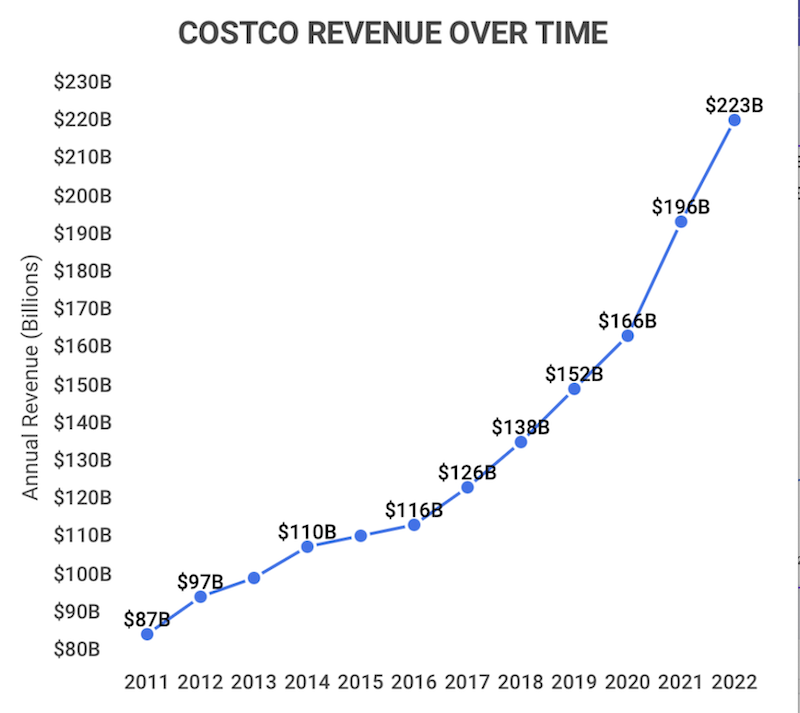
To truly grasp how much Costco makes a year, one must look at its consolidated financial statements, which reveal a company operating on a colossal scale. While specific figures fluctuate year-to-year based on economic conditions, expansion, and consumer trends, the overall magnitude of its financial performance remains consistently impressive, regularly crossing the mark of hundreds of billions in net sales and several billions in net income.
Net Sales: The Top Line Metric
Costco’s annual net sales consistently hover in the range of hundreds of billions of dollars. This figure represents the total value of merchandise sold to members after accounting for returns and allowances. This top-line number is a testament to the immense volume of products moving through its global network of warehouses and its growing e-commerce channels. The consistent growth in net sales year over year is often driven by several factors:
- Comparable Sales Growth: Increase in sales from existing warehouses.
- New Store Openings: Expansion into new domestic and international markets.
- E-commerce Expansion: Growth in online sales, complementing the physical store experience.
These combined elements ensure that Costco’s revenue engine continues to expand, reflecting its ability to attract new members and increase spending among existing ones.
Net Income and Profitability: The Bottom Line
While net sales provide an indicator of scale, net income (or profit) is the ultimate measure of a company’s financial success. Costco typically reports net income in the billions of dollars annually. This figure is arrived at after deducting all operating expenses, interest, and taxes from its total revenue (which includes both merchandise sales and membership fees).
The remarkable aspect of Costco’s net income is the significant contribution of membership fees. As mentioned, these fees are high-margin by nature, with very little associated cost beyond the administrative overhead of managing the membership program itself. This allows a substantial portion of membership fee revenue to flow directly to the bottom line, acting as a powerful insulator against potential fluctuations in merchandise profitability. For investors, this creates a robust and reliable earnings profile.
Profitability ratios, such as net profit margin, illustrate how efficiently Costco converts its revenue into profit. While its net profit margin on merchandise sales is intentionally low, the inclusion of high-margin membership fees significantly boosts the overall corporate profit margin, making it a highly attractive and financially sound enterprise.
Key Drivers of Sustained Financial Performance
Costco’s ability to consistently generate billions in revenue and profits stems from several interwoven strategic drivers that reinforce its business model and competitive advantages.
Global Scale and Membership Growth
Costco operates hundreds of warehouses across numerous countries, giving it a vast global footprint. This scale allows for significant purchasing power, enabling the company to negotiate better prices with suppliers and pass those savings on to members. Furthermore, consistent membership growth, both domestically and internationally, fuels both merchandise sales and the crucial membership fee income. A high membership renewal rate, often exceeding 90% in key markets, testifies to the enduring value proposition perceived by its customers.
Operational Efficiency and Supply Chain Mastery
Operational efficiency is paramount for a low-margin, high-volume retailer like Costco. The company excels in streamlining its supply chain, minimizing inventory holding costs, and optimizing warehouse layouts for rapid replenishment and customer flow. Limiting the number of Stock Keeping Units (SKUs) compared to traditional supermarkets also simplifies operations, reduces purchasing complexity, and enhances buying power. These efficiencies are critical in preserving the slim margins on merchandise and ensuring competitive pricing, which, in turn, drives sales volume.
The Power of Kirkland Signature
Costco’s private label brand, Kirkland Signature, is a massive contributor to its financial success. Kirkland Signature products are known for their high quality and competitive pricing, often matching or exceeding national brands. This private label strategy offers several financial advantages:
- Higher Margins: Private label products typically carry higher profit margins than branded merchandise, directly boosting Costco’s overall profitability.
- Brand Loyalty: Kirkland Signature fosters brand loyalty to Costco itself, as members often specifically seek out these trusted products.
- Negotiating Power: The success of Kirkland Signature enhances Costco’s negotiating leverage with national brand suppliers, as it can offer a competitive alternative.
The immense sales volume of Kirkland Signature products contributes billions to Costco’s annual revenue and plays a significant role in improving overall profit margins.
E-commerce Expansion and Omnichannel Strategy
While primarily known for its physical warehouses, Costco has made significant strides in expanding its e-commerce presence. Its online platform offers a broader selection of items, including larger or specialized goods not typically found in warehouses, and caters to members who prefer online shopping convenience. This omnichannel approach ensures that Costco remains relevant in an evolving retail landscape, capturing additional sales and reinforcing member value across different shopping preferences. The growth in e-commerce contributes to the overall net sales figures, albeit still a smaller portion compared to in-warehouse sales, but it represents an important growth vector.

What These Figures Mean for Business Finance and Investors
For investors and those studying business finance, Costco’s annual financial performance offers a compelling case study in sustainable profitability and strategic differentiation. The company’s consistent generation of billions in revenue and net income, fueled by its unique membership model and operational excellence, demonstrates a robust business that generates significant shareholder value. Its financial health makes it an attractive investment, often viewed as a defensive stock due to its stable cash flows from membership fees and its ability to offer value during various economic cycles.
Understanding “how much does Costco make a year” goes beyond just the numbers; it reveals a meticulously crafted business model where every component, from bulk sales to private labels and membership fees, works in concert to create a financial powerhouse. This intricate financial ecosystem allows Costco to not only thrive but also to consistently expand its global footprint and deliver billions in earnings, year after year.
aViewFromTheCave is a participant in the Amazon Services LLC Associates Program, an affiliate advertising program designed to provide a means for sites to earn advertising fees by advertising and linking to Amazon.com. Amazon, the Amazon logo, AmazonSupply, and the AmazonSupply logo are trademarks of Amazon.com, Inc. or its affiliates. As an Amazon Associate we earn affiliate commissions from qualifying purchases.