
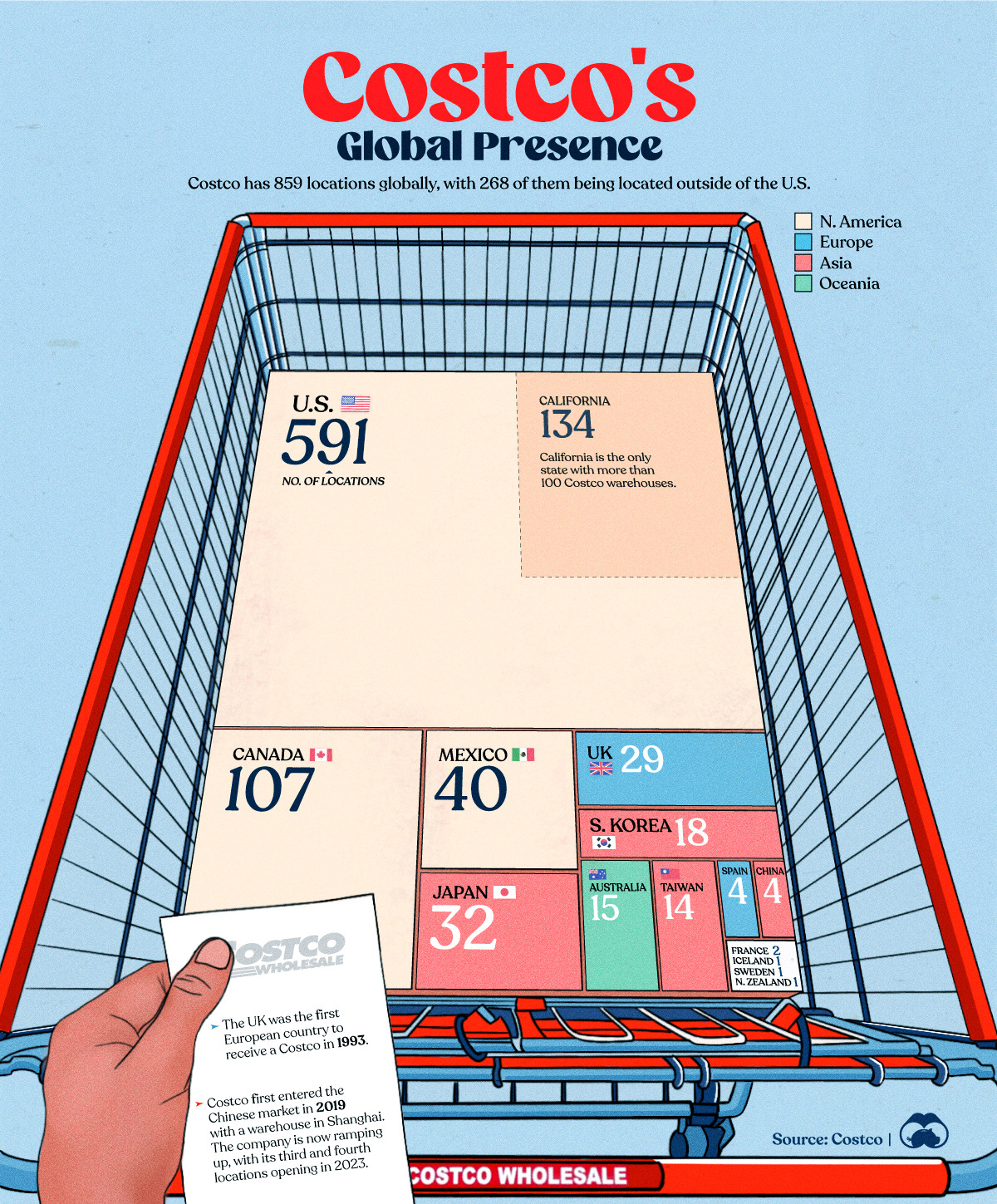
Costco Wholesale Corporation stands as a titan in the global retail landscape, a membership-only warehouse club renowned for its bulk products and competitive pricing. For investors, business analysts, and those keen on understanding the mechanics of large-scale retail, the question of “how many Costco warehouses are there” extends far beyond a simple numerical inquiry. It delves into the company’s expansive business finance, its investment appeal, strategic growth, and profound economic impact. The precise number fluctuates as new locations open and, very occasionally, old ones close, but as of recent reports, Costco operates well over 870 warehouses worldwide, a testament to its formidable global footprint and consistent growth strategy.
The Global Footprint of a Retail Giant
Costco’s physical presence is a critical indicator of its market penetration and operational scale. Each warehouse represents a significant capital investment, a hub for revenue generation, and a strategic point of access to a vast member base. The distribution of these warehouses across continents and countries paints a clear picture of the company’s global ambitions and its success in replicating its unique business model across diverse economic environments.
Understanding Warehouse Growth
The steady increase in Costco’s warehouse count over decades is a direct reflection of its strategic expansion and robust financial health. New warehouse openings are typically financed through a combination of retained earnings, debt, and sometimes equity, signifying a company confident in its return on investment. Each new location involves substantial upfront costs, including land acquisition, construction, inventory stocking, and staffing. These capital expenditures, often in the range of tens of millions of dollars per store, are carefully weighed against projected sales volumes, membership growth potential, and long-term profitability.
From a business finance perspective, this growth is fundamental. It expands Costco’s addressable market, allowing it to capture a larger share of consumer spending. Furthermore, it reinforces economies of scale in purchasing and distribution, a cornerstone of its low-cost strategy. The ability to continually add profitable locations is a strong signal to investors about the company’s inherent strength and management’s effectiveness in executing its growth playbook.
Regional Concentration and Market Penetration
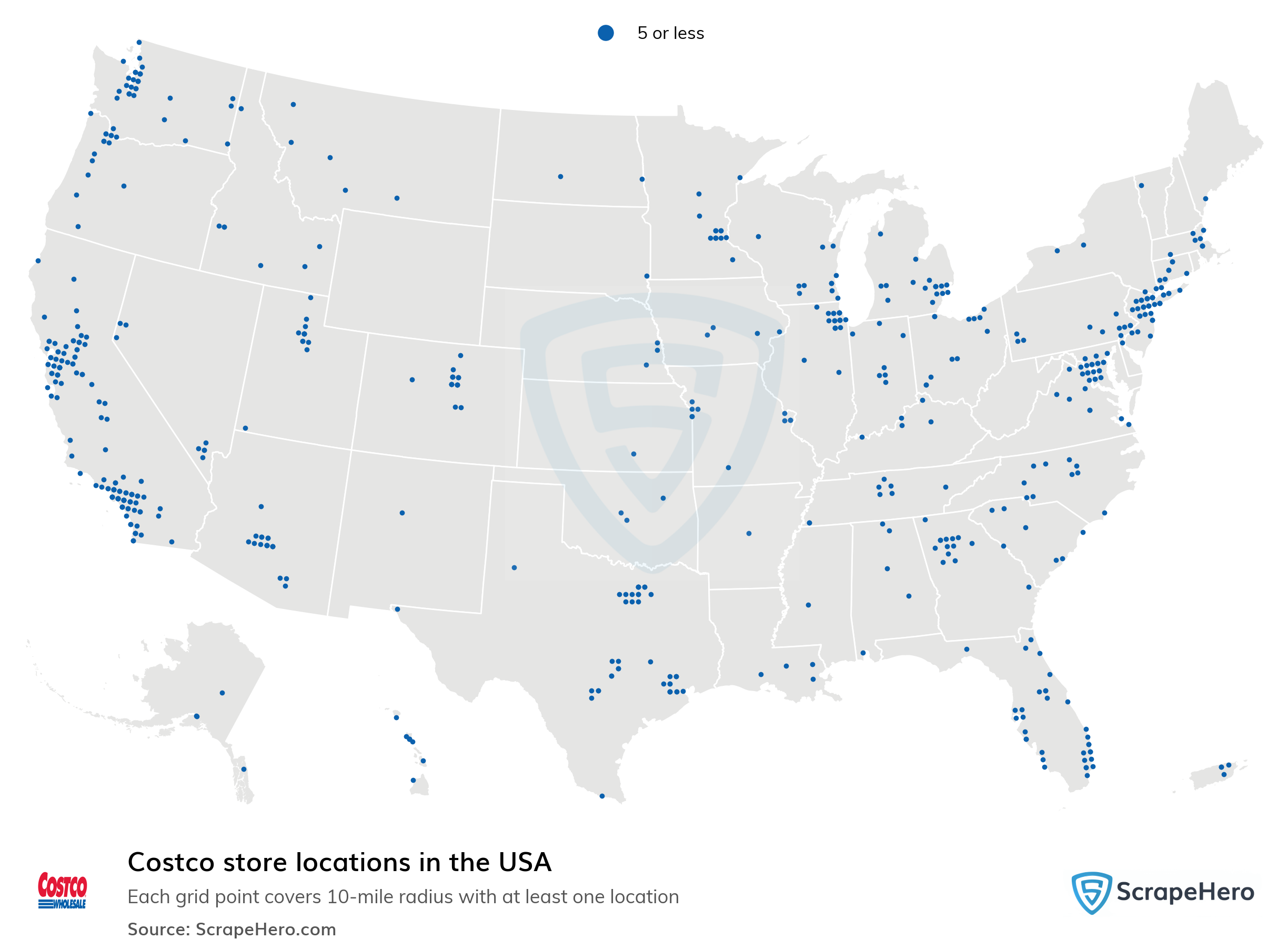
While Costco operates globally, its warehouses are not evenly distributed. A significant concentration remains in the United States and Canada, its mature markets, where the brand has deep roots and a loyal member base. However, strategic expansion into international markets like Mexico, the UK, Japan, Korea, Australia, Taiwan, China, Spain, France, Iceland, New Zealand, and Sweden demonstrates a deliberate effort to diversify revenue streams and tap into emerging consumer bases.
This regional concentration and phased international expansion reveal important financial considerations. In mature markets, new warehouses might target underserved areas or replace older, smaller facilities with larger, more modern ones, aiming to increase sales per square foot and enhance member experience. In contrast, expansion into new international territories often involves higher initial investment and a longer ramp-up period to achieve profitability, but offers substantial long-term growth potential. Assessing the financial performance of warehouses across different geographies helps analysts and investors understand the varying levels of market penetration, operational efficiency, and revenue potential inherent in Costco’s global portfolio.
More Than Just a Number: Financial Implications
The sheer number of Costco warehouses is not merely a logistical count but a direct input into the company’s financial statements and overall business valuation. Each store contributes to revenue, incurs costs, and plays a role in the company’s unique membership-driven profit model.
Revenue Generation and Membership Model
Costco’s business model is fundamentally different from traditional retailers. A significant portion of its profitability derives not from product markups, but from membership fees. Each warehouse serves as an enrollment center and a vital touchpoint for retaining existing members and attracting new ones. The more warehouses, the greater the potential reach for membership acquisition and the easier it is for existing members to shop, reinforcing the value proposition of annual fees. These fees are a high-margin, predictable revenue stream that largely covers the company’s selling, general, and administrative (SG&A) expenses. This financial structure allows Costco to sell its merchandise at very thin margins, often just 10-15% above cost, making its product offerings highly competitive.

From an investment standpoint, this recurring revenue model provides a stable financial base, insulating the company from some of the volatility inherent in merchandise sales. A growing warehouse count directly translates to a larger member base, increasing the stable membership revenue and enhancing the overall financial resilience of the company. Analyzing revenue per warehouse, or even membership fee revenue per warehouse, provides critical insights into the productivity and financial health of the store network.
Operational Costs and Efficiency
While new warehouses drive growth, they also represent significant operational costs. Beyond the initial capital outlay, each location incurs ongoing expenses such as utilities, maintenance, property taxes, and a substantial payroll for its staff. Managing these costs efficiently across hundreds of locations is paramount to maintaining profitability. Costco’s operational model emphasizes efficiency, utilizing large, no-frills warehouses and efficient inventory management systems to keep overheads low. The company’s bulk purchasing power, facilitated by its large store count and high sales volumes, also plays a crucial role in negotiating favorable terms with suppliers, further reducing cost of goods sold.
Investors scrutinize metrics like sales per square foot, inventory turnover rates, and operating margins across the warehouse network. A high number of warehouses with consistent operational efficiency signals a well-managed company capable of scaling its business without a proportional increase in costs. Conversely, declining efficiency in new or existing stores could raise concerns about profitability and return on investment. The successful management of these financial metrics across a vast and growing network of warehouses is a hallmark of Costco’s enduring financial strength.
Investment Perspective: Growth and Valuation
For those considering an investment in Costco, the number of warehouses is a key performance indicator (KPI) that informs growth projections, valuation models, and long-term shareholder value. It speaks to the company’s ability to expand its market share and sustain its competitive advantages.
Expansion Strategies and Future Outlook
Costco’s expansion strategy is typically deliberate and well-researched, focusing on areas with strong demographics and limited direct competition. The continuous addition of new warehouses globally is a primary driver of top-line revenue growth. Analysts often forecast Costco’s future revenue and earnings by estimating the number of new stores it will open in upcoming fiscal years and the expected sales ramp-up for those locations. This organic growth through new store openings, coupled with same-store sales growth (sales growth from existing warehouses), forms the bedrock of investment theses for Costco.
The future outlook for Costco’s warehouse count is critical. As mature markets reach saturation, international expansion becomes increasingly important for sustaining high growth rates. Success in emerging markets, characterized by different consumer behaviors and regulatory environments, will heavily influence Costco’s long-term financial trajectory and its appeal as a growth stock. Understanding the capital allocation decisions for new stores versus other investments (e.g., e-commerce, supply chain improvements) is crucial for evaluating management’s strategic priorities.
Shareholder Value and Competitive Advantage
The ability to consistently grow its warehouse footprint, and critically, for those new warehouses to become profitable quickly, directly impacts shareholder value. A growing and profitable store base leads to increased earnings per share (EPS), which can drive stock price appreciation and support dividend payouts. Furthermore, the extensive network of warehouses strengthens Costco’s competitive advantage. Its scale allows for unparalleled purchasing power, enabling it to offer prices that smaller competitors cannot match. This creates a formidable barrier to entry for potential rivals and helps to lock in its member base.
From an investment angle, Costco’s consistent execution in expanding its warehouse count and maintaining strong financial performance across its network solidifies its position as a defensive investment with stable growth prospects. It’s not just about the absolute number of warehouses, but the financial productivity and strategic placement of each one that underpins its enduring market leadership and justifies its valuation in the eyes of savvy investors.
Impact on Local Economies and Consumer Spending
Beyond the corporate balance sheet, each Costco warehouse represents a significant economic entity within its local community. The decision to open a new warehouse involves substantial financial investment in infrastructure, creates a significant number of jobs—ranging from construction to permanent retail positions—and drives local tax revenues. This local economic stimulus is an important consideration when evaluating the broader financial impact of Costco’s expansion.
Moreover, the presence of a Costco warehouse influences local consumer spending patterns. Its competitive pricing and bulk offerings can lead to savings for its members, potentially freeing up discretionary income for other purchases. This shift in spending can have a ripple effect on local economies, altering the competitive landscape for smaller retailers and influencing consumer purchasing power within the immediate vicinity of a new store. For economists and municipal planners, understanding “how many Costco warehouses are there” in a given region provides valuable insights into retail market dynamics, employment trends, and local economic health.
aViewFromTheCave is a participant in the Amazon Services LLC Associates Program, an affiliate advertising program designed to provide a means for sites to earn advertising fees by advertising and linking to Amazon.com. Amazon, the Amazon logo, AmazonSupply, and the AmazonSupply logo are trademarks of Amazon.com, Inc. or its affiliates. As an Amazon Associate we earn affiliate commissions from qualifying purchases.