
The humble penny, a ubiquitous symbol of American currency, has undergone significant transformations throughout its history. While its familiar reddish-brown hue has long been associated with copper, a closer look at its composition reveals a story of changing economic realities, technological advancements, and strategic material choices. The question “What year did they stop putting copper in pennies?” isn’t as simple as a single date, but rather marks a pivotal shift in how these iconic coins are manufactured. To truly understand this transition, we need to explore the motivations behind the change, the new materials introduced, and the lasting impact on both collectors and the everyday consumer.
The Golden Age of Copper: Why the Penny Was Once Purely Copper
For over two centuries, the United States penny was predominantly made of copper. This wasn’t a matter of aesthetic preference alone; copper possessed several desirable qualities that made it the ideal material for coinage.
The Advantages of Copper in Coinage
- Durability: Copper is a relatively soft metal, which made it easy to strike with detailed designs. However, it also proved surprisingly durable for everyday circulation. Pennies made of copper could withstand the rigors of being handled, dropped, and pocketed thousands of times without significant wear and tear. This longevity was crucial for a coin intended for widespread, continuous use.
- Malleability: The ease with which copper can be shaped and formed was another key factor. It allowed for the intricate designs and inscriptions that are hallmarks of coinage. Striking a coin involves pressing a die with the desired image onto a blank piece of metal. Copper’s malleability ensured that these impressions were clear and well-defined, contributing to the aesthetic appeal and readability of the coin.
- Weight and Feel: The weight of a copper penny was substantial enough to feel like a tangible unit of value in the hand. This physicality contributed to its perceived worth and made it distinct from lighter, less substantial tokens.
- Cost-Effectiveness (Historically): For a long time, copper was readily available and relatively inexpensive. This made it an economical choice for mass production, allowing the U.S. Mint to produce millions of pennies without incurring prohibitive costs.
The “Cent” and Its Copper Roots
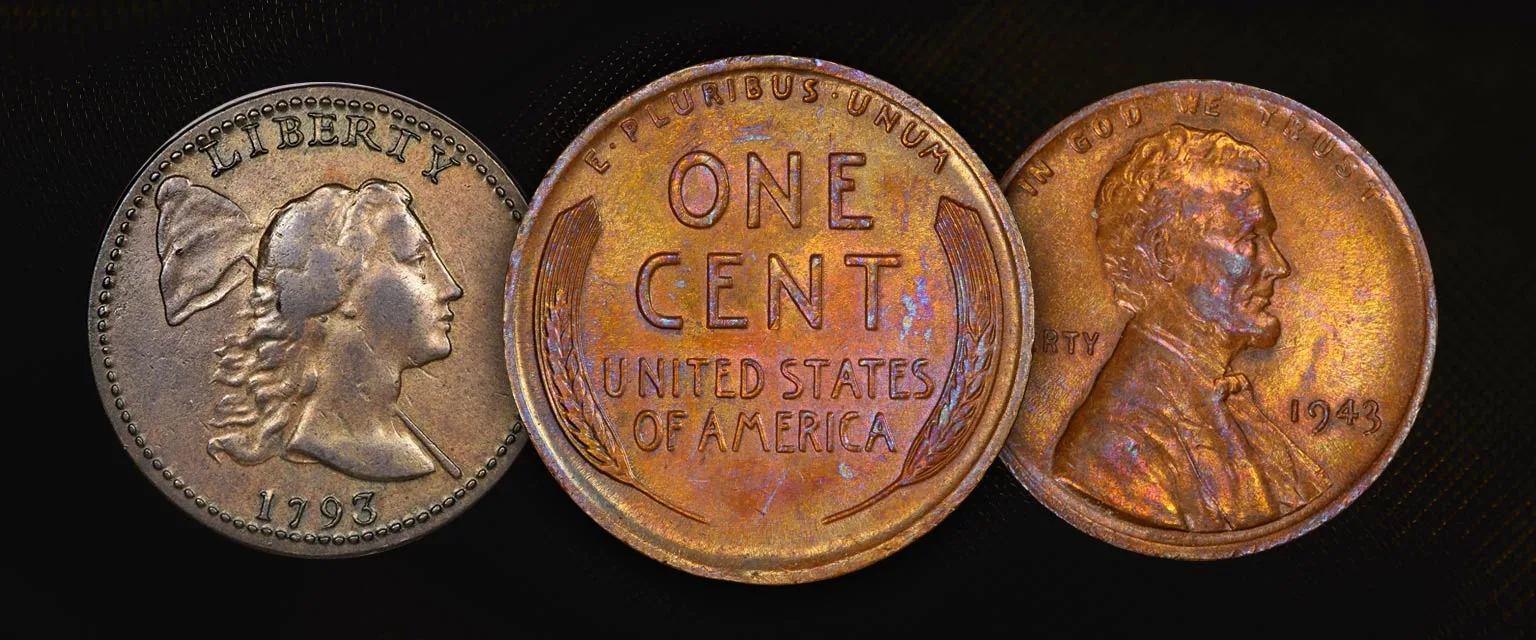
The very first U.S. pennies, authorized by the Coinage Act of 1792, were indeed made of pure copper. The term “cent” itself derives from the Latin “centum,” meaning one hundred, signifying its value as one-hundredth of a dollar. These early copper cents were larger and heavier than the pennies we are familiar with today, reflecting both the material and the economic landscape of the nascent nation.
Throughout the 19th century, the composition of the penny remained largely consistent, with minor variations in the fineness of the copper used. The iconic Lincoln cent, introduced in 1909 to commemorate the 100th anniversary of Abraham Lincoln’s birth, continued this tradition, featuring a composition of 95% copper and 5% tin and zinc. This alloy provided a good balance of durability, color, and ease of striking.
The Shifting Landscape: Economic Pressures and the Search for Alternatives
The sustained use of copper for pennies was not without its challenges, particularly as global commodity markets fluctuated. The latter half of the 20th century saw increasing economic pressures that began to make the reliance on pure copper unsustainable for coin production.
The Rising Cost of Copper
As the demand for copper grew across various industries – from electronics to construction – its market price began to climb. This had a direct impact on the cost of minting pennies. The intrinsic value of the metal used in a penny started to approach, and at times exceed, its face value. This presented a significant dilemma for the U.S. Treasury.
When the cost of producing a coin becomes equal to or greater than its face value, it creates a financial loss for the government. This economic reality forced a re-evaluation of the materials used in U.S. coinage, prompting a search for more cost-effective alternatives.
The Coinage Act of 1965 and the Shift Away from Silver
While the focus here is on copper, it’s important to note the broader changes in U.S. coinage that occurred around the same time. The Coinage Act of 1965, for instance, significantly reduced the silver content in dimes and quarters. This was a direct response to a silver shortage and the rising price of silver, demonstrating a pattern of the U.S. Mint adapting to market forces. This shift set a precedent for considering alternative materials in coinage, paving the way for changes to the penny.
The Year the Penny Became a Hybrid: The Introduction of Copper-Plated Zinc
The significant alteration in the penny’s composition didn’t happen overnight, but rather as a deliberate and calculated change driven by economics. The pivotal year that marked the transition away from a predominantly copper penny was 1982.
The Transition to Copper-Plated Zinc
In 1982, the U.S. Mint began minting pennies with a new composition. The goal was to reduce the production cost while maintaining the familiar appearance and weight of the penny. The solution was to replace the copper-heavy alloy with a core of zinc coated with a thin layer of copper.
- Compositional Change:
- Before 1982: Pennies were made of 95% copper and 5% tin and zinc.
- From 1982 onwards: Pennies are made of 97.5% zinc and 2.5% copper (as a plating).
This seemingly small adjustment had a profound impact on the cost of production. Zinc is significantly less expensive than copper, allowing the Mint to produce pennies at a much lower cost. The thin layer of copper on the outside provided the familiar reddish-brown color and a similar feel, minimizing the visual and tactile disruption for the public.
Distinguishing the Pennies: A Collector’s Challenge
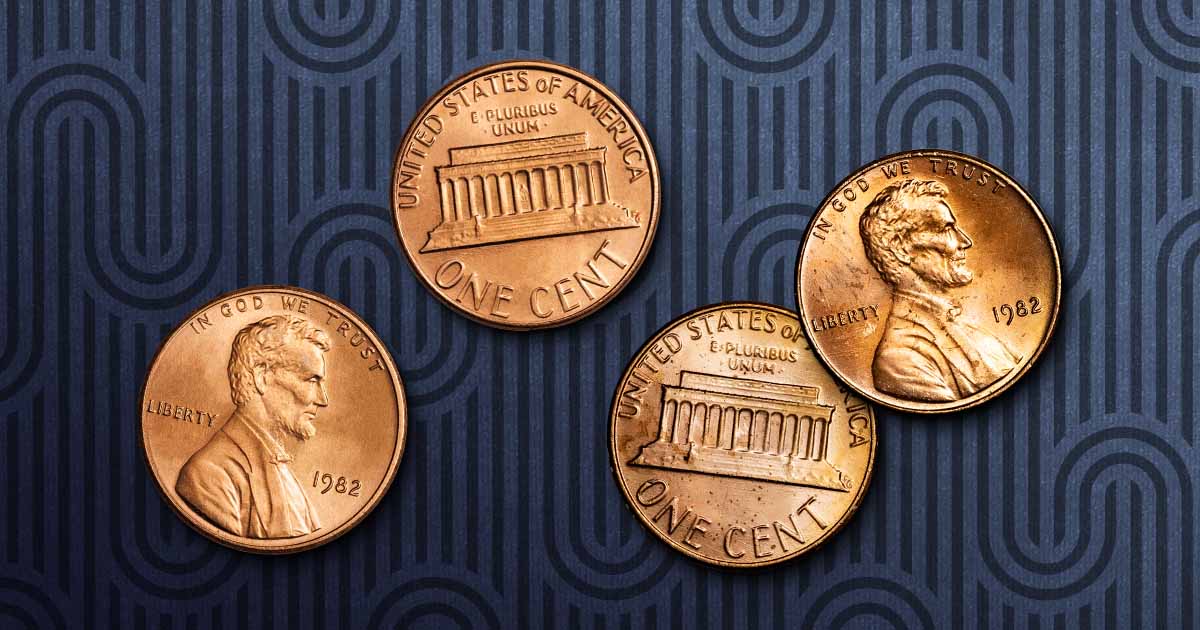
The transition in 1982 created a unique situation for coin collectors and historians. For that specific year, both compositions of pennies were minted. This means that if you find a penny dated 1982, it could be either the older copper alloy or the newer copper-plated zinc.
- Identifying 1982 Pennies: The key difference lies in their weight. Copper pennies are slightly heavier than their zinc counterparts. Collectors often use scales to differentiate between the two. A standard copper 1982 penny weighs approximately 3.11 grams, while a copper-plated zinc 1982 penny weighs about 2.5 grams.
- The “Red” vs. “Brown” Penny: While the copper plating gives the zinc penny its characteristic color, subtle variations in the strike and wear can lead to slight differences in their appearance. The older copper pennies are often referred to as “red” pennies, while the newer ones can be called “brown” pennies, though this is not always a definitive identifier.
The existence of both compositions in 1982 adds a layer of complexity and interest to coin collecting, making that particular year a point of fascination for enthusiasts.
The Impact and Future of the Penny: A Question of Relevance
The decision to alter the penny’s composition in 1982 was a pragmatic response to economic realities. However, it also ignited a broader debate about the continued relevance and economic viability of the penny in modern society.
The Cost of the Penny: More Than Just Metal
Beyond the cost of the raw materials, the actual cost of producing and distributing a penny is significantly higher than its face value. When you factor in the labor, machinery, transportation, and the administrative costs associated with managing a currency that is rarely used in its physical form, the penny becomes a net loss for the government.
The “Why Keep the Penny?” Debate
Despite the economic arguments against it, the penny has a strong cultural presence. It’s often seen as a symbol of frugality and a starting point for saving. Many businesses still price items with odd-numbered cents, leading to cash transactions where pennies are necessary.
- Rounding at the Register: In recent years, many retailers have implemented “rounding at the register” policies for cash transactions. This means that purchases paid for with cash are rounded to the nearest nickel or dime, effectively eliminating the need for pennies in many everyday transactions. This trend further highlights the diminishing practical use of the penny.
- Collector Value: While the intrinsic value of the metal in a modern penny is negligible, certain historical pennies, particularly those from earlier periods or those with minting errors, can hold significant value for collectors. The transition in 1982 itself created collectible variations.

The Future of the Penny: A Speculative Outlook
The conversation about eliminating the penny has been ongoing for years. Countries like Canada, Australia, and the United Kingdom have already phased out their lowest-denomination coins. Whether the U.S. will follow suit remains to be seen. However, the significant shift in composition in 1982 serves as a testament to the continuous evolution of currency in response to economic and technological pressures.
In conclusion, the question “What year did they stop putting copper in pennies?” points directly to 1982. This was the year the U.S. Mint transitioned to a copper-plated zinc composition for the Lincoln cent, a move driven by the escalating cost of copper. This change, while maintaining the penny’s outward appearance, fundamentally altered its metallic makeup, creating a unique collectible year and fueling ongoing discussions about the economic viability and future of this iconic, yet increasingly debated, piece of American currency.
aViewFromTheCave is a participant in the Amazon Services LLC Associates Program, an affiliate advertising program designed to provide a means for sites to earn advertising fees by advertising and linking to Amazon.com. Amazon, the Amazon logo, AmazonSupply, and the AmazonSupply logo are trademarks of Amazon.com, Inc. or its affiliates. As an Amazon Associate we earn affiliate commissions from qualifying purchases.