
In the dynamic landscape of personal finance, few expenses are as ubiquitous yet as frequently overlooked for potential savings as auto insurance. For many drivers, the thought of switching insurance providers can seem daunting, a bureaucratic labyrinth fraught with potential pitfalls and paperwork. However, failing to regularly review and, if necessary, switch your auto insurance company can lead to paying significantly more than you should, year after year. This comprehensive guide aims to demystify the process, empowering you to navigate the transition with confidence, ensuring you secure the best coverage at the most competitive price. Switching isn’t just about saving money; it’s about aligning your coverage with your current needs, ensuring peace of mind, and optimizing a crucial aspect of your financial well-being.
Why Consider Switching Your Auto Insurance?
The decision to switch auto insurance providers is rarely whimsical; it’s typically driven by a combination of financial incentives, life changes, and evolving expectations from your service providers. Understanding these motivations is the first step toward making an informed choice.
Rising Premiums and Cost Savings
One of the most common catalysts for switching is an inexplicable or significant increase in your current premium. Insurance companies often raise rates due to various factors, including inflation, an increase in claims in your area, or changes in their underwriting models. While some increases are unavoidable, many drivers find that their loyalty is not rewarded with the best rates; in fact, new customers often receive more attractive introductory offers. Proactive shopping can uncover substantial savings, sometimes hundreds of dollars annually, by simply comparing quotes from various providers. This direct impact on your monthly or annual budget makes cost savings a primary motivator for exploring new options.
Changing Life Circumstances
Life is a journey of constant change, and these shifts frequently impact your insurance needs and rates. Buying a new car, especially one with advanced safety features, can significantly alter your risk profile. Moving to a new zip code, getting married, or even experiencing improvements in your driving record (such as tickets falling off your record) are all compelling reasons to re-evaluate your current policy. Each of these events can either qualify you for new discounts or necessitate different levels of coverage, making your existing policy potentially misaligned with your current situation. A new job with a shorter commute, for instance, might make you eligible for low-mileage discounts you weren’t aware of.
Dissatisfaction with Current Provider
Beyond financial considerations, the quality of service plays a critical role. If you’ve experienced slow claims processing, unhelpful customer service representatives, or a general lack of transparency from your current insurer, these frustrations can be powerful drivers for a change. Your auto insurance is a safety net; when you need it most, you expect prompt, efficient, and compassionate service. Poor communication, arduous claims procedures, or a perceived lack of value for your premium can erode trust and signal that it’s time to seek a provider that better aligns with your expectations for service and support.
Seeking Better Coverage or Benefits
Sometimes, the motivation to switch isn’t solely about cost or dissatisfaction, but rather a desire for enhanced coverage or specific benefits not offered by your current insurer. This could include wanting accident forgiveness, roadside assistance, gap insurance for a new car loan, or more generous rental reimbursement coverage. Many modern insurers also offer telematics programs (usage-based insurance) that reward safe driving with lower premiums, an option that might not be available or competitive with your existing company. Actively seeking out these benefits ensures your insurance portfolio is optimized for both protection and added value.
Preparing for a Seamless Switch
Switching auto insurance companies doesn’t have to be a headache. With adequate preparation, you can ensure a smooth transition, avoid gaps in coverage, and ultimately make a well-informed decision that benefits your financial health.
Review Your Current Policy Thoroughly
Before you even begin shopping, take the time to understand your existing policy inside and out. Note your current coverage limits (e.g., liability, collision, comprehensive), deductibles, any specific endorsements (like rental car coverage or roadside assistance), and the policy’s expiration date. Understanding what you currently have is crucial for making accurate comparisons. Pay close attention to your cancellation policy – some insurers may have fees, though these are less common for auto policies. This foundational knowledge will serve as your benchmark when evaluating new quotes.
Understand Your Coverage Needs
Your personal financial situation, vehicle, and risk tolerance should dictate your coverage needs. While state minimums are a legal requirement, they often offer insufficient protection in the event of a serious accident, potentially leaving you exposed to significant out-of-pocket expenses. Consider your assets – if you have substantial savings or property, higher liability limits are advisable to protect them. Evaluate whether comprehensive and collision coverage is still necessary for an older vehicle, or if adding uninsured/underinsured motorist coverage is prudent in your area. This self-assessment ensures you’re not over-insuring or, more critically, under-insuring yourself.
Gather Necessary Information
Streamline the quoting process by having all essential information readily available. This typically includes:
- Vehicle Information: Make, model, year, VIN, current odometer reading, and any safety features.
- Driver Information: Names, dates of birth, driver’s license numbers, marital status, and occupations of all drivers on the policy.
- Driving History: Details of any accidents, tickets, or claims within the last 3-5 years for all drivers.
- Current Policy Information: Your current insurer’s name, policy number, and effective dates.
- Prior Insurance History: Dates of continuous coverage from your previous policies, as this can often qualify you for discounts.
Having this information at your fingertips will save time and ensure the accuracy of the quotes you receive.
Research Potential Providers
Don’t just jump at the first attractive offer. Take the time to research potential insurers thoroughly. Look beyond just the price:
- Financial Strength Ratings: Check ratings from agencies like A.M. Best, Moody’s, or Standard & Poor’s to ensure the company has the financial stability to pay out claims.
- Customer Service Reviews: Websites like J.D. Power, the National Association of Insurance Commissioners (NAIC), and various consumer review sites can provide insights into claims handling and overall customer satisfaction.
- Local Agent vs. Direct Insurer: Decide whether you prefer the personalized service of a local independent agent (who can shop multiple carriers for you) or the direct-to-consumer model offered by many national brands.
- Discount Offerings: Investigate what unique discounts each company offers that you might qualify for, such as bundling home and auto, good student, low mileage, or anti-theft device discounts.
The Step-by-Step Process of Switching
Once you’re prepared, the actual process of switching can be broken down into manageable steps, ensuring a smooth transition without any lapse in coverage.
Obtain Multiple Quotes
This is perhaps the most crucial step. Use online comparison tools, contact independent insurance agents, and directly solicit quotes from major insurance companies. Aim for at least 3-5 different quotes to get a comprehensive view of the market. Be consistent with the coverage parameters you request for each quote to ensure an apples-to-apples comparison. Provide accurate information to avoid any surprises later on.
Compare Quotes and Coverage
Resist the temptation to choose based solely on price. A lower premium might indicate less coverage, higher deductibles, or fewer benefits. Carefully compare:
- Coverage Limits: Ensure liability, collision, and comprehensive limits are consistent across quotes.
- Deductibles: A lower deductible means a higher premium, and vice-versa.
- Endorsements and Added Benefits: Are roadside assistance, rental reimbursement, or new car replacement included, and at what cost?
- Discounts Applied: Verify that all applicable discounts have been factored into your new quotes.
- Payment Plans: Understand the payment options and any fees associated with monthly installments versus annual payments.

Choose Your New Insurer
After thorough comparison, select the insurer that offers the best balance of coverage, cost, customer service reputation, and financial strength for your specific needs. Don’t hesitate to ask questions if anything in the quote is unclear. A good insurer will be transparent and helpful in explaining their offerings.
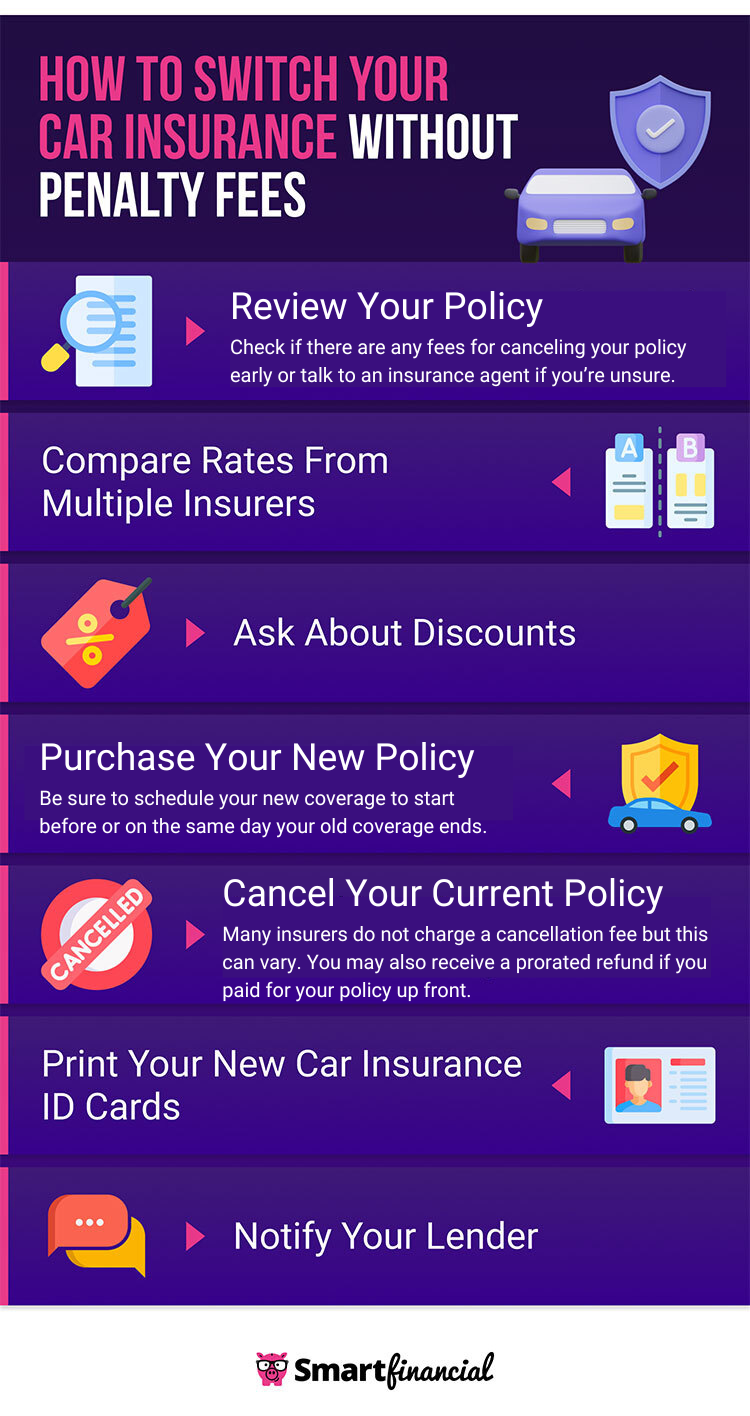
Purchase Your New Policy
Once you’ve made your decision, initiate the purchase of your new policy. Crucially, do not cancel your old policy until your new policy is officially active. Set the effective date of your new policy to align perfectly with, or ideally slightly overlap, the cancellation date of your old policy. This meticulous timing prevents any gaps in coverage, which could leave you financially vulnerable in the event of an accident and can also lead to higher rates in the future as insurers prefer continuous coverage.
Cancel Your Old Policy
With your new policy confirmed and active, it’s time to cancel your old one. Contact your previous insurer directly, preferably in writing (email or certified mail, depending on their requirements), to formally cancel your policy. Provide them with the exact cancellation date, ensuring it aligns with the effective date of your new policy. Be prepared for them to try and retain your business by offering a new rate, but stand firm if you’ve already found a better option. Inquire about any potential pro-rated refunds for premiums you’ve already paid for coverage you won’t use.
Confirm the Switch
As a final verification step, confirm that your new policy is indeed active and that your old policy has been successfully canceled. You should receive documentation from both companies. Update your vehicle’s registration information if required by your state, particularly if your new insurer provides new insurance cards or policy numbers. This ensures everything is in order and you are fully compliant and covered.
Maximizing Savings and Value
Switching auto insurance is a prime opportunity to not only save money but also optimize your financial protection. Several strategies can help you maximize these benefits.
Leverage Discounts
Insurance companies offer a myriad of discounts, and it’s essential to ensure you’re getting every one you qualify for. Common discounts include:
- Bundling: Combining auto insurance with home, renter’s, or life insurance often yields significant savings.
- Multi-Vehicle: Insuring multiple vehicles with the same company.
- Safe Driver/Accident-Free: Rewarding drivers with clean records.
- Good Student: For students maintaining a certain GPA.
- Anti-Theft Devices: For vehicles equipped with alarms or tracking systems.
- Low Mileage: For drivers who don’t log many miles.
- Payment Discounts: For paying in full, enrolling in autopay, or choosing paperless billing.
- Telematics/Usage-Based Insurance: Programs that monitor driving habits to offer personalized discounts.
Always ask your prospective insurer about all available discounts.
Adjusting Deductibles and Coverage Limits
Strategic adjustments to your deductibles and coverage limits can impact your premiums. Opting for a higher deductible on your collision and comprehensive coverage will lower your premium, but ensure you have an emergency fund capable of covering that higher out-of-pocket expense if you need to file a claim. Conversely, consider increasing your liability limits if your current ones are at the state minimum, especially if you have significant assets to protect. The small increase in premium could prevent a devastating financial loss in a serious accident.
Utilizing Financial Tools for Comparison
The digital age has brought forth a wealth of financial tools designed to simplify the insurance shopping process. Online aggregator websites allow you to input your information once and receive multiple quotes simultaneously. Independent insurance brokers also serve as valuable tools, as they work with various carriers and can often find competitive rates and coverage tailored to your needs, often at no direct cost to you. Leveraging these resources can save you considerable time and effort in your quest for the best policy.
Regular Policy Reviews
Your insurance needs are not static. Life changes, market fluctuations, and vehicle depreciation mean your policy should be reviewed periodically. Make it a habit to review your auto insurance policy annually, or whenever a major life event occurs (new car, new address, marriage, new driver). This proactive approach ensures your coverage always aligns with your current circumstances and helps you capitalize on new discounts or lower rates that become available.
Common Pitfalls and How to Avoid Them
While switching auto insurance can be highly beneficial, there are common mistakes that can lead to unintended financial consequences. Awareness is key to avoiding these pitfalls.
Gaps in Coverage
The most critical mistake is allowing a gap in your insurance coverage. Even a single day without coverage can have severe ramifications. If you’re involved in an accident during an uninsured period, you’d be solely responsible for all damages and medical bills. Furthermore, insurance companies view gaps in coverage negatively, often leading to higher premiums when you eventually seek a new policy. Always ensure your new policy is active before your old policy is canceled.
Overlooking Cancellation Fees
While less common with auto insurance than other types of policies, some insurers may impose a cancellation fee if you terminate your policy mid-term. Always check your current policy documents or speak with your current insurer to understand their cancellation policy. Factoring any potential fees into your decision-making process ensures that the savings from switching genuinely outweigh any charges.
Focusing Solely on Price
While cost savings are a significant driver, making price the sole criterion for switching can be a costly error. A rock-bottom premium might signify inadequate coverage, high deductibles, or a company with a poor claims reputation. In the event of an accident, an underinsured policy could leave you facing substantial out-of-pocket expenses that far exceed any initial premium savings. Prioritize sufficient coverage and a reliable insurer over the absolute cheapest option.

Not Understanding Policy Details
The terms and conditions of an insurance policy can be dense, but it’s crucial to understand what you’re buying. Not grasping key details like coverage limits, exclusions, deductibles, or what specific endorsements cover can lead to unwelcome surprises during a claim. Take the time to read the policy documents, ask questions, and ensure you fully comprehend the scope of your protection. A clear understanding empowers you to make the most financially sound decision.
Switching auto insurance companies is a powerful financial move that can lead to significant savings and better coverage. By understanding your motivations, preparing diligently, following a structured process, and being mindful of common pitfalls, you can navigate this process with ease. Regular review and proactive management of your auto insurance are essential components of sound personal finance, ensuring that you are adequately protected without overpaying.
aViewFromTheCave is a participant in the Amazon Services LLC Associates Program, an affiliate advertising program designed to provide a means for sites to earn advertising fees by advertising and linking to Amazon.com. Amazon, the Amazon logo, AmazonSupply, and the AmazonSupply logo are trademarks of Amazon.com, Inc. or its affiliates. As an Amazon Associate we earn affiliate commissions from qualifying purchases.