
In the labyrinthine world of personal finance, choosing the “best” home insurance isn’t about finding a single, universally superior policy. It’s about discovering the optimal coverage that precisely fits your unique property, financial situation, and risk tolerance. Home insurance is far more than a legal or mortgage requirement; it’s a critical financial safeguard, offering protection against potentially catastrophic losses that could otherwise derail your financial well-being. From natural disasters and theft to personal liability claims, a robust home insurance policy acts as a comprehensive safety net.
However, navigating the myriad of policy types, coverage options, deductibles, and providers can feel overwhelming. Many homeowners make the mistake of opting for the cheapest policy or simply sticking with their existing provider without a thorough review. This oversight can lead to inadequate coverage, unexpected out-of-pocket expenses, or missed opportunities for significant savings. The goal of this guide is to demystify the process, empowering you to make an informed decision that secures your most valuable asset – your home. We’ll delve into the fundamental components of home insurance, explore key considerations for selection, provide strategies for comparing providers, and offer actionable advice on how to optimize your coverage while managing costs effectively.

Understanding Home Insurance Fundamentals
Before you can determine what constitutes the “best” home insurance for your needs, it’s crucial to grasp the basic building blocks of a typical policy. Home insurance isn’t a single product but rather a bundle of different coverages designed to protect various aspects of your property and liability.
What Does Home Insurance Cover?
A standard homeowners insurance policy (often an HO-3 or HO-5 policy) typically includes several core components:
- Dwelling Coverage (Coverage A): This protects the physical structure of your home, including the roof, walls, floors, and attached garages, against specified perils like fire, windstorms, hail, and vandalism. The coverage limit should ideally reflect the cost to rebuild your home, not its market value.
- Other Structures Coverage (Coverage B): This extends protection to detached structures on your property, such as sheds, detached garages, fences, and gazebos. It’s usually a percentage (e.g., 10%) of your dwelling coverage.
- Personal Property Coverage (Coverage C): This covers your personal belongings, including furniture, electronics, clothing, and appliances, both inside and outside your home. It typically protects against the same perils as dwelling coverage. There are two main types: Actual Cash Value (depreciated value) and Replacement Cost Value (cost to replace new). The latter is generally preferable for better protection. High-value items like jewelry, art, or firearms may require special endorsements or separate policies for adequate coverage.
- Loss of Use/Additional Living Expenses (Coverage D): If your home becomes uninhabitable due to a covered loss, this coverage helps pay for temporary living expenses such as hotel stays, restaurant meals, and other necessary costs while your home is being repaired or rebuilt.
- Personal Liability Coverage (Coverage E): This is perhaps one of the most critical, yet often overlooked, components. It protects you financially if someone is injured on your property or if you accidentally cause damage to someone else’s property, covering legal defense costs and settlement amounts up to your policy limits.
- Medical Payments to Others (Coverage F): This provides a limited amount of coverage for medical expenses for guests injured on your property, regardless of fault, helping to prevent minor incidents from escalating into liability claims.
Understanding these core components is the first step toward tailoring a policy that adequately safeguards your financial interests.
Key Factors Influencing Premiums
Several variables play a significant role in determining how much you’ll pay for home insurance premiums:
- Location: Geographic location is paramount. Areas prone to natural disasters (hurricanes, tornadoes, earthquakes, wildfires) or with higher crime rates will generally have higher premiums. Proximity to fire hydrants and fire departments can also impact rates positively.
- Home Age and Construction: Newer homes often qualify for lower premiums due to updated building codes, wiring, and plumbing, which reduce the risk of claims. The materials used in construction (e.g., brick vs. wood frame) also play a role.
- Claims History: Both your personal claims history and the claims history of the property itself can affect rates. Frequent claims signal higher risk.
- Deductible: This is the amount you pay out-of-pocket before your insurance coverage kicks in. Opting for a higher deductible typically results in lower premiums, but means you’ll bear more initial costs in the event of a claim.
- Coverage Limits: The higher your coverage limits for dwelling, personal property, and liability, the higher your premiums will be.
- Credit Score (in some states): Insurers in many states use credit-based insurance scores as a factor in determining premiums, as studies suggest a correlation between creditworthiness and likelihood of filing claims.
- Protective Devices: Homes equipped with security systems, smoke detectors, fire extinguishers, and sprinkler systems often qualify for discounts.
Types of Homeowners Policies
While there are various policy forms, the most common for standard homeowners are:
- HO-3 (Special Form): This is the most common policy type. It provides “open perils” coverage for your dwelling and other structures, meaning it covers all causes of loss unless specifically excluded. For personal property, it provides “named perils” coverage, meaning it only covers losses from specific perils listed in the policy (e.g., fire, theft, windstorm).
- HO-5 (Comprehensive Form): This offers the broadest coverage. Both your dwelling and personal property are covered on an “open perils” basis, providing more comprehensive protection and fewer exclusions. While typically more expensive, it offers superior peace of mind.
- HO-6 (Condo Unit-Owners Form): Designed for condominium owners, this policy covers the interior of the unit, personal belongings, and liability, as the condo association’s master policy usually covers the exterior structure and common areas.
- HO-8 (Modified Coverage Form): Used for older homes where the replacement cost exceeds the market value, this policy typically covers losses on an Actual Cash Value basis.
For most homeowners, an HO-3 or HO-5 policy offers the best balance of coverage and cost, with HO-5 being the gold standard for comprehensive protection.
Navigating the Selection Process: Key Considerations
With a foundational understanding in place, the next step is to personalize your search. The “best” policy is one that aligns perfectly with your specific circumstances.
Assessing Your Specific Needs
- Property Value and Rebuild Cost: Do not confuse your home’s market value with its rebuild cost. Market value includes land; insurance covers the structure. Get a professional estimate of what it would cost to rebuild your home from the ground up, including materials, labor, and debris removal. This ensures adequate dwelling coverage.
- Valuables and Collections: If you own expensive jewelry, art, collectibles, firearms, or specialized equipment, standard personal property limits may be insufficient. Inventory these items and consider adding a “scheduled personal property endorsement” or a separate floater policy to cover their full value.
- Liability Risk: Evaluate your household’s potential for liability. Do you have a swimming pool, trampoline, or aggressive dog breeds? Do you frequently host gatherings? A higher liability limit (e.g., $300,000 to $500,000) is often a wise investment, especially if your assets exceed standard policy limits. An umbrella policy can provide additional layers of liability protection.
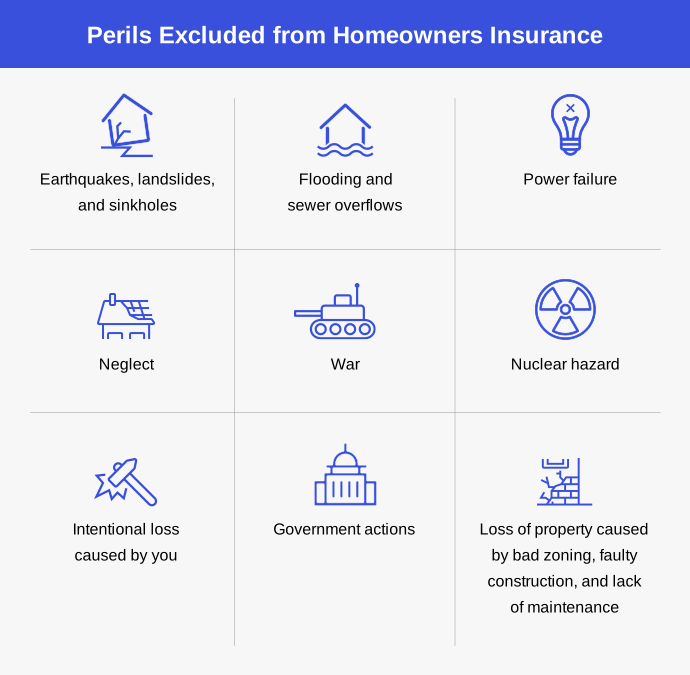
- Natural Disaster Risk: Research the specific natural disaster risks in your area. Standard policies typically exclude flood and earthquake damage. If you live in a flood plain, flood insurance through the National Flood Insurance Program (NFIP) or private insurers is essential. Similarly, earthquake insurance is a must for those in seismic zones. Consider these separate policies as crucial additions to your home insurance portfolio.
The Importance of Deductibles and Coverage Limits
Choosing the right deductible and coverage limits involves a delicate balance between premium costs and potential out-of-pocket expenses during a claim.
- Deductibles: A higher deductible means lower premiums but a larger initial financial burden if you file a claim. If you have a healthy emergency fund, a higher deductible might be a smart way to save on annual premiums. However, ensure it’s an amount you can comfortably afford to pay at a moment’s notice.
- Coverage Limits: Ensure your dwelling coverage is sufficient to rebuild your home completely. Your personal property coverage should reflect the replacement cost of your belongings, not their depreciated value. Review these limits regularly, especially after major purchases or renovations. For liability, consider an amount that protects your net worth.
Rider Policies and Endorsements
Standard policies have exclusions. Rider policies, also known as endorsements or floaters, allow you to customize your coverage for specific risks:
- Flood Insurance: Essential for anyone in or near a flood zone, as standard policies exclude flood damage.
- Earthquake Insurance: Critical for homeowners in seismically active regions.
- Sewer Backup/Water Backup: Covers damage caused by water backing up through sewers or drains, which is often excluded from standard policies.
- Identity Theft Protection: Some insurers offer endorsements that help cover costs associated with identity theft recovery.
- Guaranteed or Extended Replacement Cost: This endorsement provides additional dwelling coverage (e.g., 20-25% more) if the cost to rebuild exceeds your policy limit, offering a buffer against rising construction costs.
Carefully consider which endorsements are relevant to your property and lifestyle to fill any potential coverage gaps.
Comparing Providers and Policies
Once you’ve identified your coverage needs, the next critical step is to shop around. Relying on a single quote or your current insurer without comparison is a common financial mistake.
Researching Reputable Insurers
Don’t just look at price; consider the insurer’s reputation and financial stability.
- Financial Strength Ratings: Agencies like A.M. Best, Standard & Poor’s, and Moody’s provide ratings that indicate an insurer’s ability to pay out claims. Look for companies with high ratings (e.g., A or higher).
- Customer Service Reviews: Check consumer reviews on independent sites (e.g., J.D. Power, Better Business Bureau) to gauge customer satisfaction, particularly regarding the claims process. A low premium is meaningless if the company is difficult to deal with when you need them most.
- Complaint Ratios: Many state insurance departments publish complaint ratios for insurers, offering insight into how often customers file grievances relative to the company’s size.
Getting Multiple Quotes
This is arguably the most impactful step in finding the “best” and most affordable policy.
- Online Comparison Tools: Many websites allow you to get multiple quotes simultaneously by entering your information once.
- Independent Insurance Agents: These agents work with multiple insurance companies, allowing them to compare policies and find options that best suit your needs. They can also provide personalized advice and advocacy.
- Direct Insurers: Companies like Geico or State Farm sell directly to consumers. It’s worth getting quotes from them as well.
- Bundle Discounts: Often, you can get a discount by bundling your home and auto insurance with the same provider. Always ask about multi-policy discounts.
When comparing quotes, ensure you’re comparing apples to apples. Verify that coverage limits, deductibles, and included endorsements are identical across all quotes to get an accurate comparison of pricing.
Decoding Policy Language
Insurance policies are complex legal documents. While you don’t need to be an expert, understanding key terms can prevent future disappointments.
- Perils Covered vs. Excluded: Pay close attention to the “perils” (causes of loss) your policy covers and, more importantly, what it explicitly excludes. This is where endorsements become crucial.
- Actual Cash Value (ACV) vs. Replacement Cost Value (RCV): As mentioned earlier, ACV pays the depreciated value of your belongings, while RCV pays to replace them new. Always opt for RCV for personal property if possible.
- Special Limits: Be aware that certain categories of personal property (e.g., jewelry, cash, furs, firearms) often have low sub-limits unless scheduled specifically.
Don’t hesitate to ask your agent or insurer to clarify any confusing terms or clauses.
Strategies for Saving Money on Home Insurance
While finding the “best” policy involves robust coverage, it’s also about smart financial management. There are numerous ways to reduce your premiums without compromising essential protection.
Bundling Policies
This is one of the most straightforward ways to save. Many insurers offer significant discounts (often 10-20%) if you purchase both your home and auto insurance policies from them. This also simplifies your insurance management, as you’re dealing with a single provider.
Increasing Your Deductible
As discussed, choosing a higher deductible lowers your premium. If you have a solid emergency fund, consider increasing your deductible from, for example, $500 to $1,000 or even $2,500. Just be certain you can comfortably cover that amount should a claim arise.
Home Security and Safety Discounts
Investing in your home’s safety can pay dividends in lower insurance premiums.
- Security Systems: Professionally monitored burglar and fire alarm systems can lead to discounts.
- Smoke Detectors and Fire Extinguishers: Basic safety measures are often rewarded.
- Smart Home Technology: Some insurers offer discounts for smart home devices that detect water leaks, monitor temperature, or enhance security.
- Durable Roofing: Upgrading to impact-resistant roofing materials can reduce premiums in hail-prone areas.
- Hurricane Shutters/Impact-Resistant Windows: Essential in coastal regions, these improvements often qualify for discounts.
Always inform your insurer about any safety upgrades you make.
Improving Your Credit Score
In states where credit scores are a factor, a higher credit-based insurance score can lead to lower premiums. Maintaining a good credit history by paying bills on time and managing debt responsibly can positively impact your rates across various financial products, including insurance.
Regular Policy Review
Your life changes, and so should your insurance.
- Annual Review: Set a reminder to review your policy at least once a year. Check if your coverage limits are still adequate, especially after renovations or major purchases.
- Life Events: Inform your insurer about significant life changes such as marriage, divorce, a new child, or if you start a home-based business. These can impact your coverage needs or liability.
- Shop Around Periodically: Even if you’re happy with your current insurer, it’s wise to get quotes from competitors every few years to ensure you’re still getting a competitive rate.
Making the Final Decision and Beyond
Choosing the best home insurance is not a one-time event; it’s an ongoing process of assessment and adjustment.
Asking the Right Questions
Before committing to a policy, engage with potential insurers or agents:
- Claims Process: What is their claims process like? How quickly do they typically respond and resolve claims? Do they have a good reputation for fair payouts?
- Customer Support: What are their customer service hours? Do they offer online account management?
- Policy Renewal: How do they handle renewals? Will you receive ample notice of any premium changes?
- Exclusions: Ask specifically about common exclusions and if there are endorsements available to cover them.
The Dynamic Nature of Home Insurance
Your insurance needs will evolve. The value of your home, your personal assets, and even local risks can change over time. Being proactive in managing your policy ensures continuous protection. Don’t wait for a claim to discover gaps in your coverage.

When to Consult an Expert
If the complexities of home insurance still feel overwhelming, or if you have a unique property or high-value assets, consider consulting:
- Independent Insurance Brokers: They can offer impartial advice and shop multiple carriers for you.
- Financial Advisors: As part of a broader financial plan, they can help you understand how home insurance fits into your overall risk management strategy.
Ultimately, the “best” home insurance isn’t the cheapest, nor is it necessarily the most expensive. It’s the policy that provides comprehensive protection tailored to your specific needs, offered by a financially stable and reputable insurer, at a price you can afford. By taking the time to understand your options and thoroughly compare policies, you can secure peace of mind knowing your most significant investment is well-protected.
aViewFromTheCave is a participant in the Amazon Services LLC Associates Program, an affiliate advertising program designed to provide a means for sites to earn advertising fees by advertising and linking to Amazon.com. Amazon, the Amazon logo, AmazonSupply, and the AmazonSupply logo are trademarks of Amazon.com, Inc. or its affiliates. As an Amazon Associate we earn affiliate commissions from qualifying purchases.