
In an age dominated by algorithms, artificial intelligence, and sophisticated software, fundamental mathematical concepts might seem like quaint relics of a bygone era. Yet, beneath the sleek interfaces and complex computations lies a bedrock of elemental principles, none more ubiquitous and vital than the humble fraction. While traditionally introduced as a way to understand parts of a whole in elementary school, the concept of a fraction—and its sophisticated digital representations—is an unsung hero in the vast landscape of technology. Far from being confined to textbooks, fractions form the very language through which computers process data, algorithms make decisions, and educational tools demystify complex ideas. This article delves into what a fraction truly is and, more importantly, explores its profound and often overlooked significance within the tech world.

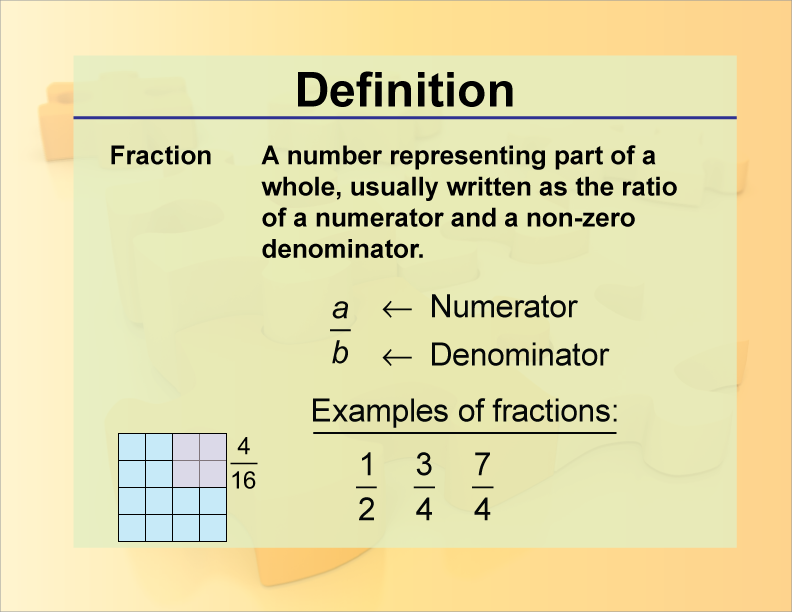
At its core, a fraction represents a part of a whole. It is written as a ratio, typically with a numerator (the top number, indicating how many parts are being considered) and a denominator (the bottom number, indicating the total number of equal parts that make up the whole). For example, 1/2 signifies one part out of two equal parts, 3/4 represents three parts out of four, and 5/5 denotes a whole comprised of five equal parts. Fractions allow us to describe quantities that are not full integers, providing precision beyond whole numbers. While decimals (which are essentially fractions with denominators that are powers of ten, e.g., 0.5 = 1/2) often dominate casual tech discussions, the underlying fractional logic remains paramount. Understanding this fundamental concept is not merely an academic exercise; it’s a prerequisite for comprehending how digital systems operate, analyze data, and power the next generation of technological innovation.
The Digital Essence of Fractional Understanding
The journey from a paper-and-pencil understanding of fractions to their sophisticated digital manifestation is crucial for appreciating their role in technology. Computers, at their most basic level, operate on binary code (0s and 1s), representing discrete states. Yet, the world we model with computers is often continuous and replete with quantities that are not whole numbers. This is where the digital representation of fractions, or non-integer values, becomes a cornerstone of computational power.
Representing Fractions in Computing Systems
While we write fractions as two integers separated by a bar, computers handle these non-integer values through specific data types, primarily floating-point numbers. This system, standardized by the IEEE 754 standard, allows computers to represent a wide range of real numbers (including fractions and decimals) by separating them into a significand (the significant digits of the number) and an exponent (which determines the magnitude). For instance, 0.5 can be represented as 5 x 10^-1. This representation enables computers to perform calculations involving very large and very small numbers with a reasonable degree of precision.
However, floating-point arithmetic is not without its nuances. Due to the finite memory allocated for these numbers, not all fractions can be represented perfectly, leading to floating-point precision errors. For example, 1/3 (0.333…) is an infinitely repeating decimal that a computer can only approximate. This limitation necessitates careful consideration in software development, particularly in applications where extreme precision is critical, such as scientific simulations, financial calculations, or CAD software. Developers must understand these inherent fractional approximations to build robust and reliable systems, sometimes opting for fixed-point arithmetic (where the decimal point is assumed to be at a fixed position, effectively treating numbers as integers scaled by a power of two) for financial calculations to avoid rounding issues that could have significant monetary impact.
Why Fractions Matter for Algorithms and Data Science
Fractions are not just about representing numbers; they are fundamental to the logic and structure of many algorithms and the very foundation of data science. Concepts like ratios, proportions, and percentages are direct applications of fractional understanding and are omnipresent in data analysis.
Consider data normalization, a critical step in preparing data for machine learning models. Normalization often involves scaling numerical features to a common range (e.g., between 0 and 1). This scaling process is inherently fractional, turning raw data points into parts of a defined whole or range. Without a solid grasp of fractions, understanding why and how to normalize data—and the impact it has on model performance—would be impossible.
In machine learning, probabilities are central to classification, prediction, and decision-making. A probability is always a value between 0 and 1, essentially a fraction representing the likelihood of an event occurring. If an algorithm predicts a 0.8 (or 8/10) chance of rain, it’s making a statement rooted in fractional mathematics. The weights in neural networks are often small fractional values that determine the strength of connections between neurons, collectively guiding the network’s learning process. Moreover, metrics like accuracy, precision, recall, and F1-score used to evaluate machine learning models are all expressed as fractions or percentages, indicating the proportion of correct predictions or relevant items retrieved. A tech professional without a deep intuitive grasp of what these fractions represent would struggle to interpret model performance or diagnose issues effectively.
Educational Technology’s Transformative Role in Mastering Fractions
For many, fractions are a stumbling block in mathematical education. Educational technology, however, is revolutionizing how these foundational concepts are taught and understood, making them more accessible, engaging, and relevant to the digital native generation.
Interactive Apps and Software for Learning Fractions
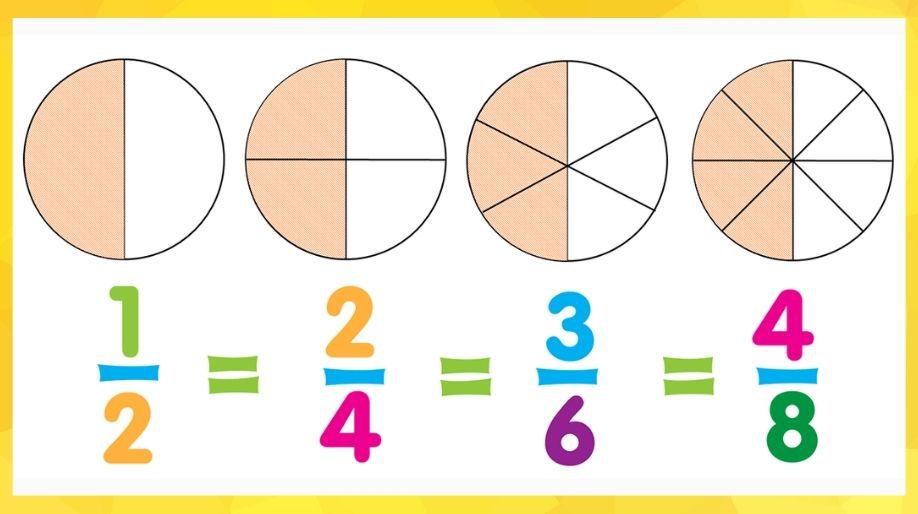
Gone are the days when learning fractions was solely about rote memorization and abstract calculations. Modern educational apps and software leverage the power of visual and interactive elements to bring fractions to life. Features like visual fraction bars, pie charts, and number lines allow students to physically manipulate and see what “one half” or “three quarters” truly means, transforming abstract symbols into tangible representations.
Gamified learning environments embed fraction practice within engaging challenges and puzzles. Students might be asked to divide pizzas, share candies, or measure ingredients using fractional quantities, turning otherwise dry exercises into fun activities. Drag-and-drop interfaces let learners build fractions from individual units, decompose them, or compare their sizes. These intuitive, hands-on digital experiences cater to various learning styles, providing immediate feedback and allowing students to learn at their own pace. By making fraction concepts interactive and visual, educational tech helps build a deeper, more intuitive understanding that traditional methods often struggle to achieve.
AI-Powered Personalization in Fraction Education
The advent of Artificial Intelligence is taking fraction education to an unprecedented level of personalization. AI-powered learning platforms can dynamically adapt to each student’s specific needs, strengths, and weaknesses. When a student struggles with adding unlike fractions, the AI tutor doesn’t just provide the next problem; it identifies the specific sub-skill causing difficulty (e.g., finding a common denominator) and offers targeted remedial exercises, additional explanations, or different approaches.
Adaptive learning paths created by AI ensure that students aren’t bored by redundant practice nor overwhelmed by concepts beyond their current grasp. The system might present alternative visual metaphors for fractions if a student isn’t grasping the initial explanation, or introduce real-world problem scenarios to illustrate relevance. Furthermore, AI tools can track a student’s progress over time, providing detailed analytics to educators and parents, highlighting areas where additional human intervention might be beneficial. This AI-driven personalization transforms the learning experience from a one-size-fits-all model into a bespoke educational journey, ensuring more students achieve mastery over this critical mathematical concept.
Fractions as Foundations for Advanced Tech Concepts
Beyond basic computation and educational tools, fractions underpin some of the most complex and cutting-edge areas of technology. From network efficiency to artificial intelligence’s decision-making, their influence is pervasive.
From Bits to Ratios: Fractions in Network Protocols
In the world of computer networking, efficiency and resource allocation are paramount. Fractions play a subtle yet critical role in understanding and optimizing these systems. Concepts like bandwidth utilization are inherently fractional: if a network link has a capacity of 100 Mbps and is currently transmitting 75 Mbps, it’s operating at 75/100 or 3/4 capacity. Network administrators frequently use these ratios to monitor performance, identify bottlenecks, and plan upgrades.
Data compression algorithms rely heavily on fractional savings. When a file is compressed, its size is reduced to a fraction of its original. Understanding the compression ratio (e.g., 1/4 or 25% of original size) is key to assessing the algorithm’s effectiveness. Similarly, packet loss rates in data transmission are expressed as fractions, indicating the proportion of data packets that failed to reach their destination. High packet loss (e.g., 5/100 or 5%) signifies network problems that can degrade service quality. Even the division of network addresses (IP subnets) involves fractional understanding of how a larger address space is partitioned into smaller, manageable chunks. Without a robust understanding of ratios and proportions, optimizing and troubleshooting complex network infrastructures would be an incredibly challenging, if not impossible, task.
Understanding Probability and Machine Learning with Fractions
We touched upon probability briefly, but its deep connection to fractions is worth emphasizing, particularly in the context of advanced machine learning and AI. Probability theory, the mathematical framework for quantifying uncertainty, is built on fractions. Every probability value, from 0 to 1, is conceptually a fraction, representing the ratio of favorable outcomes to the total possible outcomes.
In Bayesian networks, a core component of probabilistic AI, conditional probabilities (the probability of one event given another) are constantly being calculated and updated. These are fractional relationships that dictate the network’s inferences. For instance, the probability of a car starting, given that its battery is charged, might be 0.95 (or 95/100), a fractional assessment of likelihood.
Furthermore, many machine learning models output confidence scores for their predictions, which are essentially probabilities—fractions indicating how certain the model is about its classification or regression. If an image recognition AI identifies a cat with a 0.98 confidence score, it means it’s 98% certain. Understanding these fractional scores is critical for data scientists to fine-tune models, set appropriate thresholds, and interpret results reliably. The entire field of statistical learning and the algorithms that drive autonomous systems, predictive analytics, and personalized recommendations are fundamentally rooted in manipulating and interpreting these fractional probabilities.
The Future of Fractions in a Data-Driven World
As technology continues its rapid evolution, the relevance of foundational concepts like fractions only grows. They are not static mathematical curiosities but dynamic tools essential for navigating increasingly complex digital terrains.
Quantum Computing and Fractional Logic
While still in its nascent stages, quantum computing operates on principles far removed from classical binary logic. Qubits, unlike classical bits, can exist in a superposition of states (both 0 and 1 simultaneously) and exhibit entanglement. The probability amplitudes associated with these quantum states are complex numbers, and their magnitudes, when squared, yield probabilities (which are fractions between 0 and 1). Understanding these fractional probabilities is crucial for designing quantum algorithms and interpreting their outputs. The very “fuzziness” of quantum mechanics requires a sophisticated grasp of fractional likelihoods, suggesting that fractions, in a more abstract form, will continue to be fundamental even in the furthest reaches of computational theory.
Empowering the Next Generation of Innovators
For anyone aspiring to contribute to the future of technology—whether as a software developer, data scientist, AI researcher, or cybersecurity expert—a solid, intuitive grasp of fractions is non-negotiable. It’s not just about passing a math test; it’s about developing the analytical mindset and quantitative literacy required to innovate. Understanding fractions fosters the ability to reason proportionally, interpret data critically, and debug complex systems where resource allocation, probabilities, and ratios are key. As technology becomes more pervasive and sophisticated, the demand for individuals who can think fractionally about performance metrics, algorithmic efficiency, and probabilistic outcomes will only intensify. Education in the digital age must emphasize not just the use of technological tools but also the deep mathematical principles that enable them.
Conclusion
The question “what is a fraction in math?” might initially appear to be a basic inquiry, but its implications within the realm of technology are anything but simple. From the intricate ways computers represent non-integer values to the algorithms that power artificial intelligence and the educational software that teaches future innovators, fractions are an invisible yet indispensable force. They dictate the precision of our calculations, inform the decisions of our machine learning models, and define the efficiency of our networks. By bridging the gap between abstract mathematical concepts and tangible technological applications, fractions empower us to understand, build, and innovate in an increasingly digital world. Mastering them is not just about academic achievement; it’s about unlocking a deeper comprehension of the technological universe we inhabit and are constantly reshaping.
aViewFromTheCave is a participant in the Amazon Services LLC Associates Program, an affiliate advertising program designed to provide a means for sites to earn advertising fees by advertising and linking to Amazon.com. Amazon, the Amazon logo, AmazonSupply, and the AmazonSupply logo are trademarks of Amazon.com, Inc. or its affiliates. As an Amazon Associate we earn affiliate commissions from qualifying purchases.