
The term “7/12” might initially seem like a cryptic code or a date, but in the context of land ownership and finance in specific regions, particularly in India, it refers to a document of paramount importance: the 7/12 Extract. Also known as “Satbara Utara” or “Record of Rights, Tenancy, and Crop,” this extract is far more than just a piece of paper; it’s a vital legal document that serves as an abstract of the land register maintained by the revenue department of the state government. For anyone involved in property transactions, agricultural activities, or financial dealings related to land, understanding the 7/12 extract is fundamental to safeguarding investments and ensuring legal compliance.
Understanding the 7/12 Extract: A Foundation for Land Ownership
The 7/12 extract is essentially a comprehensive record providing details about a specific piece of land. It serves as documentary evidence of ownership, cultivation, and other rights associated with agricultural land, primarily in states like Maharashtra and Gujarat. Its significance stems from its ability to provide a consolidated view of historical and current information pertaining to a land parcel, making it an indispensable tool for establishing legal title and understanding the property’s financial encumbrances.
Historical Context and Purpose
The concept of the 7/12 extract emerged from the need to systematically document land ownership and usage, especially in agrarian economies. The British colonial administration implemented these land record systems to streamline revenue collection and establish clear property rights. Over time, these records evolved, becoming crucial for various legal and financial purposes beyond just taxation.
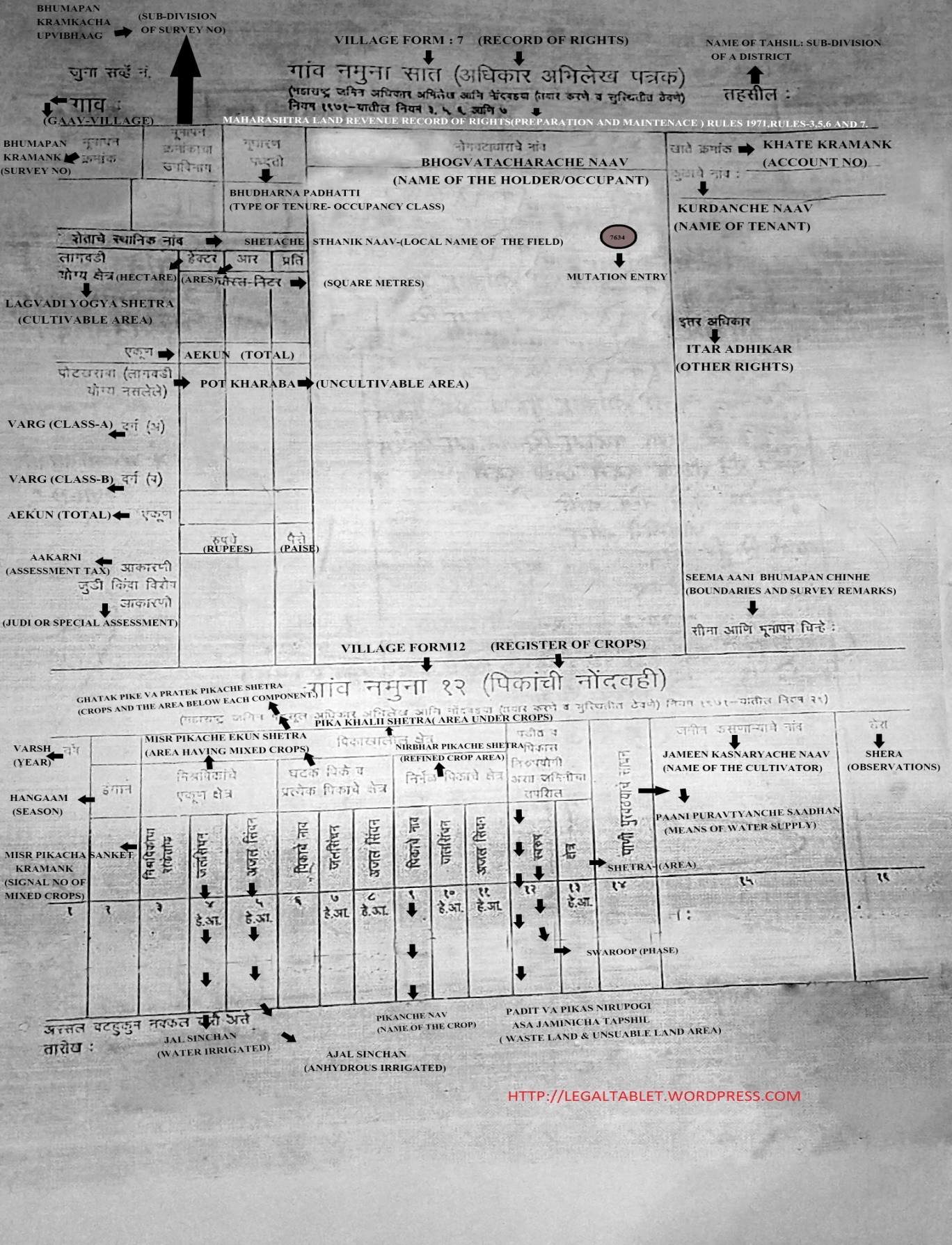
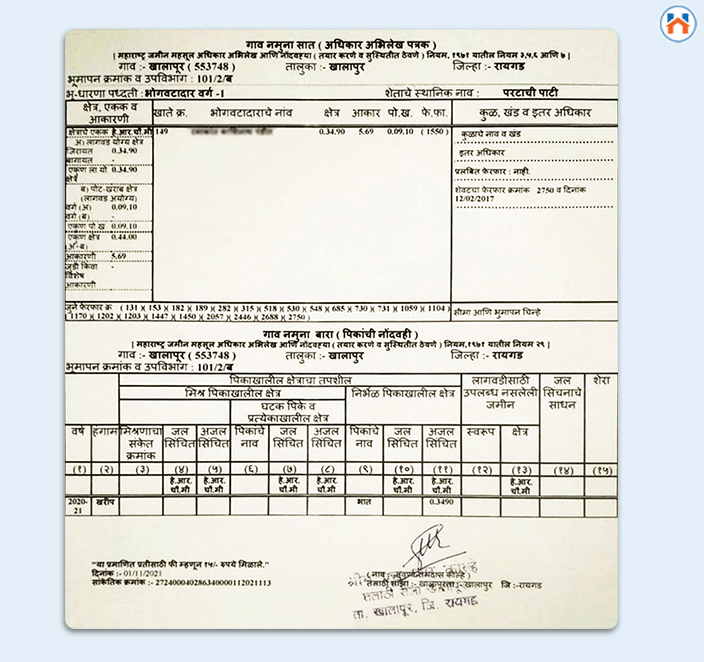
The primary purpose of the 7/12 extract is to provide a public record of who owns the land, what its area is, what crops are being cultivated on it, and whether there are any encumbrances (like mortgages or loans) on the property. It acts as a ready reference for farmers, landowners, and prospective buyers, eliminating ambiguities and facilitating transparent transactions. It consolidates information from two key village forms:
- Form VII (7): This part details the ownership information, including the name of the owner (occupant’s name), details of the sub-division of the survey number, and the type of occupancy (e.g., occupant Class 1, Class 2). It also records the tenure of the land, any pending mutations, and details of non-agricultural taxes.
- Form XII (12): This section provides agricultural details such as the type of crops grown, the area under cultivation, the type of irrigation used, and the season of cultivation. This information is vital for agricultural planning, assessing land productivity, and determining eligibility for agricultural schemes and loans.
Key Components of the Document
A typical 7/12 extract is structured to present a wealth of information in a clear, albeit sometimes dense, format. Key components include:
- Survey Number/Gat Number: A unique identification number assigned to a specific parcel of land.
- Name of Occupant/Owner: The legal owner(s) of the land.
- Type of Occupancy: Specifies the nature of ownership (e.g., Ryotwari, Occupant Class-I, Occupant Class-II). Occupant Class-II lands often come with restrictions on transfer.
- Area: The total area of the land parcel, usually specified in hectares and ares.
- Assessment Amount: The land revenue tax payable to the government.
- Mutation Entries: Records of changes in ownership due to sale, inheritance, gift, or acquisition. Each mutation is assigned a specific number and date.
- Other Rights (Pot Hissa): Details of any other rights on the land, such as rights of way, water rights, or easements.
- Encumbrances: Information on any outstanding loans, mortgages, or government charges on the land, often indicated by specific entries from financial institutions.
- Crop Information: Details from Form XII, including the names of crops grown in different seasons, the cultivated area, and irrigation sources.
Understanding each of these components is crucial for anyone engaging with land-related financial decisions, as they collectively paint a complete picture of the land’s legal and economic status.
The Financial Significance for Individuals
For individuals, the 7/12 extract is an indispensable tool in navigating personal finance, particularly when dealing with real estate and credit. It underpins transparency and security in property transactions and plays a critical role in accessing financial services.
Property Transactions and Due Diligence
When buying or selling agricultural land, the 7/12 extract is the primary document required to verify ownership and ensure a clear title. A prospective buyer must meticulously scrutinize the 7/12 to:
- Verify Ownership: Confirm that the seller is indeed the legal owner of the property and that their name is accurately recorded in the document.
- Check for Encumbrances: Identify any existing loans, mortgages, or government dues on the land. A land parcel with significant encumbrances can pose substantial financial risks to the buyer.
- Examine Mutation Entries: Review the history of ownership transfers to ensure there are no disputed claims or pending legal issues. Irregular or missing mutation entries can indicate fraudulent intent or unresolved title disputes.
- Understand Land Type and Restrictions: Determine if the land is of Occupant Class-I (freely transferable) or Occupant Class-II (transferable with government permission, often involving a premium). This classification has significant financial implications for future saleability and development.
- Assess Agricultural Status: For non-agricultural purposes, understanding the land’s current agricultural status is crucial for conversion procedures, which can be a costly and time-consuming process requiring specific financial outlays.
Failure to conduct thorough due diligence using the 7/12 extract can lead to severe financial losses, legal disputes, and the acquisition of properties with clouded titles.
Accessing Loans and Credit Facilities
The 7/12 extract is also a critical document for individuals seeking financial assistance, especially agricultural loans or loans against property. Banks and financial institutions require a valid and updated 7/12 extract as collateral for several reasons:
- Proof of Ownership: It serves as indisputable proof that the applicant owns the land they are offering as security.
- Assessment of Asset Value: The land’s area and type, as detailed in the 7/12, help lenders assess its market value and determine the loan amount.
- Identification of Existing Liabilities: The document clearly shows any prior loans or charges against the property, allowing the lender to evaluate the risk and determine the priority of their claim.
- Eligibility for Agricultural Schemes: Farmers seeking government subsidies, crop loans, or other agricultural financial benefits often need to present their 7/12 extract to prove land ownership and cultivation status, which are key eligibility criteria.
Without a clean and current 7/12 extract, individuals may find it challenging to secure favorable loan terms or even qualify for essential financial support, directly impacting their personal financial stability and growth.

Business Implications for Agriculture and Real Estate
Beyond individual finance, the 7/12 extract holds immense financial and operational significance for businesses, particularly those operating in the agricultural sector and real estate development.
Land Records for Agricultural Businesses
For agribusinesses, farmers’ cooperatives, and large-scale agricultural enterprises, accurate land records are the backbone of their operations. The 7/12 extract provides:
- Operational Planning: Details on crop patterns, irrigation sources, and cultivated area (from Form XII) assist in planning agricultural cycles, resource allocation, and projecting yields.
- Supply Chain Management: Understanding the exact land parcels and their characteristics helps in optimizing logistics for inputs (seeds, fertilizers) and outputs (harvested crops).
- Insurance and Subsidies: Agricultural businesses rely on 7/12 extracts to claim crop insurance, apply for government subsidies, and participate in schemes designed to boost agricultural productivity and resilience.
- Financing and Investment: Banks and investors evaluate the 7/12 extracts of agricultural land to assess the viability of projects, particularly when funding large-scale farming operations, food processing units, or agricultural infrastructure.
Developer and Investor Perspectives
Real estate developers and investors dealing with land acquisition find the 7/12 extract indispensable for financial due diligence and project feasibility.
- Site Selection and Acquisition: Developers use 7/12 extracts to identify suitable land parcels, verify ownership, and understand the historical context of the property before making significant financial commitments. This is critical for avoiding disputes and ensuring clear title for development.
- Cost Assessment: Information regarding land type (agricultural vs. non-agricultural), encumbrances, and development potential directly impacts the acquisition cost and conversion charges. These factors heavily influence project budgeting and profitability.
- Risk Mitigation: By thoroughly scrutinizing the mutation entries and “other rights” section, developers can uncover potential legal challenges, boundary disputes, or easement issues that could derail a project and incur massive financial losses.
- Financing Real Estate Projects: Financial institutions lending to developers for land acquisition and construction projects rigorously examine the 7/12 extract to ensure the underlying asset is free from legal complications and provides sufficient collateral. A clear 7/12 streamlines the approval process and reduces perceived risk.
Digitalization and Accessibility
Recognizing the critical role of the 7/12 extract, various state governments have initiated digitalization efforts to make these records more accessible and transparent, enhancing financial security and reducing fraud.
Online Portals and e-7/12
Many states now offer online portals (e.g., MahaBhulekh in Maharashtra, AnyROR Gujarat) where individuals and businesses can access their 7/12 extracts digitally. This online availability offers several financial advantages:
- Reduced Transaction Costs and Time: Eliminates the need for physical visits to government offices, saving time, travel costs, and administrative fees.
- Enhanced Transparency: Digital records are less prone to tampering and provide a more accurate, up-to-date reflection of land status.
- Faster Due Diligence: Prospective buyers, lenders, and developers can quickly obtain and verify information, speeding up property transactions and loan approvals.
- Improved Governance: Digitalization helps in maintaining a centralized, consistent database, reducing discrepancies and improving revenue administration.
Verifying Authenticity and Preventing Fraud
While digitalization has brought convenience, it also necessitates vigilance. Online portals often provide mechanisms to verify the authenticity of the e-7/12 extracts, such as unique verification numbers or QR codes.
- Financial Safeguard: Verifying the authenticity of a 7/12 extract is paramount to preventing fraud, which can lead to significant financial distress. Scammers often use forged documents to sell land they don’t own or land with hidden encumbrances.
- Legal Validity: For any critical financial or legal transaction, always ensure that the 7/12 extract used is verified and current. Outdated or unverified documents can render a transaction invalid or legally challenged.
- Professional Assistance: When in doubt, it is advisable to seek assistance from legal and financial professionals who specialize in property matters to interpret the 7/12 extract and verify its authenticity.
Navigating Challenges and Ensuring Compliance
Despite its foundational role, dealing with 7/12 extracts can present challenges, requiring careful attention to compliance and proactive problem-solving.
Common Issues and How to Address Them
Several issues can arise with 7/12 extracts that directly impact financial dealings:
- Discrepancies in Records: Errors in names, survey numbers, or area details can lead to disputes and delays in transactions. These require correction through applications to the Tahsildar or local revenue officer.
- Unupdated Mutation Entries: If a change in ownership (e.g., inheritance, sale) is not promptly recorded, the 7/12 may still show the previous owner, complicating future sales or loan applications. Regular review and timely application for mutation are crucial.
- Hidden Encumbrances: Sometimes, older encumbrances might not be clearly visible or could be subject to ongoing legal disputes. A thorough title search beyond just the 7/12 is recommended for high-value transactions.
- Occupancy Class-II Restrictions: Land classified as Occupancy Class-II has transfer restrictions and often requires a premium payment to the government for conversion or transfer, which is a significant financial consideration.
Addressing these issues proactively involves engaging with revenue authorities, submitting necessary applications, and sometimes seeking legal counsel, all of which have financial implications in terms of time and cost.
Legal and Regulatory Framework
The 7/12 extract operates within a specific legal and regulatory framework governing land records in India. Key aspects include:
- The Maharashtra Land Revenue Code, 1966 (or similar state-specific codes): This legislation dictates how land records are maintained, updated, and accessed.
- Registration Act, 1908: While the 7/12 is proof of possession and rights, the final legal transfer of ownership (title) for sales over a certain value is formalized through a registered sale deed, which is then reflected as a mutation in the 7/12.
- Stamp Duty and Registration Charges: These are significant financial components of any property transaction, calculated based on the market value of the land and enshrined in legal statutes.
Staying informed about these legal provisions is not just a matter of compliance; it’s a critical financial strategy to ensure the validity of land transactions, avoid penalties, and protect one’s investments in real estate and agriculture. The 7/12 extract, therefore, is not merely a document, but a cornerstone of financial security in land-related dealings.