
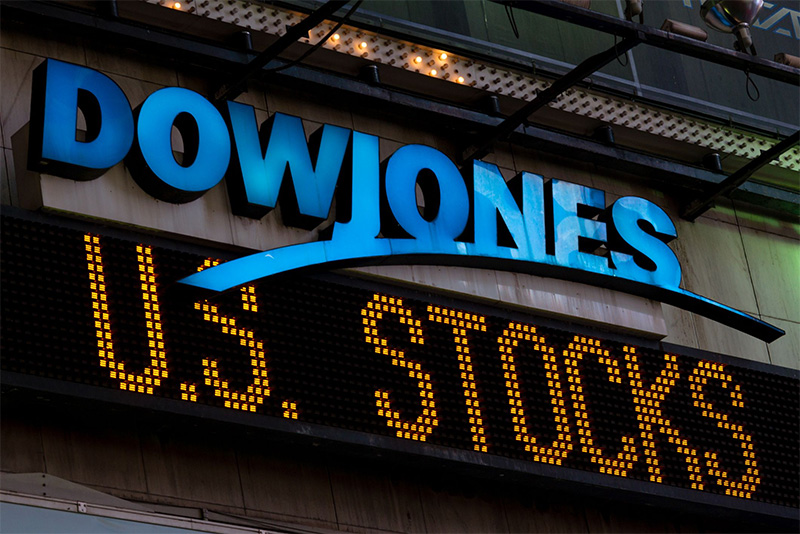
For over a century, the question “What’s the Dow Jones at?” has served as the universal shorthand for “How is the economy doing?” Whether it is whispered on the floor of the New York Stock Exchange or checked via a smartphone app during a morning commute, the Dow Jones Industrial Average (DJIA) remains the most visible pulse of the American financial system. For the modern investor, understanding the current state of the Dow is about more than just tracking a four-five-digit number; it is about interpreting the health of corporate giants, predicting consumer sentiment, and making informed decisions regarding personal wealth.

The Foundation of the Dow Jones Industrial Average
To understand where the Dow is today, one must understand its structural DNA. Established in 1896 by Charles Dow and Edward Jones, the index was originally a simple average of 12 industrial companies. Today, it has evolved into a sophisticated tracker of 30 “blue-chip” companies listed on the New York Stock Exchange (NYSE) and the Nasdaq.
A Legacy of Market Tracking
The Dow is unique because of its longevity. It has survived the Great Depression, two World Wars, the dot-com bubble, and the Great Recession. Because of this history, the index provides a long-term perspective that few other financial instruments can match. When investors ask where the Dow is, they are looking for a sense of continuity. The companies included in the index are leaders in their respective industries, ranging from healthcare and finance to technology and retail. These are not speculative startups; they are the “steady hands” of the global economy.
The Price-Weighted Methodology
Unlike the S&P 500 or the Nasdaq Composite, which are market-capitalization-weighted, the Dow is a price-weighted index. This means that companies with a higher stock price have a greater influence on the index’s daily movement than those with lower stock prices, regardless of the company’s total actual size.
To maintain the index’s integrity despite stock splits and dividends, the “Dow Divisor” is used. This is a mathematical constant that adjusts the sum of the prices of the 30 stocks to ensure that corporate actions don’t artificially inflate or deflate the index. Understanding this mechanic is crucial for investors who want to know why a massive swing in one high-priced stock like UnitedHealth Group might move the Dow more significantly than a similar percentage move in a lower-priced stock like Coca-Cola.
Why the Dow Remains a Critical Financial Metric
In an era of high-frequency trading and complex derivatives, some critics argue the Dow is an outdated relic. However, for the average person focused on personal finance and long-term investing, the Dow remains incredibly relevant. Its focus on established, profitable companies makes it a primary indicator of “Value” investing.
The “Blue-Chip” Advantage
The 30 companies that make up the Dow are often referred to as “blue chips.” This term, derived from poker where blue chips have the highest value, signifies companies that are nationally recognized, well-established, and financially sound. When the Dow is “up,” it generally indicates that the giants of industry—the companies that employ millions and provide essential services—are performing well. For a personal finance enthusiast, a rising Dow often correlates with a healthy job market and robust consumer spending, both of which are essential for a thriving investment environment.
A Reflection of Main Street via Wall Street
While the S&P 500 is often considered a better technical representation of the “market,” the Dow is a better representation of the “economy” as felt by the average consumer. Because the Dow includes household names like Home Depot, McDonald’s, and Walmart, its fluctuations often mirror the spending habits of the American public. When these stocks rise, it suggests that consumers have disposable income and confidence. Conversely, when the Dow dips, it often signals a tightening of belts across the country. Monitoring the Dow allows investors to gauge the psychological state of the market, which is often just as important as the underlying data.
Factors That Move the Needle: Understanding Volatility

When you look at the Dow today and see a significant change, it is rarely the result of a single event. Instead, the index is moved by a complex web of macroeconomic and geopolitical factors that influence the 30 constituent companies simultaneously.
Macroeconomic Indicators and the Fed
Perhaps the most significant driver of the Dow in recent years has been the policy of the Federal Reserve. Interest rates are the “gravity” of the financial world. When the Fed raises rates to combat inflation, it becomes more expensive for Dow companies to borrow money and expand. This often leads to a cooling of stock prices. Conversely, when the Fed signals a “pivot” toward lower rates, the Dow typically rallies as investors anticipate cheaper capital and higher corporate profits. Employment data and Consumer Price Index (CPI) reports are also critical; they provide the “why” behind the Dow’s daily fluctuations.
Geopolitical Events and Supply Chains
The companies in the Dow are global entities. Apple sells iPhones in Beijing, Chevron extracts oil in the Middle East, and Boeing sells aircraft to European carriers. Consequently, the Dow is highly sensitive to international relations. Trade wars, regional conflicts, and supply chain disruptions can all cause the Dow to tumble. For instance, a disruption in semiconductor manufacturing in Asia can negatively impact the tech components of the Dow, while an oil supply crunch can send its energy and industrial components into a tailspin. Investors must look beyond domestic borders to understand the Dow’s current trajectory.
Integrating Dow Insights into Your Personal Finance Strategy
Knowing “what the Dow is at” is only useful if you can translate that information into actionable financial strategy. Whether you are a seasoned trader or someone just starting their first 401(k), the Dow offers valuable lessons in portfolio management.
Investing in Index Funds and ETFs
For many individual investors, the best way to interact with the Dow is through an exchange-traded fund (ETF) that tracks the index, such as the SPDR Dow Jones Industrial Average ETF Trust (DIA). By investing in a Dow-tracking fund, you gain exposure to 30 of the world’s most stable companies with a single purchase. This is a classic “set it and forget it” strategy that aligns with the principles of long-term wealth building. It reduces the risk associated with individual stock picking while allowing the investor to capture the overall growth of the American industrial and service sectors.
Avoiding the Trap of Short-Term Noise
One of the biggest mistakes investors make is reacting emotionally to the Dow’s daily points. A “500-point drop” sounds terrifying on the evening news, but in the context of a 40,000-point index, it is a relatively minor percentage move. Successful personal finance requires the ability to distinguish between “noise” and “signal.” The Dow’s daily movements are often noise. The signal is the long-term upward trend of the index over decades. By focusing on the “at” in “what’s the Dow at” for a specific year or decade, rather than a specific hour, investors can maintain the discipline needed to build substantial wealth.
The Modern Evolution: Is the Dow Still Relevant?
As the global economy shifts from heavy manufacturing to digital services and AI, the Dow has had to adapt to stay relevant. The composition of the index is not static; it is managed by a committee that ensures it continues to reflect the current state of the U.S. economy.
Shifting From Heavy Industry to Technology
In its early days, the Dow was dominated by railroads, sugar, and leather. Today, technology and healthcare carry significant weight. The inclusion of companies like Salesforce, Microsoft, and Amazon marks a transition toward a digital-first economy. This evolution is vital for investors to track. If the Dow were still composed solely of industrial manufacturers, it would likely be underperforming in today’s market. By including high-growth tech firms, the Dow maintains its status as a relevant benchmark for the modern age.
Comparing the Dow to the S&P 500 and Nasdaq
To truly understand where the Dow stands, one must look at it in relation to its peers. The Nasdaq is tech-heavy and tends to be more volatile, while the S&P 500 provides a broader look at 500 large-cap companies. When the Dow outperforms the Nasdaq, it usually indicates a “flight to safety,” where investors are moving money out of risky tech stocks and into stable, dividend-paying blue chips. Understanding these relative movements helps an investor determine the current market “mood.” If you notice the Dow is hitting all-time highs while the Nasdaq is lagging, it may be a sign that the market is prioritizing stability and earnings over speculative growth—a key insight for any business finance strategy.
In conclusion, “What’s the Dow Jones at?” is a question that opens the door to a deeper understanding of global finance. By tracking the DJIA, investors gain insight into corporate health, economic policy, and market psychology. While it is just one of many tools in a financial toolkit, its history, stability, and focus on industry leaders ensure that it will remain the primary gauge of the world’s financial weather for years to come. For the savvy investor, the Dow is not just a number; it is a roadmap for building and protecting personal wealth.
aViewFromTheCave is a participant in the Amazon Services LLC Associates Program, an affiliate advertising program designed to provide a means for sites to earn advertising fees by advertising and linking to Amazon.com. Amazon, the Amazon logo, AmazonSupply, and the AmazonSupply logo are trademarks of Amazon.com, Inc. or its affiliates. As an Amazon Associate we earn affiliate commissions from qualifying purchases.