
The phrase “algebraic expressions” typically conjures images of high school math classes: variables, numbers, and operations forming equations to solve for an unknown. While deeply rooted in mathematics, the fundamental principles behind algebraic expressions are surprisingly pervasive and incredibly powerful in the realm of technology. In the digital world, “algebraic expressions” aren’t just about ‘x’ and ‘y’; they are the logical frameworks, formulas, and data manipulations that empower software, automate tasks, and drive insightful analysis. They are the concise, structured ways we instruct computers to process information, make decisions, and transform data.
For anyone navigating the modern tech landscape—from data analysts and software developers to spreadsheet power users and automation enthusiasts—understanding how to construct and interpret these digital expressions is not merely beneficial; it is foundational. This article will delve into how the concept of algebraic expressions translates into practical tech applications, providing a guide to mastering these essential building blocks for effective digital problem-solving. By understanding the components, principles, and strategic application of these “expressions,” you can unlock a deeper level of control and innovation in your tech endeavors.
The Ubiquity of Expressions in Digital Tools and Programming
The core idea of an “expression” – a combination of values, variables, operators, and functions that evaluates to a single result – is a universal language across countless digital platforms. From the simplest spreadsheet calculation to complex software algorithms, these structured declarations are what make digital systems dynamic and responsive.
Spreadsheet Formulas as Practical Algebra
Perhaps the most accessible example of digital algebraic expressions is found within spreadsheet applications like Microsoft Excel or Google Sheets. Here, formulas are direct analogies to mathematical expressions, allowing users to perform calculations, make logical decisions, and manipulate data. A formula such as =SUM(A1:A10)*B1 - C1 is a clear algebraic expression: it combines a function (SUM), cell references (variables), and arithmetic operators (*, -) to yield a single value. Similarly, conditional logic expressions like =IF(D2>100, "High", "Low") evaluate a comparison (D2 > 100) and return a corresponding result, mimicking boolean algebra. Mastering spreadsheet formulas means mastering practical, real-world algebraic expressions that automate reporting, financial modeling, and data summaries with incredible efficiency. These expressions transform raw data into actionable insights, providing a dynamic view of information that can be updated in real-time simply by changing an input value.
Scripting and Coding: Logic in Action
In programming languages such as Python, JavaScript, or Java, expressions form the very backbone of execution. Every calculation, every condition, and every data assignment relies on the construction and evaluation of an expression. Variables store values, and operators combine them to produce new results. For instance, total_price = quantity * unit_cost is a direct algebraic assignment. Conditional statements use complex expressions to control program flow: if (user_age >= 18 and has_license == True):. Here, user_age >= 18 and has_license == True are individual boolean expressions combined by a logical AND operator, resulting in a single true/false outcome that dictates the program’s next step. Even calling functions, like data_processor.clean_data(raw_input_string), involves an expression where a method is applied to an object with specific arguments. Understanding how to craft these expressions is fundamental to writing functional, efficient, and intelligent code, enabling developers to build intricate systems that respond precisely to user input and data conditions.
Database Queries: Shaping Data with Expressions
Database management systems, particularly those using SQL (Structured Query Language), heavily rely on expressions to retrieve, filter, and transform data. The WHERE clause in an SQL query uses a boolean expression to specify which records to select, such as SELECT * FROM Orders WHERE order_date >= '2023-01-01' AND total_amount > 500;. Here, order_date >= '2023-01-01' and total_amount > 500 are expressions linked by the logical AND operator. Furthermore, the SELECT clause itself can contain expressions to calculate new values on the fly, like SELECT product_name, price * quantity AS line_total FROM OrderItems;. This expression calculates a line_total for each row, demonstrating how expressions are used not just for filtering but also for real-time data manipulation and presentation. Efficiently forming database expressions is crucial for data retrieval, reporting, and integration, allowing users to extract precisely the information they need in the desired format from vast datasets.
Deconstructing Digital Expressions: Components and Principles
To effectively “do” algebraic expressions in tech, one must understand their fundamental components and the rules governing their behavior. These principles ensure that expressions are not only syntactically correct but also logically sound, yielding the desired outcomes.
Variables and Data Types: The Dynamic Elements
At the heart of any expression are variables, which act as placeholders for values. In tech, unlike pure mathematics where ‘x’ is typically a number, variables can hold various data types: numbers (integers, floats), text (strings), true/false values (booleans), dates, or even complex objects. The data type of a variable dictates what operations can be performed on it. For example, 5 + 3 results in 8, but "Hello" + " World" results in "Hello World" (string concatenation), while "Hello" + 3 might result in an error or an unexpected outcome, depending on the language. Understanding data types is critical for preventing errors and ensuring that expressions evaluate correctly, as operations are often type-sensitive. Mismatched types are a common source of bugs, highlighting the importance of explicitly defining or understanding the type of data a variable holds before attempting to manipulate it with an expression.
Operators: The Verbs of Digital Logic
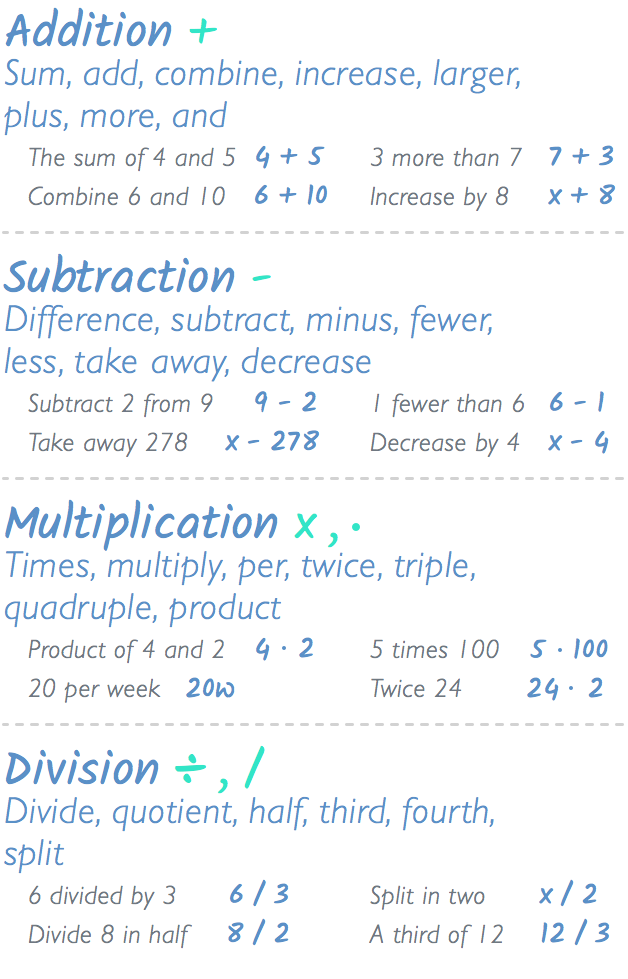
Operators are the ‘verbs’ of an expression, defining the actions to be performed on variables or values. They can be broadly categorized:
- Arithmetic Operators:
+(addition),-(subtraction),*(multiplication),/(division),%(modulo – remainder). - Comparison Operators:
==(equals),!=(not equals),>(greater than),<(less than),>=(greater than or equal to),<=(less than or equal to). These always return a boolean (true/false) result. - Logical Operators:
AND,OR,NOT. Used to combine or negate boolean expressions, crucial for complex conditions. - Concatenation Operators: Often
+or&, used to join text strings.
Understanding operator precedence is paramount. Just like in mathematics (PEMDAS/BODMAS), certain operators are evaluated before others. For instance,2 + 3 * 4evaluates to14(multiplication first), not20(addition first). Parentheses()can be used to override precedence and force a specific order of operations, ensuring the expression’s logic is executed as intended.
Functions and Methods: Pre-built Operations
Functions (or methods in object-oriented programming) are encapsulated blocks of code designed to perform a specific task and often return a result. They act as powerful components within larger expressions, allowing for complex operations to be abstracted into a simple call. For example, instead of writing out the logic for squaring a number, you might use a SQUARE() function. In spreadsheets, AVERAGE(A1:A10) calculates the mean of a range. In programming, len("hello") returns the length of a string. Functions take arguments (inputs) and produce an output, making expressions more concise, reusable, and readable. They enable modularity, allowing developers to build on existing logic without reinventing the wheel, significantly speeding up development and reducing errors. Custom functions also extend the capabilities of standard tools, tailoring them to unique problem sets.
Crafting Effective Expressions for Problem Solving
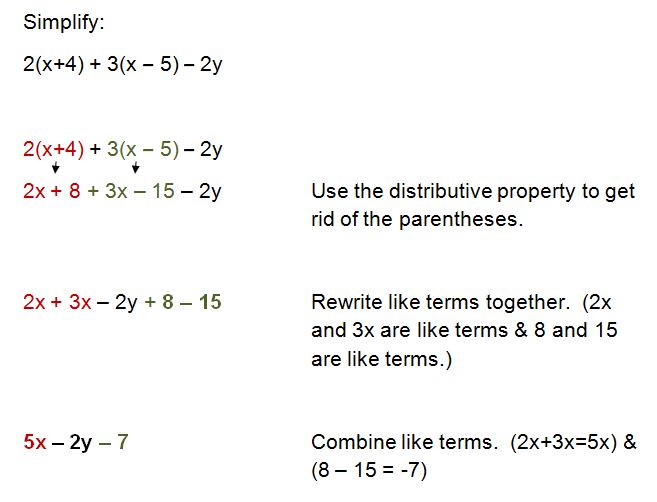
Simply knowing the components isn’t enough; the art lies in strategically combining them to solve specific problems. Crafting effective expressions is a skill that blends logical thinking with practical application, leading to robust and efficient digital solutions.
Breaking Down Complex Problems
The first step in crafting an effective expression is to deconstruct the problem into smaller, manageable parts. What are the inputs? What is the desired output? What intermediate calculations or logical steps are required? For example, if you need to calculate a user’s discount based on their loyalty level AND total purchase amount, you would first define the expressions for loyalty level (loyalty_level = IF(purchase_count > 10, 'Gold', 'Silver')), then for purchase amount conditions, and finally combine them with logical operators into a single, comprehensive expression (discount = IF(AND(loyalty_level = 'Gold', total_purchase > 500), 0.15, IF(total_purchase > 200, 0.05, 0))). This incremental approach helps manage complexity, ensuring each piece of the logic is sound before integration.
Best Practices for Readability and Maintainability
While an expression might technically work, an unreadable one is a future liability. Best practices include:
- Meaningful Variable Names:
annual_revenueis better thanar, andcustomer_categoryis clearer thanc. - Consistent Formatting: Use spaces and indentation where applicable (especially in code) to visually separate components.
- Comments: Explain the purpose of complex expressions or less obvious parts of the logic.
- Avoid Over-Nesting: Deeply nested functions or conditional statements can become incredibly difficult to follow. Consider breaking them into intermediate variables or helper functions.
These practices don’t just help others understand your work; they also make it easier for you to revisit, debug, and modify your expressions months down the line. Maintainability is key to long-term software health and efficient data management.
Debugging and Testing Expressions
Errors are an inevitable part of writing expressions. Common pitfalls include:
- Syntax Errors: Typos, missing parentheses, incorrect operator usage. These usually prevent the expression from running at all.
- Logic Errors: The expression runs, but produces incorrect results because the underlying logic is flawed. (e.g.,
>instead of>=). - Data Type Mismatches: Attempting to perform an operation on incompatible data types.
Debugging strategies involve:
- Isolate: Test small parts of a complex expression individually.
- Inspect: Use debugger tools or temporary print statements to view intermediate values.
- Test with Edge Cases: Check how the expression behaves with minimum, maximum, zero, or null values.
Thorough testing with a variety of inputs is crucial to validate an expression’s correctness and ensure it handles all anticipated scenarios gracefully. This iterative process of writing, testing, and refining is central to building reliable tech solutions.
Advanced Applications and Future Trends
The foundational understanding of digital expressions paves the way for advanced applications and insights into emerging technological trends. The core principles remain, but their scale and integration become increasingly sophisticated.
Data Analysis and Visualization Libraries
In the realm of data science, libraries like Pandas in Python or frameworks in R leverage expressions extensively for data manipulation, filtering, and aggregation. Users construct complex expressions to select specific subsets of data (df[df['sales'] > 1000]), create new derived columns (df['profit_margin'] = (df['revenue'] - df['cost']) / df['revenue']), or apply statistical functions across entire datasets. These expressions are the bedrock of exploratory data analysis, feature engineering, and preparing data for machine learning models. Visualization tools also often use expressions to define what data to plot, how to aggregate it, and what visual properties (color, size) correspond to data points, transforming raw data into compelling visual narratives that communicate insights effectively.
Automating Workflows with Conditional Logic
Beyond individual applications, expressions drive the automation of entire workflows across different platforms. Tools like Zapier, IFTTT (If This Then That), and Microsoft Power Automate allow users to define triggers and actions using conditional expressions. For example, “IF an email from ‘X’ contains ‘urgent’ AND the current time is business hours, THEN send a Slack notification to channel ‘Y’.” These no-code/low-code platforms empower users to build sophisticated automated sequences without writing traditional code, all by meticulously crafting logical expressions that dictate the flow of information and tasks between various services. This capability is revolutionizing productivity for businesses and individuals, streamlining repetitive processes and ensuring timely responses to critical events.
The Role of AI in Understanding and Generating Expressions
Artificial Intelligence, particularly large language models and code generation tools, is increasingly influencing how we interact with and create expressions. AI can now interpret natural language requests (e.g., “Show me all customers who made more than three purchases last quarter and live in California”) and translate them into precise SQL queries, Python code, or spreadsheet formulas—effectively generating the required algebraic expressions. Furthermore, AI can assist in debugging, refactoring, and optimizing existing expressions, suggesting more efficient ways to achieve the same logical outcome. The future likely holds a collaborative environment where humans articulate the problem, and AI assists in crafting, validating, and optimizing the digital expressions needed to solve it, democratizing complex problem-solving and accelerating development.
Conclusion
From the humble spreadsheet cell to the intricate logic of AI-powered systems, algebraic expressions, in their various digital forms, are the unsung heroes of the technological world. They are the universal language through which we command computers, manipulate data, and automate processes. Mastering the art of “doing” these expressions—understanding their components, applying sound logical principles, and employing best practices for construction and debugging—is an indispensable skill for anyone seeking to thrive in a data-driven, automated future.
Embracing this skill means more than just learning syntax; it means cultivating a structured, logical approach to problem-solving that is applicable across diverse tech domains. As technology continues to evolve, the ability to clearly define, construct, and refine digital expressions will remain a core competency, empowering individuals to build, innovate, and extract unprecedented value from the digital landscape. Dive in, experiment, and empower your digital endeavors with the foundational strength of well-crafted expressions.
aViewFromTheCave is a participant in the Amazon Services LLC Associates Program, an affiliate advertising program designed to provide a means for sites to earn advertising fees by advertising and linking to Amazon.com. Amazon, the Amazon logo, AmazonSupply, and the AmazonSupply logo are trademarks of Amazon.com, Inc. or its affiliates. As an Amazon Associate we earn affiliate commissions from qualifying purchases.