
Understanding how your Social Security benefits are calculated is a cornerstone of effective retirement planning. For millions, Social Security represents a vital income stream, providing a financial safety net in retirement, disability, and for survivors. Yet, the system can seem complex, shrouded in jargon and intricate rules. Demystifying this process is not just an exercise in financial literacy; it’s an essential step toward making informed decisions that can significantly impact your financial well-being throughout your golden years. This article aims to break down the key factors and calculations that determine your Social Security benefits, empowering you to better plan for your future.

Understanding the Pillars of Social Security Benefits
At its core, Social Security operates on a system of earned benefits, funded through payroll taxes. The amount you receive is primarily a function of your earnings history and when you choose to claim. Three fundamental concepts—work credits, Average Indexed Monthly Earnings (AIME), and Primary Insurance Amount (PIA)—form the bedrock of this calculation.
Work Credits: Your Eligibility Foundation
Before you can receive any Social Security benefits, you must be “insured” by the system, which means you’ve accumulated enough work credits. Work credits are the fundamental units of eligibility.
- What are Work Credits? In simple terms, work credits are points you earn through your work and earnings. The Social Security Administration (SSA) defines a certain amount of earnings that qualifies for one credit. This amount changes annually with national average wage levels. For instance, in 2024, you earn one Social Security credit for every $1,730 in earnings, up to a maximum of four credits per year.
- How They Are Earned: You can earn up to four credits each year. This means you only need to earn $6,920 (4 x $1,730) in 2024 to get the maximum four credits for the year, regardless of how much more you earn. It’s not about how long you work, but how much you earn over time.
- The Minimum for Retirement: To qualify for retirement benefits, most individuals need 40 credits, which typically translates to 10 years of work (earning the maximum four credits per year). It’s important to note that these 10 years don’t have to be consecutive; they simply need to be accumulated over your working lifetime.
- Other Benefit Requirements: While 40 credits are standard for retirement, different rules apply for disability and survivor benefits. For example, younger workers may qualify for disability benefits with fewer credits, as long as they have worked recently. Survivor benefits also have varying credit requirements based on the deceased worker’s age.
Average Indexed Monthly Earnings (AIME): The Benefit Calculator’s Core
Once you’ve established eligibility, the SSA uses your earnings record to calculate your AIME. This is arguably the most crucial component in determining your benefit amount.
- Defining AIME: AIME is a measure of your average monthly earnings over your working career, adjusted for changes in general wage levels. It’s not a simple average of all your earnings.
- The 35-Year Rule: The SSA primarily uses your highest 35 years of earnings to calculate your AIME. If you have fewer than 35 years of earnings, the “missing” years are counted as zero, which can significantly lower your AIME and, consequently, your benefits. This rule highlights the importance of consistent employment throughout your career.
- Indexing Earnings: A critical aspect of AIME is “indexing.” Earnings from past years are adjusted to reflect the average wage growth in the national economy since those earnings were made. This ensures that your past earnings are evaluated in terms of their current-day value, protecting your benefit amount from being eroded by inflation over decades. Earnings from the year you turn 60 and subsequent years are not indexed; they are included at their nominal value.
- Why Higher Lifetime Earnings Matter: Simply put, the higher your average indexed monthly earnings over your top 35 years, the higher your potential Social Security benefits will be. This directly links your career earnings to your retirement security.
Primary Insurance Amount (PIA): Your Full Retirement Age Benefit
The culmination of your work credits and AIME is the calculation of your Primary Insurance Amount (PIA). This is the monthly benefit you are entitled to if you claim Social Security at your Full Retirement Age (FRA).
- What is PIA? Your PIA represents the bedrock of your Social Security benefits. It’s the amount the SSA will pay you each month if you elect to begin receiving benefits exactly at your FRA, without any reduction for early claiming or increase for delayed claiming.
- The “Bend Points” System: The PIA is not a flat percentage of your AIME. Instead, the SSA uses a progressive formula with “bend points” to calculate it. This formula divides your AIME into three segments and applies different percentages to each segment. For 2024, the formula is:
- 90% of the first $1,174 of AIME
- 32% of AIME between $1,174 and $7,078
- 15% of AIME over $7,078
This progressive structure means that lower-income workers receive a higher percentage of their average lifetime earnings back in benefits compared to higher-income workers. However, higher-income workers still receive a larger absolute dollar amount.
Navigating Your Claiming Age: Maximizing Your Benefits
While your PIA is determined by your earnings history, when you decide to start receiving benefits plays a monumental role in the actual monthly amount you receive. This decision can lead to permanent increases or decreases in your benefit.
Full Retirement Age (FRA): The Benchmark
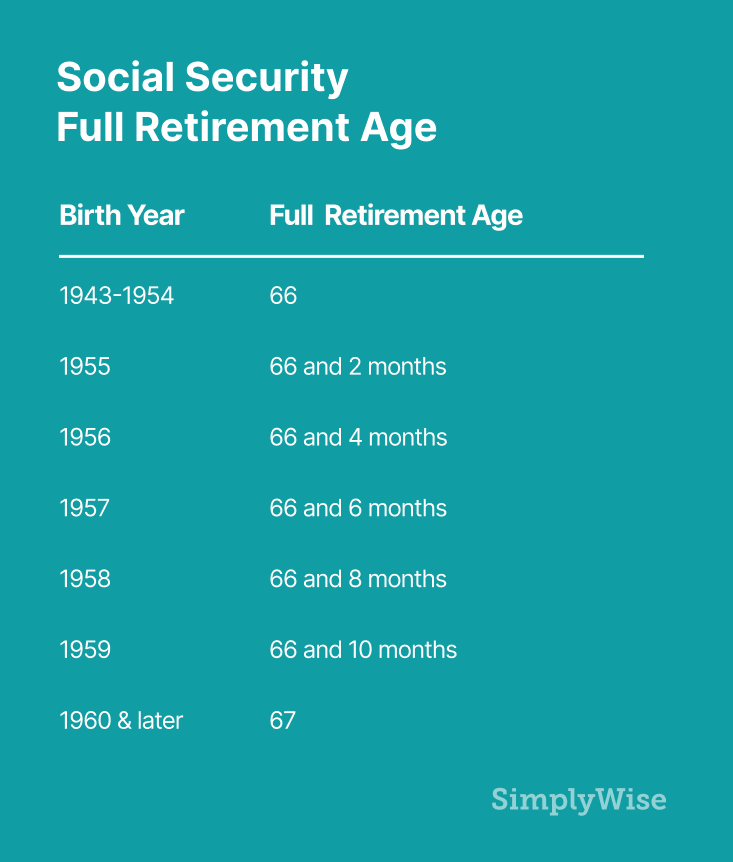
Your Full Retirement Age (FRA) is the age at which you are entitled to receive 100% of your PIA. This age is not universal; it depends on your birth year.
- Determining Your FRA: For those born in 1943-1954, FRA is 66. It gradually increases by two months for each birth year between 1955 and 1959. For everyone born in 1960 or later, FRA is 67. Understanding your specific FRA is critical for planning.
- The 100% Mark: Claiming benefits precisely at your FRA ensures you receive your full PIA, neither reduced nor increased by age-related adjustments. It serves as the baseline for all claiming decisions.
Early Claiming: The Trade-offs
The earliest you can begin receiving retirement benefits is age 62. While tempting for many, claiming early comes with a significant and permanent reduction in your monthly benefit.
- Permanent Reduction: For each month you claim benefits before your FRA, your monthly benefit amount is permanently reduced. If your FRA is 67 and you claim at 62, your benefits could be reduced by as much as 30%. This reduction is applied to your PIA.
- Reasons for Early Claiming: People choose to claim early for various reasons: immediate financial need, health issues that prevent continued work, or a belief that they may not live long enough to make delayed claiming worthwhile.
- Considering the Impact: It’s crucial to understand that this reduction is permanent. While you start receiving benefits sooner, the total amount received over your lifetime might be less, especially if you live a long life.
Delayed Claiming: The Growth Advantage
Conversely, delaying your Social Security benefits past your FRA can significantly increase your monthly payment.
- Delayed Retirement Credits (DRCs): For each year you delay claiming benefits past your FRA, up to age 70, you earn Delayed Retirement Credits (DRCs). These credits permanently increase your monthly benefit. The annual increase is 8% for those with an FRA of 66, and this rate is applied monthly.
- Maximum Benefit Increase: You can continue to earn DRCs until age 70. After age 70, there are no further increases for delaying, so there’s no financial incentive to wait beyond that point. For someone with an FRA of 67, delaying until age 70 could result in a 24% increase (3 years x 8% per year) in their monthly benefit compared to their PIA.
- When Delaying Makes Sense: Delaying can be a powerful strategy for those who are healthy, can afford to work longer, or have other income sources to support them until age 70. It provides a guaranteed, inflation-adjusted increase in benefits that can serve as longevity insurance, protecting against outliving other retirement savings.
Accessing Your Personal Social Security Information
Making informed decisions about your Social Security benefits requires access to your personal earnings history and benefit estimates. Fortunately, the SSA provides several user-friendly tools to help you do just that.
The Importance of Your Social Security Statement
Your Social Security Statement is a personalized snapshot of your earnings record and an estimate of the benefits you could receive.
- What It Is: This statement provides a comprehensive overview of your earnings history as reported to the SSA, year by year. It also gives you personalized estimates for your retirement, disability, and survivor benefits based on your current earnings record.
- How to Get It: The easiest way to access your statement is online through your “my Social Security” account. You can also request a copy by mail. Historically, the SSA mailed statements to workers periodically, but now it’s primarily an online service.
- What Information It Contains: Beyond earnings and benefit estimates, your statement includes information on how Social Security benefits are calculated, how to correct errors in your earnings record, and important facts about the program. Regularly reviewing your statement ensures your earnings are accurately recorded, which directly impacts your future benefits.

Creating a “my Social Security” Account
The “my Social Security” online portal is an invaluable tool for managing and understanding your benefits.
- Step-by-Step Setup: Creating an account is straightforward. You’ll need to visit the SSA’s official website (www.ssa.gov) and follow the prompts to create an account. This typically involves providing personal information, answering security questions, and verifying your identity.
- Benefits of an Account: Once set up, your “my Social Security” account provides instant, secure access to:
- Your Social Security Statement at any time.
- Personalized benefit estimates for different claiming ages.
- Tools to apply for benefits online.
- The ability to check the status of an application.
- Change your address or direct deposit information if you are already receiving benefits.
It’s an essential digital tool for anyone approaching retirement or wanting to monitor their Social Security record.
Utilizing Online Calculators and Resources
The SSA offers a suite of online calculators and resources designed to help you plan your claiming strategy.
- SSA’s Benefit Calculators:
- Quick Calculator: Provides a rough estimate of your benefits based on your current earnings.
- Retirement Estimator: A more detailed tool available through your “my Social Security” account, allowing you to plug in different retirement ages and future earnings scenarios to see how they impact your benefits.
- Detailed Calculators: For more complex situations, the SSA provides even more in-depth calculators.
- How They Help in Planning: These tools are excellent for “what-if” scenarios. You can explore how claiming at age 62, FRA, or 70 affects your monthly income, helping you visualize the financial implications of each choice. They are critical for integrating Social Security into your broader retirement financial plan.
Beyond Individual Retirement: Other Benefit Types and Considerations
Social Security is more than just individual retirement benefits. It also provides crucial support through spousal, survivor, and disability benefits, each with its own set of rules and considerations.
Spousal and Survivor Benefits
Social Security extends its protective reach to families, offering benefits to spouses, ex-spouses, and survivors of deceased workers.
- Spousal Benefits: If you are married, you may be eligible to receive spousal benefits based on your spouse’s work record if it results in a higher benefit than your own. Generally, a spouse can receive up to 50% of the working spouse’s PIA. You must be married for at least one year and your spouse must have filed for their own benefits for you to claim spousal benefits.
- Divorced Spouse Benefits: You may be eligible for benefits as a divorced spouse if your marriage lasted 10 years or longer, you are unmarried, and you are age 62 or older. Your ex-spouse must also be age 62 or older, but does not need to have filed for benefits for you to claim, provided you have been divorced for at least two years.
- Survivor Benefits: If a worker dies, certain family members may be eligible for survivor benefits, including widows/widowers, divorced widows/widowers, and dependent children. A widow/widower can receive up to 100% of the deceased worker’s benefit amount if claiming at their own FRA, or a reduced amount if claiming earlier. Children under 18 (or 19 if still in high school) or disabled before age 22 can also receive benefits.
Disability Benefits (SSDI)
The Social Security Disability Insurance (SSDI) program provides income replacement for individuals who are unable to work due to a severe medical condition.
- Eligibility Requirements: To qualify for SSDI, you must meet two main criteria:
- You must have worked long enough and recently enough to have accumulated sufficient work credits for disability (which vary by age).
- You must have a medical condition that meets the SSA’s strict definition of disability, meaning it prevents you from doing “substantial gainful activity” and is expected to last at least 12 months or result in death.
- Benefit Calculation: SSDI benefits are calculated similarly to retirement benefits, using your AIME to determine your PIA. However, since a disability may occur earlier in your career, the number of earnings years used in the AIME calculation is adjusted.
Taxation of Social Security Benefits
While often considered tax-free, a portion of Social Security benefits can be subject to federal income tax for many recipients.
- Provisional Income: The taxability of your benefits depends on your “provisional income,” which is calculated as your adjusted gross income (AGI) plus non-taxable interest income plus half of your Social Security benefits.
- Taxation Tiers:
- If your provisional income is between $25,000 and $34,000 (for individuals) or between $32,000 and $44,000 (for those filing jointly), up to 50% of your benefits may be taxable.
- If your provisional income exceeds $34,000 (individual) or $44,000 (joint), up to 85% of your benefits may be taxable.
It’s important to factor potential taxes into your retirement income planning.
Strategies for Optimizing Your Social Security Benefits
Understanding the mechanics of Social Security is the first step; the next is to strategize how to make the most of your potential benefits.
Review Your Earnings Record Regularly
- Catching Errors: Your Social Security Statement provides a detailed history of your earnings. It is crucial to review this periodically to ensure all your earnings have been accurately reported. Errors, whether from employer mistakes or misreported income, can lead to a lower benefit amount in retirement. If you find an error, contact the SSA immediately to correct it.
Understand Break-Even Points for Claiming Age
- Longevity and Health: The decision of when to claim benefits often boils down to a personal calculation of your expected lifespan and financial needs. While delaying benefits increases your monthly payment, you receive fewer payments overall. Financial planners often calculate “break-even points” – the age at which the total cumulative benefits from delaying equal the total cumulative benefits from claiming early. For many, this point falls in their late 70s or early 80s.
- Considering Other Factors: Your health, family history of longevity, and other retirement income sources (pensions, 401(k)s, IRAs) should heavily influence your claiming decision.
Coordinate with Your Spouse
- Household Maximization: For married couples, Social Security claiming strategies can become more complex but also offer opportunities for maximizing combined household benefits. Strategies often involve one spouse (typically the higher earner) delaying benefits to age 70 to maximize their benefit, which will also translate into a higher potential survivor benefit for the other spouse. The lower-earning spouse might claim earlier, or claim spousal benefits later. These strategies require careful planning.
Seek Professional Financial Advice
- Complex Scenarios: While the SSA provides excellent resources, complex financial situations, such as multiple marriages, significant wealth, or intricate retirement income streams, often warrant personalized professional advice. A qualified financial advisor specializing in retirement planning can help you analyze your specific situation, understand the nuances of Social Security rules, and integrate your benefits into a holistic retirement plan.
Conclusion
Determining your Social Security benefits involves a blend of historical earnings, actuarial science, and personal choice. By understanding the core components—work credits, AIME, and PIA—and recognizing the profound impact of your claiming age, you gain valuable insight into your financial future. Proactively engaging with the SSA’s resources, from reviewing your earnings statement to utilizing online calculators, empowers you to make informed decisions. Whether you choose to claim early, at your Full Retirement Age, or delay until 70, a well-thought-out strategy for Social Security is an indispensable element of a secure and confident retirement. It’s not just about receiving a check; it’s about optimizing a lifetime of contributions into a reliable source of income that supports your later years.
aViewFromTheCave is a participant in the Amazon Services LLC Associates Program, an affiliate advertising program designed to provide a means for sites to earn advertising fees by advertising and linking to Amazon.com. Amazon, the Amazon logo, AmazonSupply, and the AmazonSupply logo are trademarks of Amazon.com, Inc. or its affiliates. As an Amazon Associate we earn affiliate commissions from qualifying purchases.