
Fractions, often perceived as a mathematical hurdle, are fundamental to understanding quantities, proportions, and relationships across countless disciplines. From baking and carpentry to advanced physics and financial modeling, the ability to work with fractions is an indispensable skill. While traditional paper-and-pencil methods have long been the bedrock of fractional arithmetic, the advent of sophisticated technology has revolutionized how we approach, understand, and apply these critical mathematical concepts. This article delves into how modern digital tools not only simplify fraction calculations but also deepen our comprehension, making mathematical precision accessible to everyone.
The Digital Evolution of Fractional Arithmetic
For centuries, calculating with fractions was an arduous task, demanding meticulous attention to common denominators, simplification, and conversion. Mistakes were common, and the process itself could obscure the underlying mathematical principles. Today, technology offers a paradigm shift, transforming fraction calculations from a manual chore into an intuitive, often automated, process.
From Paper-and-Pencil to Pixels: A Paradigm Shift
The journey from chalkboards to advanced digital interfaces represents a significant leap in mathematical education and practice. Early computing devices, while initially focused on whole numbers, quickly adapted to handle fractional values, often converting them to decimals for internal processing. However, modern software and applications are designed to work directly with fractions, preserving their exact form and facilitating a clearer understanding of their proportional nature. This shift is not merely about speed; it’s about accuracy, error reduction, and the ability to explore complex fractional relationships without getting bogged down in arithmetic minutiae. Educational platforms now offer interactive visualizations that animate fraction operations, allowing users to see fractions combine, subtract, or divide, providing a level of insight unreachable through static textbook examples.
Why Digital Tools Outperform Manual Methods for Fractions
The advantages of leveraging digital tools for fraction calculations are manifold. Firstly, precision and accuracy are significantly enhanced. Manual errors, a common pitfall in fractional arithmetic, are virtually eliminated by algorithms designed for exact computation. Secondly, speed and efficiency allow users to tackle more complex problems in less time, freeing up cognitive resources to focus on problem-solving strategies rather than rote calculation. Thirdly, accessibility is dramatically improved. Digital tools can cater to diverse learning styles, offering visual aids, step-by-step guides, and auditory feedback. They can also be adapted for individuals with learning disabilities, making mathematics more inclusive. Finally, exploration and experimentation become feasible. Users can instantly see the impact of changing numerators or denominators, fostering a deeper, intuitive understanding of fractional properties.
Essential Software and Applications for Fraction Calculations
The digital landscape is rich with tools designed to assist with fraction calculations, ranging from basic calculators to advanced programming environments. Choosing the right tool depends on the user’s needs, whether for educational purposes, professional applications, or casual problem-solving.
Dedicated Math Calculators and Educational Apps
A plethora of dedicated math calculators and educational apps are available across various platforms, from smartphones to web browsers. These tools are often designed with user-friendliness in mind, offering intuitive interfaces for inputting fractions and performing operations. Examples include Wolfram Alpha, PhotoMath, and countless educational apps like “Fractions” by Tapfun or “Math Workout” that feature specific modules for fractional arithmetic. Many of these apps not only provide answers but also show step-by-step solutions, helping users understand the process behind the calculation. Features like converting fractions to decimals, simplifying improper fractions, and finding common denominators are often automated, significantly easing the learning curve and reducing calculation time. For students, these apps serve as invaluable study aids, reinforcing concepts learned in the classroom.
Leveraging Spreadsheet Software for Complex Fractional Datasets
For professionals and advanced students dealing with large datasets or complex fractional relationships, spreadsheet software like Microsoft Excel, Google Sheets, or LibreOffice Calc becomes an incredibly powerful tool. While not explicitly designed for symbolic fraction manipulation, spreadsheets can perform calculations with fractions when they are input correctly (e.g., “1/2” as a fraction format). More importantly, they excel at applying fractional operations across vast ranges of data, calculating averages, proportions, and ratios derived from fractional components. Users can set up custom formulas to perform specific fraction operations, compare different fractional values, and even create charts and graphs to visualize fractional data. This capability is particularly useful in fields such as engineering, finance (where stock prices or interest rates might involve fractions), and scientific research where precise ratios and proportions are critical.
Programming Environments: Building Your Own Fractional Logic
For those with a background in computer science or a desire for ultimate control, programming languages offer the most robust and flexible approach to fraction calculation. Languages like Python, Java, and JavaScript have built-in libraries or can be extended to handle fractional arithmetic with high precision. For instance, Python’s fractions module allows users to create Fraction objects and perform operations (addition, subtraction, multiplication, division) directly on them, preserving exact fractional values without converting to floating-point decimals, which can sometimes introduce rounding errors. This approach is ideal for developing custom applications, scientific simulations, or educational tools where maintaining exact fractions is paramount. Programmers can write algorithms to solve complex fractional equations, optimize fractional expressions, or even create entirely new methods for visualizing fractional data, pushing the boundaries of what’s possible with digital fraction management.
Step-by-Step Fractional Operations with Tech Tools
Understanding how technology facilitates common fractional operations can demystify the process and highlight the power of digital assistance.
Simplifying Addition and Subtraction with Automated Common Denominators

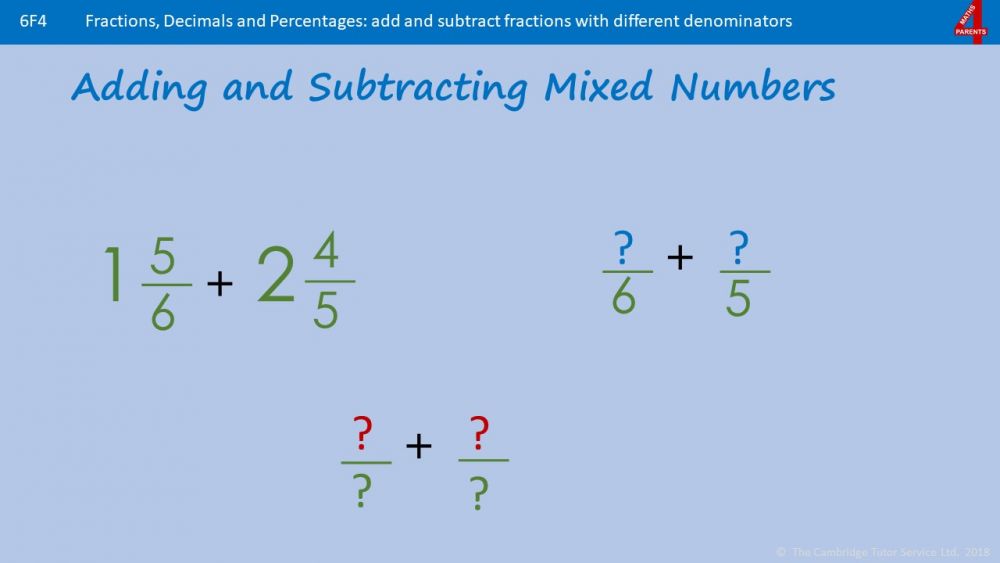
The most common hurdle in adding or subtracting fractions is finding a common denominator. Manually, this involves identifying the least common multiple (LCM) of the denominators, converting fractions, and then performing the operation. Digital tools automate this entire process. You simply input the fractions, and the software instantly finds the common denominator, performs the addition or subtraction, and often simplifies the resulting fraction to its lowest terms. For example, in a dedicated math app, entering “1/3 + 1/4” will immediately yield “7/12,” bypassing the intermediate step of converting both to “4/12 + 3/12.” This automation saves time and minimizes errors, allowing users to focus on setting up the correct problem rather than the mechanics of finding LCMs.
Expediting Multiplication and Division: Beyond Cross-Cancellation
Multiplication and division of fractions, while conceptually simpler than addition/subtraction due to not requiring common denominators, can still involve cumbersome cross-cancellation and simplification steps. Digital tools streamline this significantly. For multiplication, simply input the fractions, and the software multiplies the numerators and denominators, then automatically simplifies the result. For division, the tool applies the “invert and multiply” rule instantly. For instance, dividing “2/3 by 1/2” would be processed as “2/3 multiplied by 2/1” resulting in “4/3,” which the tool might then convert to “1 and 1/3” if specified. The power here lies in eliminating manual intermediate steps and ensuring the final answer is always in its most simplified form.
Mastering Simplification and Conversion: Decimal Equivalents and Mixed Numbers
Simplifying fractions to their lowest terms and converting between improper fractions, mixed numbers, and decimal equivalents are crucial skills. Manually simplifying large fractions (e.g., 24/36) can involve finding the greatest common divisor (GCD). Digital tools perform this instantly. Input “24/36,” and it immediately returns “2/3.” Similarly, converting “7/3” to a mixed number “2 and 1/3” or its decimal equivalent “2.333…” is a single click or command. This automated conversion capability is incredibly useful for presenting data in different formats or for ensuring all fractions are always in their most digestible form, enhancing clarity and communication.
Advanced Applications and Interactive Learning Platforms
Beyond basic calculations, technology has opened doors to advanced applications and immersive learning experiences for fractions.
Visualizing Fractions: Interactive Simulations and Gamified Learning
One of the most profound contributions of technology to fraction education is the ability to visualize these abstract concepts. Interactive simulations and gamified learning platforms make fractions tangible. Users can drag and drop slices of a pie to represent fractions, see how different fractions combine on a number line, or even manipulate virtual blocks to understand equivalent fractions. Websites like Khan Academy, SplashLearn, and Prodigy Math Game incorporate engaging visuals and interactive exercises that turn fraction learning into an exciting exploration. These platforms cater to visual and kinesthetic learners, transforming what was once a dry subject into an enjoyable and intuitive experience, fostering deeper understanding and retention.
AI and Machine Learning: Predictive Models for Fractional Relationships
The cutting edge of technology, Artificial Intelligence (AI) and Machine Learning (ML), is beginning to influence how we interact with mathematical concepts, including fractions. AI-powered tutors can adapt to a student’s learning pace and style, offering personalized fraction problems and explanations. ML algorithms can analyze patterns in fractional datasets, predicting trends or identifying anomalies in areas like stock market analysis, scientific research, or supply chain optimization, where fractional ratios are critical. While still evolving, the potential for AI to create intelligent, adaptive systems for advanced fractional problem-solving and education is immense, promising an even more sophisticated approach to understanding and leveraging these fundamental mathematical building blocks.
Choosing and Integrating Fractional Tech into Your Workflow
With a myriad of digital tools available, selecting the right ones and integrating them effectively into your personal or professional workflow is key to maximizing their benefits.
Evaluating Features: Precision, User Experience, and Accessibility
When choosing a digital tool for fractions, consider its core features. Precision is paramount, especially for scientific or financial applications; ensure the tool handles exact fractions rather than just decimal approximations. A clear and intuitive User Experience (UX) is crucial, making it easy to input fractions and interpret results. Look for clean interfaces, logical layouts, and helpful prompts. Accessibility features, such as voice input, screen reader compatibility, or adjustable font sizes, are important for broad usability. Additionally, consider the availability of step-by-step solutions, visualization tools, and the ability to export or share results.
Best Practices for Digital Fraction Management
To effectively use technology for fractions, integrate it thoughtfully. For learners, use apps not as a crutch but as a tool to check work and understand processes. Always try to solve problems manually first, then use the app to verify or review the steps. For professionals, organize your data in spreadsheets efficiently, labeling fractional columns clearly. When using programming languages, comment your code thoroughly to explain the fractional logic. Regularly update your software to benefit from new features and security enhancements. Most importantly, understand when to use exact fractions versus decimal approximations; while tech can handle both, the context dictates the best representation.

The Future Landscape of Fractional Computation
The future of fractional computation in a technologically advanced world is bright. We can anticipate more sophisticated AI-driven tutors offering hyper-personalized learning paths, real-time feedback, and predictive insights into student struggles. Augmented Reality (AR) and Virtual Reality (VR) applications could offer even more immersive experiences, allowing users to “touch” and manipulate fractions in 3D environments. Integration across different platforms will become seamless, allowing fractional data to flow effortlessly between educational apps, professional software, and collaborative tools. As technology continues to evolve, our ability to calculate with fractions will not only become more effortless but also profoundly insightful, empowering a new generation to master this essential mathematical skill with unparalleled precision and understanding.
aViewFromTheCave is a participant in the Amazon Services LLC Associates Program, an affiliate advertising program designed to provide a means for sites to earn advertising fees by advertising and linking to Amazon.com. Amazon, the Amazon logo, AmazonSupply, and the AmazonSupply logo are trademarks of Amazon.com, Inc. or its affiliates. As an Amazon Associate we earn affiliate commissions from qualifying purchases.