
For millions of Americans, Social Security represents a cornerstone of their retirement income, providing a vital financial safety net. Understanding how your benefits are calculated and what strategies can maximize your payout is crucial for effective retirement planning. While the program’s complexities can seem daunting, demystifying the core factors that determine your monthly check allows you to make informed decisions that can significantly impact your financial well-being in your golden years.
Understanding the Pillars of Social Security Benefits
Your Social Security benefit amount is not a flat rate; it’s a personalized calculation based on several key factors. The Social Security Administration (SSA) uses a specific formula to determine your Primary Insurance Amount (PIA), which is the benefit you would receive if you claim at your Full Retirement Age (FRA).
Your Earning History: The AIME Formula
The foundation of your Social Security benefit is your lifetime earnings. Specifically, the SSA calculates your Average Indexed Monthly Earnings (AIME). This involves taking your 35 highest-earning years, adjusting them for inflation (indexing) to reflect the general wage level at the time you earned them, summing them up, and then dividing by 420 (the number of months in 35 years).
- 35-Year Rule: The “35 highest-earning years” is a critical detail. If you have fewer than 35 years of work history, the missing years are counted as zeros in the calculation, which can significantly lower your AIME and, consequently, your benefit. Conversely, if you work more than 35 years, your lowest-earning years will be replaced by higher-earning years, boosting your overall average.
- Indexed Earnings: Indexing ensures that earlier earnings are brought up to a current value, so a dollar earned in 1980 holds comparable weight to a dollar earned today when determining your benefit. This prevents your benefit from being disproportionately lowered by lower nominal wages from decades ago.
- Bend Points: After your AIME is calculated, it’s run through a formula that applies “bend points.” These bend points are income thresholds that determine the percentage of your AIME that translates into your PIA. The formula is progressive, meaning lower earners receive a higher percentage of their average indexed monthly earnings back as benefits compared to higher earners.
Full Retirement Age (FRA): A Crucial Benchmark
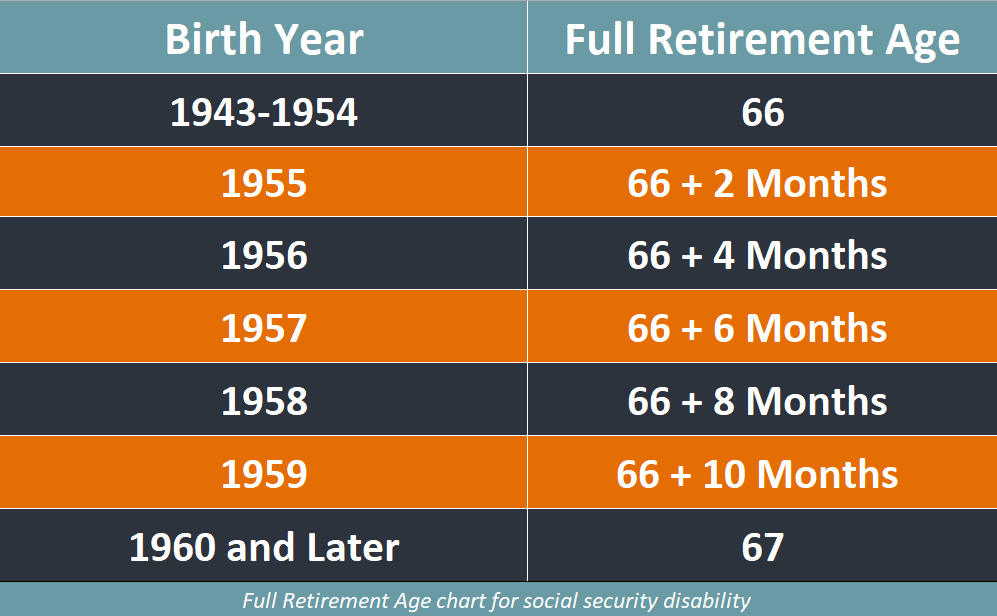
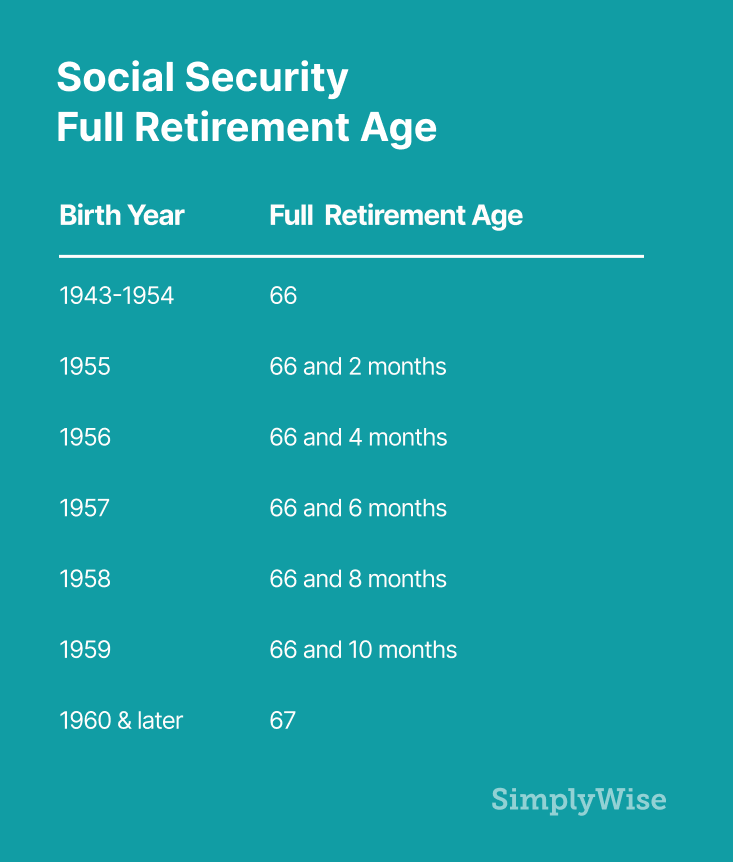
Your Full Retirement Age (FRA) is the age at which you are entitled to receive 100% of your Primary Insurance Amount. This age is not universal; it depends on your birth year. For those born between 1943 and 1954, FRA is 66. It then gradually increases by two months per birth year until it reaches 67 for those born in 1960 or later.
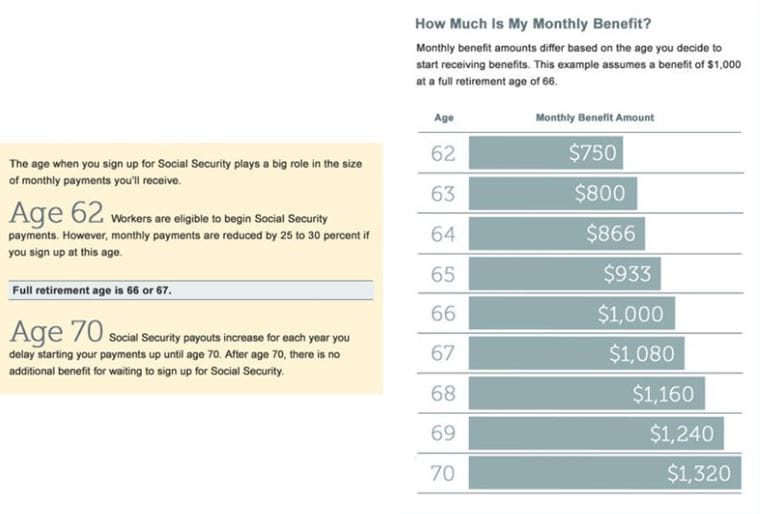
- Claiming Before FRA: You can start receiving Social Security benefits as early as age 62. However, claiming before your FRA results in a permanent reduction of your monthly benefit. For each month you claim early, your benefit is reduced. For someone with an FRA of 67, claiming at 62 means a reduction of approximately 30%.
- Claiming At or After FRA: Claiming at your FRA ensures you receive your full PIA. More importantly, delaying your claim beyond your FRA can significantly increase your monthly benefit.
Cost-of-Living Adjustments (COLAs)
Once you begin receiving Social Security benefits, your monthly payment isn’t static. It’s subject to annual Cost-of-Living Adjustments (COLAs). These adjustments are designed to help maintain the purchasing power of your benefits by offsetting inflation. COLAs are typically announced in October and take effect in December for the following year’s benefits, based on changes in the Consumer Price Index for Urban Wage Earners and Clerical Workers (CPI-W). While not directly impacting your initial calculation, COLAs ensure your benefits keep pace with the economy over your retirement.
Strategies to Maximize Your Social Security Payout
While the Social Security benefit formula is fixed, you have significant control over the inputs that determine your final payout. Strategic planning around your work years and claiming age can lead to a substantially larger monthly check.
Working Longer to Boost Your AIME
As established, your benefit calculation uses your 35 highest-earning years. If you’ve had periods of lower earnings, unemployment, or part-time work, continuing to work longer can be highly beneficial.
- Replacing Low-Earning Years: By working an additional year with high earnings, you effectively replace one of your 35 lowest (or zero) earning years with a higher number. This directly increases your Average Indexed Monthly Earnings, leading to a larger benefit.
- Beyond 35 Years: Even if you already have 35 years of earnings, continuing to work can still be advantageous if your current earnings are higher than some of your past indexed earnings. This ensures that only your absolute highest-earning years contribute to your AIME.
Delaying Your Claim Beyond Full Retirement Age
This is arguably one of the most powerful strategies for increasing your Social Security benefits. For every year you delay claiming benefits past your Full Retirement Age, up until age 70, you earn Delayed Retirement Credits (DRCs).
- 8% Annual Increase: Delayed Retirement Credits increase your monthly benefit by 8% for each year you wait beyond your FRA. This is a guaranteed, inflation-protected increase that no other investment offers with similar certainty.
- Compounding Effect: These credits accrue monthly and compound, leading to a significant boost in your lifetime benefits, especially if you live a long life. For someone with an FRA of 67, delaying until age 70 would result in an additional 24% increase (3 years x 8%) on top of their full PIA. This is a permanent increase to your monthly benefit.
- Weighing the Trade-Offs: While delaying provides a larger monthly payment, it means foregoing benefits for several years. The decision to delay depends on various factors, including your current financial needs, health status, other retirement income sources, and expected longevity. For those who are financially able, healthy, and anticipate living into their late 80s or beyond, delaying often proves to be a highly lucrative strategy.
Coordinating Benefits with a Spouse
For married couples, Social Security claiming strategies become more intricate and offer additional opportunities for optimization. Your claiming decisions can impact not only your own benefit but also your spouse’s and potential survivor benefits.
- Spousal Benefits: A spouse can generally claim up to 50% of the higher-earning spouse’s Full Retirement Age benefit, provided their own benefit based on their work record is less than that amount. If a spouse claims spousal benefits before their own FRA, that benefit will also be reduced. The higher earner’s decision to delay claiming benefits indirectly increases the potential spousal benefit for the lower earner, as it raises the base amount from which the 50% is calculated.
- Survivor Benefits: When one spouse passes away, the surviving spouse may be eligible to receive survivor benefits. The survivor can receive 100% of the deceased spouse’s benefit amount if they claim at their own FRA (or at their deceased spouse’s FRA, whichever is later). Crucially, if the higher-earning spouse delayed their claim, their increased benefit due to Delayed Retirement Credits will become the higher survivor benefit for the surviving spouse. This makes delaying a particularly powerful strategy for couples, as it provides “longevity insurance” for the surviving partner.
- Strategic Claiming: Couples often benefit from having the higher earner delay benefits until age 70, while the lower earner may claim their own benefit earlier, or claim spousal benefits when the higher earner files. A financial advisor specializing in Social Security can help map out the optimal claiming strategy for a couple’s unique circumstances, considering both current income needs and long-term benefit maximization.
Estimating Your Future Benefits: Tools and Resources
Accurately forecasting your Social Security income is a vital step in comprehensive retirement planning. Fortunately, the Social Security Administration provides robust tools to help you get a clear picture of your future benefits.
The Social Security Administration’s Online Account
The single most authoritative source for your personalized Social Security information is your “My Social Security” online account. Creating an account is free and secure, offering a wealth of data tailored to your work history.
- Personalized Statement: Once logged in, you can view your Social Security Statement, which provides an estimate of your future benefits at different claiming ages (62, your FRA, and 70). These estimates are based on your actual earnings record reported to the SSA.
- Earnings Record: The account also allows you to review your complete earnings record. It’s critical to check this periodically for accuracy. Any discrepancies could affect your future benefit, so reporting errors to the SSA promptly is important.
- Benefit Calculator: The SSA website also hosts various online calculators that allow you to model different scenarios, such as the impact of working a few more years, or different claiming ages, on your estimated benefit. This interactive tool can be invaluable for strategizing.
Third-Party Calculators and Financial Advisors
While the SSA’s tools are foundational, other resources can offer deeper insights or a broader financial planning context.
- Reputable Online Calculators: Several financial websites and organizations offer sophisticated Social Security calculators. These tools often allow for more complex scenarios, such as factoring in spousal benefits, taxation, or cost-of-living adjustments, which can provide a more holistic view. Ensure any third-party calculator you use is from a reputable source and frequently updated to reflect current rules.
- Professional Financial Advisors: For complex situations, such as blended families, individuals with significant other assets, or those needing a comprehensive retirement income plan, consulting a fee-only financial advisor can be highly beneficial. An advisor specializing in retirement planning can integrate your Social Security strategy into your broader financial picture, considering tax implications, other income sources, and your overall goals. They can provide personalized advice on optimal claiming ages and spousal coordination strategies.
The Broader Context: Social Security as Part of Your Retirement Plan
While Social Security is a foundational element, it is rarely sufficient to fund an entire retirement on its own. Integrating your Social Security benefits into a diversified and robust retirement income strategy is paramount.
Diversifying Retirement Income Sources
Think of Social Security as one leg of a multi-legged stool supporting your retirement. Relying solely on Social Security can leave you vulnerable to rising costs and unexpected expenses.
- IRAs and 401(k)s: These tax-advantaged retirement accounts (Traditional or Roth) are critical for accumulating substantial savings. Consistent contributions over your working life can build a significant nest egg.
- Pensions: If you are fortunate enough to have a pension from a previous employer, it provides another layer of guaranteed income in retirement.
- Personal Savings and Investments: Beyond dedicated retirement accounts, general savings, investments in taxable brokerage accounts, or even real estate can provide additional income streams or liquidity during retirement.
- Part-Time Work: Many retirees choose to work part-time, either for supplemental income, to stay active, or both. This can provide flexible income and delay the need to draw heavily from other assets.
The goal is to create a diversified income portfolio that can weather economic fluctuations and provide financial security, with Social Security serving as a stable, inflation-adjusted base.
Future of Social Security: Solvency Concerns and Projections
It’s common to hear discussions about the long-term solvency of the Social Security program. While the system faces some long-term financial challenges due to demographic shifts (lower birth rates, increased longevity) and historical funding mechanisms, it’s important to understand the context.
- Not Going Away: Social Security is not projected to “run out of money.” Current projections from the Social Security Trustees indicate that, without congressional action, the program will be able to pay about 80% of promised benefits after its trust fund reserves are depleted, likely around the mid-2030s.
- Potential Adjustments: Congress has addressed Social Security’s finances in the past and is likely to do so again. Potential adjustments could include raising the full retirement age further, increasing the Social Security tax rate, adjusting the wage base cap, changing the COLA formula, or modifying the benefit formula for higher earners.
- Planning with Prudence: While it’s prudent to be aware of these discussions, it’s generally wise to plan your retirement assuming you will receive a significant portion, if not all, of your earned Social Security benefits. However, structuring your overall retirement plan such that you are not solely reliant on Social Security can provide peace of mind and flexibility should any future program changes occur. Building your own robust savings and investment portfolio is the best hedge against uncertainty.