
Retiring at 62 is a significant milestone, representing the earliest age at which you can claim Social Security benefits. While attractive for those eager to begin their post-work life, this decision comes with specific financial implications, primarily regarding your income streams. Understanding these nuances is crucial for accurately estimating “how much you will make” and for building a sustainable financial plan. Your total income will be a mosaic of Social Security, personal savings, and potentially other sources, each with its own set of rules and considerations.
Understanding Social Security Benefits at 62
Social Security is a foundational component of most American retirement plans. However, claiming benefits at the earliest possible age of 62 means you will receive a permanently reduced monthly payment compared to waiting until your Full Retirement Age (FRA).
The Early Retirement Reduction
Your Full Retirement Age (FRA) is the age at which you are entitled to 100% of your Primary Insurance Amount (PIA). For anyone born in 1960 or later, FRA is 67. Claiming Social Security benefits at 62 means you are taking them 60 months (5 years) early. The Social Security Administration (SSA) applies a permanent reduction to your monthly benefit for each month you claim before your FRA.
The reduction rate is approximately 5/9 of 1% for each of the first 36 months and 5/12 of 1% for each month over 36. For someone with an FRA of 67, claiming at 62 results in a total permanent reduction of about 30%. This means if your PIA at FRA 67 was projected to be $2,000 per month, claiming at 62 would reduce your monthly benefit to approximately $1,400. This reduction is significant and applies for the rest of your life, making it a critical factor in your overall retirement income.
Calculating Your Primary Insurance Amount (PIA)
Your Primary Insurance Amount (PIA) is the monthly benefit you would receive if you started claiming Social Security at your Full Retirement Age. The SSA calculates your PIA based on your Average Indexed Monthly Earnings (AIME) over your 35 highest-earning years. If you have fewer than 35 years of earnings, zero earnings are factored in for the missing years, which can lower your AIME and, consequently, your PIA.
To get an accurate estimate of your PIA and projected benefits at various claiming ages, it is highly recommended to create an account on the official SSA website (ssa.gov). Your annual Social Security statement also provides personalized estimates based on your complete earnings history. Reviewing this information regularly is vital to ensure accuracy and to understand the baseline from which any early retirement reduction will be applied.
Impact of Earnings Tests
If you choose to retire at 62 and claim Social Security benefits but continue to work, your benefits may be subject to an earnings test. This test applies if you are receiving benefits before your Full Retirement Age and your earned income exceeds certain thresholds.
For 2024, if you are under FRA for the entire year, the SSA will deduct $1 from your benefits for every $2 you earn above $22,320. In the year you reach your FRA, the deduction is $1 for every $3 earned above a higher threshold ($59,520 in 2024) until the month you reach your FRA. Once you reach your FRA, the earnings test no longer applies, and you can earn any amount without it affecting your Social Security benefits.
This means that if you plan to work part-time or full-time after claiming benefits at 62, a portion of your Social Security income could be withheld. While these withheld benefits are not permanently lost (they contribute to a recalculation that slightly increases your benefit at FRA), they will not be part of your immediate monthly income. Therefore, your retirement budget must account for this potential reduction if you plan to continue working.
Tapping into Other Retirement Savings
While Social Security provides a base, it rarely covers all retirement expenses, especially when claimed early. Most retirees rely heavily on a combination of personal savings and investments. At 62, accessing these accounts often comes with specific rules.
401(k)s and IRAs: Rules and Withdrawals
For most qualified retirement accounts, such as 401(k)s, 403(b)s, and traditional IRAs, the earliest age you can typically withdraw funds without incurring a 10% early withdrawal penalty is 59½. This means that by 62, you are generally past the penalty age and can take distributions from these accounts. However, these withdrawals are considered ordinary income and will be subject to federal income tax, and potentially state income tax, depending on your residence.
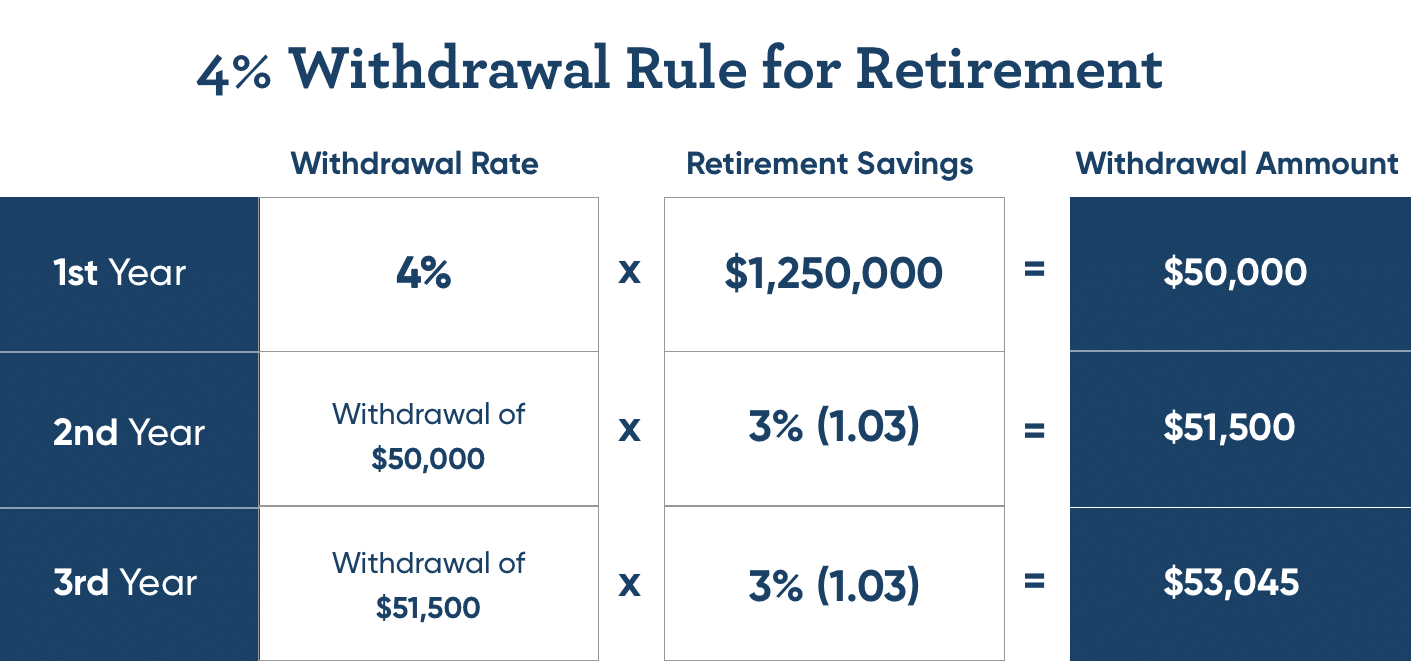
The amount you can safely withdraw from these accounts depends on your total savings, your overall financial plan, and your chosen withdrawal strategy. Common strategies include the “4% rule” (withdrawing 4% of your initial portfolio value, adjusted for inflation annually) or more dynamic approaches that adjust withdrawals based on market performance. For example, if you have a $750,000 nest egg and follow a 4% rule, you could withdraw $30,000 annually, or $2,500 per month, before taxes. Careful planning is essential to ensure your savings last throughout your potentially long retirement.
Pensions and Annuities
If you are one of the fortunate individuals with a defined-benefit pension plan from a former employer, this can be a valuable and predictable source of income. Many pension plans allow you to begin receiving benefits at age 62, though similar to Social Security, claiming early may result in a reduced monthly payout compared to waiting until an older age (e.g., age 65). It is crucial to consult your plan administrator for the specific terms and payout options of your particular pension.
Annuities, which are contracts with an insurance company designed to provide a regular income stream, are another potential income source. If you previously purchased an immediate annuity, payments would likely have already begun or are scheduled to begin around this age. Deferred annuities, on the other hand, would convert to an income stream when you choose to annuitize them. The income from annuities is determined by the premium paid, the type of annuity, prevailing interest rates, and the payout options selected. Both pensions and annuities offer a level of income certainty that can be highly beneficial for managing cash flow in early retirement.
Non-Retirement Accounts and Investments
Beyond dedicated retirement vehicles, many individuals hold taxable investment accounts, such as brokerage accounts, savings accounts, or real estate. These assets offer greater flexibility as they are not subject to the age-based restrictions or penalties of retirement accounts. However, withdrawals from these accounts may trigger capital gains taxes when appreciated assets are sold.
A diversified portfolio of stocks, bonds, and mutual funds held in a brokerage account can be drawn upon to meet living expenses. Income from dividends, interest, or capital gains can significantly supplement your other income sources. Real estate, whether in the form of rental properties or the equity in your primary home, can also be leveraged. Options include selling a home and downsizing, or even considering a reverse mortgage (though typically less advisable at 62 due to costs and long-term implications unless absolutely necessary). Utilizing non-retirement assets strategically provides liquidity and flexibility, which can be particularly useful in the early years of retirement when other income sources might be lower.
The Importance of a Comprehensive Financial Plan
Retiring at 62 necessitates a robust and meticulously planned financial strategy. Without the benefit of a full Social Security benefit and potentially fewer years for investment compounding, every financial decision holds greater weight. A comprehensive plan ensures your resources are aligned with your retirement goals and helps mitigate the risk of outliving your money.
Budgeting for Early Retirement
Creating a detailed and realistic retirement budget is paramount. You need to accurately estimate all your monthly and annual expenses, differentiating between essential costs (housing, food, utilities, transportation, healthcare) and discretionary spending (travel, entertainment, hobbies). Many people find that while some expenses like commuting or work-related clothing decrease, others, particularly healthcare and leisure activities, may increase in retirement.
Compare your projected income from all sources (Social Security, pensions, and planned withdrawals from savings) against your estimated expenses. If there’s a shortfall, you must be prepared to adjust your spending habits or explore ways to generate additional income. A well-crafted budget serves as your financial roadmap, guiding your spending and helping you identify areas for potential savings or adjustments to ensure financial stability.
Healthcare Costs: A Major Consideration
One of the most significant financial hurdles for early retirees in the U.S. is healthcare. Medicare eligibility does not begin until age 65. This creates a critical three-year gap (from 62 to 65) during which you will need to secure your own health insurance. Common options include:
- COBRA: If available from your former employer, COBRA can temporarily extend your group health coverage, but it is typically expensive as you pay the full premium plus an administrative fee.
- Affordable Care Act (ACA) Marketplace: Purchasing a plan through your state’s ACA marketplace is often the most viable option. Premiums can be subsidized based on your income, but even with subsidies, costs can be substantial.
- Spousal Coverage: If your spouse is still working and has employer-sponsored health insurance, you may be able to join their plan.
Beyond premiums, you must budget for out-of-pocket costs such as deductibles, co-pays, and prescription drugs. This three-year healthcare bridge can easily cost tens of thousands of dollars, making it an essential item to plan for and fund proactively before you retire. Underestimating or failing to plan for these costs can quickly undermine your early retirement security.
Longevity Risk and Inflation
When considering “how much you will make,” it’s not solely about the monthly amount but also about how long that income needs to last. With increasing life expectancies, retiring at 62 means your retirement could span 30 years or more. This extended period introduces significant longevity risk – the risk of outliving your savings.
Compounding this challenge is inflation. Even a modest 2-3% annual inflation rate can drastically erode the purchasing power of your fixed income streams over several decades. A monthly benefit of $1,500 today might feel like significantly less in 20 years. Your financial plan must account for potential inflation adjustments, particularly for non-indexed income sources, and include strategies to ensure your investment portfolio continues to grow and generate income that keeps pace with rising costs.
Strategies to Maximize Your Income at 62
While retiring at 62 often entails a reduced income compared to waiting, there are proactive strategies you can employ to maximize your financial resources and make your early retirement more comfortable.
Part-Time Work and Side Gigs
Continuing to work part-time or pursuing a side hustle can significantly boost your income without necessitating a full-time commitment. While it’s important to remember the Social Security earnings test if your income exceeds certain limits, the additional earnings can still be highly valuable. Many retirees find satisfaction in “encore careers,” consulting, freelancing, or turning hobbies into income-generating activities.
This approach offers multiple benefits: it supplements your income, keeps you mentally and socially engaged, and allows your investment portfolio more time to grow without heavy early withdrawals. Even a few hundred dollars a month from a part-time job or hobby can make a substantial difference in your budget and reduce the strain on your long-term savings.
Spousal Benefits and Survivor Benefits
If you are married or divorced, you may be eligible for spousal or survivor benefits from Social Security, which could potentially provide a higher income than your own reduced benefit alone. A spouse can claim a benefit equal to up to 50% of their partner’s full retirement age benefit. If your own PIA is lower than 50% of your spouse’s FRA amount, you might be able to claim a spousal benefit instead. However, if you claim spousal benefits early (before your own FRA), they will also be reduced.
Similarly, survivor benefits can be a critical income source. If your spouse passes away, you might be eligible for 100% of their benefit if you claim at your own FRA, or a reduced amount if claimed earlier. Understanding these options, especially in the context of your spouse’s earning record and claiming strategy, can be vital for optimizing household income. Coordinated claiming strategies between spouses can often lead to a higher combined lifetime benefit for the couple.

Optimizing Investment Withdrawals
Beyond simply withdrawing money from your accounts, an optimized withdrawal strategy can extend the life of your portfolio and maximize your after-tax income. This involves carefully considering the tax implications of different account types. For instance, withdrawing from taxable brokerage accounts first might be advisable if you can realize capital gains at a lower tax rate, thereby preserving tax-deferred growth in your 401(k) or IRA. Conversely, in low-income years, performing a “Roth conversion” (moving a portion of a traditional IRA to a Roth IRA) might make sense to create a future stream of tax-free income.
Working with a qualified financial advisor to develop a tax-efficient withdrawal strategy is often highly beneficial. They can help you navigate considerations like Required Minimum Distributions (RMDs) once they begin (currently at age 73) and ensure your withdrawals minimize your tax burden while maximizing your spendable income throughout your retirement years. This careful management can significantly influence “how much you make” in real, spendable terms.
Retiring at 62 is a challenging but achievable goal for many, demanding meticulous planning and a clear understanding of the financial trade-offs. By carefully assessing your Social Security options, leveraging all your savings vehicles, creating a robust budget, and exploring supplementary income strategies, you can build a solid financial foundation for an enjoyable early retirement. The exact amount you “make” will be a dynamic sum, shaped by your choices, your savings, and your ongoing financial management.
aViewFromTheCave is a participant in the Amazon Services LLC Associates Program, an affiliate advertising program designed to provide a means for sites to earn advertising fees by advertising and linking to Amazon.com. Amazon, the Amazon logo, AmazonSupply, and the AmazonSupply logo are trademarks of Amazon.com, Inc. or its affiliates. As an Amazon Associate we earn affiliate commissions from qualifying purchases.