
The relentless march of time impacts nearly every facet of our lives, and few areas are as profoundly affected as the value of money. What a dollar could purchase in a bygone era often bears little resemblance to its buying power today. The question “how much was 100 dollars worth in 1960?” isn’t merely a historical curiosity; it’s a profound inquiry into the dynamics of inflation, economic growth, and the enduring challenge of preserving wealth. For anyone involved in personal finance, investing, or business finance, understanding this temporal erosion of value is fundamental. It underscores the critical need for thoughtful financial planning, strategic investing, and a keen awareness of economic trends.
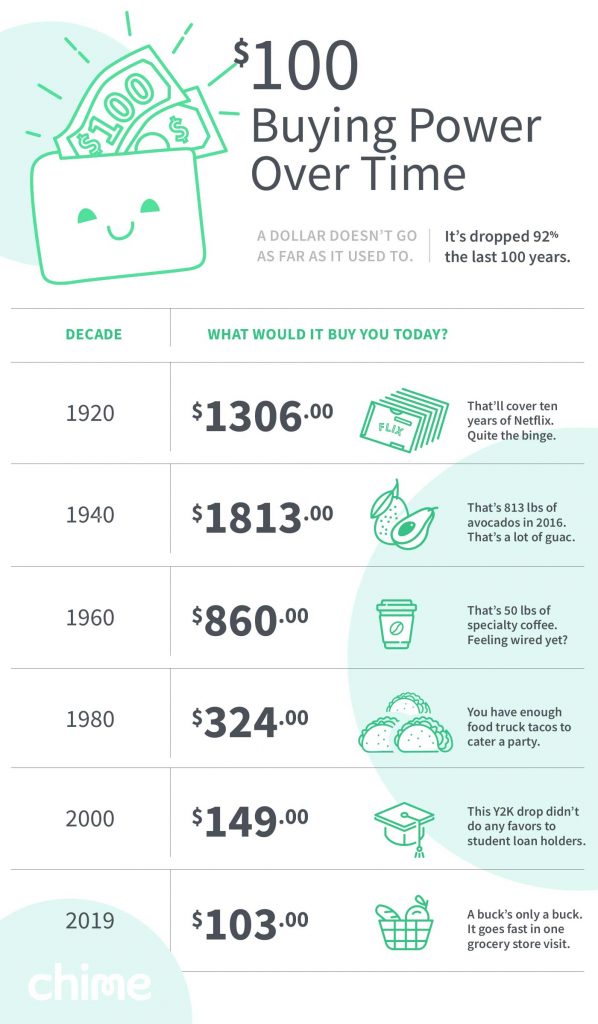
In 1960, the United States was a nation brimming with post-war optimism, navigating the dawn of a new technological era, and experiencing significant societal shifts. Economically, it was a period characterized by steady growth, relatively low inflation compared to later decades, and a booming middle class. To truly grasp the “worth” of $100 in this context, we must dive beyond the nominal figure and explore its purchasing power, compare it to average incomes, and analyze the economic environment that shaped consumer prices. This exploration provides not just a historical snapshot, but vital lessons applicable to today’s financial landscape, where inflation continues to be a persistent, if sometimes subtle, force.
Understanding the Shifting Sands of Purchasing Power
The concept of a dollar’s worth is not static; it is a dynamic measure constantly being reshaped by economic forces. To comprehend what $100 represented in 1960, we must first establish a foundational understanding of the primary mechanism responsible for this change: inflation.
The Core Concept of Inflation
At its heart, inflation is the rate at which the general level of prices for goods and services is rising, and consequently, the purchasing power of currency is falling. When you hear that inflation is 3%, it means that, on average, a basket of goods and services that cost $100 last year now costs $103. Over extended periods, even low rates of inflation can dramatically diminish the value of money. For instance, an item that cost $1.00 in 1960 would cost considerably more today, not necessarily because the item itself is intrinsically more valuable, but because the dollar used to purchase it has lost much of its buying power.
This erosion of value is insidious because it’s often gradual. Consumers may not notice the small, incremental increases year-over-year, but over decades, the cumulative effect is staggering. Inflation impacts everything from the price of groceries and housing to wages, savings, and investments. For anyone holding cash or fixed-income assets, inflation acts as a silent tax, gradually siphoning away their real wealth. Conversely, assets that tend to appreciate at or above the rate of inflation (like stocks or real estate) can serve as crucial hedges against this devaluation.
Why 1960? A Snapshot of a Different Economic Era
Choosing 1960 as our benchmark offers a unique perspective. It predates the significant inflationary pressures of the 1970s and early 1980s, placing it in an era of relative price stability following the post-World War II economic boom. The US economy was robust, driven by manufacturing, expanding infrastructure, and a growing consumer base. This period also saw the rise of modern suburbia, increased car ownership, and the nascent stages of the space race, all contributing to specific demand patterns and price points for goods and services.
Wages, while seemingly low by today’s standards, offered significant purchasing power within the prevailing economic context. A single-income household could often comfortably support a family, own a home, and save for retirement. Understanding $100 in 1960 is therefore not just an exercise in numbers; it’s an exploration of a fundamentally different socio-economic structure where the cost of living and the accessibility of a middle-class lifestyle were significantly different from what they are today. This historical lens helps us appreciate how much economic conditions, rather than just raw monetary figures, define true “worth.”
Calculating the Real Value: From Past to Present
To translate the nominal value of $100 in 1960 into today’s equivalent, we rely on specific economic tools and then contextualize those numbers with real-world examples of what that money could actually purchase.
The Consumer Price Index (CPI) as Our Guide
The most widely used measure for tracking inflation and calculating purchasing power over time is the Consumer Price Index (CPI). Published by the Bureau of Labor Statistics (BLS), the CPI measures the average change over time in the prices paid by urban consumers for a market basket of consumer goods and services. This basket includes everything from food and housing to transportation, medical care, and education. By comparing the CPI from 1960 to the current year, we can estimate how much money today would be required to buy the same amount of goods and services that $100 bought back then.
While specific annual CPI figures fluctuate, a general calculation reveals the dramatic shift. For example, if we consider an average CPI of around 29.5 in 1960 and roughly 300 today (these are approximate for illustration, actual numbers vary slightly), a simple calculation shows:
*Today’s Value = Original Value * (CPI Today / CPI Original)*
$100 * (300 / 29.5) ≈ $100 * 10.17 ≈ $1,017
This means that, in terms of purchasing power, $100 in 1960 had roughly the same buying power as over $1,000 would have today. This tenfold decrease in value over six decades underscores the profound impact of compounding inflation and highlights why simply holding cash is a losing proposition over the long term.
Beyond the Numbers: What Could $100 Buy?
While the CPI provides a numerical equivalent, understanding what $100 could actually purchase in 1960 offers a more tangible sense of its worth. Back then, $100 represented a significant sum that could cover substantial expenses or provide a comfortable margin for discretionary spending for many households.
- Groceries: A comprehensive grocery haul for a family for a week or even two could easily be managed with $100. A gallon of milk might cost around $1.00, a loaf of bread $0.20, and a pound of ground beef roughly $0.50. You could fill your pantry and fridge with relative ease.
- Automotive: While a new car was still a major purchase (average price around $2,600-$3,000), $100 could cover several fill-ups of gasoline (at about $0.30 per gallon), a few basic repairs, or perhaps a significant down payment on a used vehicle.
- Housing: A monthly mortgage payment on an average home (which cost around $12,000-$15,000) might have been around $70-$100, making $100 a substantial contribution to shelter. Rent for a modest apartment could also fall within this range.
- Wages and Income: In 1960, the average annual income was approximately $5,300. This meant $100 represented nearly 2% of an entire year’s average earnings, equivalent to roughly a week’s wages for many blue-collar workers. For context, 2% of today’s average annual income (closer to $60,000-$70,000) would be $1,200-$1,400.
- Entertainment & Apparel: You could buy multiple records, go to the movies several times, or purchase a significant amount of clothing. A decent suit might cost $50-$70, leaving change from your $100 bill.
These examples vividly illustrate that $100 in 1960 was not mere pocket change; it was a powerful unit of currency capable of sustaining a family, making significant purchases, or contributing substantially to savings.
The Impact of Compounding Inflation
The long-term impact of inflation is often underestimated. While the average annual inflation rate in the US has fluctuated, it typically hovers in the low single digits. However, these seemingly small percentages compound over time, leading to exponential erosion of purchasing power. The journey from $100 in 1960 being equivalent to over $1,000 today is a testament to the power of compounding. This phenomenon is a critical lesson for personal finance: money that isn’t actively working and growing at a rate equal to or greater than inflation is, in essence, losing value every single day. This underscores the necessity of investing for growth rather than simply saving cash, especially over multi-decade horizons.
The Broader Economic Landscape of the 1960s
Understanding the specific economic conditions of the 1960s provides crucial context for appreciating the value of $100 and the financial decisions of the era. It was a time of both stability and emerging shifts.
Post-War Boom and Economic Stability
The 1960s largely benefited from the lingering momentum of the post-World War II economic boom. The US had emerged from the war as the dominant global economic power, with its industrial capacity intact and an insatiable domestic demand for consumer goods. This period was characterized by strong GDP growth, low unemployment, and rising living standards for a significant portion of the population. Manufacturing was at its peak, providing stable, well-paying jobs that formed the backbone of the middle class. The relatively stable economic environment meant that while inflation was present, it wasn’t the runaway concern it would become in the subsequent decade. This stability made financial planning somewhat more predictable, and the immediate need to aggressively combat inflation through complex investment strategies was less pressing for the average saver than it is today.
Key Economic Indicators and Policies
Several key economic indicators and government policies shaped the financial reality of the 1960s. Fiscal policy was often expansionary, with government spending on infrastructure, defense (Vietnam War), and social programs (the Great Society initiatives) contributing to demand. Monetary policy, managed by the Federal Reserve, aimed to balance growth with price stability. Interest rates, while lower than future peaks, were often attractive for savers. The US dollar was also pegged to gold under the Bretton Woods system until 1971, which provided a different kind of stability and limited the ability of governments to simply print money without consequence, indirectly influencing inflation. This fixed exchange rate system meant that the dollar’s international value was more stable, which in turn helped temper domestic price increases.
Interest Rates and Savings in the Era
For savers, the 1960s often offered more appealing returns than what many bank accounts yield today. While inflation was present, it was typically in the low single digits (e.g., 1-2%). Savings accounts and Treasury bonds could often provide returns that outpaced inflation, allowing savers to genuinely grow their wealth. This made traditional savings vehicles a viable component of a financial plan. The concept of “set it and forget it” savings had more merit when real interest rates (nominal rate minus inflation) were positive. This contrasts sharply with today’s environment, where many savings accounts offer nominal rates barely above zero, making it imperative for individuals to seek investment opportunities to maintain or grow their purchasing power.
The Long-Term Implications for Financial Planning
The journey of $100 from 1960 to today offers invaluable lessons for modern financial planning, emphasizing the enduring challenge of inflation and the importance of strategic wealth management.
Protecting Wealth Against Inflation
The most significant takeaway is the necessity of actively protecting wealth against inflation. Simply holding cash or parking money in low-yield savings accounts guarantees a loss of purchasing power over time. For long-term financial goals like retirement, education, or significant purchases, an investment strategy that aims to outpace inflation is non-negotiable. This involves understanding real returns—the actual gain after accounting for inflation—rather than just nominal returns. Financial tools like inflation-protected securities (TIPS), real estate, and diversified equity portfolios become crucial components of a robust financial plan designed to preserve and grow real wealth.
The Importance of Diversification and Investment
The 1960s economic environment, while stable, eventually gave way to more volatile periods. This historical trajectory reinforces the principle of diversification. Investing across various asset classes—stocks, bonds, real estate, commodities—helps to mitigate risk and capture growth opportunities regardless of which economic cycle prevails. For personal finance, this means not putting all your financial eggs in one basket. From an investing standpoint, focusing on growth-oriented assets that have historically provided returns exceeding inflation is key to long-term wealth accumulation. This typically involves investing in the stock market, either directly or through mutual funds and exchange-traded funds (ETFs), allowing one’s capital to participate in the growth of companies and the broader economy.
Lessons for Today’s Savers and Investors
The value shift of $100 serves as a powerful cautionary tale for today’s savers and investors. It highlights that the absolute number in your bank account is less important than what that number can actually buy. To secure financial futures, individuals must be proactive:
- Educate Yourself: Understand inflation, compound interest, and various investment vehicles.
- Invest Early and Consistently: Time in the market is often more critical than timing the market.
- Diversify Your Portfolio: Spread risk and capture broader market growth.
- Regularly Review and Adjust: Economic conditions change, and so should your financial strategy.
- Focus on Real Returns: Always consider the impact of inflation on your investment gains.
Bridging the Gap: $100 in 1960 vs. Today
The transformation of $100’s value from 1960 to the present day is a stark reminder of economic evolution and the constant struggle for financial relevance. What was once a respectable sum capable of meeting significant needs now scarcely covers a modest meal out or a small grocery run.
The Diminished Value of “A Dollar”
The diminished value of “a dollar” isn’t a phenomenon unique to the US, but a common thread across developed economies. It reflects decades of continuous, albeit often low, inflation. This necessitates a fundamental shift in how individuals perceive and manage money. The nominal value of currency becomes less important than its purchasing power. Understanding this change is crucial for setting realistic financial goals and making informed decisions about saving, spending, and investing. It means that to achieve the same standard of living or purchasing power as someone in 1960, a contemporary individual needs significantly more nominal dollars.
Strategies for Building and Preserving Wealth in a Dynamic Economy
In today’s dynamic global economy, building and preserving wealth requires sophistication and foresight. Strategies must go beyond traditional saving. They encompass:
- Aggressive Investment: Prioritizing investments in assets that have historically beaten inflation, such as equities, real estate, and certain commodities.
- Income Diversification: Exploring online income streams, side hustles, or multiple income sources to build resilience.
- Financial Literacy: Continuously learning about personal finance, taxes, market trends, and economic indicators.
- Debt Management: Understanding the difference between “good” debt (e.g., low-interest mortgage that appreciates) and “bad” debt (e.g., high-interest credit card debt) and managing it effectively.
- Leveraging Financial Tools: Utilizing budgeting apps, robo-advisors, and other digital financial tools to optimize management and decision-making.
The journey of $100 from 1960 to today is more than a historical anecdote; it’s a foundational lesson in personal finance. It teaches us that money is not a static store of value, but a fluid concept constantly influenced by economic forces. To thrive financially, one must understand these forces and adapt their strategies to ensure their wealth grows in real terms, not just in nominal dollars.
aViewFromTheCave is a participant in the Amazon Services LLC Associates Program, an affiliate advertising program designed to provide a means for sites to earn advertising fees by advertising and linking to Amazon.com. Amazon, the Amazon logo, AmazonSupply, and the AmazonSupply logo are trademarks of Amazon.com, Inc. or its affiliates. As an Amazon Associate we earn affiliate commissions from qualifying purchases.