
Social Security is a cornerstone of financial security for millions of Americans, providing retirement, disability, and survivor benefits. Yet, despite its pervasive influence on personal finances, many individuals don’t fully grasp the mechanics of how much is actually contributed to the system, by whom, and for what purpose. Understanding these contributions is crucial not only for tax planning but also for forecasting future benefits and integrating Social Security into a comprehensive financial strategy.
Understanding Social Security Contributions: The FICA Tax
The primary mechanism for funding Social Security is through payroll taxes, most commonly known as the Federal Insurance Contributions Act (FICA) tax. This tax is a mandatory deduction from the wages of most American workers, shared between employees and employers, and also applies to self-employed individuals.
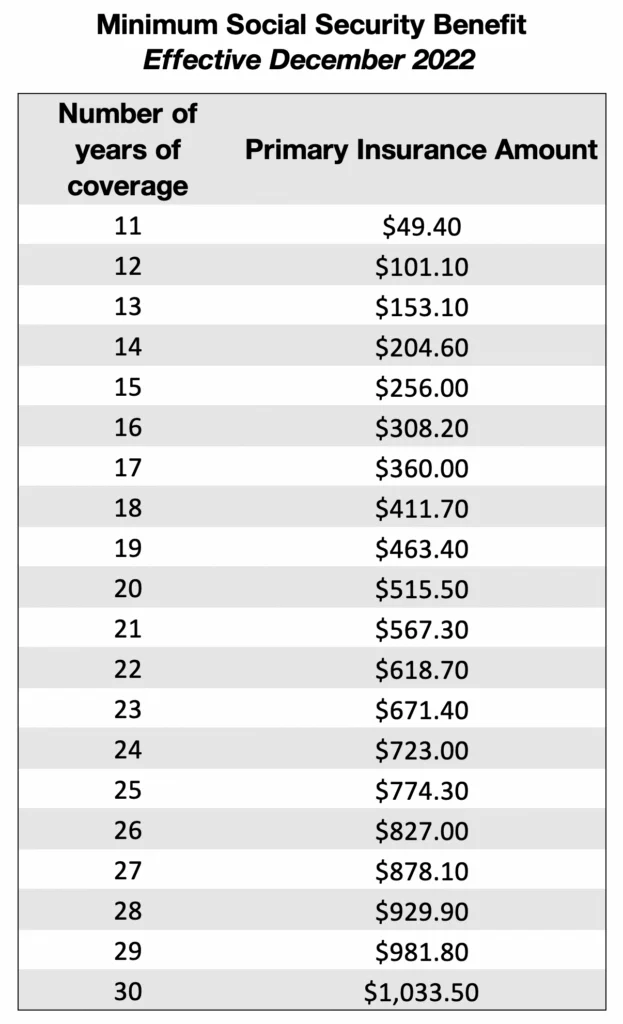
The FICA Tax Breakdown
FICA tax is composed of two main components:
- Social Security tax: This portion funds the Old-Age, Survivors, and Disability Insurance (OASDI) program. For 2024, the Social Security tax rate is 6.2% on earnings up to a certain annual limit.
- Medicare tax: This portion funds the hospital insurance program. For 2024, the Medicare tax rate is 1.45% on all earnings, with no wage base limit. Additionally, a 0.9% Additional Medicare Tax applies to earnings above a certain threshold ($200,000 for single filers, $250,000 for married filing jointly) for employees.
Combined, the total FICA tax rate for employees is 7.65% (6.2% for Social Security + 1.45% for Medicare) on earnings up to the Social Security wage base, plus the 1.45% (and potentially 0.9% additional) Medicare tax on all earnings.
Employee vs. Employer Contributions
One of the most distinctive features of the FICA tax is its shared burden. When you see a FICA deduction on your paycheck, that 7.65% (or more) is just your half of the equation. Your employer pays an identical amount on your behalf.
- Employee Contribution: You directly pay 6.2% for Social Security and 1.45% for Medicare from your gross wages.
- Employer Contribution: Your employer matches these contributions, paying another 6.2% for Social Security and 1.45% for Medicare on your behalf.
This means that for every dollar you earn (up to the Social Security wage base), a total of 15.3% (12.4% for Social Security + 2.9% for Medicare) is contributed to the FICA system.
Self-Employment Tax
If you are self-employed, you are responsible for paying both the employee and employer portions of FICA taxes. This is known as the Self-Employment Contributions Act (SECA) tax. The self-employment tax rate is 15.3% (12.4% for Social Security + 2.9% for Medicare) on your net earnings from self-employment. However, you don’t pay SECA tax on all of your gross income. You pay SECA tax on 92.35% of your net earnings from self-employment. This adjustment accounts for the employer’s half of FICA taxes, which an employee typically doesn’t pay income tax on. Like employed individuals, there is a wage base limit for the Social Security portion, and the Medicare portion applies to all earnings, with the Additional Medicare Tax potentially coming into play.
The Wage Base Limit
A critical detail for Social Security contributions is the annual wage base limit. For the Social Security portion of FICA tax (the 6.2%), there’s an annual cap on the amount of earnings subject to the tax. This limit is adjusted annually to account for changes in average wages. For example, in 2024, the Social Security wage base limit is $168,600. This means that any earnings above this amount are not subject to the 6.2% Social Security tax. However, there is no wage base limit for the Medicare tax (1.45% and the additional 0.9%). This means that the Medicare portion of FICA tax is levied on all of your earned income, regardless of how high it is.
Who Pays and What It Funds
The system of Social Security is built on a “pay-as-you-go” principle, meaning that current workers’ contributions largely fund the benefits of current retirees and other beneficiaries.
Current Workers Funding Current Beneficiaries
When you or your employer pay FICA taxes, that money isn’t set aside in an individual account for your future use. Instead, it’s immediately used to pay benefits to people currently receiving Social Security payments. This intergenerational contract ensures a continuous flow of funds to support those who are no longer working or are unable to work. This makes Social Security a form of social insurance, pooling resources to protect individuals against common financial risks.
Beyond Retirement: Disability, Survivors, and Medicare
While often associated with retirement, Social Security’s reach extends much further. The FICA contributions fund several vital programs:
- Old-Age and Survivors Insurance (OASI): This is the retirement component, providing benefits to retired workers and their eligible family members (spouses, children). It also provides benefits to survivors of deceased workers, including spouses, children, and dependent parents.
- Disability Insurance (DI): This program provides financial assistance to workers who become severely disabled and are unable to work, and to their eligible family members.
- Medicare Hospital Insurance (HI): The Medicare portion of FICA tax specifically funds Part A of Medicare, which covers inpatient hospital stays, skilled nursing facility care, hospice care, and some home health care.
It’s important to distinguish that while FICA funds Medicare Part A, other parts of Medicare (Part B, D, and supplemental plans) are typically funded through general revenues, beneficiary premiums, and state payments.
The Social Security Trust Funds
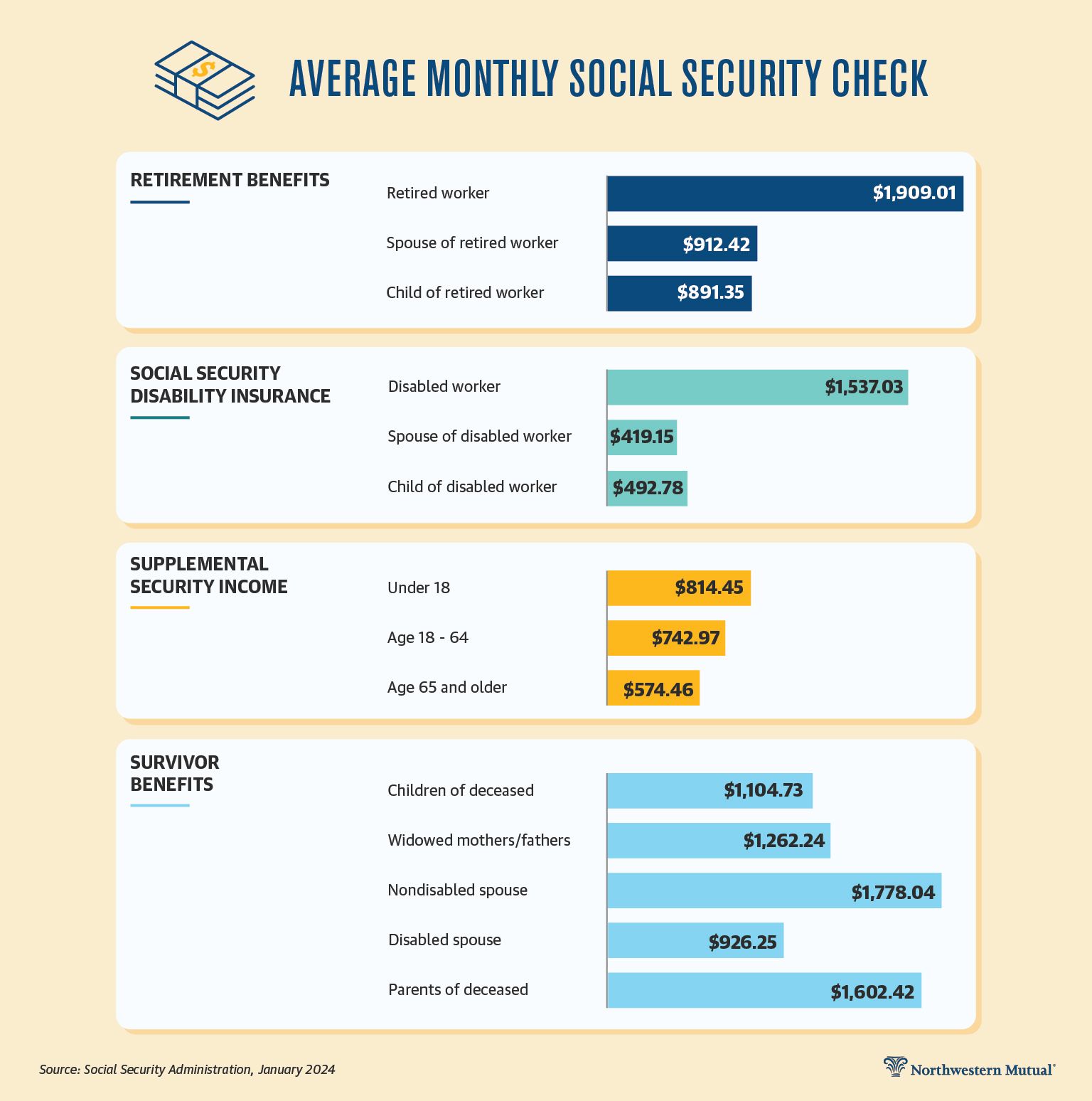
Despite the “pay-as-you-go” nature, there are actual Social Security Trust Funds. These are not bank accounts in the traditional sense, but rather accounting mechanisms that hold government bonds. The Social Security Administration (SSA) manages two primary trust funds: the Old-Age and Survivors Insurance (OASI) Trust Fund and the Disability Insurance (DI) Trust Fund. When annual FICA tax revenues exceed the amount needed to pay current benefits, the surplus is invested in special-issue U.S. Treasury securities, which earn interest. These bonds represent a claim on the U.S. government, providing a reserve that can be drawn upon when annual expenditures exceed incoming tax revenues, as is projected to happen in the coming decades due to demographic shifts.
Calculating Your Future Benefits: What You Get Out
While the focus has been on what is paid into Social Security, the ultimate question for many is, “What will I get out?” Your future Social Security benefit amount is not a simple calculation of your total contributions. It’s determined by a complex formula that considers your entire earnings history and several other factors.
Primary Insurance Amount (PIA)
The core of your Social Security benefit calculation is your Primary Insurance Amount (PIA). This is the monthly benefit you would receive if you start collecting benefits at your full retirement age (FRA). To calculate your PIA, the SSA uses your “average indexed monthly earnings” (AIME).
- Earnings Record: The SSA considers your highest 35 years of indexed earnings. “Indexed” means that past earnings are adjusted to reflect changes in the national average wage level over time, ensuring that early career earnings retain their relative value.
- Average Monthly Earnings: These 35 years of indexed earnings are summed and then divided by 420 (the number of months in 35 years) to arrive at your AIME.
- Bend Points: The AIME is then subjected to a progressive formula involving “bend points.” This formula is designed to replace a higher percentage of earnings for lower-income workers compared to higher-income workers, reflecting the program’s social adequacy goals. For example, a certain percentage of your AIME up to the first bend point is replaced, a smaller percentage between the first and second bend points, and an even smaller percentage above the second bend point.
The result of this calculation is your PIA. You can obtain an estimate of your PIA and projected benefits by creating an account on the Social Security Administration’s website (ssa.gov) and reviewing your Social Security Statement.
Factors Affecting Your Benefit Amount
Beyond your PIA, several other factors significantly influence the actual monthly benefit you receive:
- Age of Claiming: This is arguably the most impactful decision.
- Claiming Early (Age 62): You can start receiving benefits as early as age 62, but your monthly benefit will be permanently reduced. The reduction can be substantial, often around 25-30% less than your PIA, depending on your birth year.
- Claiming at Full Retirement Age (FRA): Your FRA varies based on your birth year (e.g., 66 for those born between 1943-1954, gradually increasing to 67 for those born in 1960 or later). Claiming at your FRA ensures you receive 100% of your PIA.
- Claiming Late (Up to Age 70): For each year you delay claiming benefits beyond your FRA, up to age 70, you earn “delayed retirement credits.” These credits permanently increase your monthly benefit by 8% per year (or 2/3 of 1% per month), resulting in a significantly higher payment.
- Cost-of-Living Adjustments (COLAs): Once you start receiving benefits, your monthly payment is typically adjusted annually to account for inflation. These COLAs help maintain the purchasing power of your benefits over time.
- Spousal and Survivor Benefits: Your earnings history can also impact benefits for your eligible spouse or survivors. A spouse may be eligible for up to 50% of your PIA (if claiming at their FRA), and survivors may receive a percentage of your benefit.
Maximizing Your Benefits
To maximize your Social Security benefits, consider these strategies:
- Work at Least 35 Years: Since the formula uses your highest 35 years of indexed earnings, working fewer than 35 years will result in “zero” years in the calculation, lowering your AIME. Conversely, working more than 35 years, especially in your higher-earning years, can replace lower-earning years, increasing your AIME.
- Increase Your Earnings: Higher lifetime earnings directly translate to a higher AIME and thus a higher PIA.
- Strategize Your Claiming Age: For many, delaying benefits past their FRA, up to age 70, can lead to significantly higher lifetime payouts, especially if they have good health and other retirement income sources. However, the optimal claiming age is highly individual and depends on health, financial needs, and other income streams.
- Coordinate with a Spouse: Married couples have opportunities to coordinate their claiming strategies to maximize combined lifetime benefits, which might involve one spouse claiming early while the other delays.
The Long-Term Outlook: Sustainability and Future Changes
The financial health of Social Security is a perennial topic of discussion, particularly concerning its long-term sustainability. Demographic shifts and economic factors pose challenges that may necessitate future adjustments to the program.
Demographic Shifts
The primary drivers of Social Security’s long-term financial challenges are demographic.
- Aging Population: The baby boomer generation is reaching retirement age, leading to a surge in beneficiaries relative to the number of contributing workers.
- Lower Birth Rates: Fewer births mean a shrinking base of future workers to support the growing number of retirees.
- Increased Life Expectancy: People are living longer, meaning they collect benefits for more years than previous generations.
These trends collectively put pressure on the pay-as-you-go system, as the ratio of workers to beneficiaries declines.
Potential Reforms and Their Impact
To address the projected shortfall in the Social Security Trust Funds, various proposals for reform have been put forward. These typically fall into a few categories:
- Increasing Revenue:
- Raising the Social Security Payroll Tax Rate: A modest increase in the 6.2% rate for employees and employers would generate significant additional revenue.
- Raising or Eliminating the Wage Base Limit: Currently, earnings above the annual wage base limit are not subject to Social Security tax. Eliminating or raising this limit would increase contributions from high-income earners.
- Including More Earnings: Some proposals suggest expanding the types of income subject to FICA taxes.
- Decreasing Expenditures:
- Raising the Full Retirement Age (FRA): Gradually increasing the age at which individuals can claim their full benefits would reduce the total duration of payments.
- Adjusting the COLA Formula: Changing how cost-of-living adjustments are calculated (e.g., using a “chained CPI” which typically grows slower) would result in smaller annual benefit increases.
- Means-Testing Benefits: Reducing benefits for higher-income retirees.
The precise impact of any potential reform would depend on the specific changes enacted. For individuals, these changes could mean paying more in taxes, receiving less in benefits, or retiring later to achieve the same level of benefits.

Personal Financial Planning Beyond Social Security
Given the uncertainties surrounding Social Security’s long-term future, a prudent financial strategy should not rely solely on these benefits. While Social Security provides a vital safety net and a foundational component of retirement income, it is generally designed to replace only about 40% of an average worker’s pre-retirement earnings. For higher earners, this replacement rate is even lower.
Therefore, robust personal financial planning necessitates:
- Aggressive Savings and Investing: Maximize contributions to 401(k)s, IRAs, and other investment vehicles.
- Diversified Income Streams: Consider pensions, rental properties, part-time work, or other sources of income in retirement.
- Healthcare Planning: Factor in significant healthcare costs beyond what Medicare covers.
- Contingency Planning: Build an emergency fund and consider long-term care insurance.
Understanding how much is paid into Social Security, who pays it, and how your future benefits are calculated empowers you to make informed decisions about your financial future, integrating this essential program into a broader and more resilient personal finance plan.
aViewFromTheCave is a participant in the Amazon Services LLC Associates Program, an affiliate advertising program designed to provide a means for sites to earn advertising fees by advertising and linking to Amazon.com. Amazon, the Amazon logo, AmazonSupply, and the AmazonSupply logo are trademarks of Amazon.com, Inc. or its affiliates. As an Amazon Associate we earn affiliate commissions from qualifying purchases.