
The quest for sustainable energy solutions has placed solar photovoltaic (PV) technology at the forefront of global innovation. As individuals, businesses, and nations increasingly turn to the sun for power, a fundamental question arises: how much energy do solar panels actually produce? The answer, while seemingly straightforward, involves a nuanced understanding of technology, environmental factors, and system design. This article delves into the intricate mechanics of solar energy production, explores the diverse factors that influence output, quantifies performance metrics, and looks at the broader technological impact of these revolutionary devices.
The Core Mechanics of Solar Energy Production
At its heart, a solar panel is an elegant device designed to capture sunlight and convert it into usable electricity. This process relies on a scientific phenomenon discovered in the 19th century and perfected over decades of engineering.
Photovoltaic Effect Explained
The magic behind solar panels lies in the “photovoltaic effect.” This is the process by which a material, when exposed to light, generates an electric current. Solar panels are constructed from semiconductor materials, most commonly silicon, which is treated to create an electric field. When photons (particles of light) from the sun strike the silicon cells, they knock electrons loose from their atoms. These freed electrons are then directed by the electric field to flow in a particular direction, creating an electric current. Each individual solar cell produces a small amount of direct current (DC) electricity. These cells are then wired together within a panel to increase the voltage and current to a practical level. The efficiency with which a solar cell converts sunlight into electricity is a critical technological metric, constantly being improved through materials science and design innovations. Modern panels typically achieve efficiencies ranging from 17% to over 22% in commercial applications, with cutting-edge research pushing these figures even higher.
Components of a Solar PV System
A standalone solar panel doesn’t constitute a complete energy system. A fully functional solar PV system is an integrated network of several key technological components working in concert:
- Solar Panels (Modules): These are the primary energy collectors, containing the photovoltaic cells. They are designed to be durable, weather-resistant, and have a long operational lifespan, often exceeding 25 years.
- Inverter: Solar panels produce DC electricity, but most modern homes and grids operate on alternating current (AC). The inverter is the crucial component that converts DC electricity from the panels into usable AC electricity. There are different types of inverters, including string inverters (common for residential systems), microinverters (one per panel, optimizing individual panel performance), and hybrid inverters (which can also manage battery storage).
- Mounting System: This structural framework securely holds the solar panels in place, often on a roof or ground array, ensuring optimal tilt and orientation. Material science plays a role here, ensuring durability and resistance to various environmental stresses.
- Wiring and Cabling: These connect the panels to the inverter and the inverter to the electrical panel, ensuring efficient and safe transmission of electricity.
- Monitoring System: Many modern PV systems include monitoring hardware and software that track energy production, system performance, and identify potential issues, often accessible via mobile apps or web portals.
- Optional Battery Storage: For increased energy independence and resilience, battery storage systems can store excess electricity generated during the day for use at night or during power outages. This integration represents a significant technological advancement in solar adoption.
DC to AC Conversion
The conversion from DC to AC electricity is a critical technological step. While seemingly simple, the efficiency and quality of this conversion significantly impact the overall energy output and stability of the system. Inverters are sophisticated electronic devices designed to perform this conversion with minimal energy loss. Advanced inverters also offer features like maximum power point tracking (MPPT), which continuously adjusts the electrical load to ensure the solar panels operate at their peak power output under varying conditions. The evolution of inverter technology, particularly the advent of microinverters, has allowed for more granular control over individual panel performance, mitigating the impact of shading or panel-level issues on the overall system output.
Factors Influencing Solar Panel Output
The energy production of a solar panel system is not a fixed value; it’s a dynamic output influenced by a multitude of factors, both intrinsic to the technology and external environmental conditions. Understanding these variables is key to accurately predicting and optimizing performance.
Panel Efficiency and Type
The inherent efficiency of a solar panel is paramount. This metric, expressed as a percentage, indicates how much of the sunlight hitting the panel is converted into electricity.
- Monocrystalline Panels: Made from a single crystal of silicon, these are generally the most efficient (18-22%+) and have a sleek, uniform black appearance. They perform well in high temperatures and low light conditions.
- Polycrystalline Panels: Composed of multiple silicon crystals, they are slightly less efficient (15-17%) but typically more affordable. They have a blue, speckled appearance.
- Thin-Film Panels: Utilizing various semiconductor materials (like amorphous silicon, cadmium telluride, or copper indium gallium selenide), these are generally the least efficient (10-13%) but can be flexible and lightweight, making them suitable for specialized applications.
Technological advancements continuously push the boundaries of efficiency for all types, with manufacturers investing heavily in R&D to improve cell architecture and material composition.
Irradiance and Sunlight Hours (Geographic Location)
The amount of solar radiation (irradiance) reaching the panels is the most significant external factor. Areas closer to the equator generally receive more direct and intense sunlight throughout the year. The number of peak sun hours—the equivalent hours per day when solar irradiance averages 1,000 watts per square meter—is a crucial geographical determinant. A panel in Arizona will naturally produce more energy than an identical panel in Seattle due to differences in average sunlight and weather patterns. Sophisticated solar mapping tools and databases provide detailed irradiance data for almost any location on Earth, allowing for precise pre-installation energy yield estimations.
Temperature Effects on Performance
Counterintuitively, while solar panels need sunlight, very high temperatures can actually reduce their efficiency. Silicon-based PV cells are more efficient at cooler temperatures. As the temperature of the panel rises above optimal operating conditions (typically around 25°C or 77°F), its voltage output decreases, leading to a reduction in power production. This is usually expressed by a temperature coefficient, which indicates the percentage drop in power per degree Celsius increase. Effective ventilation and mounting designs that allow air to circulate beneath the panels can mitigate this effect.
System Sizing and Configuration
The sheer number of panels and their arrangement directly influences the total energy output. A larger array with more panels will, all else being equal, produce more electricity. However, system sizing must be balanced against available space, budget, and energy needs. The configuration of the panels (e.g., in series or parallel) and the matching of the inverter to the array’s capacity are also critical technical considerations to avoid underperformance or overloading. Advanced system design software helps engineers optimize these configurations for maximum energy harvesting.
Orientation, Tilt, and Shading
For fixed-tilt systems, the angle and direction of the panels are crucial. In the Northern Hemisphere, panels ideally face true south (or north in the Southern Hemisphere) to maximize exposure to the sun throughout the day. The tilt angle should generally correspond to the latitude of the location for optimal year-round production, or be adjusted seasonally. Even partial shading from trees, chimneys, or neighboring buildings can drastically reduce the output of an entire string of panels if a string inverter is used. Microinverters or power optimizers (DC optimizers) are technological solutions that can mitigate the impact of shading by allowing each panel to operate independently at its maximum power point.
Maintenance and Degradation
Like any technological system, solar panels require some level of maintenance. Dust, dirt, pollen, and debris can accumulate on the surface of the panels, blocking sunlight and reducing output. Regular cleaning, especially in dusty or polluted environments, is recommended. Furthermore, solar panels experience a natural, gradual degradation in performance over their operational lifespan. Most manufacturers guarantee a certain level of power output (e.g., 80% of original output after 25 years), reflecting this anticipated degradation. This technological characteristic is factored into long-term energy yield predictions.
Quantifying Energy Production: Metrics and Calculations
To understand and compare solar panel performance, several key technical metrics are used. These allow for precise measurement and estimation of energy production.
Kilowatt-peak (kWp) and Kilowatt-hour (kWh)
- Kilowatt-peak (kWp): This is a measure of a solar panel or system’s theoretical maximum power output under standard test conditions (STC). STC typically involves an irradiance of 1,000 watts per square meter, a panel temperature of 25°C, and an air mass of 1.5. A 400-watt panel, for example, has a peak power of 0.4 kWp. This metric is used to rate the capacity of panels and entire arrays, but it doesn’t represent real-world average production.
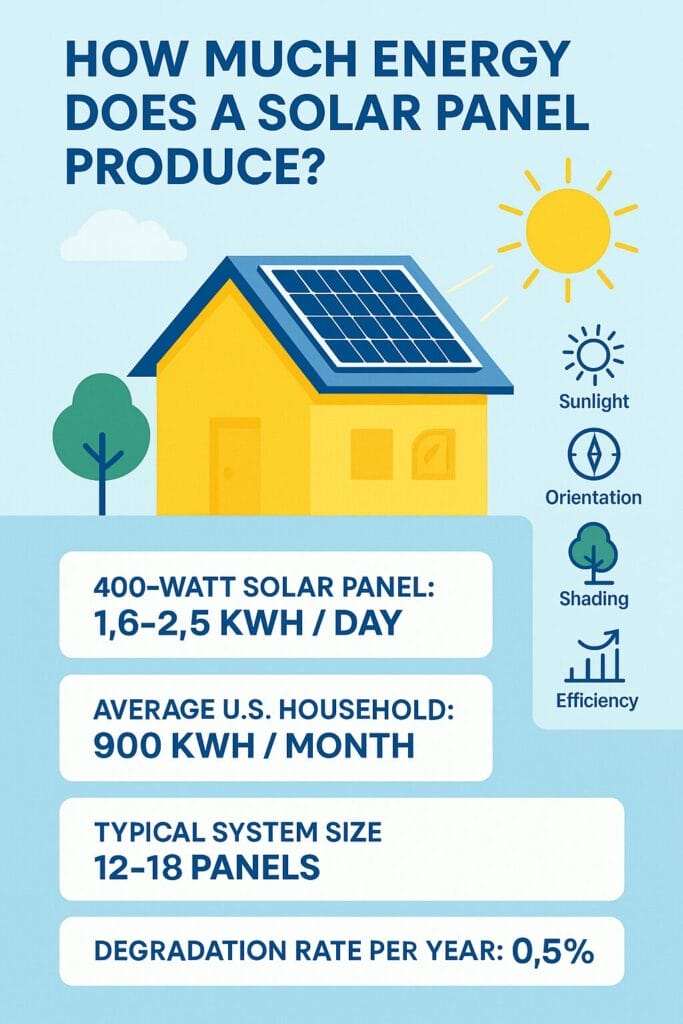
- Kilowatt-hour (kWh): This is the standard unit of energy and represents the actual amount of electricity produced over time. One kilowatt-hour is equivalent to using 1,000 watts of power for one hour. When discussing “how much energy” solar panels produce, we are fundamentally talking about kWh. A typical residential solar system might produce anywhere from 5,000 kWh to 15,000 kWh per year, depending on its size and location.
Performance Ratio (PR)
The Performance Ratio (PR) is a crucial metric for evaluating the overall quality and efficiency of a solar PV system once installed. It compares the actual measured energy output of the system to its theoretically possible output under ideal conditions. A PR of 0.80 (or 80%) means that the system is delivering 80% of its potential energy, with the remaining 20% lost due to factors like temperature effects, wiring losses, inverter inefficiency, shading, and soiling. A higher PR indicates a more efficiently designed and operating system. Monitoring systems often calculate PR, providing valuable data for troubleshooting and optimization.
Estimating Annual Energy Yield
Estimating the annual energy yield (in kWh) is a complex but vital process, often performed using sophisticated simulation software (like PVsyst or PVWatts). These tools take into account:
- System Size (kWp): The total peak power of the array.
- Geographic Location: Using historical weather data for irradiance, temperature, and cloud cover.
- Orientation and Tilt: Specific angles of the panels.
- Shading Analysis: Detailed assessment of potential shading throughout the year.
- Component Efficiencies: Inverter efficiency, panel degradation rates, and estimated system losses (wiring, dust, etc.).
The result is a projected annual energy output, which provides a realistic expectation of the system’s performance under specific environmental and technological conditions.
Real-World Examples and Averages
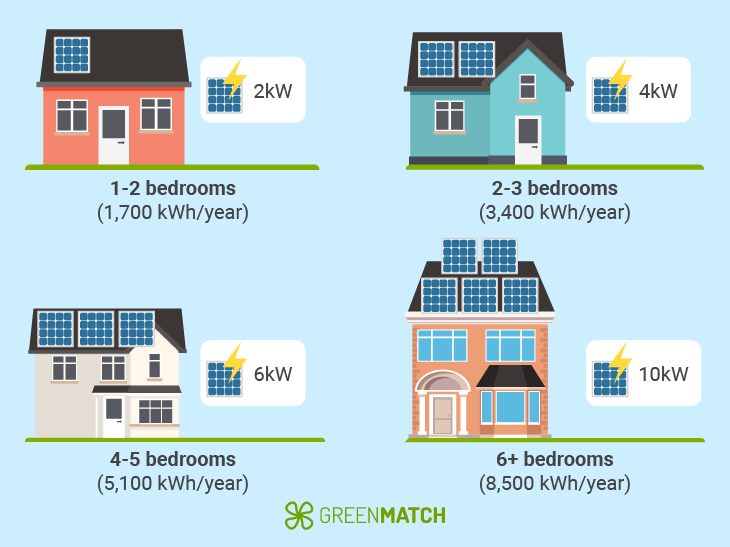
While specific numbers vary wildly, we can provide some illustrative averages. A typical residential solar panel might produce between 250-400 watts of power under ideal conditions. A standard 6 kW residential solar system (about 15-20 panels) in a sunny location in the US might produce approximately 7,000-9,000 kWh of electricity annually. In extremely sunny regions, this could be higher, while in less sunny areas, it would be lower. For example, a system in California could easily produce 1,500 kWh per kWp installed per year, whereas a similar system in the Pacific Northwest might yield closer to 1,000 kWh per kWp annually. These figures highlight the significant impact of geography on the technological output.
Beyond Kilowatt-Hours: The Broader Technological Impact
The energy production from solar panels extends beyond mere kilowatt-hours; it has a profound technological impact on energy infrastructure, grid stability, and the pursuit of a sustainable future.
Grid Integration and Smart Grids
The widespread adoption of solar PV has necessitated significant advancements in grid technology. Integrating intermittent renewable sources like solar requires sophisticated grid management systems. Smart grids, enabled by advanced sensors, communication networks, and data analytics, are designed to handle bidirectional power flow (electricity going both to and from homes with solar), manage fluctuations in supply, and optimize energy distribution. Technologies like predictive analytics, demand-response programs, and advanced inverters with grid-support functions are crucial for maintaining grid stability and reliability in an increasingly solar-powered world.
Energy Storage Solutions (Batteries)
The inherent intermittency of solar power (no production at night, reduced on cloudy days) has accelerated the development and deployment of energy storage technologies, primarily batteries. Lithium-ion batteries, in particular, have seen rapid technological advancements in terms of energy density, cycle life, and cost reduction. Integrating battery storage with solar PV systems allows for energy shifting, where surplus solar energy generated during peak sunlight hours can be stored and used later, enhancing self-sufficiency and reducing reliance on the grid during peak demand periods. This technological synergy unlocks the full potential of solar energy.
Advancements in Solar Technology
The field of solar technology is dynamic, with continuous innovation driving improved performance and versatility.
- Perovskite Solar Cells: Emerging as a promising alternative to silicon, perovskites offer high efficiency, flexibility, and lower manufacturing costs, potentially revolutionizing panel design.
- Bifacial Solar Panels: These panels can capture sunlight from both their front and back sides, increasing overall energy capture, especially when mounted over reflective surfaces or on ground arrays.
- Transparent Solar Cells: Still largely in research, these could be integrated into windows and building facades, turning entire structures into energy generators.
- Solar Trackers: Mechanized systems that automatically adjust the orientation of panels throughout the day to follow the sun, significantly increasing energy yield (though at a higher cost and complexity). These represent a blend of mechanical and control engineering.
Environmental and Sustainability Aspects
From a technological standpoint, the energy produced by solar panels is inherently clean. Once manufactured, solar panels produce electricity without emitting greenhouse gases, air pollutants, or generating hazardous waste during operation. This shift from fossil fuel-based generation to renewable solar power is a critical technological step in mitigating climate change and improving air quality. The ongoing technological challenge is to make the manufacturing and recycling processes for solar panels even more sustainable.
Optimizing Your Solar Investment Through Technology
Maximizing the energy production from solar panels isn’t just about initial installation; it involves continuous optimization and strategic technological choices that enhance long-term performance and returns.
Monitoring Systems and Analytics
Modern solar PV systems are often equipped with sophisticated monitoring technologies that provide real-time data on energy production, consumption, and system health. These systems utilize sensors, data loggers, and internet connectivity to provide insights that can be accessed via desktop or mobile applications. Advanced analytics can identify underperforming panels, detect shading issues, predict maintenance needs, and even forecast future production based on weather patterns. This data-driven approach allows owners to ensure their system is consistently operating at peak efficiency and to quickly address any issues, thereby preserving and maximizing energy output.
Choosing the Right Technology for Your Needs
The “best” solar technology is subjective and depends on specific requirements. For limited roof space, high-efficiency monocrystalline panels might be preferred. For complex roofs or areas prone to shading, microinverters or power optimizers are technologically superior choices. Those seeking greater energy independence might integrate a battery storage system. A thorough assessment of site conditions, energy consumption patterns, and budget, combined with expert technical consultation, is essential to select the optimal combination of solar panel type, inverter technology, and system architecture for maximum output and longevity.
Future-Proofing with Scalable Systems
As energy needs evolve and technology advances, planning for future scalability is a wise technical consideration. Designing a solar PV system with the potential for expansion – perhaps by including an inverter that can handle more panels than initially installed, or by selecting a system architecture that readily integrates battery storage later – ensures adaptability. This approach leverages the modular nature of solar technology, allowing owners to incrementally enhance their energy production capabilities as their requirements or technological opportunities change.
In conclusion, the energy production of solar panels is a fascinating intersection of physics, engineering, and environmental science. While the core principle is simple, the factors influencing real-world output are complex and interconnected. By understanding the technological mechanics, appreciating the variables at play, and leveraging advanced monitoring and optimization tools, we can harness the sun’s immense power more effectively, driving us towards a cleaner, more sustainable energy future.
aViewFromTheCave is a participant in the Amazon Services LLC Associates Program, an affiliate advertising program designed to provide a means for sites to earn advertising fees by advertising and linking to Amazon.com. Amazon, the Amazon logo, AmazonSupply, and the AmazonSupply logo are trademarks of Amazon.com, Inc. or its affiliates. As an Amazon Associate we earn affiliate commissions from qualifying purchases.