
For millions of Americans, Social Security benefits form a critical pillar of their retirement strategy, often serving as a foundational income stream that can significantly impact financial security in later life. Yet, despite its widespread importance, the precise methodology behind how these benefits are calculated remains a mystery to many. This lack of clarity can lead to anxiety, missed planning opportunities, and ultimately, a suboptimal financial outcome. Understanding the complex interplay of your earnings history, claiming age, and various other factors is not just an academic exercise; it’s an essential step in empowering yourself to make informed decisions about your financial future.

Social Security isn’t a simple “what you put in is what you get out” system. Instead, it’s a sophisticated, progressive insurance program designed to provide a safety net across a wide spectrum of earnings. The calculation involves several key stages, from compiling your lifetime earnings to applying a specific formula that determines your primary benefit amount, which is then adjusted based on when you choose to begin receiving payments. By demystifying this process, we aim to provide you with the insights necessary to project your potential benefits more accurately and strategize effectively for your retirement years.
The Foundation: Your Earnings Record
The bedrock of your Social Security benefit calculation is your lifetime earnings record. The Social Security Administration (SSA) meticulously tracks every dollar you earn from jobs covered by Social Security, ensuring that your contributions are recorded and will eventually be factored into your benefit determination. This record is more than just a tally; it’s a detailed history that profoundly influences the size of your future payments.
A Lifetime of Contributions
Every time you see a deduction for FICA (Federal Insurance Contributions Act) on your paycheck, you’re contributing to Social Security and Medicare. These contributions are credited to your earnings record. The SSA collects and maintains this information, which forms the basis for determining eligibility and calculating benefits for retirement, disability, and survivor benefits. It’s crucial that this record is accurate, as any discrepancies could negatively impact your future benefits. The SSA encourages individuals to regularly review their Social Security Statement to ensure that all earnings have been correctly posted.
Indexed Earnings (AIME)
While your raw earnings are recorded, they aren’t used directly in the calculation for benefits. Instead, the SSA “indexes” your past earnings to account for changes in the national average wage level over time. This indexing process brings your historical earnings up to current wage levels, ensuring that your early career earnings have the same relative value as more recent earnings. For example, $10,000 earned in 1980 is worth significantly more in real purchasing power today, and indexing adjusts for this.
The indexed earnings are then used to calculate your Average Indexed Monthly Earnings (AIME). To arrive at your AIME, the SSA takes your 35 highest earning years, indexed for inflation, totals them, and then divides that total by 420 (the number of months in 35 years). If you have fewer than 35 years of earnings, the “missing” years will be counted as zero, which can significantly lower your AIME and, consequently, your benefit amount. This highlights the importance of consistent work history over a long career.
From AIME to Primary Insurance Amount (PIA)
Once your Average Indexed Monthly Earnings (AIME) are determined, the next critical step is to convert this figure into your Primary Insurance Amount (PIA). The PIA is essentially your full, unreduced monthly benefit amount if you claim benefits precisely at your Full Retirement Age (FRA). This conversion is not a simple linear multiplication; it involves a progressive benefit formula designed to provide a higher percentage of pre-retirement earnings to lower-income workers.
Bend Points and Progressive Benefit Formula
The SSA uses a three-tiered progressive formula involving what are known as “bend points.” These bend points are specific dollar amounts for your AIME that change each year to keep pace with wage growth. For earnings up to the first bend point, a high percentage is applied (e.g., 90%). For earnings between the first and second bend points, a lower percentage is applied (e.g., 32%). Finally, for earnings above the second bend point, an even lower percentage is applied (e.g., 15%).
Let’s illustrate with an example (using hypothetical 2024 bend points, as these change annually):
- 90% of the first $1,174 of AIME
- 32% of AIME between $1,174 and $7,078
- 15% of AIME over $7,078
This progressive structure means that Social Security replaces a larger percentage of lifetime average earnings for low-wage earners than for high-wage earners. It reflects the program’s underlying social adequacy goal, providing a more robust safety net for those with fewer alternative retirement resources.
What is PIA?
The result of applying the bend point formula to your AIME is your Primary Insurance Amount (PIA). Your PIA is the monthly benefit you are entitled to receive if you file for Social Security benefits precisely at your Full Retirement Age (FRA). It’s the baseline figure from which all other benefit amounts (early retirement, delayed retirement, spousal, or survivor benefits) are derived. Understanding your PIA is fundamental because it’s the anchor point for all your Social Security planning decisions.
Factors Influencing Your Actual Benefit Amount
While your PIA is your baseline, the actual monthly benefit check you receive can be significantly different. Several critical factors come into play, primarily related to when you choose to start receiving benefits and certain aspects of your ongoing financial situation.
Claiming Age
The age at which you decide to start receiving Social Security benefits is perhaps the most impactful decision you’ll make regarding your benefit amount.
- Early Retirement: You can begin collecting benefits as early as age 62. However, for each month you claim before your Full Retirement Age (FRA), your monthly benefit is permanently reduced. The maximum reduction can be substantial, often around 25-30% depending on your FRA. This reduction is applied to your PIA.
- Delayed Retirement: Conversely, if you delay claiming benefits past your FRA, your monthly benefit will increase. For each year you delay, you earn “Delayed Retirement Credits” (DRCs) which permanently boost your benefit by a certain percentage (currently 8% per year) up until age 70. There’s no additional benefit increase for delaying past age 70.
This means that while your PIA represents your full benefit at FRA, your actual payment can be much higher or lower depending on your claiming strategy.
Full Retirement Age (FRA)
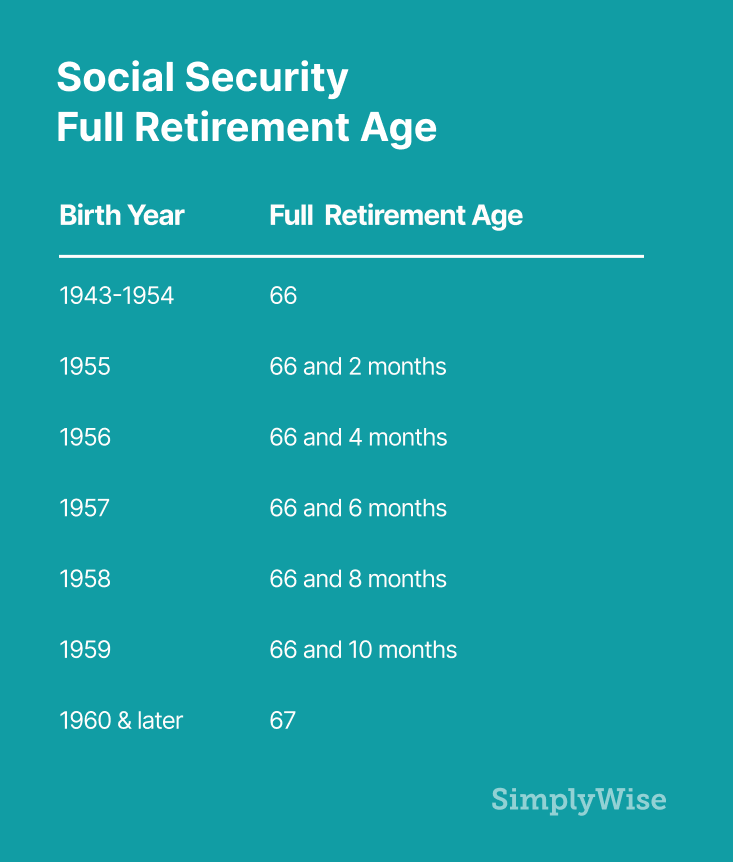
Your Full Retirement Age (FRA) is a crucial determinant in Social Security calculations. It is the age at which you are entitled to receive 100% of your PIA. FRA is not a universal age; it varies based on your birth year. For those born in 1937 or earlier, FRA was 65. For those born between 1943 and 1954, FRA is 66. For those born in 1960 or later, FRA is 67. If your birth year falls between these ranges, your FRA is somewhere in between, gradually increasing by a few months each year. Knowing your specific FRA is vital for understanding how early or delayed claiming will affect your benefits.
Spousal and Survivor Benefits
Social Security is not just for individual workers; it also provides benefits to spouses, ex-spouses, and survivors (widows/widowers, children). These benefits are often linked to the primary earner’s work record.
- Spousal Benefits: A spouse may be eligible for up to 50% of the primary earner’s PIA, provided they are at least age 62 or caring for a child who is receiving benefits on the primary earner’s record. If a spouse has their own work record, they will generally receive the higher of their own benefit or the spousal benefit.
- Survivor Benefits: When a covered worker dies, certain family members (widows/widowers, minor children, dependent parents) may be eligible for survivor benefits. A surviving spouse can typically receive up to 100% of the deceased worker’s PIA. The age at which a surviving spouse claims benefits also impacts the amount, similar to individual retirement benefits.
These provisions add another layer of complexity and opportunity for families planning their financial future, underscoring the insurance aspect of Social Security.
Earnings Limit While Receiving Benefits
If you continue to work while receiving Social Security benefits before your Full Retirement Age, there’s an annual earnings limit. If your earnings exceed this limit, the SSA will temporarily withhold a portion of your benefits. For example, for every $2 you earn over the limit, $1 in benefits may be withheld.
However, once you reach your Full Retirement Age, the earnings limit no longer applies, and you can earn any amount without your Social Security benefits being reduced. Furthermore, any benefits withheld due to the earnings limit before FRA are not permanently lost. When you reach your FRA, the SSA recalculates your benefit to account for the withheld amounts, effectively increasing your monthly benefit going forward. This means the reduction is more of a deferral than a permanent loss.
Tools and Resources for Estimation
Given the intricacies of Social Security calculations, it’s easy to feel overwhelmed. Fortunately, the Social Security Administration provides a wealth of resources and tools to help you understand and estimate your future benefits. Leveraging these resources is crucial for effective retirement planning.
Your Social Security Statement
The most direct and personalized tool is your Social Security Statement. This statement, which you can access online by creating a “my Social Security” account, provides a personalized estimate of your future benefits at different claiming ages (early retirement, full retirement age, and delayed retirement). It also includes a detailed record of your earnings history, allowing you to verify its accuracy. Reviewing your statement annually is highly recommended to catch any potential errors in your earnings record and to stay informed about your projected benefits.
Online Calculators
The SSA website (www.ssa.gov) hosts several helpful online calculators. These tools allow you to input different scenarios, such as varying retirement ages or future earnings projections, to see how these factors might influence your benefit amount. They can be invaluable for exploring various claiming strategies and understanding the financial implications of each. Beyond the official SSA site, many reputable financial planning websites also offer robust Social Security calculators that can provide further insights.
Professional Financial Advice
While online tools and your Social Security Statement provide excellent starting points, the optimal claiming strategy for Social Security is deeply personal and depends on a myriad of individual factors, including your health, other retirement assets, marital status, and desired lifestyle. Consulting with a qualified financial advisor who specializes in retirement planning can provide invaluable personalized guidance. An advisor can help you integrate your Social Security benefits into a comprehensive financial plan, considering tax implications, longevity risk, and your overall financial goals, ensuring you maximize your lifetime benefits.

Conclusion
Understanding how your Social Security benefits are calculated is not just an academic exercise; it’s a critical component of sound personal finance and retirement planning. From the foundation of your indexed lifetime earnings to the complexities of bend points and primary insurance amounts, and finally to the pivotal role of your claiming age, each step contributes to the final benefit amount you’ll receive.
While the system can seem intricate, the core principles revolve around your contributions, your consistent work history, and the strategic decisions you make about when to claim. By actively monitoring your earnings record, utilizing the tools provided by the Social Security Administration, and considering professional financial advice, you can gain clarity and confidence in projecting your future income. Armed with this knowledge, you are better equipped to make informed choices that optimize your Social Security benefits and build a more secure financial future for yourself and your loved ones.
aViewFromTheCave is a participant in the Amazon Services LLC Associates Program, an affiliate advertising program designed to provide a means for sites to earn advertising fees by advertising and linking to Amazon.com. Amazon, the Amazon logo, AmazonSupply, and the AmazonSupply logo are trademarks of Amazon.com, Inc. or its affiliates. As an Amazon Associate we earn affiliate commissions from qualifying purchases.