
In the intricate world of finance, few concepts are as foundational, ubiquitous, and critically misunderstood as the percentage. From personal budgets to global market analyses, percentages serve as the universal language for expressing proportions, changes, and relationships between numbers. They distil complex financial realities into digestible figures, enabling individuals and institutions alike to make informed decisions. Yet, despite their pervasive presence, many grapple with the simple question at the heart of their utility: “what is percentage of what?” This seemingly elementary query is, in fact, the key to unlocking a deeper understanding of financial mechanics, revealing how a part relates to a whole, how growth or decline is measured, and how risks and rewards are quantified.
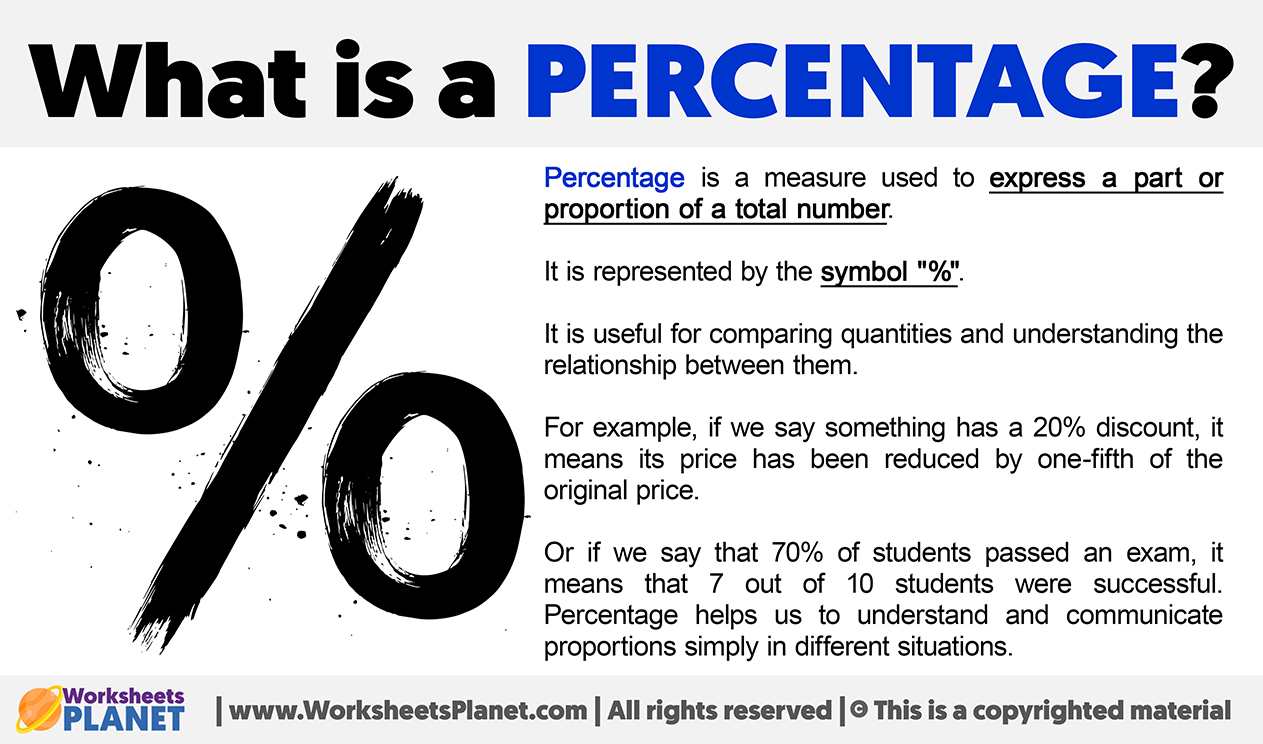
This article delves into the indispensable role of percentages across the financial landscape. We will explore how mastering these fundamental calculations empowers you in personal finance, investing, and business strategy. By breaking down common financial scenarios, we aim to demystify percentage applications, transforming a potentially daunting mathematical concept into a powerful tool for achieving financial clarity and control. Understanding “what percentage of what” is not just about calculation; it’s about gaining perspective, identifying trends, and ultimately, making smarter financial choices that propel you towards your monetary goals.
The Indispensable Role of Percentages in Personal Finance
Personal finance is perhaps where the power of percentages becomes most immediately apparent and impactful. Every decision, from how much to save to how much debt to take on, is underscored by percentage calculations. They provide a clear, relative measure that absolute numbers often lack, allowing for meaningful comparisons and strategic planning.
Budgeting and Expense Management
At the core of sound personal finance lies budgeting, and budgeting is inherently a percentage game. When you earn income, the first question is often: “what percentage of my income goes towards rent?” or “what percentage am I spending on discretionary items?” This approach shifts focus from arbitrary dollar amounts to a proportional allocation, making it easier to see if your spending aligns with your financial goals. For instance, the popular 50/30/20 rule (50% needs, 30% wants, 20% savings/debt repayment) is a direct application of percentages to manage and visualize your financial allocations. Tracking expenses as a percentage of your total income can quickly reveal overspending in certain categories and highlight areas where adjustments can lead to significant savings. Without percentages, managing a budget would be a mere list of numbers, devoid of the comparative insight necessary for effective control.
Saving and Debt Management
Percentages are the bedrock of understanding how your savings grow and how your debts accumulate. Interest rates on savings accounts dictate the percentage return you earn on your principal, illustrating the power of compounding over time. Conversely, the interest rate on a loan or credit card reveals the percentage cost of borrowing money. A 19% APR (Annual Percentage Rate) on a credit card versus a 3% APR on a mortgage represents vastly different financial commitments and implications for your overall financial health. Calculating “what percentage of my income should go to savings” or “what percentage of my debt have I repaid” offers crucial metrics for tracking progress towards financial freedom. These calculations aren’t just numbers; they are indicators of your financial discipline and momentum.
Understanding Your Paycheck
For many, a paycheck can seem like a mysterious figure, especially when the gross amount differs significantly from the net. Percentages demystify this process. Federal, state, and local taxes are typically calculated as a percentage of your gross income, often progressive in nature, meaning higher incomes are taxed at higher percentages within specific brackets. Deductions for retirement contributions (e.g., 401k), health insurance premiums, or other benefits are also expressed as percentages or fixed amounts that ultimately constitute a percentage of your pay. Understanding “what percentage of my gross pay goes to taxes” or “what percentage is my 401k contribution” empowers you to comprehend your actual take-home pay and how various deductions impact your financial planning. This transparency is vital for making informed decisions about benefits enrollment and tax planning.
Navigating the World of Investing and Business Finance
Beyond personal budgets, percentages are the analytical backbone of investing and business finance. They provide standardized metrics that allow for direct comparisons across different assets, companies, and market conditions, making complex financial data digestible and actionable.
Evaluating Investment Returns
In the realm of investing, percentages are the primary language for assessing performance. Whether you’re looking at a stock, a mutual fund, or real estate, returns are almost universally expressed as a percentage. The “return on investment (ROI)” answers “what percentage did my investment grow (or shrink) relative to its initial cost?” Annualized returns allow investors to compare the performance of investments over different timeframes, offering a standardized metric. Dividend yields, often expressed as a percentage, indicate the income generated by a stock relative to its price. Understanding compound annual growth rate (CAGR) – a smoothed annualized percentage return – helps in projecting future growth and comparing investment opportunities. Without percentages, evaluating and comparing investment options would be an apples-to-oranges dilemma, making rational decision-making nearly impossible.
Decoding Business Performance
For businesses, percentages are vital for operational analysis, strategic planning, and communicating financial health to stakeholders. Key performance indicators (KPIs) like gross profit margin, net profit margin, operating margin, and return on equity (ROE) are all expressed as percentages. A gross profit margin of 30% means that for every dollar of sales, 30 cents remain after the cost of goods sold. Comparing a company’s profit margins to industry averages or competitors (e.g., “what percentage of the market do we control?”) provides critical insights into its efficiency and competitive standing. Revenue growth is always discussed in percentage terms, indicating the rate at which sales are increasing. Understanding these percentage-based metrics allows investors to assess a company’s financial health and management’s effectiveness, and business leaders to identify areas for improvement.
Risk Assessment and Diversification
Percentages play a crucial role in managing risk within investment portfolios. Diversification strategies often involve allocating specific percentages of a portfolio to different asset classes (e.g., “60% stocks, 40% bonds”) or geographic regions to mitigate risk. Value-at-Risk (VaR) is a statistical measure used to quantify the level of financial risk within a firm or investment portfolio over a specific time frame, typically expressed as a percentage. For instance, a VaR of 5% at a 99% confidence level means there is a 1% chance that losses will exceed 5% of the portfolio’s value over a given period. These percentage-based allocations and risk metrics help investors construct portfolios that align with their risk tolerance and long-term financial objectives, ensuring a balanced approach to potential gains and losses.
Deconstructing Common Financial Scenarios: Practical Applications
The abstract concept of “percentage of what” becomes tangible in everyday financial interactions. From shopping for deals to understanding the true cost of borrowing, percentages are constantly at play, directly impacting our wallets.
Discounts, Sales, and Markups
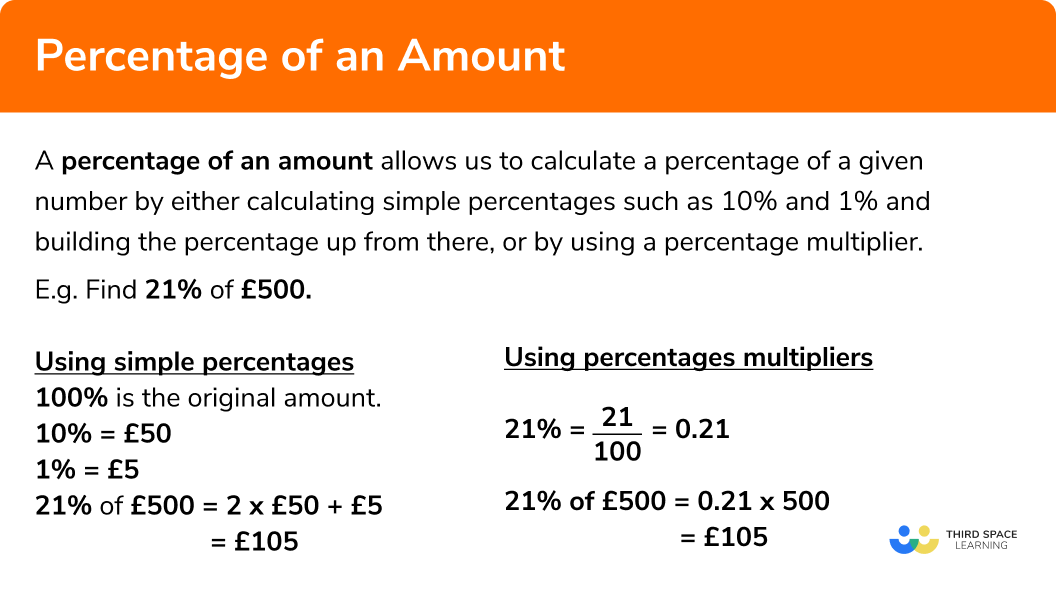
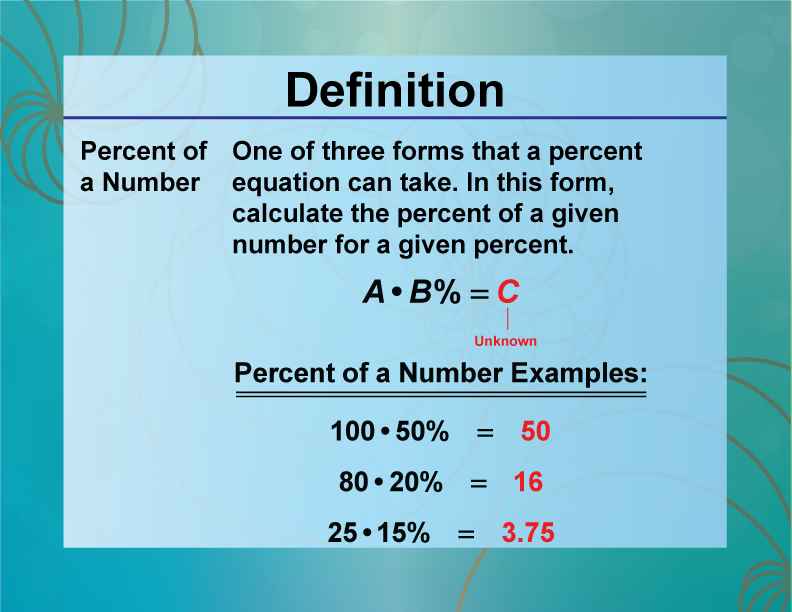
Shopping savvy individuals are adept at “percentage math.” A “20% off” sale immediately triggers a mental calculation: “what is 20 percent of this item’s price?” to determine the savings. Similarly, a service charge, a sales tax, or a markup applied by a retailer is always expressed as a percentage, impacting the final price you pay. Understanding how to calculate these quickly can save you money and ensure you’re getting the best deal. For businesses, markups (the percentage added to the cost to determine the selling price) are critical for profitability. Whether you’re a consumer evaluating a discount or a business owner setting prices, percentages are the essential tool for financial clarity in transactions.
Interest Rates: Loans, Savings, and Credit Cards
Interest rates are perhaps the most pervasive and impactful application of percentages in personal finance. When you borrow money, the interest rate (Annual Percentage Rate or APR) determines “what percentage of the principal you will pay as interest” over a year. This applies to mortgages, car loans, personal loans, and especially credit cards. A seemingly small difference in APR can translate into thousands of dollars over the life of a loan. Conversely, when you save money, the interest rate (often Annual Percentage Yield or APY) determines “what percentage return your savings will generate.” Understanding how these percentages are calculated and compound is crucial for both debt management and wealth accumulation. Ignoring the power of interest rates, both positive and negative, is a common financial pitfall.
Inflation and Purchasing Power
Inflation, often discussed as a percentage, represents the rate at which the general level of prices for goods and services is rising, and subsequently, purchasing power is falling. When the inflation rate is 3%, it means that, on average, goods and services cost 3% more than they did a year ago. This directly impacts “what percentage of your money’s value has eroded.” If your investments are yielding a 2% return while inflation is at 3%, your real return is actually -1%. Understanding the percentage of inflation is critical for long-term financial planning, as it dictates how much your savings need to grow just to maintain their purchasing power. It’s a silent tax on your money, and tracking its percentage movement is essential for preserving wealth.
Beyond the Basics: Strategic Use of Percentages for Financial Growth
Moving beyond mere calculation, percentages become powerful strategic tools, enabling individuals and businesses to project future growth, benchmark performance, and make sophisticated financial decisions.
Compound Interest: The Eighth Wonder of the World
Albert Einstein reputedly called compound interest the “eighth wonder of the world.” This concept fundamentally relies on percentages, illustrating how interest earned on an investment also earns interest over time. Instead of merely calculating “what percentage of my initial deposit is interest,” compound interest calculates “what percentage of my initial deposit plus accumulated interest is new interest.” This exponential growth, driven by consistent percentage returns, is the engine of long-term wealth creation. Understanding the power of compounding allows individuals to appreciate the importance of early saving and consistent investing, demonstrating how even small, consistent percentage gains can lead to substantial wealth over decades.
Financial Planning Ratios
Advanced financial planning often involves the use of ratios, which are essentially percentage-based comparisons, to assess financial health. For instance, the debt-to-income ratio (DTI) compares your monthly debt payments to your gross monthly income, expressed as a percentage, to determine your borrowing capacity and financial burden. A healthy DTI indicates a lower risk profile. Other ratios like savings rate (percentage of income saved) or liquidity ratios (percentage of assets that can be easily converted to cash) provide comprehensive snapshots of financial stability and readiness. These percentage-based benchmarks help individuals and advisors identify strengths, weaknesses, and areas needing adjustment, guiding them towards more robust financial futures.
Understanding Tax Implications
Taxes, while often complex, are fundamentally based on percentages. Income tax brackets define “what percentage of your income falls into different tax rates.” Capital gains taxes, property taxes, and sales taxes are also percentage-based calculations. Strategic financial planning often involves understanding how these percentages apply to various income streams and assets, allowing for legal tax optimization. For instance, understanding the percentage difference between short-term and long-term capital gains taxes can influence investment holding periods. Knowing “what percentage of my taxable income can be reduced by deductions or credits” allows for effective tax planning, ensuring that you retain more of your hard-earned money and contribute strategically to your overall financial growth.
In conclusion, the seemingly simple question “what is percentage of what” underpins virtually every aspect of personal and business finance. From the daily decisions of budgeting and spending to the long-term strategies of investing and wealth creation, percentages provide the indispensable framework for understanding, measuring, and predicting financial outcomes. They transform raw numbers into meaningful insights, enabling comparisons, revealing trends, and highlighting opportunities or risks. Mastering this fundamental concept is not merely a mathematical exercise; it is an essential step towards financial literacy, empowerment, and ultimately, the confident navigation of an increasingly complex financial world. Embrace percentages, and you embrace clarity and control over your financial destiny.
aViewFromTheCave is a participant in the Amazon Services LLC Associates Program, an affiliate advertising program designed to provide a means for sites to earn advertising fees by advertising and linking to Amazon.com. Amazon, the Amazon logo, AmazonSupply, and the AmazonSupply logo are trademarks of Amazon.com, Inc. or its affiliates. As an Amazon Associate we earn affiliate commissions from qualifying purchases.