
In the dynamic world of personal finance and business, numbers tell a story. They reveal growth, highlight trends, and provide the critical data points necessary for informed decision-making. Among the most fundamental yet powerful calculations is determining the percentage increase between two numbers. Whether you’re tracking your investment portfolio’s growth, analyzing sales figures for your business, assessing the impact of inflation on your expenses, or evaluating salary hikes, understanding how to accurately calculate percentage increase is an indispensable skill. It transforms raw figures into actionable insights, allowing you to gauge the magnitude of change relative to an initial state.
This guide will demystify the process, walking you through the core formula and illustrating its multifaceted applications across various financial scenarios. By mastering this simple calculation, you’ll unlock a deeper understanding of your financial landscape, empowering you to make smarter choices for your wealth and business.
The Fundamental Formula: Unpacking Percentage Increase
At its heart, calculating percentage increase quantifies the relative growth of a value from a starting point to a new point. It’s not just about knowing that a number went up; it’s about understanding how much it went up proportionally.
Understanding the Core Concept
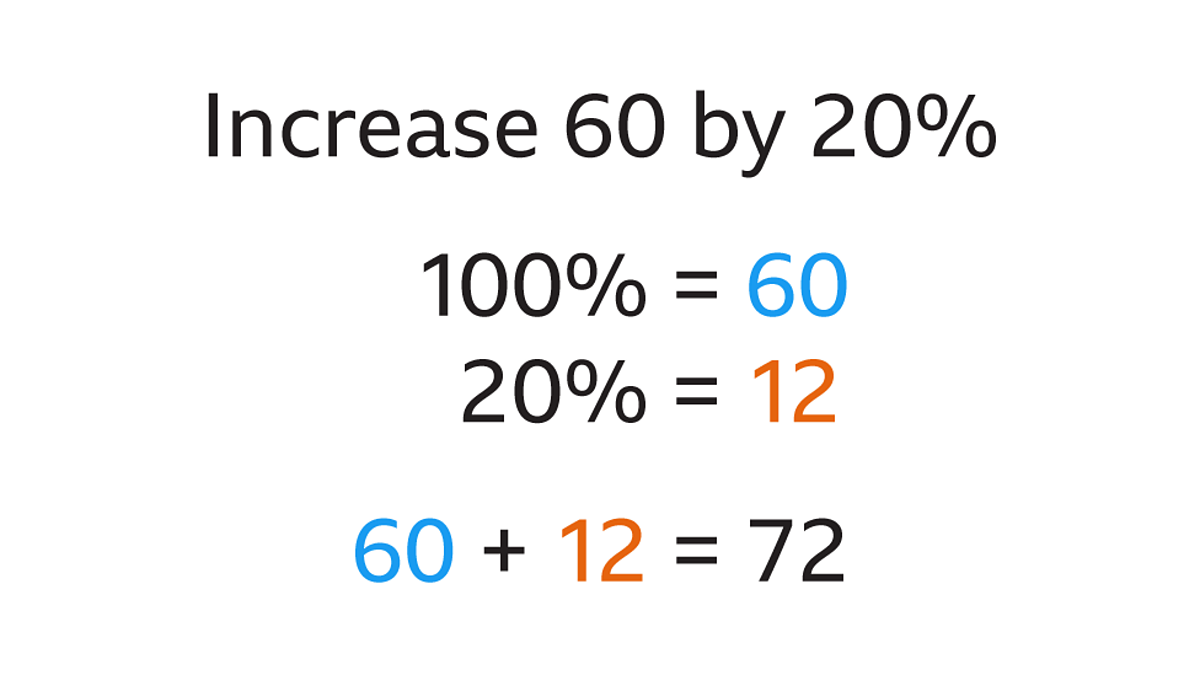
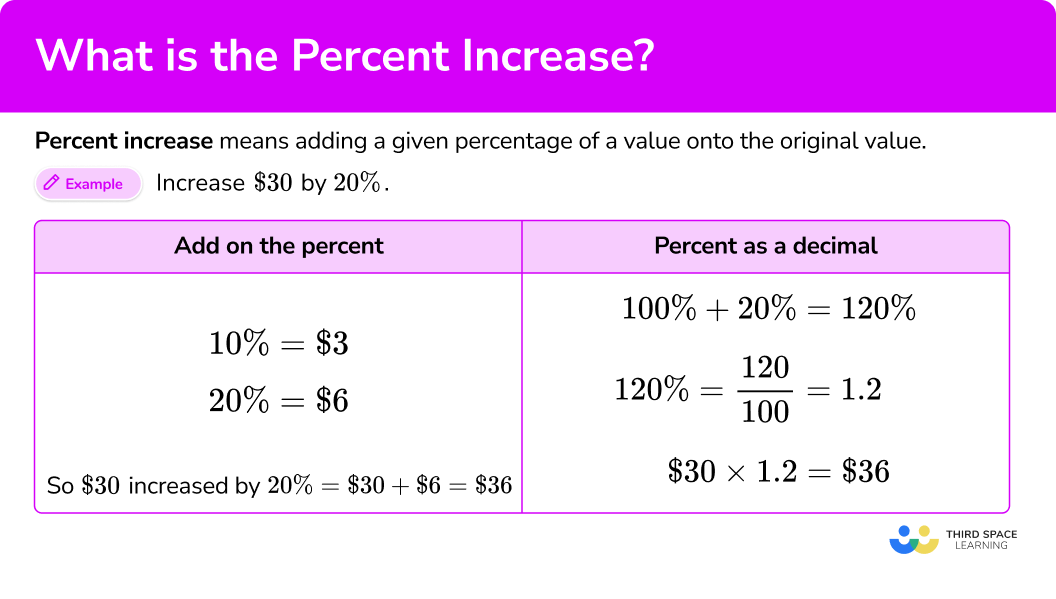
Percentage increase measures the amount of change over a period, expressed as a fraction of the original amount, then multiplied by 100 to convert it into a percentage. A positive result indicates growth, while a negative result (which would technically be a percentage decrease) signifies a decline. For our purposes, we’re focusing specifically on scenarios where the value has risen.
The Step-by-Step Calculation
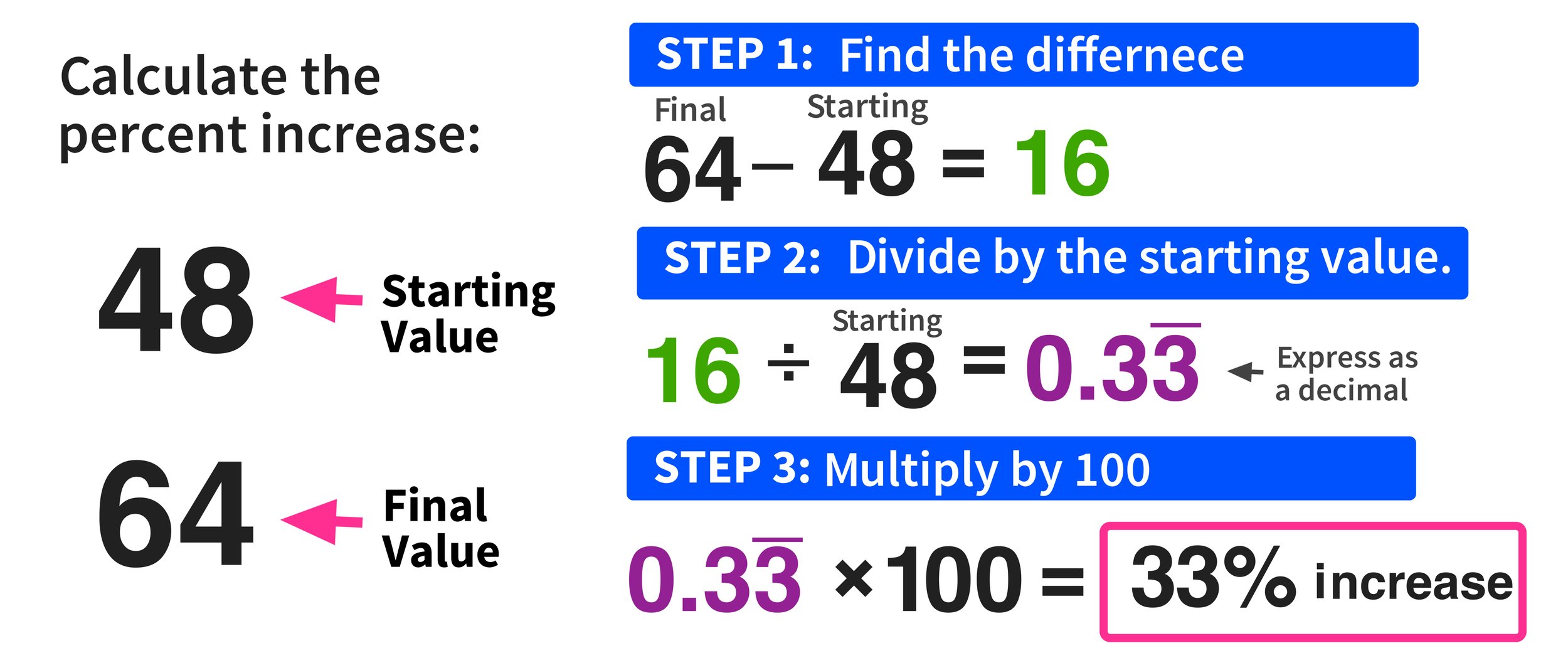
The formula for percentage increase is straightforward and relies on three key pieces of information: the original number, the new number, and the difference between them.
-
Find the Difference: Subtract the original number from the new number. This gives you the absolute increase.
- Difference = New Number – Original Number
-
Divide by the Original Number: Take the difference you calculated and divide it by the original number. This expresses the increase as a decimal fraction of the initial value.
- Fractional Increase = Difference / Original Number
-
Multiply by 100: To convert this decimal into a percentage, multiply the result by 100.
- Percentage Increase = (Fractional Increase) × 100%
Combining these steps, the complete formula looks like this:
Percentage Increase = ((New Number – Original Number) / Original Number) × 100%
Why the “Original” Number Matters
The choice of the “original number” is paramount. It serves as the baseline, the reference point against which all growth is measured. Using the wrong original number will lead to an inaccurate and potentially misleading percentage. Always ensure you’re using the initial value from which the increase is being measured.
Practical Example: A Simple Financial Scenario
Let’s say you invested $1,000 in a stock, and after a year, its value grew to $1,250.
- Original Number (Initial Investment) = $1,000
- New Number (Current Value) = $1,250
- Difference: $1,250 – $1,000 = $250
- Divide by Original: $250 / $1,000 = 0.25
- Multiply by 100: 0.25 × 100 = 25%
Your investment saw a 25% increase. This single percentage tells a more intuitive story than just saying it went up by $250, especially if you were comparing it to another investment that went up by $250 but started at $500 (which would be a 50% increase).
Real-World Applications in Personal Finance and Investing
For individuals managing their money, the percentage increase is not just an academic exercise; it’s a vital tool for understanding their financial health and making prudent decisions.
Tracking Investment Growth
One of the most common applications is evaluating investment performance. Whether it’s stocks, mutual funds, real estate, or even a savings account, percentage increase allows you to:
- Compare Returns: Easily compare the performance of different assets or funds over the same period, even if your initial investments varied. A fund that turned $5,000 into $6,000 (20% increase) performed better than one that turned $10,000 into $11,000 (10% increase), even though the absolute dollar gain was the same.
- Calculate Compound Returns: While the calculation itself is for a single period, understanding it is crucial for grasping compound interest and the power of sustained percentage gains over time.
- Assess Portfolio Performance: Monitor the overall growth of your entire investment portfolio, providing a clear picture of your wealth accumulation.
Analyzing Salary and Income Growth
Your salary is a critical component of your personal finance. Percentage increase helps you:
- Evaluate Raises: Understand the true impact of a pay raise. A $5,000 raise means different things for someone earning $50,000 (10% increase) versus someone earning $100,000 (5% increase).
- Track Career Progression: Monitor your income growth over several years, helping you assess your career trajectory and market value.
- Negotiate Effectively: Armed with the knowledge of average industry increases or your historical growth, you can better negotiate future compensation.
Evaluating Loan and Debt Changes
While we typically focus on increases, understanding this concept also applies to the cost of borrowing money.
- Interest Rate Fluctuations: If your variable-rate mortgage or credit card interest rate increases, calculating the percentage increase helps you quantify the added cost and plan accordingly.
- Loan Principal Growth (less common): In some complex financial products or defaulting scenarios, understanding the growth of an outstanding principal can be crucial.
Budgeting and Expense Management
Managing your daily and monthly expenses is fundamental to financial stability. Percentage increase helps you:
- Identify Rising Costs: Track how much your utility bills, groceries, or insurance premiums have increased year-over-year. This helps you adjust your budget and potentially look for alternatives.
- Evaluate Inflationary Impact: Understand how inflation erodes your purchasing power by tracking the percentage increase in the cost of goods and services you regularly consume.
Strategic Insights for Business Finance and Operations
For business owners, managers, and financial analysts, percentage increase is a cornerstone of financial reporting, strategic planning, and performance measurement.
Sales and Revenue Growth Analysis
Monitoring sales and revenue growth is perhaps the most direct application in business.
- Key Performance Indicator (KPI): Sales growth percentage is a primary KPI, indicating market acceptance, effective marketing, and overall business expansion.
- Trend Identification: Comparing monthly, quarterly, or annual sales growth helps identify trends, seasonality, and the impact of specific business initiatives.
- Investor Relations: Investors keenly watch percentage growth figures as a sign of a company’s health and potential.
Profit Margin Evolution
Profitability is the lifeblood of any business.
- Gross vs. Net Profit Growth: Analyzing the percentage increase in gross profit (revenue minus cost of goods sold) and net profit (after all expenses) provides insight into operational efficiency and cost management.
- Pricing Strategy: Understanding profit margin percentage changes can inform pricing adjustments, cost-cutting measures, or negotiations with suppliers.
Cost Increases and Impact on Bottom Line
Just as revenue increases are tracked, so are cost increases.
- Supplier Price Hikes: Calculate the percentage increase from suppliers to assess the impact on your cost of goods and adjust pricing or seek new suppliers.
- Operating Expenses: Monitor increases in rent, salaries, utilities, and other operating expenses to control overhead and maintain profitability.
- Forecasting and Budgeting: Use historical percentage increases in costs to create more accurate forecasts and budgets for future periods.
Market Share and Customer Acquisition
Beyond internal financial metrics, percentage increase is vital for external market analysis.
- Market Share Growth: Track the percentage increase in your company’s market share to understand its competitive position and growth within the industry.
- Customer Base Expansion: Measure the percentage increase in your customer base to evaluate the effectiveness of marketing campaigns and sales efforts.
Return on Investment (ROI) Calculations
While ROI often has its own specific formula, the underlying concept of measuring gain relative to an initial investment closely ties back to percentage increase. Calculating the percentage return on specific projects, marketing campaigns, or capital expenditures helps businesses prioritize and allocate resources effectively.
Common Pitfalls and Best Practices
While the calculation is simple, misinterpretations or common errors can lead to skewed analyses and poor decisions.
Beware of Misleading Baselines
Always double-check that you are using the correct “original number.” For example, if you’re tracking annual growth, ensure your original number is from the beginning of that year, not an arbitrary point mid-year. In financial statements, consistency in reporting periods is crucial.
Distinguishing Between Percentage Point and Percentage Change
This is a critical distinction, especially in financial news and reports. If an interest rate goes from 4% to 5%, that’s a 1 percentage point increase. However, the percentage increase of the rate itself is ((5-4)/4) * 100 = 25%. Understanding this difference prevents significant misinterpretations, particularly in investment returns or economic data.
The Importance of Context and Timeframes
A 10% increase might be phenomenal over a month but disappointing over a decade. Always consider the timeframe over which the increase occurred. Financial analysis often requires annual, quarterly, or monthly comparisons to provide meaningful context. Understanding the economic environment, market conditions, and industry-specific factors is also essential.
Utilizing Financial Tools and Software
While manual calculation is good for understanding, for robust financial analysis, leverage tools:
- Spreadsheets (Excel, Google Sheets): These are indispensable. You can quickly set up formulas (
=(B2-A2)/A2) and apply them across large datasets, making tracking and analysis efficient. - Online Calculators: For quick, one-off calculations, numerous reliable online percentage increase calculators are available.
- Financial Software: Accounting software and investment platforms often integrate these calculations directly into their reporting, providing real-time insights.
Beyond the Numbers: Making Informed Financial Decisions
The ultimate goal of calculating percentage increase isn’t just to have a number; it’s to derive meaning from it and use it to steer your financial ship.
Strategic Planning and Goal Setting
Understanding historical percentage increases helps in setting realistic financial goals. If your investments have historically grown by an average of 8% annually, you can use that to project future wealth accumulation and plan for retirement, a down payment, or other major life events. Businesses use growth rates to project future revenues, expenses, and staffing needs.
Risk Assessment and Opportunity Identification
Significant percentage increases (or decreases) can signal underlying trends. A suddenly high percentage increase in a specific expense might indicate a need to investigate and cut costs. Conversely, consistent strong percentage growth in a particular product line might signal an opportunity for further investment and expansion. It helps in assessing risk by identifying areas where growth is slowing or becoming unsustainable.
Communicating Financial Performance Effectively
Whether you’re presenting financial results to stakeholders, explaining your investment performance to a financial advisor, or simply reviewing your personal budget, expressing changes as percentages is often clearer and more impactful than raw dollar figures. It standardizes comparison and makes complex data more accessible.
Conclusion
The ability to accurately calculate the percentage increase between two numbers is a foundational skill in the realm of money—from personal finance management to sophisticated business analytics. It transforms raw data into understandable metrics, allowing for meaningful comparisons, insightful trend analysis, and ultimately, more informed financial decisions. By mastering this simple yet potent formula, you gain a powerful lens through which to view financial growth, track performance, assess risks, and seize opportunities.
Don’t let numbers intimidate you. Embrace the elegance of the percentage increase calculation, integrate it into your financial toolkit, and empower yourself to navigate the complexities of your financial journey with greater clarity and confidence. Start applying it today, and watch as your understanding of the financial world deepens.
aViewFromTheCave is a participant in the Amazon Services LLC Associates Program, an affiliate advertising program designed to provide a means for sites to earn advertising fees by advertising and linking to Amazon.com. Amazon, the Amazon logo, AmazonSupply, and the AmazonSupply logo are trademarks of Amazon.com, Inc. or its affiliates. As an Amazon Associate we earn affiliate commissions from qualifying purchases.