
In an increasingly data-driven world, the ability to understand and interpret percentages is not just a mathematical skill but a critical digital literacy. From monitoring software progress bars and analyzing website conversion rates to assessing the efficiency of algorithms or the performance of a new app feature, percentages provide a universal language for comparison and proportional understanding. While the fundamental concept of a percentage remains steadfast, the methods and tools we employ to calculate them have evolved significantly, placing sophisticated computing power at our fingertips. This article delves into how technology empowers us to efficiently and accurately calculate percentages between two numbers, transforming a basic arithmetic operation into a powerful analytical tool.
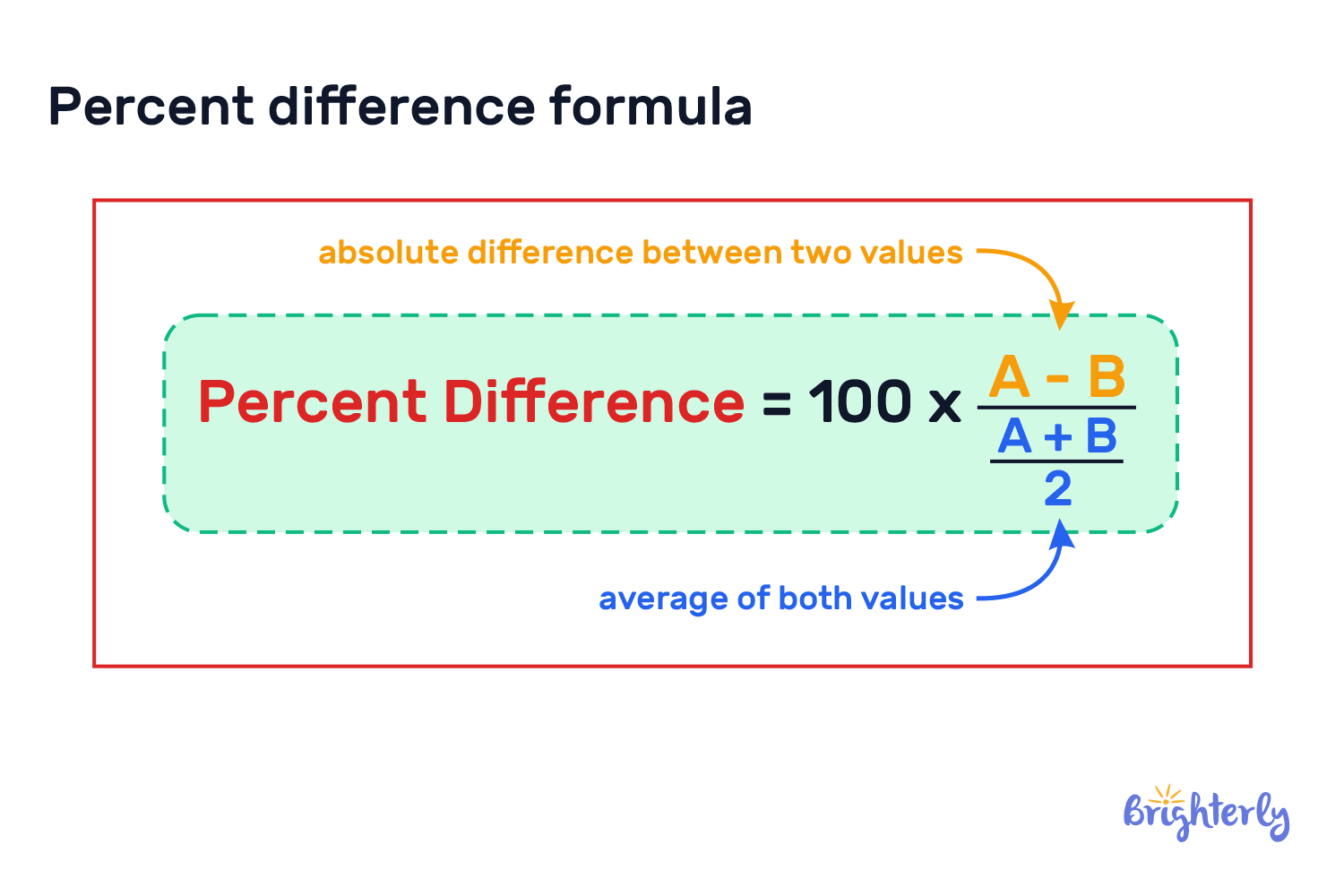
The Core Concept: Understanding Percentages in a Digital Age
Before diving into the technological methodologies, it’s crucial to firmly grasp the underlying mathematical principle of percentages. This foundational understanding ensures that irrespective of the tool used, the results are interpreted correctly within their digital context.
What is a Percentage? The Digital Definition
At its heart, a percentage represents a fraction of a whole expressed as a number out of 100. The term “percent” literally means “per hundred.” When we calculate the percentage of one number relative to another, we are essentially determining what proportion the first number represents of the second, scaled to a base of 100.
The universal formula is straightforward:
Percentage = (Part / Whole) × 100
Here, ‘Part’ is the number you want to express as a percentage, and ‘Whole’ is the total or reference number against which the ‘Part’ is being compared. In a technological context, this “Part” might be the amount of data downloaded, the number of successful API calls, or the completed stages of a software installation, while the “Whole” would be the total data size, total API calls attempted, or total installation stages. Understanding this simple ratio is the first step to leveraging technological tools for its calculation.
Why it Matters: Ubiquitous Applications in Technology
The importance of percentages permeates nearly every facet of the technology landscape. They are not merely abstract figures but actionable insights derived from data.
- Software Development: Progress bars showing “50% complete” for an update, or “80% code coverage” in testing, provide immediate status updates. Developers might use percentages to track bug fix rates or the proportion of users adopting a new feature.
- Data Science & Analytics: Analysts routinely calculate the percentage of missing data in a dataset, the percentage increase in website traffic, or the proportion of users clicking on a specific button (click-through rate). These metrics are vital for informed decision-making.
- Digital Security: Understanding the percentage of blocked cyber threats or the compliance rate with security protocols helps gauge the effectiveness of defense mechanisms.
- System Performance: Monitoring CPU usage at “75%,” or storage capacity at “90% full,” offers critical insights into system health and resource allocation.
- App Development: Conversion rates (percentage of users completing a desired action), retention rates (percentage of users returning), and crash rates (percentage of sessions ending in a crash) are fundamental to app success.
Without the ability to quickly and accurately calculate these percentages, the vast amounts of data generated by modern technology would be far less intelligible and actionable.
Essential Tech Tools for Percentage Calculations
The digital age has gifted us an array of tools that streamline percentage calculations, ranging from basic built-in utilities to sophisticated software designed for complex data analysis. Each tool offers distinct advantages depending on the scale and nature of the task.
Desktop & Mobile Calculators: Instant Proportionality
The most fundamental technological tool for percentage calculations is the digital calculator, whether it’s a dedicated handheld device, a built-in application on your desktop operating system (Windows Calculator, macOS Calculator), or a mobile app on your smartphone. These tools are perfect for quick, ad-hoc calculations involving just two numbers.
How to Use:
- Enter the ‘Part’ number.
- Divide it by the ‘Whole’ number (using the
/division operator). - Multiply the result by 100 (using the
*multiplication operator). - Press
=to get the percentage.
For example, to find what percentage 45 is of 180:
45 / 180 * 100 = 25
Result: 25%
Many modern calculators also have a dedicated % button, which can simplify some percentage operations (like adding a percentage to a number or finding a percentage of a number), though for calculating “percentage of 2 numbers,” the (Part / Whole) * 100 method remains the most direct.
Spreadsheet Software: The Powerhouse for Data Analysis
For tasks involving multiple percentage calculations, larger datasets, or dynamic adjustments, spreadsheet software like Microsoft Excel, Google Sheets, or LibreOffice Calc is indispensable. Spreadsheets combine computational power with visual organization, making them ideal for everything from personal budgeting to complex financial modeling and data science pre-processing.
How to Use:
- Enter Your Data: Input your ‘Part’ number in one cell (e.g., A2) and your ‘Whole’ number in another cell (e.g., B2).
- Apply the Formula: In a third cell (e.g., C2), type the formula:
=(A2/B2)*100.- The parentheses ensure the division happens before multiplication.
A2andB2are cell references.
- Percentage Formatting: Alternatively, if you want the result to be displayed directly as a percentage without multiplying by 100, you can use the formula
=(A2/B2)and then apply the “Percentage” number format to cell C2. The spreadsheet software will automatically multiply the decimal result by 100 and add the percent sign. This method is often preferred for clarity and consistency. - Drag and Fill: For calculating percentages across many rows of data, simply drag the fill handle (a small square at the bottom-right of the selected cell) down, and the spreadsheet will automatically adjust the cell references (e.g., A3/B3, A4/B4, etc.), saving immense time and reducing error.
Spreadsheets also allow for more complex scenarios, such as calculating percentage change ((New Value - Old Value) / Old Value) * 100, or conditional percentages based on specific criteria within your data.
Online Percentage Calculators: Niche Solutions for Specific Needs
The internet hosts a plethora of specialized online percentage calculators. These tools are particularly useful when you need to perform specific types of percentage calculations (e.g., percentage increase/decrease, percentage difference, tips, discounts, GPA calculations) without the need to set up a spreadsheet or use a programming language. Websites like Calculator.net or Google’s built-in calculator function (just type “percentage calculator” into the search bar) offer immediate, user-friendly interfaces.
How to Use:
- Navigate to an online percentage calculator.
- Identify the specific type of percentage calculation you need (e.g., “What is X percent of Y?”, “X is what percent of Y?”).
- Enter your two numbers into the designated input fields.
- Click “Calculate” or “Solve” to instantly see the result.
While they don’t offer the flexibility of spreadsheets, their ease of use for specific, common scenarios makes them a convenient option.

Advanced Methods: Programming and Automation
For technologists and developers, understanding how to calculate percentages programmatically opens up possibilities for automation, custom applications, and integration into larger systems. This is where the core mathematical formula truly becomes a building block for more complex software solutions.
Scripting Languages: Custom Solutions and Data Pipelines
Programming languages like Python, JavaScript, and R are the backbone of data processing, web development, and scientific computing. They provide the ultimate flexibility for calculating percentages, especially when dealing with dynamic data sources, large datasets, or when embedding calculations into an application.
Python Example:
def calculate_percentage(part, whole):
    if whole == 0:
        return "Error: Cannot divide by zero."
    return (part / whole) * 100

number_of_users = 15000
total_potential_users = 20000

# Calculate active user percentage
active_user_percentage = calculate_percentage(number_of_users, total_potential_users)
print(f"Active user percentage: {active_user_percentage:.2f}%") # Output: 75.00%
This Python function calculate_percentage can be reused across various scripts, perhaps to analyze the percentage completion of a batch process, the percentage of successful API calls in a log file, or the market share percentage from sales data.
JavaScript Example (for web applications):
function calculatePercentage(part, whole) {
    if (whole === 0) {
        return "Error: Cannot divide by zero.";
    }
    return (part / whole) * 100;
}

let completedTasks = 75;
let totalTasks = 100;

// Display progress in a web interface
let progress = calculatePercentage(completedTasks, totalTasks);
document.getElementById("progress-display").innerText = `Progress: ${progress}%`;
JavaScript is perfect for real-time calculations in web browsers, such as dynamically updating a download progress bar or showing a user’s completion rate on an online course.
AI Tools and Specialized Analytics Platforms
While not directly performing the (Part/Whole)*100 calculation themselves in a raw sense, advanced AI tools and specialized analytics platforms (like Tableau, Power BI, or even advanced features within cloud platforms like Google Cloud AI Platform or AWS SageMaker) heavily rely on percentage calculations for their output and insights. These platforms often abstract away the basic arithmetic, allowing users to define metrics and dimensions, and then automatically calculate percentages for things like:
- Conversion funnels: Percentage of users moving from one stage to the next.
- A/B testing results: Percentage difference in engagement between two versions of a product.
- Predictive analytics confidence: Expressing the certainty of a prediction as a percentage.
- Resource utilization: Dashboards showing CPU, memory, or storage usage as percentages.
In these environments, the user specifies what they want to measure (e.g., “percentage of successful transactions”) and the platform processes the underlying data, often using sophisticated algorithms that incorporate percentage calculations internally, to deliver the desired insight. This moves the calculation from a manual process to an integrated, automated reporting feature, allowing for quicker and deeper analysis.
Common Pitfalls and Best Practices in Digital Percentage Calculations
Even with robust technological tools, misinterpretations and errors can occur. Adhering to best practices ensures accuracy and clarity when working with percentages.
Data Entry Errors: The Human Element
The most sophisticated software is only as good as the data it processes. Incorrectly entering numbers into a calculator or spreadsheet is a common source of error. Always double-check your input values, especially when dealing with critical data. In spreadsheets, data validation rules can be implemented to minimize errors by restricting input to specific formats or ranges.
Understanding Context: Base vs. Percentage Change
It’s crucial to distinguish between a simple “Part of Whole” percentage and a “Percentage Change” (increase or decrease). The formulas differ, and applying the wrong one will lead to incorrect results.
- Part of Whole:
(Part / Whole) * 100(e.g., 25 is 25% of 100) - Percentage Change:
((New Value - Old Value) / Old Value) * 100(e.g., if a value goes from 80 to 100, the increase is((100-80)/80)*100 = 25%)
Always be clear about what your ‘Whole’ or ‘Old Value’ represents and what relationship you are trying to express.
Leveraging Automation for Efficiency and Accuracy
For repetitive tasks, manual calculations are prone to errors and consume valuable time. Embrace automation through:
- Spreadsheet Formulas: Utilize fill handles, named ranges, and array formulas to apply calculations across entire datasets consistently.
- Programming Scripts: Write reusable functions or scripts for recurring percentage calculations, especially when integrating with databases or external APIs.
- Macros: For complex, multi-step processes in spreadsheets, record or write macros to automate the sequence of calculations.
Automation not only speeds up the process but also ensures that the same logic is applied consistently, reducing the risk of human error in complex scenarios.

Conclusion
The ability to calculate percentages between two numbers is a foundational skill, but in the technology sphere, it transcends basic arithmetic. It is an essential component of data interpretation, system monitoring, performance analysis, and strategic decision-making. From the immediate feedback of a simple calculator to the comprehensive insights derived from advanced AI platforms, technological tools have democratized and amplified our capacity to work with percentages. By understanding the core mathematical principle and mastering the various digital tools available, individuals and organizations can unlock deeper insights from their data, driving innovation and efficiency in an increasingly interconnected and data-rich world. Embracing these technological approaches to percentage calculation is not just about crunching numbers; it’s about making sense of the digital universe around us.
aViewFromTheCave is a participant in the Amazon Services LLC Associates Program, an affiliate advertising program designed to provide a means for sites to earn advertising fees by advertising and linking to Amazon.com. Amazon, the Amazon logo, AmazonSupply, and the AmazonSupply logo are trademarks of Amazon.com, Inc. or its affiliates. As an Amazon Associate we earn affiliate commissions from qualifying purchases.