
In the intricate world of finance, numbers speak volumes, and percentages often serve as the universal translator. From tracking your budget to evaluating investment returns, understanding how to calculate a percentage from a number is not merely an academic exercise; it’s an indispensable life skill that empowers you to make informed, strategic financial decisions. This guide will demystify percentage calculations, anchoring them firmly within the realm of personal and business finance, offering practical applications and insights to enhance your financial literacy and confidence.
The Foundational Math: Deciphering Percentages in Finance
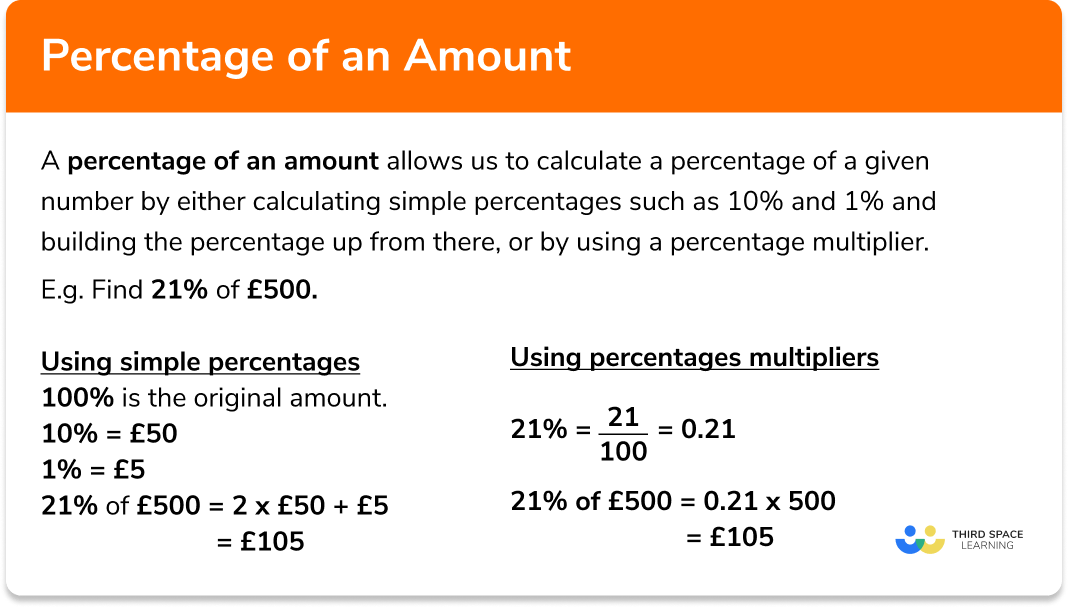
At its heart, a percentage is a way of expressing a number as a fraction of 100. The term “percent” literally means “per hundred” or “out of one hundred.” It provides a standardized way to compare parts of different wholes, making complex financial data digestible and comparable.

What Exactly is a Percentage?
A percentage is denoted by the symbol “%” and represents a proportion or a share of a total. For instance, 25% means 25 out of every 100. It can be expressed in three primary forms:
- As a Percentage: 25%
- As a Fraction: 25/100
- As a Decimal: 0.25 (obtained by dividing the percentage by 100)
The basic formula for calculating a percentage is:
(Part / Whole) × 100 = Percentage
Let’s consider a simple non-financial example to solidify the concept: If you have 20 apples and 5 of them are red, the percentage of red apples is (5/20) × 100 = 25%. Here, 5 is the ‘part’ (red apples) and 20 is the ‘whole’ (total apples).
Why Percentages Matter in Your Financial Life
The relevance of percentages permeates almost every aspect of your financial existence. They allow you to:
- Understand Interest Rates: Whether on savings accounts, credit cards, or mortgages, interest rates are almost always expressed as percentages.
- Evaluate Discounts and Sales: Smart shopping hinges on correctly calculating percentages off original prices.
- Manage Your Budget: Allocating portions of your income to different categories is often best done using percentages, like the popular 50/30/20 rule.
- Assess Investment Performance: Returns on investment (ROI), growth rates, and portfolio diversification are all quantified with percentages.
- Analyze Business Performance: Profit margins, revenue growth, and market share are critical business metrics expressed as percentages.
Mastering this fundamental calculation transforms you from a passive observer of your finances into an active, empowered participant, capable of making informed decisions rather than relying on guesswork.
Practical Applications: Percentages in Personal Finance
In personal finance, percentages are daily tools for managing money effectively. They help you save, spend wisely, and plan for the future.
Mastering Discounts and Savings
One of the most immediate applications of percentages is in consumer spending. When a store advertises “30% off,” knowing how to calculate that percentage instantly tells you the actual savings.
Example: A jacket costs $150, and there’s a 30% discount.
- Step 1: Convert percentage to decimal: 30% / 100 = 0.30
- Step 2: Calculate the discount amount: $150 × 0.30 = $45
- Step 3: Subtract the discount from the original price: $150 – $45 = $105 (the sale price)
Understanding these calculations ensures you truly grasp the value of a sale and can compare different offers effectively.
Navigating Interest Rates (Loans and Savings)
Interest is the cost of borrowing money or the income earned from saving it, almost universally expressed as a percentage.
Example: Simple Interest on a Savings Account: You deposit $1,000 into a savings account with a 2% annual simple interest rate.
- Interest earned in one year: $1,000 × (2/100) = $1,000 × 0.02 = $20
For loans, understanding the Annual Percentage Rate (APR) is crucial. A 15% APR on a credit card balance means you’re paying 15% of your outstanding balance in interest over a year, though it’s typically calculated monthly. For savings, the Annual Percentage Yield (APY) reflects the actual rate of return, taking into account compounding interest, offering a more realistic picture of your earnings.
Budgeting and Expense Tracking
Effective budgeting often involves allocating percentages of your income to various categories. A common guideline is the 50/30/20 rule: 50% for needs, 30% for wants, and 20% for savings and debt repayment.
Example: If your monthly take-home income is $4,000:
- Needs (50%): $4,000 × 0.50 = $2,000
- Wants (30%): $4,000 × 0.30 = $1,200
- Savings/Debt (20%): $4,000 × 0.20 = $800
Tracking your spending as a percentage of your budget also helps identify where your money goes and areas where you might cut back. If dining out consumes 20% of your income but you budgeted only 10%, you quickly see the deviation.
Understanding Taxes and Tips
Percentages are integral to everyday transactions involving taxes and gratuities.
- Sales Tax: If an item costs $25 and the sales tax is 8%.
- Tax amount: $25 × 0.08 = $2
- Total cost: $25 + $2 = $27
- Tips: When dining out, a standard tip might be 15-20% of the bill. For a $60 bill with a 18% tip:
- Tip amount: $60 × 0.18 = $10.80
- Total: $60 + $10.80 = $70.80
Strategic Insights: Percentages in Investing and Business Finance
Beyond personal spending, percentages are the backbone of investment analysis and business strategy. They provide clear metrics for performance, growth, and risk.
Evaluating Investment Returns (ROI)
Return on Investment (ROI) is a crucial percentage-based metric that measures the profitability of an investment. It tells you how much profit you made relative to the cost of the investment.
Formula: ROI = ((Current Value of Investment - Initial Cost of Investment) / Initial Cost of Investment) × 100
Example: You invest $5,000 in a stock that grows to $6,500.
- ROI: (($6,500 – $5,000) / $5,000) × 100 = ($1,500 / $5,000) × 100 = 0.30 × 100 = 30%
A higher ROI indicates a more efficient and profitable investment. Comparing ROIs of different investments helps investors allocate capital wisely.
Analyzing Profit Margins and Business Growth
In business, percentages are vital for understanding financial health and trajectory.
- Gross Profit Margin: Measures the percentage of revenue left after deducting the cost of goods sold.
- Formula:
(Gross Profit / Revenue) × 100
- Formula:
- Net Profit Margin: Indicates the percentage of revenue remaining after all expenses (including taxes) have been deducted.
- Formula:
(Net Profit / Revenue) × 100 - A company with a 10% net profit margin means that for every dollar of revenue, 10 cents is profit.
- Formula:
Revenue Growth: Businesses often track percentage growth in revenue year-over-year to assess expansion. If a company’s revenue grew from $1 million to $1.2 million in a year:
- Percentage Growth: (($1.2 million – $1 million) / $1 million) × 100 = ($0.2 million / $1 million) × 100 = 0.20 × 100 = 20%
These metrics are essential for internal decision-making, attracting investors, and evaluating market competitiveness.
Risk Assessment and Portfolio Allocation
Percentages are used to diversify investment portfolios, minimizing risk by spreading investments across different asset classes. An investor might decide on an allocation of 60% stocks, 30% bonds, and 10% cash, based on their risk tolerance and financial goals.
- If your total portfolio is $100,000:
- Stocks: $100,000 × 0.60 = $60,000
- Bonds: $100,000 × 0.30 = $30,000
- Cash: $100,000 × 0.10 = $10,000
This percentage-based approach ensures adherence to a strategic investment plan and helps manage exposure to market volatility.
Leveraging Technology: Financial Tools for Percentage Calculations
While the underlying math is simple, financial tools make percentage calculations even easier, faster, and more accurate, especially for complex scenarios or large datasets.
Spreadsheet Software (Excel, Google Sheets)
Spreadsheets are incredibly powerful for financial calculations involving percentages. You can set up formulas that automatically calculate percentages for budgeting, tracking expenses, or projecting investment growth.
- Budgeting: Create columns for income, expenses, and allocate percentages. A formula like
=B2/$A$1(where B2 is an expense category and A1 is total income) can display the percentage of income spent on that category. - ROI Tracking: Input initial investment and current value, then use the ROI formula to instantly see your returns.
The ability to quickly change numbers and see the impact on percentages makes spreadsheets invaluable for “what-if” financial analysis.
Online Calculators and Mobile Apps
The internet abounds with free online percentage calculators, loan payment calculators, mortgage interest calculators, and investment return calculators. Many banking and financial planning apps also integrate these functionalities, providing instant calculations for:
- Tip Calculation: Split bills and calculate tips with ease.
- Loan Amortization: See how much of each payment goes towards principal vs. interest over time.
- Savings Growth: Project how your savings will grow with compound interest over various periods.
These tools offer convenience and reduce the chances of manual errors, especially when you need quick answers.
The Role of Financial Planning Software
Sophisticated financial planning software often uses percentages extensively for:
- Goal Setting: Calculating the percentage of income you need to save to reach a retirement goal.
- Scenario Planning: Modeling different market conditions and their percentage impact on your portfolio.
- Tax Planning: Estimating tax liabilities based on income percentages and deductions.
These comprehensive platforms integrate various percentage-based calculations to provide a holistic view of your financial health and future projections.
Common Pitfalls and Mastering Percentage Wisdom
While the basic calculation is straightforward, misinterpreting or misapplying percentages can lead to significant financial errors. Awareness of these common pitfalls is key to truly mastering percentage wisdom.
The Importance of the “Whole” (The Base Number)
A common mistake is forgetting that a percentage is always relative to a “whole” or base number. When the base changes, the meaning of the percentage also changes.
Example: A stock drops 10%, then rises 10%. Does it return to its original value?
- Start: $100
- Drops 10%: $100 × 0.10 = $10. New value: $100 – $10 = $90
- Rises 10% (of the new value): $90 × 0.10 = $9. New value: $90 + $9 = $99
The stock is now $99, not $100. The second 10% increase was calculated on a smaller base ($90), not the original ($100). Always be mindful of what the percentage is of.
Distinguishing Between Percentage Points and Percentage Change
This distinction is crucial, especially when interpreting financial news.
Example: An interest rate moves from 4% to 5%.
- This is a 1 percentage point increase (5% – 4% = 1 percentage point).
- However, it’s a 25% percentage change in the rate itself: ((5 – 4) / 4) × 100 = 25%.
Mixing these up can lead to vastly different conclusions about the magnitude of a change.
The Power of Compounding (and How Percentages Amplify It)
Compounding interest, where interest is earned on both the initial principal and the accumulated interest from previous periods, is one of the most powerful forces in finance. Percentages are at its core. Even small percentage differences in interest rates, when compounded over long periods, can lead to astronomically different financial outcomes. The “Rule of 72” uses percentages to quickly estimate how long it takes for an investment to double: Divide 72 by the annual percentage rate of return. For a 6% return, your money doubles in approximately 12 years (72/6 = 12).
Context is King: Real vs. Nominal Percentages
Inflation erodes purchasing power. When discussing returns or growth, it’s vital to consider whether you’re looking at nominal (stated) percentages or real (inflation-adjusted) percentages. If your investment earns a nominal 5% return, but inflation is 3%, your real return is only 2%. This contextual understanding is essential for long-term financial planning and preserving wealth.

Conclusion
Understanding how to calculate percentages from a number is more than just a mathematical exercise; it’s a foundational pillar of financial literacy. From navigating daily discounts and budgeting to making savvy investment decisions and comprehending economic reports, percentages are the language through which financial information is communicated and understood. By mastering these calculations and appreciating their nuances within a financial context, you empower yourself to take control of your money, make smarter choices, and build a more secure financial future. Embrace this skill, and you unlock a deeper understanding of the financial world around you.
aViewFromTheCave is a participant in the Amazon Services LLC Associates Program, an affiliate advertising program designed to provide a means for sites to earn advertising fees by advertising and linking to Amazon.com. Amazon, the Amazon logo, AmazonSupply, and the AmazonSupply logo are trademarks of Amazon.com, Inc. or its affiliates. As an Amazon Associate we earn affiliate commissions from qualifying purchases.