
The question “how much interest will I earn on a Roth IRA?” is a common one, yet it often stems from a slight misunderstanding of how these powerful retirement vehicles actually operate. Unlike a traditional savings account, a Roth IRA doesn’t pay a fixed “interest rate.” Instead, it’s an investment account, meaning its growth is tied directly to the performance of the assets you choose to hold within it. Understanding this fundamental difference is the first step toward unlocking the true potential and projected earnings of your Roth IRA.
A Roth IRA is not merely a place to stash cash; it’s a tax-advantaged wrapper that allows your investments to grow completely tax-free and be withdrawn tax-free in retirement, provided certain conditions are met. This unique tax treatment, combined with the power of compounding investment returns, makes the Roth IRA an indispensable tool for long-term financial planning. This article will delve into how a Roth IRA generates returns, the myriad factors influencing its growth, how to project potential earnings, and strategies to maximize its long-term performance.
Understanding the Roth IRA: More Than Just “Interest”
To accurately assess potential earnings, it’s crucial to first grasp the core mechanics of a Roth IRA and distinguish it from other financial instruments.
What is a Roth IRA?
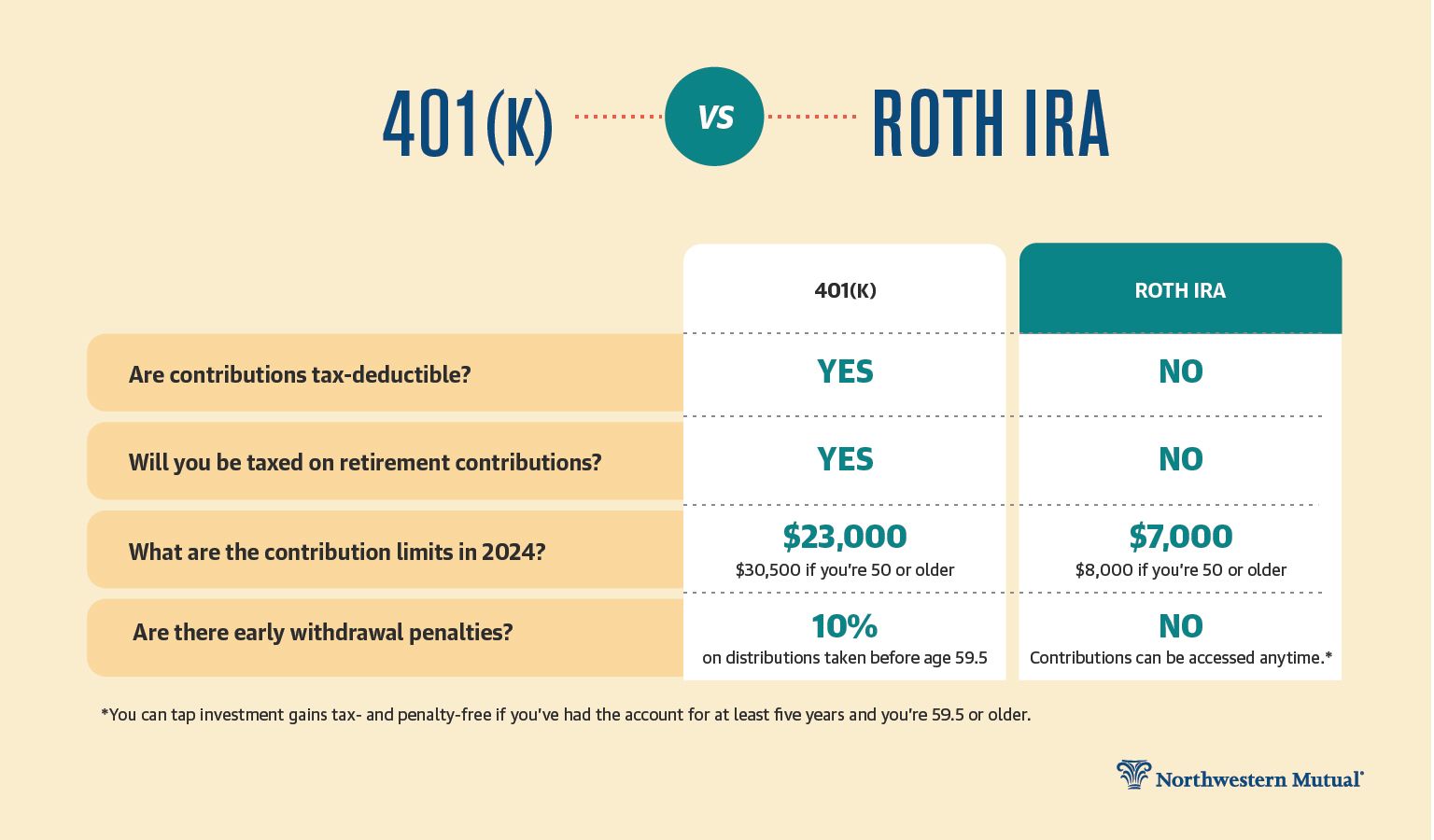
A Roth IRA (Individual Retirement Arrangement) is a retirement savings plan that allows after-tax contributions to grow tax-free and be withdrawn tax-free in retirement. Unlike a Traditional IRA, where contributions might be tax-deductible now and withdrawals taxed later, the Roth IRA flips this model. You contribute money that has already been taxed, and in exchange, all qualified withdrawals in retirement—including all earnings—are completely free from federal income tax. This makes it particularly appealing for younger individuals who anticipate being in a higher tax bracket in retirement or for anyone seeking tax diversification in their portfolio.
How Roth IRAs Grow: Investments, Not Savings Accounts
The term “interest” typically refers to the fixed percentage return paid on deposits in a bank savings account, money market account, or Certificate of Deposit (CD). While you can hold cash or low-interest bearing instruments within a Roth IRA, its primary purpose is to hold investments. This distinction is critical because the returns on investments are variable and can be significantly higher (though also carry more risk) than the fixed interest rates offered by traditional savings products.
Within a Roth IRA, you can invest in a wide array of assets, including:
- Stocks: Shares of individual companies, offering potential for significant capital appreciation.
- Bonds: Debt instruments issued by governments or corporations, generally offering more stable, but lower, returns than stocks.
- Mutual Funds: Professionally managed portfolios of stocks, bonds, or other securities.
- Exchange-Traded Funds (ETFs): Similar to mutual funds but traded like stocks on an exchange.
- Target-Date Funds: Funds that automatically adjust their asset allocation over time, becoming more conservative as you approach retirement.
The “interest” you “earn” on a Roth IRA, therefore, is really the investment return generated by these underlying assets. This return can come in the form of capital gains (when your investments increase in value), dividends (payments from stocks), or interest (from bonds or cash holdings within the account).
The Tax Advantage: Why Roth is Unique
The true power of a Roth IRA’s growth isn’t just in the investment returns themselves, but in the tax-free nature of those returns. Over decades, the impact of not paying taxes annually on dividends, capital gains, or ultimately on withdrawals can be astronomical. Imagine an investment that compounds annually at 7%. In a taxable account, a portion of those gains might be taxed each year, slowing down the compounding effect. In a Roth IRA, every dollar of growth is allowed to compound untouched by taxes, creating a significantly larger sum over the long run. This tax-free compounding is the hidden gem that truly answers the “how much interest” question with a profound “much, much more than you might think.”
Factors Influencing Your Roth IRA Growth
The amount your Roth IRA will grow is not predetermined but is a dynamic outcome of several interconnected factors. Understanding these elements empowers you to make informed decisions that can significantly impact your retirement nest egg.
Your Investment Choices: The Core Driver
This is arguably the most significant determinant of your Roth IRA’s performance. The specific stocks, bonds, mutual funds, or ETFs you select will dictate the risk and return profile of your account.
- Higher-risk, higher-reward assets like growth stocks or aggressive equity funds have the potential for substantial appreciation but also greater volatility.
- Lower-risk assets like investment-grade bonds or stable dividend stocks tend to offer more modest, predictable returns but with less fluctuation.
- Diversification across different asset classes, industries, and geographies is crucial to manage risk and capture broad market returns. A well-diversified portfolio aims to smooth out returns and reduce the impact of any single underperforming asset.
Market Performance and Economic Cycles
Even the best investment choices are subject to the broader market environment. Stock markets experience bull markets (periods of sustained growth) and bear markets (periods of decline). Economic factors such as inflation, interest rates, GDP growth, and geopolitical events can all influence corporate earnings, investor sentiment, and ultimately, asset prices. While you cannot control market cycles, understanding their existence helps set realistic expectations and encourages a long-term perspective. Historically, despite numerous downturns, the stock market has trended upwards over extended periods, rewarding patient investors.
Time Horizon: The Power of Compounding
Time is an investor’s most powerful ally, especially with a Roth IRA. The longer your money is invested, the more time it has to compound. Compounding refers to earning returns not only on your initial investment but also on the accumulated returns from previous periods. Even modest annual returns, given enough time, can grow into a substantial sum. For example, a 7% annual return on $10,000 becomes $10,700 after one year. The next year, you earn 7% on $10,700, and so on. This exponential growth is why starting early is so critical for Roth IRA investors.
Contribution Amounts and Consistency
The more you contribute, and the more consistently you do so, the faster your Roth IRA will grow. Maxing out your annual contributions (currently $6,500 in 2023, $7,000 in 2024, with an additional catch-up contribution for those aged 50 and over) is the most direct way to accelerate your wealth accumulation. Even smaller, consistent contributions, thanks to compounding, can make a significant difference over decades. Automating contributions, such as setting up a direct deposit from your paycheck, ensures consistency and helps avoid “timing the market” pitfalls.
Projecting Your Roth IRA’s Potential Returns
While past performance is not indicative of future results, historical data and sound financial principles can provide a robust framework for projecting your Roth IRA’s potential growth.
Historical Market Averages as a Guide
Financial planners and investors often use historical market returns as a benchmark for future expectations. Over the very long term (e.g., 50+ years), the U.S. stock market (as measured by indices like the S&P 500) has delivered average annual returns of around 9-10%. However, this average masks significant year-to-year volatility and includes periods of both strong growth and sharp declines. A more conservative and often cited long-term real (inflation-adjusted) return for a diversified portfolio might be in the range of 5-7% annually. This range provides a reasonable basis for projections, especially for retirement planning that spans decades.
Realistic Growth Expectations
It’s essential to set realistic expectations. While it’s tempting to project aggressive 15% annual returns, sustained double-digit growth is rare and highly volatile. Basing your projections on a more conservative 5-7% average annual return is generally prudent. This accounts for market fluctuations, potential recessions, and periods of lower growth. By under-promising and potentially over-delivering, you reduce the risk of disappointment and can adjust your saving strategy if needed. Remember, these are averages; some years will be much higher, others much lower, and some even negative.

The Impact of Fees and Expenses
Fees, even small ones, can significantly erode your Roth IRA’s earnings over time. These can include:
- Expense Ratios: The annual fee charged by mutual funds and ETFs, expressed as a percentage of your investment.
- Trading Fees: Charges for buying or selling investments (though many brokers now offer commission-free trading).
- Advisory Fees: If you work with a financial advisor who manages your account.
A seemingly small 0.50% difference in expense ratios might seem negligible, but over 30 years, it can amount to tens of thousands of dollars in lost growth due to the power of compounding. Opting for low-cost index funds or ETFs is a common strategy to minimize fees and maximize net returns.
Tools and Calculators for Projections
Numerous online calculators can help you project the potential growth of your Roth IRA. These tools typically allow you to input:
- Your initial investment
- Your regular contribution amount
- Your estimated annual rate of return
- Your time horizon (number of years until retirement)
By experimenting with different rates of return and contribution amounts, you can visualize the profound impact of starting early and investing consistently. These calculators are excellent for illustrating the power of compounding and motivating consistent saving.
Maximizing Your Roth IRA’s Long-Term Earning Potential
Beyond understanding the mechanics, proactive strategies are key to ensuring your Roth IRA reaches its full potential.
Diversification: Spreading Your Risk
Diversification means investing in a variety of assets to reduce the impact of any single investment performing poorly. This doesn’t just mean owning different stocks; it means diversifying across:
- Asset Classes: Stocks, bonds, real estate, commodities.
- Geographies: U.S. stocks, international stocks (developed and emerging markets).
- Industries: Technology, healthcare, consumer goods, financials.
- Company Size: Large-cap, mid-cap, small-cap companies.
A well-diversified portfolio helps capture market-wide returns while mitigating specific risks, thus providing a smoother, more predictable growth trajectory over the long term.
Regular Rebalancing
Over time, due to differing market performances, your portfolio’s original asset allocation can drift. For example, if stocks have outperformed bonds, your stock allocation might grow larger than your target. Rebalancing involves periodically (e.g., annually) adjusting your portfolio back to your desired asset allocation by selling some of the outperforming assets and buying more of the underperforming ones. This strategy helps maintain your desired risk level and can even force you to “buy low and sell high” automatically.
Staying Invested Through Market Volatility
One of the biggest mistakes investors make is panicking during market downturns and selling their investments. This often locks in losses and causes them to miss the subsequent recovery, which can be rapid and significant. A Roth IRA is a long-term investment vehicle. Market corrections and bear markets are a normal part of investing. The most successful investors are those who stay disciplined, continue contributing, and remain invested through these periods, trusting in the market’s long-term upward trend.
Professional Guidance and Education
While self-directing your Roth IRA is possible, seeking advice from a qualified financial advisor can be invaluable. An advisor can help you:
- Determine your risk tolerance and establish an appropriate asset allocation.
- Select suitable investments.
- Develop a comprehensive financial plan that integrates your Roth IRA with other goals.
- Provide emotional guidance during market turbulence.
Furthermore, continuously educating yourself about personal finance and investing will empower you to make more confident and informed decisions for your Roth IRA.
The Broader Benefits Beyond “Interest”
While the central question revolves around “interest” or growth, the Roth IRA offers several other compelling benefits that solidify its position as a cornerstone of retirement planning.
Tax-Free Withdrawals in Retirement
This is the flagship advantage. Provided your Roth IRA has been open for at least five years and you are age 59½ or older (or meet certain other conditions like disability or first-time home purchase), all withdrawals—both your original contributions and all the earnings—are entirely tax-free. This provides tremendous certainty and predictability in retirement, as you won’t have to worry about tax implications on this portion of your income.
Flexibility for Early Withdrawals (Qualified Cases)
Roth IRAs offer a unique degree of flexibility regarding withdrawals before retirement age. Your original contributions can always be withdrawn tax-free and penalty-free at any time, for any reason. This is because you already paid taxes on that money. While it’s generally not advisable to dip into retirement savings, this feature provides a valuable emergency valve if truly needed. Additionally, qualified withdrawals for specific purposes, like a first-time home purchase (up to $10,000 in earnings) or certain higher education expenses, can also be made penalty-free, though earnings might be subject to income tax if the five-year rule isn’t met.
Estate Planning Advantages
A Roth IRA can be a powerful estate planning tool. If you pass away, your beneficiaries can inherit the Roth IRA and continue to take tax-free withdrawals (subject to specific IRS rules for inherited IRAs). This allows your wealth to continue growing tax-free for a period even after your death, providing a significant legacy for your loved ones. Unlike Traditional IRAs, there are no required minimum distributions (RMDs) for the original owner of a Roth IRA, allowing the money to continue growing tax-free for as long as you live, and potentially for your beneficiaries.

Contribution Limits and Income Phase-outs
It’s important to be aware that there are annual limits to how much you can contribute to a Roth IRA, and eligibility phases out at higher income levels. For 2024, the contribution limit is $7,000 ($8,000 if age 50 or over). For single filers, the ability to contribute directly to a Roth IRA phases out between $146,000 and $161,000 of modified adjusted gross income (MAGI), and for married couples filing jointly, it phases out between $230,000 and $240,000. If your income exceeds these limits, you might still be able to utilize the “backdoor Roth IRA” strategy. These rules are crucial for planning your contributions effectively.
In conclusion, the “interest” you earn on a Roth IRA is not a fixed rate but rather the dynamic, tax-free growth generated by your underlying investments. By understanding the nature of these investments, embracing the power of compounding, making consistent contributions, and maintaining a disciplined, long-term approach, you can harness the full potential of this exceptional retirement vehicle. The Roth IRA truly empowers individuals to build significant wealth, tax-free, for a secure and prosperous future.
aViewFromTheCave is a participant in the Amazon Services LLC Associates Program, an affiliate advertising program designed to provide a means for sites to earn advertising fees by advertising and linking to Amazon.com. Amazon, the Amazon logo, AmazonSupply, and the AmazonSupply logo are trademarks of Amazon.com, Inc. or its affiliates. As an Amazon Associate we earn affiliate commissions from qualifying purchases.