
In the world of finance, numbers speak a universal language. From managing your personal budget to analyzing complex investment portfolios or evaluating business performance, the ability to interpret and manipulate these numbers is paramount. Among the most fundamental yet powerful tools in your financial toolkit is the percentage. Understanding how to find, calculate, and apply percentages isn’t just an academic exercise; it’s a critical skill that empowers you to make informed decisions, track progress, and truly comprehend the financial landscape around you.
This guide will demystify the process of finding percentages between two numbers, anchoring each explanation in practical financial scenarios. Whether you’re a novice looking to grasp the basics of financial literacy or a seasoned professional seeking to refine your quantitative understanding, mastering percentages is your gateway to greater financial clarity and control.

The Core Concept: Understanding Percentages in Finance
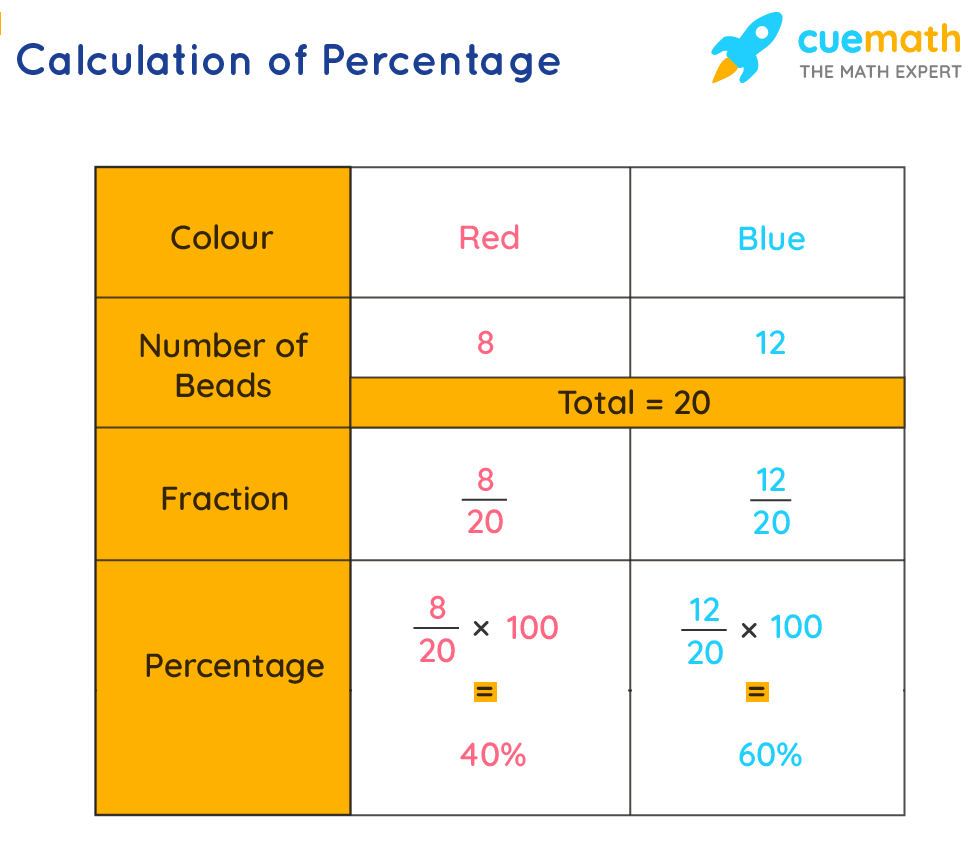
At its heart, a percentage is a way to express a part of a whole, specifically as a fraction of 100. The term “percent” literally means “per hundred” or “out of one hundred.” This standardized way of expressing proportions makes it incredibly useful for comparisons and understanding relative changes, which are constant themes in financial analysis.
What is a Percentage?
Imagine you have a pie cut into 100 slices. If you take 10 slices, you have taken 10 percent of the pie. It’s a simple concept that scales across all numerical contexts. In finance, this “whole” could be your total income, a company’s revenue, an investment portfolio’s value, or the principal amount of a loan. The “part” could be the portion of your income spent on housing, the profit generated, the gain from an investment, or the interest paid on a debt.
The universal denominator of 100 makes percentages incredibly versatile. It allows us to compare different quantities that might initially seem incomparable because they are based on different total amounts. For instance, comparing a $100 profit on a $1,000 investment to a $10,000 profit on a $1,000,000 investment becomes straightforward when expressed as a percentage return.
Why Percentages Matter in Your Financial Life
Percentages are more than just mathematical curiosities; they are the bedrock of financial analysis and decision-making. Their importance stems from several key aspects:
- Standardization for Comparison: They provide a common scale, allowing for meaningful comparisons between diverse financial figures. How does your savings rate compare to the national average? What’s the best interest rate on a loan offer?
- Understanding Growth and Decline: Percentages are essential for tracking growth (e.g., investment returns, revenue growth) or decline (e.g., inflation impact, depreciation) over time. A 5% annual return on your investment gives you a clear picture of its performance, regardless of the initial capital.
- Budgeting and Allocation: When managing personal or business finances, percentages help allocate resources effectively. What percentage of your income goes towards necessities versus discretionary spending? What proportion of a company’s budget is allocated to marketing?
- Risk Assessment: In investing, percentages are used to quantify risk, such as the percentage volatility of an asset or the percentage allocation of assets in a portfolio.
- Transparency in Reporting: Financial reports, whether for public companies or your personal bank statement, rely heavily on percentages to convey information concisely and transparently. Tax rates, discounts, and fees are almost always expressed as percentages.
Without a solid grasp of percentages, interpreting financial news, evaluating investment opportunities, or even understanding your monthly utility bill would be significantly more challenging.
Mastering the Basic Calculation: Step-by-Step
While modern financial tools and calculators often do the heavy lifting, understanding the underlying manual calculation of percentages provides a deeper comprehension and ensures you can verify results or perform quick mental estimates. There are several key scenarios for finding percentages of two numbers, each with a slightly different approach.
Method 1: The Fundamental Formula (Part/Whole * 100)
This is the most common application: finding what percentage one number (the “part”) is of another number (the “whole”).
Formula: (Part / Whole) * 100
Example in Finance: You spent $500 on groceries in a month, and your total monthly income is $4,000. What percentage of your income did you spend on groceries?
- Part: $500 (groceries)
- Whole: $4,000 (total income)
Calculation:
- Divide the part by the whole:
500 / 4000 = 0.125 - Multiply the result by 100 to convert it to a percentage:
0.125 * 100 = 12.5%
Result: You spent 12.5% of your income on groceries. This insight is crucial for budgeting and understanding your spending habits.
Method 2: Calculating a Percentage of a Number
Sometimes, you know the total (the “whole”) and a specific percentage, and you need to find the corresponding part. This is common when calculating discounts, interest, or taxes.
Formula: (Percentage / 100) * Whole or Decimal Percentage * Whole
Example in Finance: You want to calculate the 15% tip on a restaurant bill of $75.
- Percentage: 15%
- Whole: $75 (bill amount)
Calculation (using Percentage / 100):
- Divide the percentage by 100 to convert it to a decimal:
15 / 100 = 0.15 - Multiply the decimal by the whole:
0.15 * 75 = 11.25
Calculation (using Decimal Percentage):
- Recognize 15% as 0.15 in decimal form.
- Multiply:
0.15 * 75 = 11.25
Result: The 15% tip on a $75 bill is $11.25. This method is fundamental for understanding costs and savings.
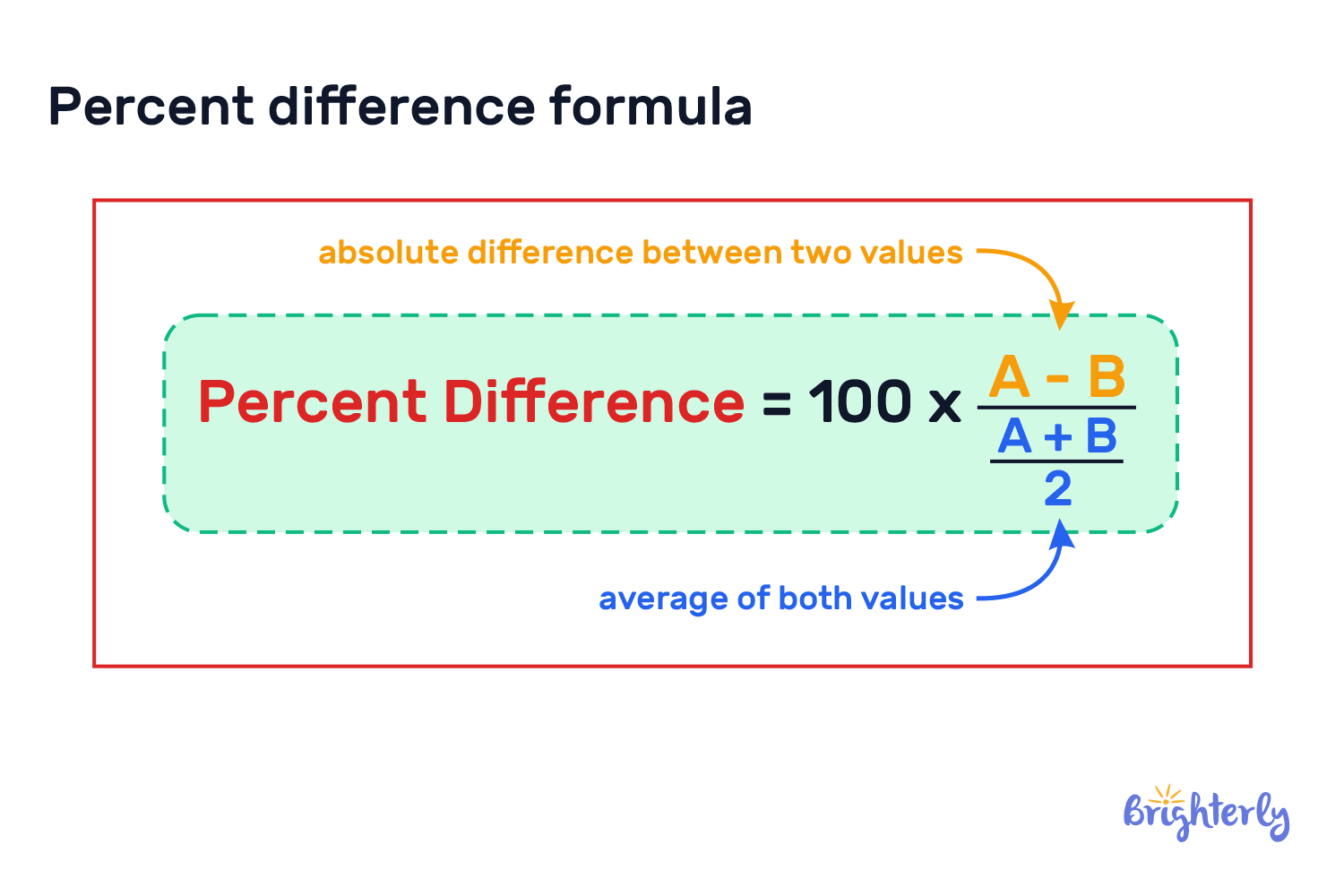
Method 3: Finding Percentage Change
Percentage change is critical for tracking financial growth or decline over time. This could be the growth of an investment, the increase in your salary, or the rise in inflation.
Formula: ((New Value - Old Value) / Old Value) * 100
Example in Finance: Your stock investment was worth $5,000 last year and is now worth $5,750. What is the percentage increase?
- New Value: $5,750
- Old Value: $5,000
Calculation:
- Subtract the old value from the new value:
5750 - 5000 = 750 - Divide the difference by the old value:
750 / 5000 = 0.15 - Multiply by 100 to convert to a percentage:
0.15 * 100 = 15%
Result: Your investment has seen a 15% increase.
Example for a Decrease: If your investment dropped from $5,000 to $4,500.
Calculation:
- Subtract
4500 - 5000 = -500 - Divide
-500 / 5000 = -0.10 - Multiply by 100:
-0.10 * 100 = -10%
Result: Your investment has seen a 10% decrease. The negative sign indicates a decline.
Practical Applications in Personal Finance
The ability to calculate percentages is not just theoretical; it’s a daily necessity for effective personal financial management. From managing your budget to understanding savings and debt, percentages offer clarity.
Budgeting and Expense Tracking
One of the most immediate applications of percentages is in creating and maintaining a budget. Financial advisors often recommend allocating certain percentages of your income to different categories (e.g., 50/30/20 rule for needs/wants/savings).
- Example: If your net income is $3,500 per month, and you want to follow the 50/30/20 rule:
- Needs (50%):
0.50 * $3,500 = $1,750 - Wants (30%):
0.30 * $3,500 = $1,050 - Savings/Debt Repayment (20%):
0.20 * $3,500 = $700
- Needs (50%):
By tracking your actual spending, you can then calculate the percentage of your income spent in each category and compare it against your targets, making adjustments as needed. This allows for informed decisions on where to cut back or increase spending.
Discounts, Sales, and Savings
Understanding discounts and sales percentages is crucial for smart shopping and maximizing your savings.
- Example: A new television is priced at $800, and there’s a 25% discount.
- Discount Amount:
0.25 * $800 = $200 - Final Price:
$800 - $200 = $600
- Discount Amount:
Similarly, when a store offers an “extra 10% off the marked price,” knowing how to apply successive percentages can save you a significant amount.
Interest Rates and Loan Repayments
Interest rates are almost universally expressed as percentages, making their calculation central to understanding loans, credit cards, and savings accounts.
- Example: You have a savings account with an annual interest rate of 0.5%. If you have $10,000 in the account, how much interest will you earn in a year?
- Interest Earned:
0.005 * $10,000 = $50
- Interest Earned:
For loans, understanding the annual percentage rate (APR) helps you compare different loan offers and grasp the true cost of borrowing. A 6% APR on a $10,000 loan means you’ll owe $600 in interest for that year (ignoring compounding for simplicity), a significant component of your repayment schedule.
Percentages in Investing and Business Finance
Beyond personal finance, percentages form the backbone of investment analysis and business decision-making. They help investors evaluate performance and businesses track profitability and growth.
Return on Investment (ROI) and Portfolio Performance
Investors constantly use percentages to measure the performance of their investments. Return on Investment (ROI) is a fundamental metric expressed as a percentage.
-
Formula (Simplified ROI):
((Current Value - Initial Investment) / Initial Investment) * 100 -
Example: You bought shares for $10,000 and sold them for $12,500.
- ROI:
(($12,500 - $10,000) / $10,000) * 100 = ($2,500 / $10,000) * 100 = 0.25 * 100 = 25%
- ROI:
This 25% ROI allows you to compare the profitability of this investment against other opportunities or market benchmarks, regardless of the initial capital amount. Similarly, portfolio managers report gains or losses as percentages to demonstrate performance to clients.
Profit Margins and Business Growth
Businesses use percentages extensively to analyze their financial health and operational efficiency.
- Gross Profit Margin:
((Revenue - Cost of Goods Sold) / Revenue) * 100- This tells a business what percentage of its revenue is left after accounting for the direct costs of producing its goods or services. A higher percentage indicates greater efficiency.
- Net Profit Margin:
((Net Income) / Revenue) * 100- This shows what percentage of revenue is left after all expenses, including taxes, have been deducted. It’s a key indicator of a company’s overall profitability.
Tracking the percentage growth in sales, customer base, or market share year-over-year also provides critical insights into a company’s trajectory and success.
Market Share and Economic Indicators
On a macroeconomic level, percentages are used to quantify significant trends and relationships.
- Market Share:
(Company's Sales / Total Market Sales) * 100- This percentage indicates a company’s portion of the total sales in its industry. It’s a crucial metric for competitive analysis.
- Inflation Rate: The percentage increase in the general price level of goods and services over a period. This directly impacts purchasing power and economic policy.
- Unemployment Rate: The percentage of the total labor force that is unemployed and actively seeking employment. This is a vital economic health indicator.
- GDP Growth Rate: The percentage increase in a country’s Gross Domestic Product (GDP), reflecting economic expansion or contraction.
These percentage-based indicators help governments, investors, and businesses understand the broader economic environment and make strategic decisions.
Leveraging Tools for Accuracy and Efficiency
While understanding the manual calculations is fundamental, in today’s fast-paced financial world, leveraging technology for percentage calculations is both efficient and highly recommended.
Using Calculators and Spreadsheets
For everyday calculations, a simple scientific or financial calculator is indispensable. For more complex or recurring financial analysis, spreadsheet software like Microsoft Excel or Google Sheets becomes an extremely powerful ally.
- Spreadsheet Functions: Spreadsheets can automate percentage calculations. You can set up columns for “Part” and “Whole,” and then a third column automatically calculates the percentage using a formula like
= (A2/B2)*100. This is particularly useful for budgeting, tracking expenses, or analyzing investment returns over time, where you need to apply the same calculation repeatedly to different data points. You can also easily sum percentages or perform conditional formatting based on percentage thresholds.
Online Financial Calculators
The internet is replete with specialized online calculators designed for specific financial percentage calculations:
- Mortgage Calculators: Calculate monthly payments, interest paid over the loan term, and amortization schedules, all heavily relying on interest rate percentages.
- Loan Calculators: Determine repayment schedules and total interest based on principal amount, interest rate (APR), and loan term.
- Savings/Compound Interest Calculators: Project future value of savings based on initial deposit, regular contributions, and annual interest rate.
- Tip Calculators: Quickly determine tip amounts based on a percentage of the bill.
- Discount Calculators: Figure out final prices after sales percentages.
These tools save time, reduce the risk of manual errors, and often provide visual representations or detailed breakdowns that enhance understanding. However, always ensure you understand the inputs required and the output provided, as some calculators may make assumptions (e.g., compound interest frequency).
Conclusion
The ability to find the percentage of two numbers is far more than a basic math skill; it is a foundational pillar of financial literacy. From meticulously managing your personal budget and making informed purchasing decisions to critically evaluating investment opportunities and understanding broad economic trends, percentages provide the indispensable framework for quantitative analysis.
By mastering the core formulas—calculating a part of a whole, determining a percentage of a number, and computing percentage change—you equip yourself with the power to translate raw financial data into meaningful insights. Coupled with the efficient use of modern calculators and sophisticated spreadsheet software, you can navigate the complexities of personal finance, investing, and business with confidence and precision. Embrace the power of percentages, and unlock a clearer, more controlled financial future.
aViewFromTheCave is a participant in the Amazon Services LLC Associates Program, an affiliate advertising program designed to provide a means for sites to earn advertising fees by advertising and linking to Amazon.com. Amazon, the Amazon logo, AmazonSupply, and the AmazonSupply logo are trademarks of Amazon.com, Inc. or its affiliates. As an Amazon Associate we earn affiliate commissions from qualifying purchases.