
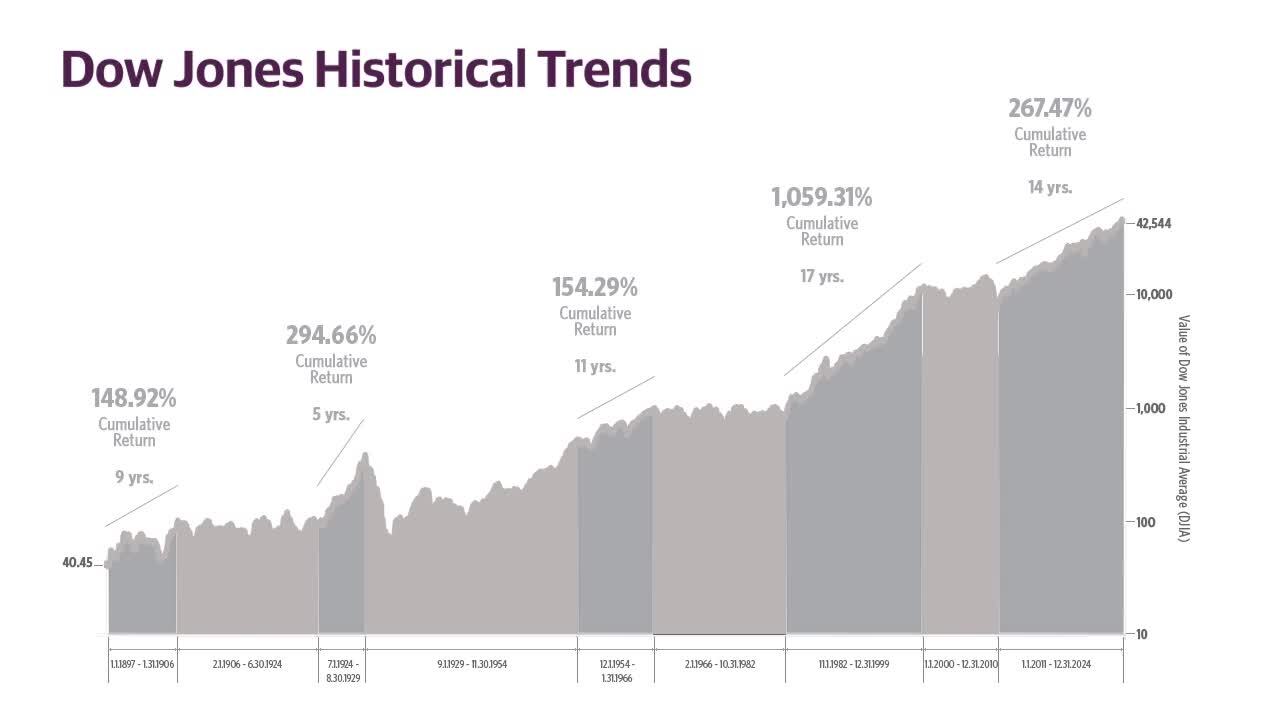
The Dow Jones Industrial Average (DJIA) stands as one of the most venerable and widely quoted stock market indices globally. For over a century, its movements have served as a barometer for the health of the American economy and the sentiment of investors worldwide. Tracking its all-time high is not merely about identifying a number on a chart; it’s about understanding the confluence of economic forces, corporate performance, and market psychology that propelled it to that peak, offering profound insights for personal finance, investing strategies, and broader economic analysis.
A Historical Perspective on the Dow Jones Industrial Average
Understanding the Dow’s all-time high requires appreciating its deep roots and evolving significance in financial markets. The index, created by Charles Dow in 1896, initially tracked 12 industrial companies, aiming to provide a clear indicator of the stock market’s direction amidst the burgeoning industrial revolution. Its journey from a handful of railroads and sugar companies to today’s diversified collection of 30 mega-cap corporations reflects the dramatic transformation of the U.S. economy.

Origins and Evolution of the Dow
From its humble beginnings, the Dow was designed to simplify market analysis for the average investor and businessman. Unlike broader indices such as the S&P 500, which is market-capitalization weighted, the DJIA is a price-weighted index, meaning companies with higher stock prices have a greater impact on the index’s movement. This unique methodology, while sometimes criticized for its limitations in representing the overall market, has nonetheless cemented its role as a widely recognized benchmark. Over its history, the Dow has weathered world wars, depressions, recessions, and technological revolutions, continuously adapting its components to remain relevant to the nation’s economic landscape. Each component company, chosen for its substantial size, reputation, and broad investor interest, represents a significant segment of the industrial economy, providing a snapshot of corporate America’s prowess.
The Significance of Market Milestones
Every time the Dow closes at a new all-time high, it sparks a flurry of media attention and investor conversation. These milestones are more than just numbers; they represent periods of sustained economic growth, robust corporate earnings, and often, an underlying sense of optimism in the financial markets. For many individual investors, a new Dow high can be a source of confidence, validating their long-term investment strategies and potentially encouraging further participation in the market. Conversely, the inability to surpass previous highs for extended periods can signal underlying economic anxieties or market stagnation. These peaks often serve as psychological benchmarks, influencing investor behavior and market narratives, making them crucial points of reference for anyone tracking their financial health and investment portfolio.
Pinpointing the Record Peak
Identifying the exact all-time high for the Dow Jones Industrial Average requires looking at specific dates and the economic backdrop that supported such unprecedented valuations. This isn’t just about a solitary number but the conditions that converged to create that moment.
The Exact Number and Date
As of late 2023 and early 2024, the Dow Jones Industrial Average has consistently pushed into new record territory, reflecting a period of surprising economic resilience and corporate earnings growth following significant global disruptions. The most recent all-time high for the Dow Jones Industrial Average was 39,807.37, achieved on May 17, 2024. This figure represents the culmination of several factors discussed below, signaling strong investor confidence despite lingering inflationary concerns and evolving monetary policy. It’s crucial for investors to remember that this figure is a snapshot in time, and the Dow’s volatile nature means new records can be set regularly, or previous highs can stand for extended periods.
Factors Contributing to the Record High
Numerous interwoven factors typically contribute to the Dow reaching new record highs. The climb to 39,807.37 was no exception, benefiting from a multifaceted economic environment:
- Robust Corporate Earnings: Strong earnings reports from major Dow components and other S&P 500 companies often fuel investor optimism. When companies consistently exceed analyst expectations and provide positive forward guidance, it signals underlying business strength and justifies higher valuations. This period saw many companies demonstrating resilience and adapting to new market conditions.
- Economic Resilience: Despite predictions of recession, the U.S. economy displayed remarkable resilience, characterized by a strong labor market, stable consumer spending, and better-than-expected GDP growth. This underlying economic health provides a solid foundation for corporate profitability and, by extension, stock market appreciation.
- Easing Inflationary Pressures and Monetary Policy Hopes: While inflation remained a concern, signs of it moderating without a severe economic contraction bolstered hopes that the Federal Reserve might soon pivot towards interest rate cuts. The anticipation of lower borrowing costs generally makes equities more attractive relative to fixed-income investments, encouraging capital flow into the stock market.
- Technological Advancement and Innovation: Ongoing advancements, particularly in areas like artificial intelligence, continue to drive productivity gains and open new market opportunities. Companies at the forefront of these innovations, many of which are Dow components or influence the broader market, see increased investor interest and valuation.
- Investor Sentiment and Momentum: Positive market momentum often feeds on itself. As the Dow approaches and surpasses previous highs, it can trigger a “fear of missing out” (FOMO) among sidelined investors, leading to increased buying activity. This self-reinforcing cycle can push indices higher, although it also carries the risk of overvaluation.
- Fiscal Stimulus and Government Spending: In some periods, government spending programs and fiscal policies can inject liquidity and stimulate demand, indirectly boosting corporate revenues and market sentiment. While less pronounced in this specific record period compared to post-pandemic stimulus, underlying government spending can still provide economic support.
Understanding these contributing factors is vital for investors seeking to contextualize market movements and make informed decisions about their portfolios.
Understanding What Drives Dow Records
The Dow’s ascent to new highs is never accidental; it’s a complex interplay of macroeconomic forces, corporate fundamentals, and policy decisions. Grasping these drivers is fundamental for investors to navigate the market cycle.
Economic Fundamentals
At the core of any sustained market rally are strong economic fundamentals. When the Gross Domestic Product (GDP) is growing, indicating an expanding economy, it typically translates to higher corporate revenues and profits. A robust employment market means more people earning and spending, which further fuels economic activity. Low and stable inflation, coupled with wage growth, gives consumers greater purchasing power, benefiting companies. Conversely, high unemployment, stagnant GDP, or runaway inflation can quickly erode corporate profitability and investor confidence, preventing the Dow from reaching new records.
Corporate Performance
Ultimately, the Dow reflects the collective performance of its 30 constituent companies. Strong corporate earnings, driven by efficient operations, successful product launches, and expanding market share, are perhaps the most direct catalyst for rising stock prices. Companies that consistently deliver solid profits, manage debt effectively, and return value to shareholders through dividends or share buybacks tend to see their stock prices appreciate. When a significant portion of Dow components reports strong results, it provides a powerful upward thrust to the index. Conversely, widespread earnings misses or pessimistic outlooks can quickly send the Dow lower.
Monetary and Fiscal Policies
Central bank policies, particularly those of the Federal Reserve in the U.S., exert immense influence on market valuations. Low-interest rates reduce borrowing costs for businesses, encouraging investment and expansion, and make equity investments more attractive relative to bonds. Quantitative easing (QE) injects liquidity into the financial system, often finding its way into asset markets. On the fiscal side, government spending programs, tax cuts, or infrastructure projects can stimulate economic demand and boost corporate revenues. Changes in these policies, such as interest rate hikes or government austerity measures, can significantly alter the market’s trajectory and influence the Dow’s ability to achieve new highs.
Geopolitical Stability and Investor Confidence
Beyond economic and corporate specifics, the broader geopolitical landscape and prevailing investor sentiment play a crucial role. Periods of international stability, reduced trade tensions, and predictable political environments foster a sense of security among investors, making them more willing to allocate capital to riskier assets like stocks. Conversely, geopolitical conflicts, political instability, or significant global crises can trigger uncertainty, leading to market sell-offs and preventing sustained upward movements. Investor confidence, often a psychological factor, can amplify these trends, creating either exuberance or fear that drives market behavior beyond pure fundamentals.
The Broader Implications of New Highs
When the Dow Jones Industrial Average reaches an all-time high, its impact reverberates far beyond the trading floors, affecting individual investors, the broader economy, and even market psychology.
For Individual Investors
For many, a new Dow high translates directly to an increase in the value of their retirement accounts, brokerage portfolios, and other investment holdings linked to the stock market. This “wealth effect” can make individuals feel more financially secure, potentially leading to increased consumer spending, which in turn stimulates economic growth. However, it also presents critical considerations:
- Portfolio Valuation: Investors see their asset values rise, which can be reassuring.
- Rebalancing Considerations: Periods of strong market growth might cause an investor’s asset allocation to shift, with equities comprising a larger portion of their portfolio than originally intended. This often calls for rebalancing, selling some appreciated assets to reinvest in underperforming ones, or to meet target allocations, managing risk.
- Capital Gains: For those nearing retirement or contemplating large purchases, new highs might trigger decisions to realize capital gains, potentially incurring tax liabilities.
- Emotional Biases: The excitement of new highs can sometimes lead to irrational exuberance, prompting investors to chase returns or take on excessive risk, overlooking fundamental analysis.
For the Economy
New market highs often signal a strong underlying economy or, at least, robust expectations for future growth.
- Consumer Spending: The wealth effect can boost consumer confidence and spending, which is a major driver of economic activity.
- Business Investment: Rising stock markets can make it easier for companies to raise capital through equity offerings, encouraging business expansion, innovation, and job creation.
- Economic Barometer: While not a perfect indicator, a rising Dow can serve as a positive psychological boost for the nation, suggesting prosperity and progress.
The Psychology of Market Peaks
Market peaks are fraught with psychological implications. They can induce both optimism and anxiety.
- FOMO (Fear of Missing Out): As the market climbs, sidelined investors may feel compelled to jump in, fearing they are missing out on further gains, potentially pushing valuations higher even beyond fundamental justification.
- Irrational Exuberance: Sometimes, market rallies can become disconnected from underlying economic realities, fueled by speculation and collective optimism. This “irrational exuberance,” as famously coined by Alan Greenspan, can lead to asset bubbles.
- Risk Aversion vs. Greed: New highs can test an investor’s discipline, making them question whether to lock in profits or ride the wave further, balancing the fear of missing out with the risk of a potential correction. Understanding these psychological dynamics is crucial for maintaining a disciplined investment approach.
Looking Beyond the Peak: Volatility and Long-Term Investing
While reaching new all-time highs is celebrated, astute investors understand that market performance is rarely a straight line upwards. The Dow’s journey is characterized by volatility, making a long-term perspective and disciplined strategy essential for wealth accumulation.
The Inevitability of Corrections
History teaches that market corrections and bear markets are an intrinsic part of the investment cycle. Even after reaching record highs, the market will inevitably experience pullbacks due to various factors: economic slowdowns, corporate earnings disappointments, shifts in monetary policy, or unforeseen geopolitical events. These corrections, while sometimes painful in the short term, are a natural and healthy mechanism for the market to reset and shed excessive valuations. Long-term investors recognize these periods not as failures, but as opportunities to acquire quality assets at potentially lower prices.
Diversification and Risk Management
Relying solely on an index like the Dow, or even a few high-performing stocks, carries inherent risks. A diversified portfolio, spread across various asset classes (stocks, bonds, real estate, commodities), industries, and geographies, helps mitigate the impact of any single asset’s poor performance. Furthermore, within equities, diversification across market capitalizations (large-cap, mid-cap, small-cap) and investment styles (growth, value) can provide a more resilient portfolio. Risk management also involves understanding one’s personal risk tolerance, setting clear investment goals, and regularly reviewing and rebalancing the portfolio to maintain desired allocations.

The Power of Compounding and Long-Term Strategy
Despite the Dow’s impressive peaks and inevitable valleys, the most consistent path to wealth creation in the stock market has been through long-term investing. The power of compounding returns, where earnings generate further earnings over extended periods, is transformative. Investors who adopt a “buy and hold” strategy, regularly contributing to their investments, and resisting the urge to react impulsively to short-term market fluctuations, often outperform those who attempt to time the market. Focusing on robust companies, understanding their intrinsic value, and maintaining a patient, disciplined approach through all market cycles, including periods of new highs, remains the cornerstone of successful personal finance and investing. The Dow’s all-time high is a testament to the market’s long-term upward bias, but it’s the journey, not just the peak, that truly defines investor success.
aViewFromTheCave is a participant in the Amazon Services LLC Associates Program, an affiliate advertising program designed to provide a means for sites to earn advertising fees by advertising and linking to Amazon.com. Amazon, the Amazon logo, AmazonSupply, and the AmazonSupply logo are trademarks of Amazon.com, Inc. or its affiliates. As an Amazon Associate we earn affiliate commissions from qualifying purchases.