
Understanding Standard Market Hours
For most investors, the phrase “what time the stock market opens” primarily refers to the opening bell of the major US stock exchanges: the New York Stock Exchange (NYSE) and the Nasdaq Stock Market (NASDAQ). These institutions dictate the standard trading hours for a vast majority of publicly traded companies in the United States. Adhering to a well-defined schedule is crucial for maintaining market order, ensuring fair price discovery, and allowing market participants to plan their trading and investment strategies. Understanding these core hours is the foundational step for anyone engaging with the equity markets.
NYSE and NASDAQ: The Core Trading Day
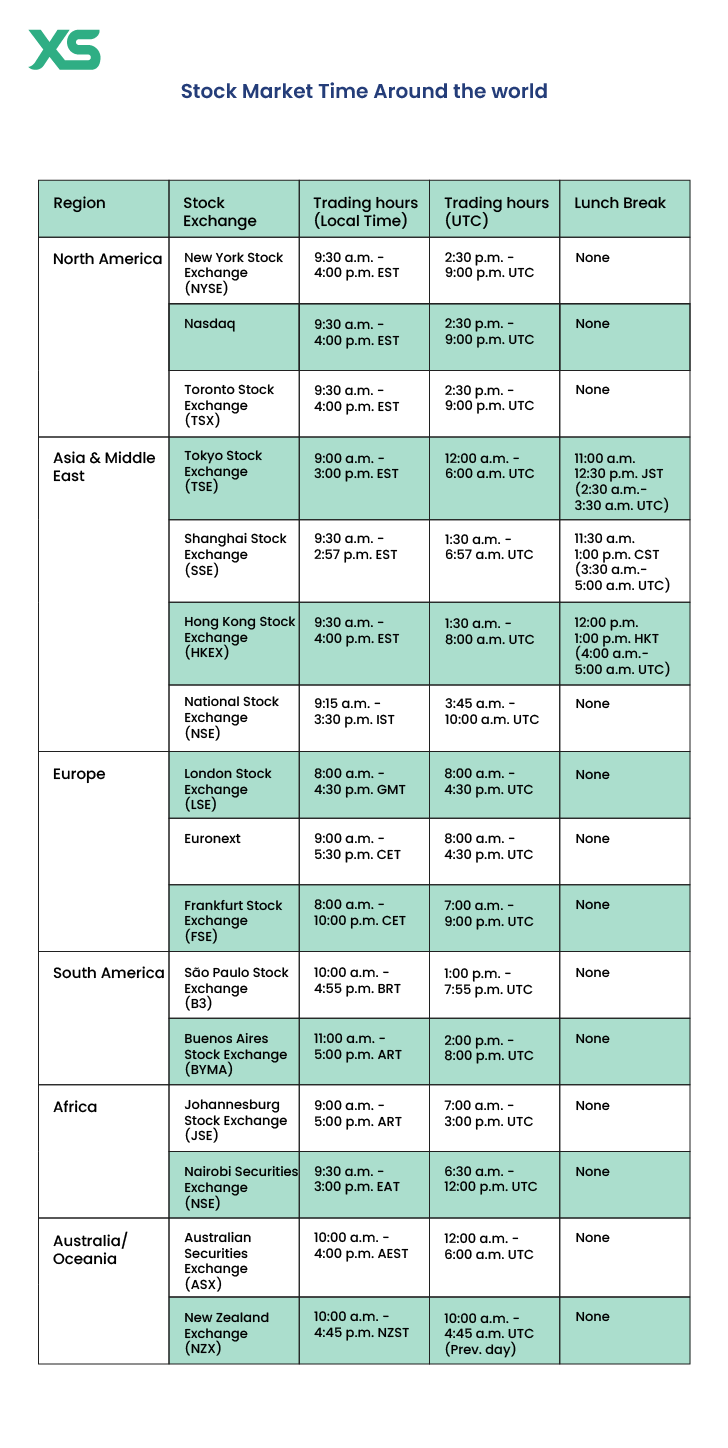
The New York Stock Exchange and the Nasdaq Stock Market operate on identical standard trading hours: 9:30 AM Eastern Time (ET) to 4:00 PM ET, Monday through Friday. This 6.5-hour window represents the most active and liquid period of the trading day. During these hours, institutional investors, professional traders, and individual retail investors execute billions of dollars in transactions, leading to efficient price discovery. The opening bell on the NYSE, a highly publicized event, symbolizes the start of trading, often accompanied by significant volume as orders accumulated overnight are processed. Similarly, the closing bell marks the end of the standard trading session, frequently seeing another surge in activity as participants adjust positions before the market closes.
Time Zones and Their Impact
It is paramount for investors to remember that the official operating hours for US stock exchanges—9:30 AM to 4:00 PM—are always quoted in Eastern Time (ET). For individuals residing in different time zones, accurate conversion is essential to avoid confusion and missed opportunities. For example, an investor in California (Pacific Time, PT) would see the market open at 6:30 AM PT and close at 1:00 PM PT. In the Central Time (CT) zone, the market opens at 8:30 AM CT and closes at 3:00 PM CT. For global investors, the time difference can be substantial, often requiring late-night or early-morning engagement depending on their location relative to New York. Relying solely on local time without confirming the ET reference can lead to misinterpretations of market activity or poorly timed trades.
Beyond Standard Hours: Pre-Market and After-Hours Trading
While the 9:30 AM to 4:00 PM ET window defines the core trading day, stock market activity extends beyond these standard hours. Electronic Communication Networks (ECNs) facilitate pre-market and after-hours trading, offering investors opportunities to react to news and execute trades outside the traditional session. These extended hours, however, come with distinct characteristics and a different risk profile that investors must understand before participating. They cater to a specific need for immediate response to breaking information but demand a more nuanced approach due to altered market dynamics.
Pre-Market Trading: Getting an Early Start
Pre-market trading typically commences as early as 4:00 AM ET and runs until the standard market open at 9:30 AM ET. This session allows investors to react to significant news that often breaks before the traditional trading day begins, such as overnight corporate earnings reports, crucial economic data releases, or global geopolitical developments. For professional traders and institutions, pre-market offers an early opportunity to position portfolios or capitalize on initial price movements. Retail investors can also access pre-market trading through various brokerage platforms. However, pre-market sessions are characterized by significantly lower trading volume and liquidity compared to standard hours, often leading to wider bid-ask spreads, increased price volatility, and potential difficulty in executing large orders at desired prices.
After-Hours Trading: Extending the Day
After-hours trading extends the market’s activity beyond the 4:00 PM ET close, typically continuing until 8:00 PM ET. Similar to pre-market, this session is crucial for reacting to news that emerges after the regular market closes. Companies frequently release quarterly earnings or make other significant announcements in the late afternoon or early evening. After-hours trading provides a mechanism for investors to immediately process and react to this information, rather than waiting until the next trading day. While offering flexibility, after-hours trading shares the same risks as pre-market: reduced liquidity, wider spreads, and heightened volatility. Fewer participants mean that smaller trades can disproportionately impact a stock’s price, potentially leading to substantial price gaps at the next day’s opening.
Risks and Opportunities in Extended Hours
Extended-hours trading presents a double-edged sword for investors. The primary opportunity lies in the ability to react instantaneously to breaking news, potentially capturing significant gains or mitigating losses before the broader market can fully process the information during standard hours. It also allows for responsiveness to global market movements that occur outside the US trading window. However, the risks are substantial. Reduced liquidity is the foremost concern; fewer buyers and sellers can make it challenging to execute trades at desirable prices, especially for larger orders, and result in wider bid-ask spreads. Volatility is often amplified, as small order imbalances can cause outsized price swings. Furthermore, institutional investors often dominate these sessions, leveraging superior resources and faster information access, potentially disadvantaging retail participants. Investors engaging in extended-hours trading should prioritize limit orders to control their execution price and be acutely aware of potential price dislocations.
Global Markets: A 24/7 Investing World
The global financial landscape ensures that investment opportunities and market dynamics are always in motion, far beyond the confines of US trading hours. Major stock exchanges across Asia, Europe, and other continents operate on different schedules, creating a continuous cycle of trading activity around the clock. Understanding these global market hours is vital for investors tracking companies with international exposure, monitoring global economic indicators, or seeking to gain a comprehensive perspective on market sentiment. News and events from one region can rapidly influence markets elsewhere, underscoring the interconnected nature of modern finance.
Asia-Pacific Markets
As the US market prepares to open or during its closing hours, significant financial centers across the Asia-Pacific region are actively trading. The Tokyo Stock Exchange (TSE) generally operates from 9:00 AM to 3:00 PM Japan Standard Time (JST), which translates to roughly 8:00 PM ET the previous day to 2:00 AM ET for US investors. China’s Shanghai Stock Exchange (SSE) and Shenzhen Stock Exchange (SZSE) follow similar hours, typically from 9:30 AM to 3:00 PM China Standard Time (CST), corresponding to about 9:30 PM ET the previous day to 4:00 AM ET. Australia’s ASX operates from 10:00 AM to 4:00 PM Australian Eastern Standard Time (AEST), from approximately 8:00 PM ET the previous day to 2:00 AM ET. These markets often react first to global economic news or geopolitical events, influencing subsequent trading sessions in other regions.
European Markets
Following the Asian session and often overlapping with US pre-market trading, European stock exchanges become the focal point of global financial activity. The London Stock Exchange (LSE), a leading global exchange, operates from 8:00 AM to 4:30 PM Greenwich Mean Time (GMT). For US investors, this generally means the LSE is open from about 3:00 AM ET to 11:30 AM ET. The Deutsche Börse, which operates the Frankfurt Stock Exchange (FWB) in Germany, typically trades from 9:00 AM to 5:30 PM Central European Time (CET), translating to roughly 3:00 AM ET to 11:30 AM ET. Other major European exchanges include Euronext (covering Amsterdam, Brussels, Lisbon, Oslo, and Paris) and the SIX Swiss Exchange. European markets are crucial for reacting to Eurozone and UK economic data and often set the tone for the US market’s open.
The Interconnectedness of Global Trading
The staggered opening and closing times of global stock markets create a continuous, dynamic cycle of trading. No single market operates in isolation; news, economic data, and geopolitical events originating in one region can rapidly ripple across exchanges, impacting asset prices worldwide. For instance, a major economic announcement from Japan or China during its trading hours can immediately influence US stock futures and subsequently affect European and US markets upon their opening. This constant flow of information and capital means that diligent investors often monitor major global indices and news feeds even outside their primary market’s operating hours. The rise of electronic trading and derivative markets further blurs these geographical and temporal boundaries, allowing for nearly 24/5 hedging or speculation on market movements, emphasizing the need for a globally aware investment perspective.
Market Holidays and Disruptions
While stock markets generally adhere to a consistent Monday-to-Friday schedule, they are not open every weekday. A comprehensive understanding of market hours must include awareness of observed holidays and the rare instances of unexpected closures. These scheduled and unscheduled disruptions significantly impact trading activity, dictating when transactions can be executed and when investors must anticipate a pause in market operations. Planning around these non-trading days is an essential part of effective investment management and strategic execution.
Federal Holidays and Exchange Closures
In the United States, the NYSE and NASDAQ observe several federal holidays throughout the year, during which all trading activity ceases. These typically include New Year’s Day, Martin Luther King, Jr. Day, Presidents’ Day, Good Friday, Memorial Day, Juneteenth National Independence Day, Independence Day, Labor Day, Thanksgiving Day, and Christmas Day. It is crucial for investors to be aware of these full-day closures, as no trading can occur, and any orders placed during these periods will only be processed once the market reopens. Brokerage firms and financial news outlets regularly publish a calendar of these market holidays well in advance, providing ample notice for investors to adjust their trading and investment plans accordingly.
Early Closures and Special Events
In addition to full-day closures, the stock market occasionally observes early closures for specific events or surrounding certain holidays. These abbreviated trading days typically see the market close at 1:00 PM ET instead of the usual 4:00 PM ET. Common instances include the day before Independence Day (if it falls on a weekday) and the day after Thanksgiving (Black Friday). These shortened sessions often experience lower trading volumes and reduced liquidity due to decreased participation. While still active, investors should be mindful of the abbreviated hours and potential for less robust price discovery. Furthermore, in extremely rare circumstances, markets may close unexpectedly or for an extended period due to unforeseen disruptions, such as national tragedies, severe weather events impacting physical operations, or major technical failures, underscoring the importance of staying informed about exchange announcements.
Why Market Hours Matter for Investors
The specific times the stock market is open or closed, and the dynamics within those periods, profoundly influence investment strategy, risk management, and order execution. Understanding how liquidity, volatility, and information flow fluctuate throughout the trading day and across different sessions is not merely logistical knowledge but a critical component of successful investing. These temporal aspects directly impact the effectiveness of trading decisions and the ultimate realization of investment goals.
Volatility and Liquidity Throughout the Day
The interplay of volatility and liquidity is highly dynamic across market hours. Generally, the highest liquidity and often the highest volatility in the US stock market occur during the first and last hours of the standard 9:30 AM to 4:00 PM ET session. The initial hour is typically characterized by high volume as traders react to overnight news, economic data, and pre-market movements, leading to rapid price swings. Similarly, the final hour often sees increased activity as investors adjust positions or execute end-of-day orders. The middle hours of the day usually exhibit lower volatility and reduced liquidity. Extended-hours trading (pre-market and after-hours) consistently suffers from significantly lower liquidity, resulting in wider bid-ask spreads and heightened price sensitivity, meaning small trades can cause disproportionate price changes.
The Importance of Order Types
The appropriate use of order types is intrinsically linked to market hours and liquidity conditions. A “market order,” which instructs a broker to buy or sell immediately at the best available price, is most effective during standard market hours when liquidity is high and bid-ask spreads are tight. Using market orders during extended hours or periods of low liquidity can result in executing at an unfavorable price, significantly different from what the investor expected, due to wider spreads and increased volatility. Conversely, a “limit order,” which specifies a maximum buy price or a minimum sell price, is indispensable for trading outside of standard hours or for less liquid stocks. Limit orders provide critical control over the execution price, protecting investors from adverse price movements in low-liquidity environments, although they carry the risk of not being filled if the market price never reaches the specified limit.

Information Flow and Decision Making
The rhythm of market hours is directly tied to the flow of information that drives investment decisions. Major corporate announcements—such as quarterly earnings reports, guidance revisions, or mergers and acquisitions—are often strategically timed either before the market opens (e.g., 7:00 AM – 8:00 AM ET) or after it closes (e.g., 4:00 PM – 5:30 PM ET). This timing allows market participants to digest the information and react during extended-hours sessions or at the next day’s open, minimizing disruption to ongoing regular trading. Similarly, key economic indicators from government agencies are typically released at specific, pre-announced times, often 8:30 AM ET, to allow for orderly market reaction. Savvy investors and traders actively monitor these scheduled releases, as they can trigger significant price movements, and understanding their timing relative to market operations is crucial for informed decision-making.
aViewFromTheCave is a participant in the Amazon Services LLC Associates Program, an affiliate advertising program designed to provide a means for sites to earn advertising fees by advertising and linking to Amazon.com. Amazon, the Amazon logo, AmazonSupply, and the AmazonSupply logo are trademarks of Amazon.com, Inc. or its affiliates. As an Amazon Associate we earn affiliate commissions from qualifying purchases.