
For investors, traders, and financial enthusiasts worldwide, understanding the operational hours of the US stock markets is fundamental. The rhythm of global finance often hinges on the opening and closing bells of Wall Street. Far more than just a timestamp, these hours define critical periods for price discovery, liquidity, and strategic decision-making. While the answer to “what time do the US stock markets close?” might seem straightforward, delving deeper reveals a complex interplay of standard trading sessions, extended hours, and market holidays, each with significant implications for portfolio management and financial planning.
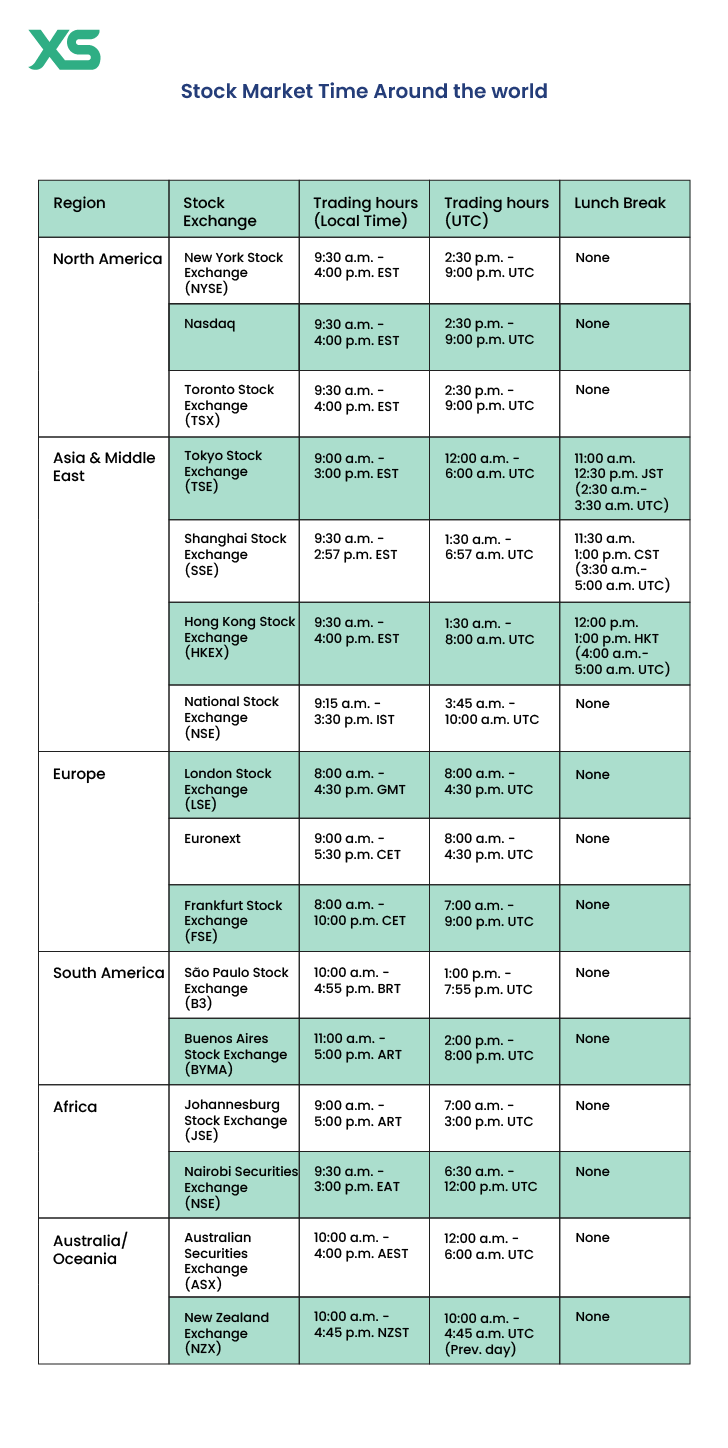
The standard closing time for the major US stock exchanges, such as the New York Stock Exchange (NYSE) and the NASDAQ Stock Market, is 4:00 PM Eastern Time (ET). This daily event, marked by the iconic closing bell, signals the end of the regular trading session, bringing to a temporary halt the frantic buying and selling that characterize one of the world’s most dynamic financial landscapes. However, this 4:00 PM ET benchmark is merely the tip of the iceberg. To truly master the timing of the market, one must consider the broader ecosystem of pre-market, after-hours, and holiday-adjusted schedules that influence trading strategies and investment outcomes. Knowing these times isn’t just about avoiding missed opportunities; it’s about informed risk management, leveraging news releases, and understanding the nuances of market liquidity.
The Standard Closing Bell: A Daily Ritual
The 4:00 PM ET closing bell on the NYSE and NASDAQ is more than just a ceremonial chime; it marks the culmination of the regular trading day, an intense six-and-a-half-hour period that dictates the daily performance of countless assets. This standard session is the most liquid and transparent time for price discovery, characterized by high trading volumes and robust participation from institutional and retail investors alike.
Regular Trading Hours Explained
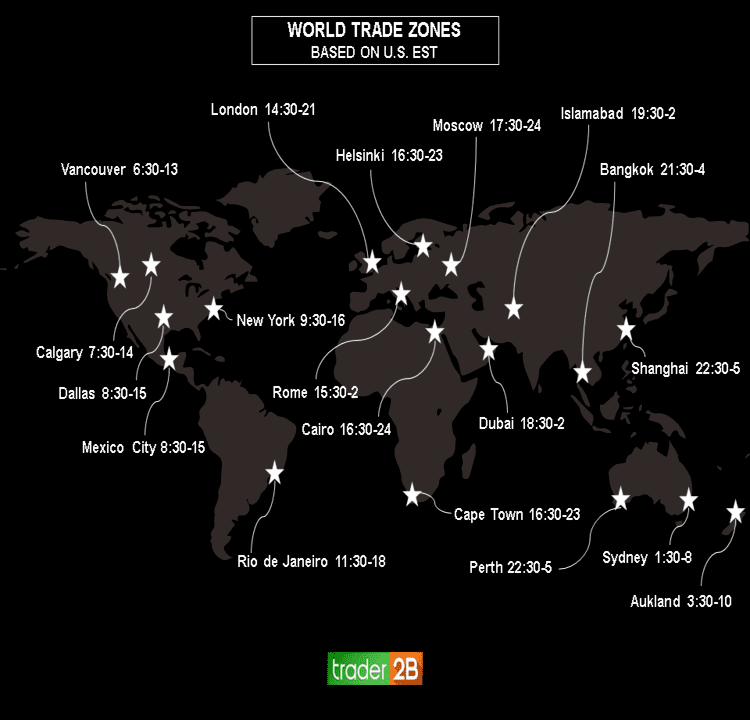
The typical US stock market day begins at 9:30 AM ET and concludes at 4:00 PM ET, Monday through Friday. These hours apply to the primary equity markets where stocks are bought and sold. It’s crucial to remember that this schedule operates on Eastern Time, meaning investors in other time zones must adjust accordingly. For instance, a trader on the West Coast observes a 6:30 AM to 1:00 PM Pacific Time schedule, while an investor in London navigates a 2:30 PM to 9:00 PM GMT window. This standard window is when most individual investors execute trades, relying on the highest liquidity and tightest bid-ask spreads. During these hours, a vast amount of data is generated, forming the basis for daily news reports, performance metrics, and technical analysis.
Understanding Different Market Segments
While the 9:30 AM to 4:00 PM ET window is standard for equities, other financial instruments traded in the US have slightly different schedules. For example, options on equities generally follow the same trading hours but may occasionally close slightly earlier or later depending on the specific exchange and product. Futures markets, particularly those tied to broad market indices like the S&P 500, operate almost 24 hours a day, five days a week, with brief breaks. Understanding these distinctions is vital for diversified investors. However, when discussing “US stock markets” in the context of the average investor, the equity market hours are almost always the primary focus. The uniformity of these hours across major exchanges like the NYSE and NASDAQ simplifies the trading experience for most participants, ensuring a consistent daily structure.
The Significance of the Closing Auction
The period leading up to and immediately following 4:00 PM ET is often characterized by heightened activity known as the closing auction. This mechanism is designed to establish the official closing price for each stock by matching buy and sell orders that have accumulated throughout the day or been specifically placed to participate in the close. Major institutional players, such as mutual funds and exchange-traded funds (ETFs), frequently use the closing auction to rebalance their portfolios or execute large block trades at the official closing price. This concentrated burst of trading can lead to significant price movements in the final minutes, sometimes referred to as the “power half-hour” or “power hour.” The closing price is critical as it dictates daily performance metrics, impacts margin calculations, and forms the starting point for the next day’s open. For day traders, navigating this volatile window requires precision and keen awareness of order imbalances.
Beyond the Bell: Extended Trading Hours
The market’s activity doesn’t cease immediately after the 4:00 PM ET closing bell. Modern electronic communication networks (ECNs) and alternative trading systems (ATS) facilitate trading beyond the regular session, offering both opportunities and challenges for investors. These extended hours are typically divided into pre-market and after-hours sessions, each with its own characteristics.
Pre-Market Trading
Pre-market trading refers to the period before the regular 9:30 AM ET opening. While hours can vary slightly by broker, pre-market activity typically commences as early as 4:00 AM ET and runs until the market officially opens. This session is often driven by the release of significant economic data, corporate earnings reports, or breaking news that occurs overnight or in the early morning hours before the standard session begins. Many institutional investors and sophisticated traders participate in pre-market sessions to react quickly to new information. However, pre-market trading is characterized by significantly lower liquidity compared to regular hours, wider bid-ask spreads, and increased volatility. This means that executing large orders can be challenging, and prices can move dramatically on relatively small volumes. For retail investors, participating in pre-market requires caution, as the lack of liquidity can lead to less favorable execution prices and magnified risks.
After-Hours Trading
After-hours trading occurs after the 4:00 PM ET closing bell, generally extending until 8:00 PM ET, though again, specific hours can vary by broker and platform. Similar to pre-market, this session is often influenced by news, such as late-breaking earnings announcements, analyst upgrades/downgrades, or geopolitical developments that emerge after the regular market close. After-hours trading provides an immediate avenue for investors to react to these events without waiting for the next trading day. Like pre-market, after-hours trading suffers from reduced liquidity, making it more challenging to execute trades efficiently. The wider spreads mean that the difference between the highest price a buyer is willing to pay and the lowest price a seller is willing to accept can be substantial, potentially eroding profits or increasing losses. It is often dominated by institutional players and those with direct market access, though retail investors increasingly have access through their brokerage accounts.
Risks and Opportunities in Extended Hours
Extended trading hours present a double-edged sword. The primary opportunity lies in the ability to react immediately to fresh information, potentially capitalizing on price movements before the broader market opens or closes. For example, a company reporting unexpectedly positive earnings after the market closes might see its stock price surge in after-hours trading, offering early movers a chance to buy in before the next day’s regular session.
Conversely, the risks are substantial. The most prominent risk is reduced liquidity. With fewer participants, it’s harder to buy or sell shares without impacting the price, leading to larger price swings and less predictable execution. Wider bid-ask spreads mean you might pay more to buy or receive less to sell than during regular hours. Furthermore, volatility can be extremely high as limited trading volume can exaggerate the impact of even small news events. Overnight risk, the risk that adverse news or events will occur while the market is closed, is also amplified when holding positions through extended hours. Investors engaging in pre-market or after-hours trading should do so with a clear understanding of these heightened risks and appropriate strategies for managing them.
Navigating Market Holidays and Early Closures
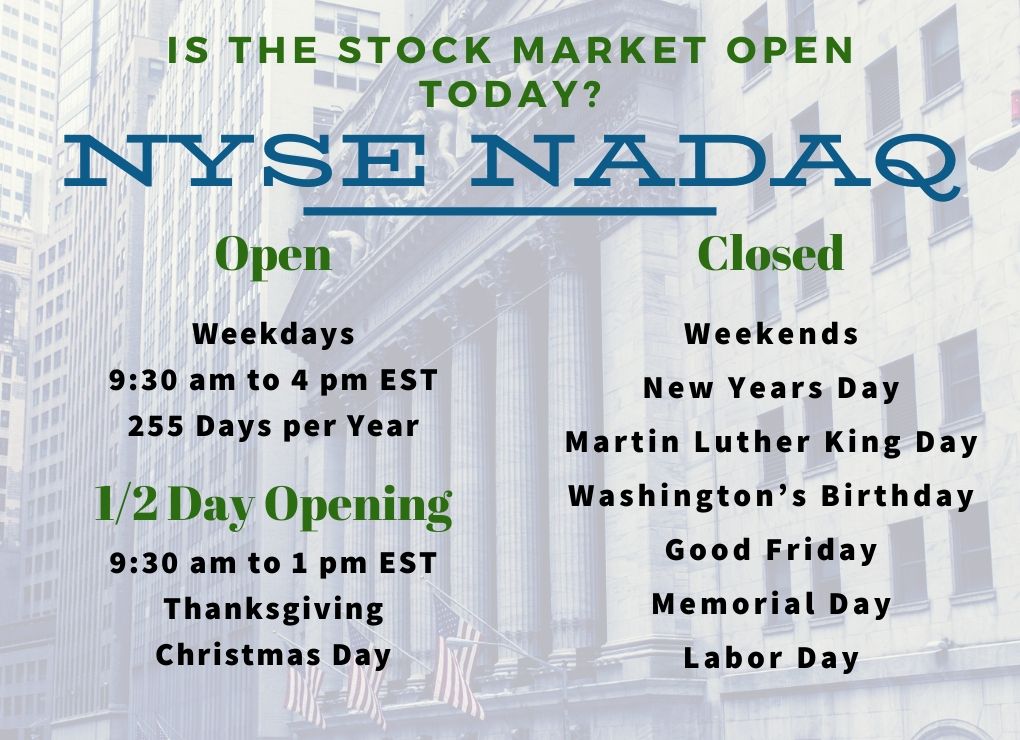
While the 9:30 AM to 4:00 PM ET schedule is the norm, the US stock markets do not operate every single business day of the year. Acknowledging market holidays and special early closures is crucial for investors to plan their trading activities, manage cash flows, and avoid unexpected disruptions.
Federal Holidays Affecting US Markets
The US stock markets typically observe several federal holidays throughout the year, during which they are completely closed. These closures provide market participants with time off and help to maintain fair and orderly markets by preventing trading on days when many financial institutions would be understaffed. Key holidays include:
- New Year’s Day: January 1st
- Martin Luther King, Jr. Day: Third Monday in January
- Presidents’ Day (Washington’s Birthday): Third Monday in February
- Good Friday: The Friday before Easter
- Memorial Day: Last Monday in May
- Juneteenth National Independence Day: June 19th
- Independence Day: July 4th
- Labor Day: First Monday in September
- Thanksgiving Day: Fourth Thursday in November
- Christmas Day: December 25th
If any of these holidays fall on a weekend, the market closure is typically observed on the preceding Friday or the following Monday. For instance, if Christmas Day falls on a Sunday, the market will be closed on the preceding Friday. Staying informed about the annual holiday schedule published by the exchanges (NYSE, NASDAQ) is essential for effective financial planning.
Special Early Closing Days
In addition to full-day closures, the US stock markets occasionally have abbreviated trading sessions, particularly around major holidays. The most common early closing days are:
- The Day After Thanksgiving (Black Friday): Markets typically close at 1:00 PM ET. This early closure allows market participants to enjoy the holiday weekend while still facilitating a half-day of trading.
- Christmas Eve: If Christmas Eve falls on a weekday, markets typically close at 1:00 PM ET.
- New Year’s Eve: If New Year’s Eve falls on a weekday, markets may also close early, though this is less consistently observed than Black Friday or Christmas Eve.
These early closures, while less impactful than full-day holidays, still require attention. They shorten the liquidity window and can concentrate trading activity into a more compressed period, potentially leading to increased volatility leading up to the earlier close.
Impact on Trading Strategies
Market holidays and early closures significantly impact trading strategies. For active traders, these periods mean fewer opportunities for intra-day trades and a need to adjust risk exposure for overnight or multi-day gaps. For long-term investors, the primary impact is on settlement times for trades; a trade executed just before a holiday might not settle until several business days later, affecting cash availability. Moreover, news or economic data released during market closures can lead to significant price gaps when markets reopen, introducing “gap risk” for held positions. Financial advisors and portfolio managers must communicate these schedules to their clients, especially when planning liquidity events or significant portfolio adjustments.
Why Closing Times Matter: Strategic Implications for Investors
Beyond the mere practicalities, understanding stock market closing times holds profound strategic implications for all types of investors. From daily traders to long-term portfolio managers, the rhythm of the market dictates crucial decision points, risk assessments, and analytical frameworks.
End-of-Day Trading Strategies
The final hour of regular trading, often dubbed the “power hour” (3:00 PM to 4:00 PM ET), is a period of heightened activity. Many day traders adjust their strategies to capitalize on the concentrated volume and potential volatility during this time. Institutional investors often enter large orders to adjust their portfolio allocations, impacting closing prices. Some strategies focus on predicting the direction of the closing auction, while others aim to exit positions before the bell to avoid overnight risk. Similarly, the first and last few minutes of trading can be highly illiquid and volatile, requiring experienced traders to exercise extreme caution or avoid these windows entirely. Understanding how various participants act during these windows can provide valuable insights into market sentiment and potential price direction.
News and Earnings Reactions
A significant portion of corporate earnings reports and economic data releases occur outside of regular trading hours, particularly after the 4:00 PM ET close. This timing allows companies to disseminate critical information without disrupting ongoing market activity and provides investors with time to digest the news before the next trading session. However, this also means that the initial reaction to such news often plays out in the less liquid pre-market and after-hours sessions. Investors who are not positioned to react during these extended hours may find themselves at a disadvantage, seeing significant price gaps when the market reopens the next day. Monitoring news sources closely and understanding how pre-market and after-hours trading impacts price discovery are essential for informed decision-making.
Risk Management and Position Sizing
Knowing market closing times is fundamental to effective risk management. Holding open positions overnight exposes an investor to “overnight risk” – the potential for significant price changes due to unforeseen news or events that occur while the market is closed. Many traders will reduce their position sizes or close out positions entirely before the 4:00 PM ET bell to mitigate this risk. For options traders, understanding the market close is critical, as option contracts often expire at the end of the regular trading session on their expiry date. For long-term investors, while daily fluctuations may be less critical, the overall market context set by closing prices informs portfolio rebalancing and diversification strategies, ensuring that asset allocations remain aligned with risk tolerance and financial goals.
Data Analysis and Performance Review
The official closing price of a stock is a cornerstone of financial analysis. It’s used to calculate daily returns, construct charts for technical analysis, determine index values, and benchmark portfolio performance. Financial software and data providers rely on these closing prices to update historical data and provide accurate analytics. For investors performing their own research, understanding the market close ensures that they are using the correct and most relevant data points for their analysis, whether comparing daily performance, calculating moving averages, or evaluating the effectiveness of their trading strategies. The closing price serves as a definitive marker, encapsulating the day’s collective market sentiment and establishing the basis for future projections.
In conclusion, the simple question “what time do the US stock markets close?” unravels a complex yet crucial aspect of financial literacy. The 4:00 PM ET closing bell for regular trading is a pivotal moment, but it’s just one piece of a larger puzzle that includes pre-market, after-hours, and holiday schedules. For any participant in the financial markets, from novice investors to seasoned professionals, a thorough understanding of these timings is not merely logistical information; it is a critical component of strategic planning, risk management, and successful investing. By diligently monitoring market hours and their implications, investors can navigate the US stock markets with greater confidence and make more informed decisions to achieve their financial objectives.
aViewFromTheCave is a participant in the Amazon Services LLC Associates Program, an affiliate advertising program designed to provide a means for sites to earn advertising fees by advertising and linking to Amazon.com. Amazon, the Amazon logo, AmazonSupply, and the AmazonSupply logo are trademarks of Amazon.com, Inc. or its affiliates. As an Amazon Associate we earn affiliate commissions from qualifying purchases.