
The phrase “stock market crash” evokes a visceral sense of fear and uncertainty. It conjures images of panicked investors, disappearing fortunes, and widespread economic hardship. For anyone with an interest in personal finance, investing, or the broader economy, understanding the history of these seismic events is not just an academic exercise; it’s a crucial component of developing financial literacy and building resilience.
While often discussed with trepidation, stock market crashes are an undeniable, albeit infrequent, feature of modern capitalism. They represent periods of rapid, significant declines in market value, often triggered by a confluence of economic, political, or psychological factors. But how many times has this happened, and what can we learn from these tumultuous periods? This article delves into the historical record, examining major market downturns, defining what constitutes a “crash,” and extracting invaluable lessons for today’s investors. By dissecting the past, we aim to equip you with the knowledge to navigate future market volatility with greater confidence and strategic insight.

Defining a Stock Market Crash: More Than Just a Bad Day
Before we count the number of times the market has “crashed,” it’s essential to establish a clear definition. The financial media often uses terms like “correction,” “bear market,” and “crash” interchangeably, but they represent distinct phenomena with varying degrees of severity and implications. Understanding these distinctions is key to accurately interpreting market movements.
What Constitutes a “Crash”?
While there’s no universally agreed-upon scientific definition, a stock market crash generally refers to a sudden, dramatic, and often unexpected drop in stock prices across a significant portion of the market. Key characteristics typically include:
- Magnitude: A sharp decline, usually 20% or more, often occurring over a very short period (days or weeks). This contrasts with a “correction,” which is a decline of 10-20% from a recent peak, or a “bear market,” which signifies a sustained decline of 20% or more over several months or even years. While a bear market implies a prolonged downturn, a crash implies an immediate, precipitous fall.
- Speed: The decline is rapid, often characterized by panic selling rather than a gradual revaluation of assets.
- Widespread Impact: It affects major market indices (like the S&P 500, Dow Jones Industrial Average, or NASDAQ) and often has global repercussions.
- Underlying Cause: Often linked to a specific catalyst, such as a bursting speculative bubble, a geopolitical crisis, or a major economic shock, though the exact cause can sometimes be debated in retrospect.
It’s important to differentiate. A correction might be a healthy market adjustment, shaking out excessive speculation. A bear market is a prolonged period of pessimism. A crash, however, is a sudden, often shocking event that can trigger widespread panic and economic dislocation. For our purposes, we will focus on events widely recognized as significant, sudden market crashes.
The Psychology of a Crash
Beyond the numbers, the human element plays a critical role in market crashes. Fear and greed are powerful forces in investing, and during a crash, fear often takes the wheel. Panic selling, where investors offload assets indiscriminately, can exacerbate declines. Herd mentality, where individuals follow the actions of the crowd rather than their own reasoned judgment, can create a downward spiral. The psychological impact can extend beyond individual investors, affecting consumer confidence, business investment, and ultimately, the real economy. Understanding this emotional component is vital, as it often explains the speed and severity of a crash, distinguishing it from more orderly market adjustments.
A Journey Through Major Stock Market Crashes
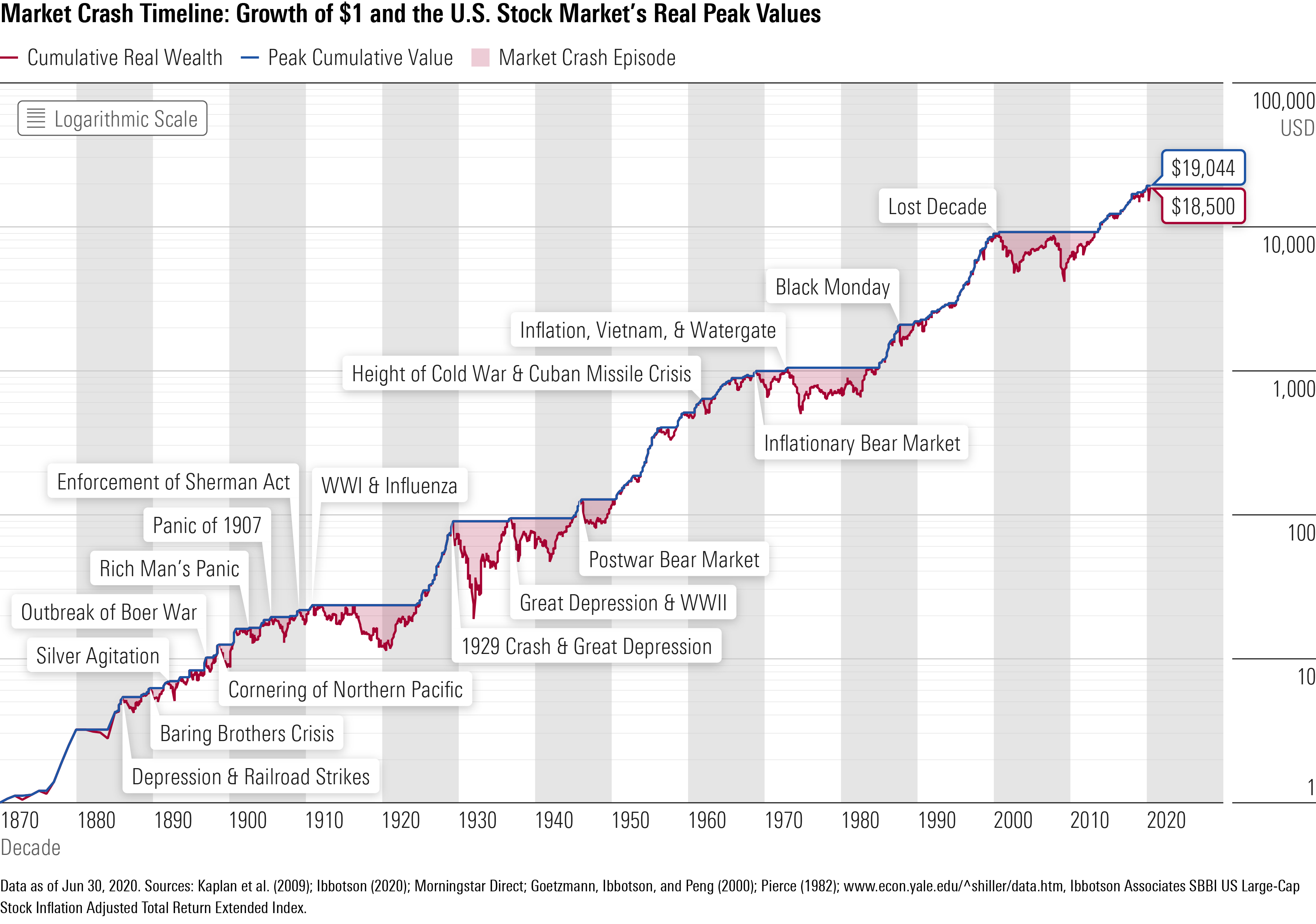
Historically, the stock market has experienced several profound downturns that fit the definition of a “crash.” While the exact count can vary depending on one’s precise criteria, a review of the most impactful events provides valuable context. Each crash has its unique story, but recurring themes of speculation, excessive leverage, and unforeseen catalysts often emerge.
The Great Depression (1929)
Perhaps the most infamous stock market crash in history, “Black Tuesday” on October 29, 1929, marked the dramatic culmination of the “Roaring Twenties” speculative boom. Following years of frenzied stock buying, often on margin (borrowed money), the market began to show cracks in September. On Black Tuesday, the Dow Jones Industrial Average plummeted 11.7%, adding to previous massive losses. Over the next three years, the market lost nearly 90% of its value from its peak, ushering in the decade-long Great Depression.
- Causes: Over-speculation, excessive use of margin debt, lack of regulation, agricultural distress, and a contraction of the money supply.
- Impact: Widespread bank failures, mass unemployment, poverty, and a global economic contraction that lasted for years. It fundamentally reshaped the role of government in economic affairs and led to significant financial reforms.
Black Monday (1987)
On October 19, 1987, the stock market experienced its largest single-day percentage drop in history, with the Dow Jones Industrial Average falling by 22.6% – a staggering 508 points. This crash was particularly unsettling due to its speed and lack of a clear, immediate trigger.
- Causes: Attributed to a combination of factors including computer-driven program trading (portfolio insurance), rising interest rates, trade deficits, and an overvalued market. The rapid cascade of sell orders overwhelmed market systems.
- Impact: While severe, the economic fallout was surprisingly contained. Central banks, particularly the Federal Reserve, injected liquidity into the system, preventing a banking crisis. This crash led to the implementation of “circuit breakers” – mechanisms that temporarily halt trading during extreme volatility to allow for an orderly market.
The Dot-Com Bubble Burst (2000-2002)
Towards the end of the 20th century, an unprecedented speculative frenzy gripped technology and internet-related stocks. Companies with little to no earnings, often identified by a “.com” in their name, soared to incredible valuations based on future potential rather than current fundamentals. The bubble began to deflate in early 2000, with the NASDAQ Composite Index, heavily weighted with tech stocks, losing over 78% of its value by late 2002.
- Causes: Irrational exuberance, widespread speculation in internet startups, easy access to venture capital, and the belief that traditional valuation metrics didn’t apply to “new economy” companies.
- Impact: While many “dot-com” companies failed, the overall economy avoided a deep recession. The crash served as a sobering lesson on the dangers of speculative bubbles and the importance of fundamental analysis. It also cleared the way for truly innovative and sustainable tech companies to emerge.
The Global Financial Crisis (2008)
The mid-2000s saw a massive housing bubble inflate, fueled by lax lending standards, subprime mortgages, and complex financial instruments like mortgage-backed securities (MBS) and collateralized debt obligations (CDOs). When the housing market began to falter, defaults on these mortgages cascaded through the financial system, leading to the collapse of major institutions like Lehman Brothers and a near-meltdown of the global banking system. The stock market reacted violently, with major indices experiencing significant declines, particularly in late 2008. From its peak in October 2007 to its trough in March 2009, the S&P 500 fell by approximately 57%.
- Causes: Subprime mortgage crisis, securitization of toxic assets, excessive leverage in the financial sector, lack of regulatory oversight, and interconnectedness of global financial institutions.
- Impact: The deepest recession since the Great Depression, mass layoffs, housing foreclosures, and unprecedented government bailouts and fiscal stimulus packages designed to prevent a total economic collapse. It led to significant financial regulatory reforms, most notably the Dodd-Frank Act in the United States.
The COVID-19 Market Plunge (2020)
In February and March 2020, as the COVID-19 pandemic spread globally, governments imposed lockdowns, and economic activity ground to a halt, the stock market experienced one of its fastest-ever plunges. The S&P 500 dropped by about 34% in just over a month.
- Causes: Unprecedented global health crisis, immediate cessation of economic activity due to lockdowns, extreme uncertainty about the virus’s trajectory and economic implications.
- Impact: While the initial crash was severe, the market also saw an exceptionally rapid recovery, largely thanks to swift and aggressive fiscal and monetary policy responses by governments and central banks worldwide, including massive quantitative easing and stimulus packages. This demonstrated the power of coordinated policy action in mitigating financial crises.
Beyond the Headlines: Lessons Learned from Market Volatility
Observing these historical crashes reveals not just a pattern of decline but also a consistent narrative of recovery and adaptation. While each event had distinct triggers, the overarching lessons remain remarkably consistent, offering timeless wisdom for investors.
The Inevitability of Market Cycles
One of the most crucial takeaways is that market volatility, including significant downturns, is an inherent and recurring feature of financial markets. Economic expansions are invariably followed by contractions, and bull markets by bear markets. Attempting to predict the exact timing or cause of the next crash is often futile; instead, investors should accept volatility as a normal part of the investment landscape and plan accordingly. The stock market is not a straight line upwards; it moves in waves, and downturns, while painful, eventually give way to recovery and new highs.
The Importance of Diversification
A common thread in many crashes is the overconcentration of assets in a specific sector or asset class that ultimately proves unsustainable (e.g., tech stocks in 2000, real estate in 2008). Diversification, the practice of spreading investments across various asset classes (stocks, bonds, real estate, commodities), industries, geographies, and company sizes, remains a cornerstone of prudent investing. It reduces the impact of any single asset or sector underperforming dramatically during a downturn, helping to cushion the blow to an overall portfolio.
Long-Term Investing and Dollar-Cost Averaging
Despite the dramatic short-term losses seen during crashes, the historical record unequivocally shows that markets always recover, eventually surpassing previous peaks. Investors who have adopted a long-term perspective and resisted the urge to panic sell during downturns have historically been rewarded. Dollar-cost averaging, investing a fixed amount of money at regular intervals regardless of market fluctuations, is a powerful strategy during volatile times. It allows investors to buy more shares when prices are low and fewer when prices are high, effectively lowering the average cost per share over time and preparing the portfolio for the inevitable rebound.
Emotional Discipline in Investing
The psychology of a crash highlights the danger of making investment decisions based on fear rather than a well-thought-out strategy. Panic selling at the bottom locks in losses and prevents participation in the subsequent recovery. Maintaining emotional discipline, sticking to a predetermined investment plan, and resisting the urge to react impulsively to market headlines are critical virtues for successful long-term investing. This often means doing nothing when everything feels chaotic.
Regulatory Responses and Market Protections
Each major crash has, to varying degrees, led to significant regulatory changes aimed at preventing a recurrence or mitigating the impact of future crises. From the creation of the Securities and Exchange Commission (SEC) after 1929 to the implementation of circuit breakers after 1987, and the Dodd-Frank Act following 2008, regulators continuously adapt. These measures, though not foolproof, aim to increase market transparency, reduce systemic risk, and protect investors.
Preparing for the Next Downturn: A Proactive Approach
Given the cyclical nature of markets, preparing for future downturns is not a matter of if, but when. A proactive approach, grounded in sound financial planning, can transform potential fear into a strategic advantage.
Building an Emergency Fund
One of the most fundamental steps in personal finance is establishing a robust emergency fund. This liquid cash reserve, typically covering three to six months of living expenses (or more), provides a critical buffer during economic hardship. It prevents the need to sell investments at a loss during a market downturn if unexpected expenses arise or income is disrupted, thereby protecting your long-term investment strategy.
Rebalancing Your Portfolio
Periodically rebalancing your portfolio ensures that your asset allocation remains aligned with your risk tolerance and financial goals. During a bull market, certain assets might grow disproportionately, leading to an overconcentration. Conversely, a downturn might create opportunities to rebalance by selling assets that have performed well (or have become overweighted) and buying those that have declined (or become underweighted), effectively buying low and selling high. This disciplined approach helps maintain your desired risk profile and can enhance long-term returns.
Continuous Education and Professional Advice
Financial markets are complex and constantly evolving. Staying informed about economic trends, market dynamics, and investment principles is an ongoing endeavor. For many, seeking advice from a qualified financial advisor can be invaluable. A professional can help you develop a personalized investment strategy, manage risk, maintain emotional discipline during volatile periods, and ensure your portfolio is structured to withstand future market shocks while aligning with your overall financial objectives. They can also help you understand how specific financial tools and instruments can enhance your resilience.

Conclusion
The question of “how many times has the stock market crashed” leads us through a sobering yet ultimately reassuring journey through financial history. While the market has indeed experienced numerous severe downturns, from the Great Depression to the Dot-Com bust and the Global Financial Crisis, each period of turmoil has been followed by a recovery and subsequent growth. These events, though painful, have served as potent teachers, imparting critical lessons about the cyclical nature of markets, the power of diversification, the importance of long-term investing, and the necessity of emotional discipline.
For today’s investor, the key is not to fear the next crash, but to understand its inevitability and prepare for it. By building robust emergency funds, maintaining diversified portfolios, practicing dollar-cost averaging, and seeking professional guidance, individuals can transform potential vulnerabilities into opportunities for long-term wealth creation. The history of market crashes is ultimately a testament to resilience – both of the markets themselves and of the informed, patient investors who navigate them successfully.
aViewFromTheCave is a participant in the Amazon Services LLC Associates Program, an affiliate advertising program designed to provide a means for sites to earn advertising fees by advertising and linking to Amazon.com. Amazon, the Amazon logo, AmazonSupply, and the AmazonSupply logo are trademarks of Amazon.com, Inc. or its affiliates. As an Amazon Associate we earn affiliate commissions from qualifying purchases.