
The New York Stock Exchange (NYSE), often dubbed “The Big Board,” stands as a colossal pillar in the global financial landscape. Its iconic trading floor, though increasingly complemented by electronic systems, has long symbolized the heartbeat of American capitalism and a significant portion of the world’s economy. For investors, financial analysts, and market enthusiasts alike, a fundamental question often arises: “How many stocks are listed on the NYSE?” While seemingly straightforward, the answer is dynamic, reflecting the constant ebb and flow of corporate growth, mergers, acquisitions, and regulatory shifts.
At any given moment, the number of distinct common stocks trading on the NYSE hovers roughly around 2,400 to 2,800 companies. This figure includes a vast array of domestic and international corporations, ranging from venerable industrial giants to innovative tech firms, and a significant number of American Depositary Receipts (ADRs) representing foreign companies. It’s crucial to understand that this number is not static; it changes daily, even hourly, as new companies undergo Initial Public Offerings (IPOs), others are delisted due to mergers, bankruptcy, or failure to meet compliance standards, and some transition to private ownership. This inherent dynamism is a testament to the continuous evolution of the market itself, offering a snapshot of economic activity and corporate aspirations.
Understanding this number, and the factors that influence it, is more than just a statistical curiosity. It provides critical insights into market depth, diversification opportunities, and the health of various economic sectors. For anyone looking to invest, analyze market trends, or simply grasp the scale of the world’s largest stock exchange by market capitalization, delving into the specifics of its listings is an invaluable exercise. This article will explore the intricacies of NYSE listings, their significance, and what this ever-changing count means for investors and the broader financial ecosystem.
The Dynamic Landscape of NYSE Listings
The number of companies listed on the New York Stock Exchange is a perpetually shifting figure, a living reflection of corporate evolution and market dynamics. It’s not a fixed registry but a constantly updated ledger that chronicles the life cycle of publicly traded entities. This fluidity is driven by several powerful forces, each contributing to the additions and subtractions that shape the exchange’s roster.
Understanding Listing Requirements and Delistings
To secure a coveted spot on the NYSE, companies must meet stringent financial and governance criteria. These requirements are designed to ensure a certain level of credibility, stability, and liquidity for investors. For instance, companies typically need to demonstrate substantial earnings, a minimum number of publicly held shares, and a significant market value. These thresholds aren’t just one-time hurdles; listed companies must continually adhere to these standards, alongside robust corporate governance rules, to maintain their listing.
Failure to meet these ongoing requirements can lead to delisting. A company might be delisted for various reasons:
- Financial Distress: Falling below minimum share price thresholds, reporting insufficient earnings, or declaring bankruptcy.
- Mergers and Acquisitions: When two listed companies merge, one often ceases to exist as an independent entity, or both might be acquired by a private firm.
- Going Private: A company’s management or a private equity firm might buy back all outstanding shares, taking the company off the public market.
- Violation of Rules: Non-compliance with reporting standards or corporate governance regulations can also trigger a delisting.
These delistings, while sometimes signaling corporate distress, are a necessary mechanism to ensure the integrity and quality of the exchange, protecting investors from defunct or non-compliant entities.
The Impact of IPOs and Mergers
On the other side of the ledger are the additions, primarily driven by Initial Public Offerings (IPOs) and, less directly, by mergers and acquisitions.
- IPOs: When a private company decides to “go public,” it offers its shares for the first time on a stock exchange. A successful IPO on the NYSE signifies a company’s readiness for significant public scrutiny and often marks a major milestone in its growth trajectory. These new entrants infuse the market with fresh capital and new investment opportunities, representing innovation and expansion across various sectors.
- Mergers and Acquisitions (M&A): While M&A often leads to delistings, it can also indirectly affect the number. When a private company acquires a public company and then opts to go public itself, or when a foreign company that was not previously listed in the U.S. acquires a NYSE-listed firm and subsequently lists its own shares as an ADR, it can contribute to the count. More commonly, M&A activity reshapes the existing landscape, consolidating industries and altering the composition of the listed companies.
Tracking the Number: Why it Fluctuates
The precise number of NYSE-listed stocks is a dynamic figure that varies daily. Financial data providers and the NYSE itself regularly update their databases. For example, a company might announce its IPO intentions, go through the listing process, and begin trading, adding one to the count. Simultaneously, another company might announce a merger that will result in its shares no longer trading, subtracting one. Economic cycles also play a significant role; robust economic periods tend to see more IPOs and fewer bankruptcies, leading to a net increase in listings. Conversely, recessions can lead to an uptick in delistings due to financial distress. This continuous churn is a vital sign of a healthy, adaptable market, constantly rebalancing to reflect economic realities and corporate performance.
More Than Just a Number: The Significance of NYSE Listings
While the exact count of NYSE-listed stocks is fluid, the general magnitude—thousands of companies—carries profound implications for investors, the economy, and global finance. It’s not merely a statistic but a reflection of market depth, investment opportunities, and the exchange’s pivotal role.
Market Capitalization and Global Influence
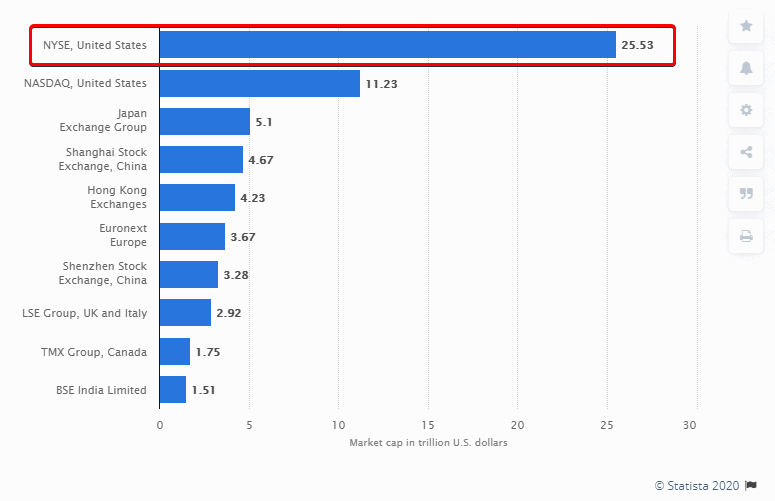
The NYSE boasts the largest market capitalization of any stock exchange in the world, often exceeding $25 trillion. This immense value is a direct consequence of the vast number of large, influential companies listed on it. Giants like Apple, Microsoft (though primarily NASDAQ-listed, many major companies are cross-listed or choose one exchange), Johnson & Johnson, Berkshire Hathaway, and ExxonMobil contribute trillions to this valuation. The presence of these market behemoths not only attracts significant institutional and retail investment but also grants the NYSE unparalleled global influence. Decisions made on its trading floor, or through its electronic systems, reverberate across international markets, shaping investor sentiment and economic forecasts worldwide. The aggregate value of its listings underscores the NYSE’s role as a primary engine for capital formation and wealth creation.
Industry Representation and Diversification
The thousands of companies on the NYSE span virtually every sector of the global economy. From technology and healthcare to finance, energy, consumer goods, and industrials, the exchange offers a comprehensive cross-section of industries. This extensive representation is invaluable for investors seeking diversification. By investing across different sectors, investors can mitigate risks associated with downturns in any single industry. For example, during a tech slump, a well-diversified portfolio with exposure to stable utility or consumer staples companies listed on the NYSE might perform more robustly. The sheer breadth of options allows investors to construct portfolios tailored to specific risk appetites and investment goals, benefiting from exposure to mature, dividend-paying companies as well as growth-oriented enterprises.
Liquidity and Investor Confidence
The large number of active listings on the NYSE contributes significantly to market liquidity. Liquidity refers to the ease with which an asset can be converted into cash without affecting its market price. For individual stocks, high trading volume, characteristic of many NYSE-listed companies, ensures that buyers and sellers can easily find each other, facilitating efficient transactions. This high liquidity is a crucial factor in attracting both domestic and international investors, as it provides assurance that they can enter and exit positions without undue difficulty or significant price impact.
Furthermore, the stringent listing requirements and regulatory oversight associated with the NYSE foster a high level of investor confidence. Companies are expected to adhere to robust accounting standards, transparent reporting, and good corporate governance. This regulatory framework, combined with the exchange’s long history and prestige, helps assure investors that their investments are in a well-regulated and fair marketplace. This confidence is essential for drawing the capital necessary to fund corporate growth and innovation, further solidifying the NYSE’s foundational role in the financial world.

Navigating the NYSE as an Investor
For individuals looking to grow their wealth, the NYSE offers an unparalleled playground of investment opportunities. With thousands of companies across diverse sectors, understanding how to approach this vast market is key to making informed and potentially profitable decisions.
Researching NYSE-Listed Companies
The sheer volume of companies on the NYSE can be overwhelming, making thorough research indispensable. Investors should go beyond just looking at a company’s stock price. Key areas of research include:
- Financial Statements: Analyzing balance sheets, income statements, and cash flow statements provides insights into a company’s financial health, profitability, and solvency. Look for consistent revenue growth, healthy profit margins, and manageable debt.
- Company Management and Business Model: Understand who is leading the company and how they plan to achieve their strategic objectives. A clear, sustainable business model with competitive advantages is crucial.
- Industry Trends and Competitive Landscape: Assess the broader industry in which the company operates. Is it growing? What are the key trends? Who are the main competitors, and how does the company stack up against them?
- Valuation Metrics: Use metrics like the Price-to-Earnings (P/E) ratio, Price-to-Sales (P/S) ratio, and Dividend Yield to assess whether a stock is overvalued, undervalued, or fairly priced relative to its peers and historical performance.
- Analyst Reports and News: Keep abreast of professional analyst ratings, company news, and macroeconomic events that could impact the stock.
Utilizing reputable financial news sources, company investor relations websites, and brokerage research tools can help synthesize this information effectively.
Diversification Strategies Using NYSE Stocks
Diversification is a cornerstone of sound investment strategy, and the NYSE provides ample scope for achieving it. With thousands of stocks, investors can diversify across:
- Sectors and Industries: Avoid putting all your capital into a single industry, even if it’s performing well. For instance, balance tech investments with exposure to healthcare, utilities, or consumer staples.
- Market Capitalization: Include a mix of large-cap (established, stable companies), mid-cap (growth-oriented), and potentially small-cap (high growth potential, but higher risk) stocks to capture different risk-reward profiles.
- Growth vs. Value Stocks: Growth stocks are companies expected to grow earnings faster than the overall market, while value stocks are typically mature companies trading below their intrinsic value. A balanced approach can provide both appreciation potential and stability.
- Domestic vs. International Exposure: While NYSE primarily lists U.S. companies, its inclusion of ADRs allows investors to gain exposure to leading foreign companies, adding another layer of diversification against country-specific risks.
A well-diversified portfolio helps spread risk, meaning a poor performance in one area is less likely to devastate your entire investment.
Beyond Individual Stocks: ETFs and Mutual Funds
For investors who prefer a more hands-off approach or want immediate broad diversification without meticulously researching individual companies, NYSE-listed Exchange Traded Funds (ETFs) and mutual funds offer excellent alternatives.
- ETFs: Many ETFs track specific NYSE indices (like the Dow Jones Industrial Average or the S&P 500, which heavily feature NYSE companies), sectors, or themes. Buying a single share of an ETF provides instant diversification across potentially hundreds of underlying stocks. ETFs are traded like stocks throughout the day, offering flexibility.
- Mutual Funds: Professionally managed mutual funds pool money from many investors to invest in a diversified portfolio of securities. While not traded on an exchange themselves, many mutual funds invest heavily in NYSE-listed companies. They offer professional management and diversification but are typically priced once a day.
These pooled investment vehicles are particularly beneficial for new investors or those with limited time for individual stock research, providing a convenient way to gain broad market exposure to NYSE-listed companies.
The NYSE’s Role in the Global Financial Ecosystem
The New York Stock Exchange is not merely a venue for trading; it is a foundational pillar of the global financial ecosystem, influencing economies far beyond American borders. Its operations and the companies it lists play a crucial role in capital formation, economic benchmarking, and fostering market innovation.
A Beacon for Capital Formation
One of the NYSE’s most vital functions is facilitating capital formation. Public companies leverage the exchange to raise significant capital from investors to fund their operations, expand their businesses, invest in research and development, and create jobs. Through IPOs and subsequent secondary offerings, companies access vast pools of capital that would otherwise be difficult or impossible to secure. This ability to attract and deploy capital efficiently is a driving force behind economic growth and innovation. The NYSE connects businesses with investors who are willing to finance their ventures, thereby catalyzing entrepreneurship and the development of new technologies and industries. Without robust exchanges like the NYSE, capital would be scarcer, and economic progress would be significantly hampered.
Benchmarking Economic Health
The collective performance of NYSE-listed companies serves as a critical barometer for economic health, both domestically and internationally. Major indices like the Dow Jones Industrial Average (DJIA), which comprises 30 prominent NYSE-listed companies, and the S&P 500 (which includes many NYSE-listed firms), are closely watched indicators. Their movements often reflect broader economic trends, investor sentiment, and corporate profitability. A rising market generally signals economic optimism and growth, while a falling market can suggest contractions or uncertainty. Analysts, economists, and policymakers meticulously track these indices to gauge the health of various sectors and the economy as a whole, using them to inform policy decisions and investment strategies. The aggregate value and trading activity on the NYSE provide real-time insights into the pulse of the global economy.
Competition and Innovation Among Exchanges
While the NYSE holds a dominant position, it operates within a competitive global landscape of stock exchanges. Exchanges like NASDAQ, the London Stock Exchange, the Japan Exchange Group, and others vie for listings and trading volume. This competition drives innovation in trading technology, regulatory frameworks, and market services. The NYSE itself has continually evolved, integrating advanced electronic trading systems with its traditional floor-based model to enhance efficiency, speed, and fairness. This ongoing innovation benefits investors through lower transaction costs, greater market access, and more sophisticated trading tools. The competitive environment encourages exchanges to adapt to changing market needs, ensuring that financial markets remain dynamic and responsive to the demands of a globalized economy. The NYSE’s consistent leadership underscores its ability to innovate and maintain its appeal to both companies seeking capital and investors seeking opportunities.

Conclusion
The question of “how many stocks on the NYSE” unveils a dynamic and ever-evolving reality rather than a static figure. At any given time, thousands of companies, encompassing a vast spectrum of industries and market capitalizations, call “The Big Board” home, roughly totaling between 2,400 and 2,800 distinct common stocks. This number is a living testament to the relentless churn of global capitalism, influenced by IPOs, mergers, delistings, and the broader economic climate.
Beyond the numerical count, the sheer scale and diversity of NYSE listings underscore its profound significance. It stands as the world’s largest exchange by market capitalization, a powerful engine for capital formation, and a critical benchmark for global economic health. For investors, the vast array of companies provides unparalleled opportunities for diversification across sectors, market caps, and geographic exposure, offering avenues for both growth and stability. Whether through direct stock ownership or diversified instruments like ETFs and mutual funds, the NYSE remains a cornerstone for wealth creation and financial planning.
In an increasingly interconnected world, the New York Stock Exchange continues to be a symbol of economic opportunity and resilience. Its ability to attract leading companies, maintain rigorous standards, and adapt to technological advancements ensures its enduring role as a pivotal force in the global financial ecosystem, guiding investment decisions and shaping economic narratives for generations to come.
aViewFromTheCave is a participant in the Amazon Services LLC Associates Program, an affiliate advertising program designed to provide a means for sites to earn advertising fees by advertising and linking to Amazon.com. Amazon, the Amazon logo, AmazonSupply, and the AmazonSupply logo are trademarks of Amazon.com, Inc. or its affiliates. As an Amazon Associate we earn affiliate commissions from qualifying purchases.