
The world of finance can often seem like an impenetrable fortress, guarded by complex terminology and rapid-fire transactions. Among its most fundamental yet frequently misunderstood components is the “stock.” For many, it represents a path to wealth, a speculative gamble, or simply a bewildering concept. Yet, understanding how stocks work is not only crucial for anyone aspiring to build financial security but also provides a fascinating glimpse into the mechanics of global capitalism.
At its core, a stock is far more than just a ticker symbol on a screen; it’s a piece of ownership in a company. When you buy a share of stock, you become a part-owner of that business, with all the inherent risks and potential rewards that entails. This article will demystify the mechanics of stocks, exploring what they are, why companies issue them, how they are traded, and the factors that influence their value, ultimately empowering you with a clearer perspective on this cornerstone of modern finance.
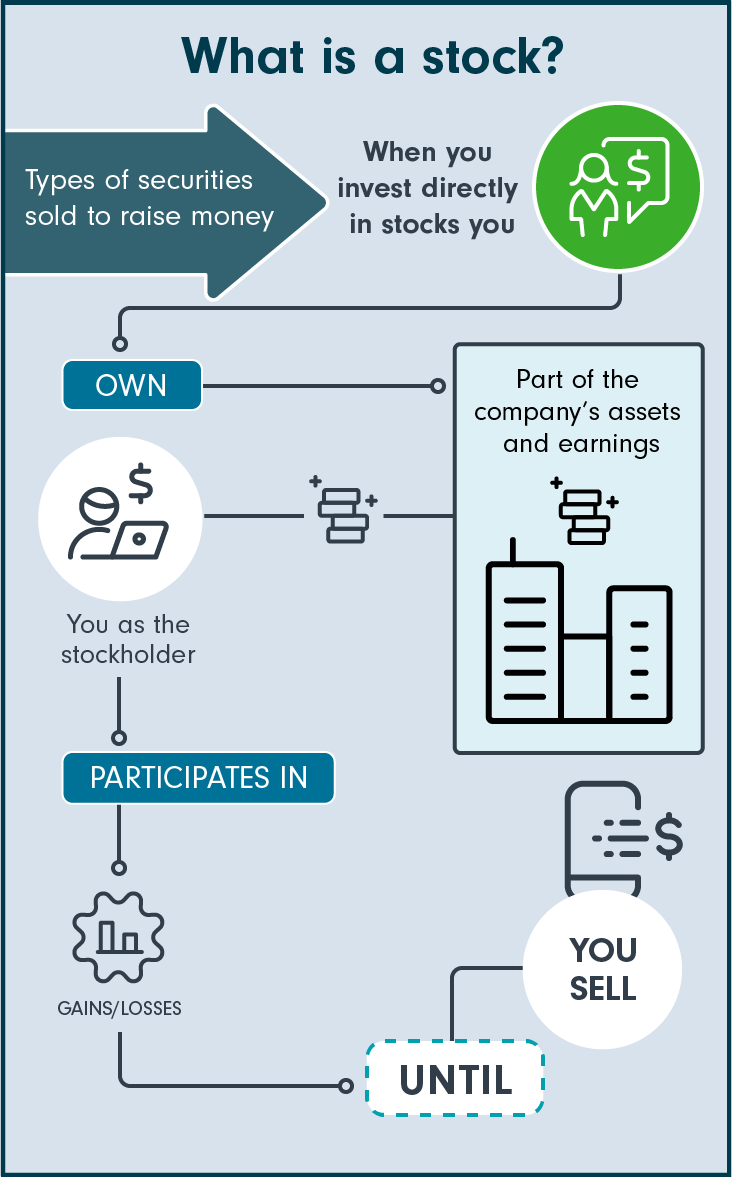
The Core Concept: What Exactly is a Stock?
Before delving into the intricate dance of market forces, it’s essential to grasp the foundational definition of a stock. Without this clarity, subsequent discussions about trading, valuation, and strategy would lack a solid anchor.
Ownership in a Company
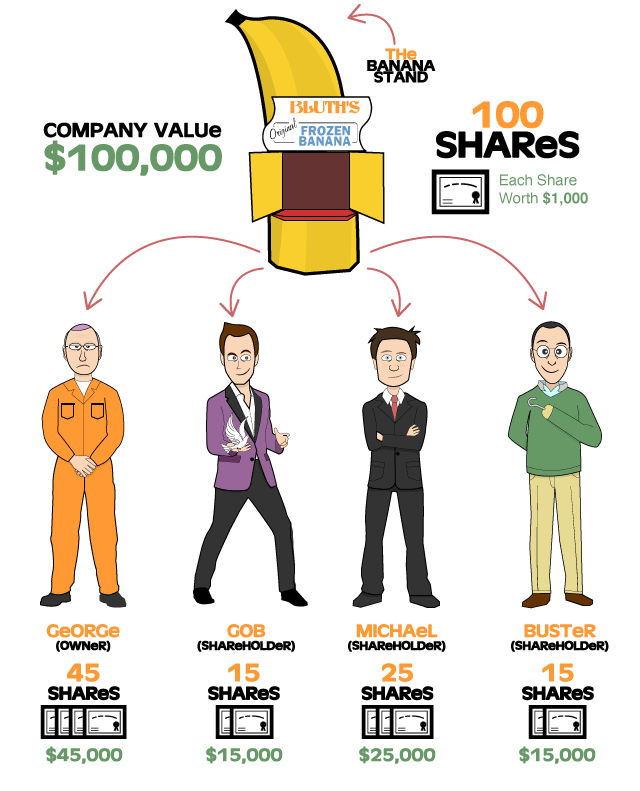
Imagine a company as a pie. When a company decides to go public (or if it’s already public), it divides this pie into many small, equal slices. Each slice is called a “share” of stock. When you purchase one or more of these shares, you are literally buying a small ownership stake in that company. Your ownership is proportional to the number of shares you own relative to the total number of shares outstanding. For instance, if a company has 1 million shares outstanding and you own 1,000 shares, you own 0.1% of that company.
This ownership comes with certain rights, though the extent of these rights can vary. Typically, common shareholders have voting rights on important company matters, such as electing the board of directors, approving mergers, or making significant corporate decisions. This gives shareholders a voice, however small, in the company’s future direction.
Shares and Shareholders
A “share” is the unit of ownership, while a “shareholder” is the individual or entity that owns these shares. Shareholders are, by definition, investors in the company. Their fortunes are intrinsically linked to the company’s performance. If the company thrives, its value generally increases, which can lead to an appreciation in the stock price. Conversely, if the company struggles, its stock price may fall.
The concept of shares allows for broad participation in a company’s success (or failure) without requiring individual investors to commit massive capital to buy the entire business. It democratizes investment, enabling a wide range of individuals and institutions to contribute capital and potentially benefit from corporate growth.
Public vs. Private Companies
It’s important to distinguish between public and private companies in the context of stock ownership.
- Private Companies: Shares of private companies are not traded on public stock exchanges. Ownership is typically held by founders, employees, venture capitalists, or a small group of private investors. While one can buy shares in a private company, it’s usually through direct negotiation, and these investments are illiquid, meaning they are difficult to sell quickly.
- Public Companies: These are companies that have offered their shares for sale to the general public on a stock exchange (like the New York Stock Exchange or Nasdaq). Once a company goes public, its shares can be bought and sold by anyone with a brokerage account, providing liquidity and price transparency. When we talk about “stocks” in the general sense, we are almost always referring to shares of publicly traded companies.
Why Companies Issue Stock and Why Investors Buy Them
The relationship between companies and investors, facilitated by stock issuance, is a symbiotic one. Companies seek capital, and investors seek returns. Stocks serve as the bridge connecting these two fundamental needs.
For Companies: Raising Capital for Growth
The primary reason a company issues stock, especially when it first goes public through an Initial Public Offering (IPO), is to raise capital. Growing a business, whether through expanding operations, developing new products, acquiring other companies, or paying down debt, requires significant funds. While companies can borrow money (debt financing), issuing stock (equity financing) provides a non-repayable source of funds.
By selling shares, a company essentially trades a small portion of its future earnings potential for immediate cash. This capital fuels innovation, expansion, and ultimately, greater profitability, which ideally benefits both the company and its new shareholders. It’s a strategic decision that allows a company to accelerate its growth trajectory beyond what it could achieve solely through its own retained earnings or debt.
For Investors: The Potential for Returns (Capital Appreciation & Dividends)
From an investor’s perspective, buying stock is an investment designed to generate returns. There are two primary ways investors can profit from owning stock:
- Capital Appreciation: This is the most common and often largest source of return. If the company performs well, grows its revenues and profits, and generally becomes more valuable, the market price of its shares tends to increase. If an investor buys a share at $50 and sells it later at $70, they’ve realized a $20 capital gain per share. This gain is a direct reflection of the market’s increased confidence in the company’s future prospects.
- Dividends: Some companies, especially mature and profitable ones, choose to share a portion of their profits directly with their shareholders in the form of dividends. These are typically cash payments distributed on a regular basis (quarterly, semi-annually, or annually) for each share owned. Dividends provide a steady stream of income for investors, regardless of whether the stock price goes up or down. Not all companies pay dividends, particularly growth-oriented companies that prefer to reinvest all profits back into the business.
Understanding Risk and Reward
Investing in stocks inherently involves a trade-off between risk and reward.
- Reward: The potential for significant returns, especially over the long term, is a major draw. Historically, stocks have outperformed most other asset classes over extended periods.
- Risk: However, stock prices can be volatile. A company’s performance can decline, industry conditions can worsen, or broader economic downturns can lead to significant drops in share prices. In the worst-case scenario, if a company goes bankrupt, shareholders may lose their entire investment, as debt holders are paid before equity holders during liquidation. It’s crucial for investors to understand that past performance is not indicative of future results and that capital is always at risk.
Navigating the Stock Market: How Stocks Are Traded
Once shares are issued, they enter a dynamic marketplace where buyers and sellers meet. Understanding this trading mechanism is key to comprehending how prices are formed and how investors participate.
Primary Market: IPOs and Direct Listings
The first time a company offers its shares to the public is through what’s known as the “primary market.”
- Initial Public Offering (IPO): This is the most common way for private companies to become public. Investment banks underwrite the offering, help determine the initial price, and facilitate the sale of shares to institutional investors and, sometimes, individual investors. The company receives the proceeds from these initial sales.
- Direct Listing: A less common method where a company lists its existing shares directly on an exchange without raising new capital through investment banks. Existing shareholders can sell their shares directly to the public.
Secondary Market: Exchanges and Brokers
After the initial sale in the primary market, shares are then traded among investors in the “secondary market.” This is what most people think of when they hear “stock market.”
- Stock Exchanges: These are regulated marketplaces where stocks are bought and sold. Prominent examples include the New York Stock Exchange (NYSE) and Nasdaq in the U.S., the London Stock Exchange (LSE), and the Tokyo Stock Exchange (TSE). These exchanges provide the infrastructure and rules for orderly trading.
- Brokerage Accounts: Individual investors don’t trade directly on an exchange. Instead, they use a “broker” (a financial firm like Charles Schwab, Fidelity, or Robinhood) that acts as an intermediary. Investors open a brokerage account, deposit funds, and then place orders to buy or sell stocks through their broker. The broker then executes these orders on the relevant stock exchange.
Bids, Asks, and Market Orders
The pricing of stocks in the secondary market is determined by the fundamental forces of supply and demand.

- Bid Price: The highest price a buyer is willing to pay for a stock.
- Ask (or Offer) Price: The lowest price a seller is willing to accept for a stock.
- Spread: The difference between the bid and ask price.
- Market Order: An instruction to buy or sell a stock immediately at the best available current price. While fast, the execution price might vary slightly, especially for volatile stocks.
- Limit Order: An instruction to buy or sell a stock at a specific price or better. A buy limit order will only execute at your specified price or lower, while a sell limit order will only execute at your specified price or higher. This offers more control over the execution price but isn’t guaranteed to fill immediately.
Factors Influencing Stock Prices
Stock prices are in constant flux, reflecting a myriad of influences. Understanding these factors is crucial for investors trying to make informed decisions and for anyone seeking to comprehend market movements.
Company Performance and Financial Health
This is arguably the most significant driver of a stock’s value. A company’s ability to generate profits, grow its revenue, manage its debt, and maintain a strong balance sheet directly impacts its perceived value.
- Earnings Reports: Quarterly and annual earnings reports, which disclose revenue, profit, and future guidance, are eagerly awaited by investors. Positive surprises can send a stock soaring, while negative news can cause it to plummet.
- Management Quality: The competence and vision of a company’s leadership team play a vital role. Strong, ethical management inspires confidence, while scandals or poor strategic decisions can erode investor trust.
- Product Innovation & Competitive Advantage: Companies that consistently innovate, capture market share, and possess sustainable competitive advantages (like strong brands, patents, or network effects) tend to be more resilient and grow faster, reflecting positively on their stock price.
Industry Trends and Economic Conditions
No company exists in a vacuum. Broader industry dynamics and the overall economic climate significantly influence individual stock prices.
- Industry Growth: Stocks in rapidly growing sectors (e.g., renewable energy, AI) often see higher valuations than those in stagnant or declining industries.
- Economic Cycles: A strong economy, characterized by high employment and consumer spending, generally bodes well for corporate profits and stock markets. Conversely, recessions often lead to decreased corporate earnings and falling stock prices.
- Interest Rates: Central bank interest rate policies impact borrowing costs for companies and the attractiveness of alternative investments (like bonds). Higher interest rates can make stocks less appealing, especially for growth companies that rely on debt for expansion.
Investor Sentiment and Market Psychology
While fundamentals are paramount over the long term, short-term stock movements are often heavily influenced by collective investor sentiment and psychological factors.
- Fear and Greed: These powerful emotions can drive irrational buying (greed) or selling (fear), leading to bubbles or crashes that detach prices from underlying fundamentals for periods.
- News and Media: Major news events, analyst upgrades/downgrades, and even social media trends can quickly shift sentiment and trigger significant price changes, sometimes with little basis in a company’s actual performance.
- Technical Analysis: Some investors use technical analysis, studying historical price patterns and trading volumes, to gauge sentiment and predict future movements, often acting on these psychological indicators.
Geopolitical Events and Regulatory Changes
Global events and government actions can have far-reaching effects on markets.
- Geopolitical Instability: Wars, trade disputes, or political unrest in key regions can disrupt supply chains, impact demand, and create uncertainty, leading to market volatility.
- Regulatory Changes: New laws or regulations (e.g., environmental policies, industry-specific rules, tax changes) can directly impact a company’s costs, revenues, or business model, thereby affecting its stock value.
Types of Stocks and Investment Strategies
The diverse landscape of stocks offers various options tailored to different investor goals and risk tolerances. Understanding these distinctions and fundamental strategies is crucial for building a well-rounded investment approach.
Common vs. Preferred Stock
While common stock is what most people refer to when they say “stock,” preferred stock offers a different set of features:
- Common Stock: Carries voting rights and offers the potential for higher capital appreciation. Dividends are not guaranteed and fluctuate based on company performance. In liquidation, common shareholders are paid last.
- Preferred Stock: Typically does not have voting rights but offers fixed dividend payments, similar to bonds. Preferred shareholders have a higher claim on assets and earnings than common shareholders in case of liquidation, meaning they get paid before common shareholders. Often considered less volatile than common stocks.
Growth vs. Value Stocks
These are two broad categories based on a company’s growth profile and valuation.
- Growth Stocks: Companies expected to grow earnings and revenues at an above-average rate compared to their industry or the overall market. They often reinvest most of their earnings back into the business, rarely paying dividends. Investors buy growth stocks hoping for significant capital appreciation. Examples include many tech companies.
- Value Stocks: Companies that appear to be trading at a discount relative to their intrinsic value. They are often mature companies with stable earnings, established brands, and sometimes pay dividends. Investors buy value stocks believing the market has underestimated their true worth. Examples might include older industrial companies or utilities.
Income (Dividend) Stocks
These are typically mature, profitable companies that regularly distribute a portion of their earnings to shareholders as dividends. Investors seeking a steady stream of income, rather than aggressive growth, often favor dividend stocks. While their capital appreciation might be slower than growth stocks, the consistent dividend payments can provide a valuable component of total return, especially in a low-interest-rate environment.
Diversification and Long-Term Investing
Two paramount principles in stock investing:
- Diversification: The strategy of spreading investments across various types of assets, industries, and geographical regions to minimize risk. Instead of putting all your eggs in one basket, you own shares in multiple companies, so the poor performance of one doesn’t devastate your entire portfolio.
- Long-Term Investing: A strategy focused on holding investments for many years (often decades) to ride out market fluctuations and benefit from compounding returns. Historically, the stock market has trended upwards over the long term, despite short-term volatility. This approach emphasizes time in the market, not timing the market.
Active vs. Passive Investing
Investors typically adopt one of two broad strategies:
- Active Investing: Involves frequent buying and selling of individual stocks, attempting to “beat the market” by selecting undervalued stocks or timing market movements. This approach requires significant research, time, and often incurs higher trading fees.
- Passive Investing: Involves investing in broad market indices (like the S&P 500) through index funds or Exchange Traded Funds (ETFs). The goal is to match the market’s performance, not beat it. This strategy is generally lower cost, requires less active management, and benefits from diversification.
Conclusion: Empowering Your Investment Journey
Understanding “how stock works” is the first, crucial step on any successful investment journey. We’ve explored that a stock represents a fractional ownership in a company, enabling businesses to raise vital capital for growth while offering investors the potential for capital appreciation and dividends. We’ve navigated the primary and secondary markets where these ownership stakes are initially offered and subsequently traded, driven by the ebb and flow of bids and asks.
Crucially, we’ve dissected the multifaceted influences on stock prices, from the granular details of a company’s financial health to the sweeping impact of global economic conditions and collective investor psychology. Finally, we’ve touched upon the diverse categories of stocks and fundamental investment strategies, emphasizing the importance of diversification and a long-term perspective.
The stock market is a dynamic and complex ecosystem, but its underlying principles are accessible to everyone. While the allure of quick gains can be tempting, a disciplined, informed, and patient approach, anchored in a solid understanding of these fundamentals, is far more likely to lead to enduring financial success. Remember, investing is a continuous learning process. Arm yourself with knowledge, understand your risk tolerance, and consider seeking advice from qualified financial professionals as you embark on your own path in the world of equity investing.
aViewFromTheCave is a participant in the Amazon Services LLC Associates Program, an affiliate advertising program designed to provide a means for sites to earn advertising fees by advertising and linking to Amazon.com. Amazon, the Amazon logo, AmazonSupply, and the AmazonSupply logo are trademarks of Amazon.com, Inc. or its affiliates. As an Amazon Associate we earn affiliate commissions from qualifying purchases.