
The stock market, for many, is a mystifying behemoth—a complex realm of numbers, charts, and jargon that seems exclusively reserved for financial professionals. Yet, at its core, the stock market is a fundamental engine of modern economies, a place where individuals can participate in the growth of businesses and build wealth over time. Demystifying this crucial financial instrument is not just an academic exercise; it’s a vital step towards financial literacy and empowerment. Understanding how the stock market functions, its inherent risks, and its potential rewards is the first stride on a journey toward informed investing and achieving long-term financial goals.
This comprehensive guide aims to peel back the layers of complexity, breaking down the essential concepts of the stock market into understandable components. From the basic definition of a stock to various investment strategies and practical steps for beginners, we will navigate this landscape with a professional, insightful, and engaging approach, strictly adhering to the principles of personal finance and investing.
The Fundamentals: What Exactly is the Stock Market?
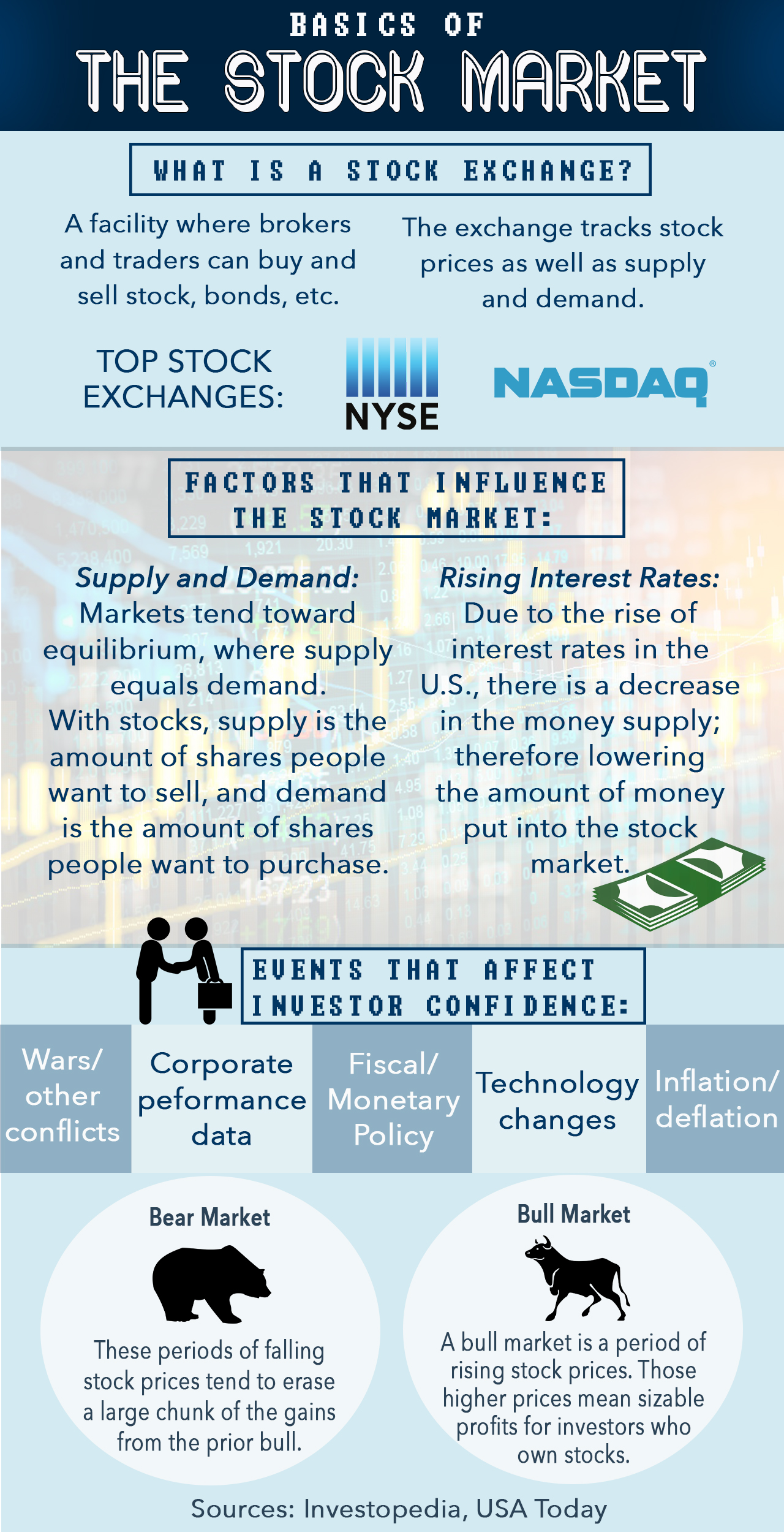
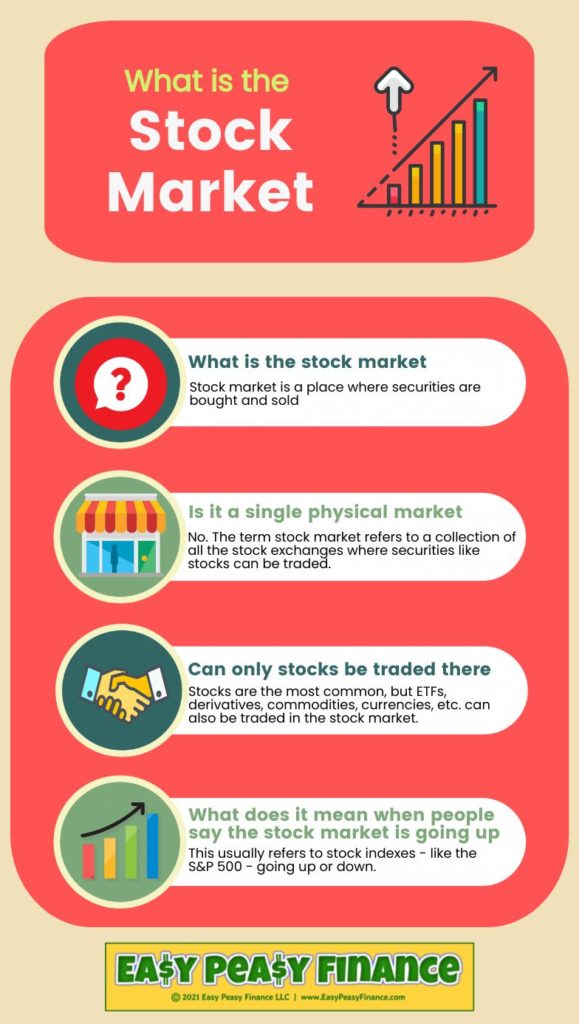
At its simplest, the stock market is a collection of exchanges and other venues where buying, selling, and issuance of shares of publicly-held companies take place. It’s not a single physical location but a vast, interconnected network. To truly grasp its essence, we must first understand its foundational elements.
Shares and Ownership: A Slice of the Company Pie
When you buy a stock, or a “share,” you are purchasing a small fraction of ownership in a public company. Imagine a giant pie representing a company; each slice of that pie is a share. As a shareholder, you become a part-owner, giving you a claim on a portion of the company’s assets and earnings. This ownership entitles you to certain rights, typically including voting rights on company matters and, in some cases, a share of the company’s profits through dividends. The value of your shares fluctuates based on the company’s performance, industry trends, economic conditions, and investor sentiment.
The Primary and Secondary Markets: Issuance vs. Trading
The journey of a stock begins in the primary market. This is where a company first offers its shares to the public, typically through an Initial Public Offering (IPO). When a company goes public, it sells new shares to investors to raise capital for expansion, debt repayment, or other corporate purposes. This is direct interaction between the company and its initial investors.
Once shares are sold in the primary market, they are then traded among investors in the secondary market. This is what most people refer to as “the stock market.” Major stock exchanges like the New York Stock Exchange (NYSE) and NASDAQ are examples of secondary markets. Here, existing shares are bought and sold between investors, and the company whose shares are being traded does not directly receive any money from these transactions. The price of shares in the secondary market is determined by the forces of supply and demand—the collective decisions of buyers and sellers.
Why Companies Issue Stock
Companies primarily issue stock to raise capital. Rather than borrowing money through loans, which incurs interest payments, selling equity (shares) allows companies to fund their operations, research and development, expansion plans, and other strategic initiatives without taking on debt. This capital infusion can fuel growth, innovation, and job creation, benefiting the economy as a whole. For investors, buying these stocks offers an opportunity to partake in the potential future success and profitability of these companies.
Key Concepts and Terminology for Beginners
Navigating the stock market requires familiarity with its unique language. Understanding these core concepts is crucial for making informed decisions and interpreting market news.
Bull vs. Bear Markets: The Market’s Mood Swings
The terms “bull” and “bear” describe the overall sentiment and direction of the stock market. A bull market is characterized by rising stock prices, optimism, and investor confidence. It signifies economic growth and a positive outlook for corporate earnings. Investors in a bull market are often aggressive, expecting prices to continue climbing.
Conversely, a bear market is marked by falling stock prices, pessimism, and widespread investor fear. It typically signals economic contraction or stagnation and a negative outlook for corporate profits. Bear markets often lead to investors selling off assets, further driving down prices. These are natural cycles in the market, driven by a myriad of economic and geopolitical factors.
Market Indexes: Gauges of Economic Health
Market indexes are statistical measures that track the performance of a specific basket of stocks, providing a snapshot of the overall market or a particular sector. They act as benchmarks against which investors can measure their portfolios’ performance. Prominent examples include:
- S&P 500: Represents 500 of the largest U.S. publicly traded companies, widely considered the best gauge of large-cap U.S. equities and the broader U.S. economy.
- Dow Jones Industrial Average (DJIA): Tracks 30 prominent companies listed on U.S. exchanges, representing various major industries.
- NASDAQ Composite: Primarily tracks technology and growth companies listed on the NASDAQ exchange.
Understanding these indexes helps investors quickly assess market trends and economic health.
Dividends: Sharing the Profits
Dividends are a portion of a company’s profits paid out to its shareholders. Not all companies pay dividends; typically, mature, profitable companies with stable earnings are more likely to distribute them. Dividends can be a significant source of return for investors, especially those focused on income generation. They can be paid quarterly, semi-annually, or annually, and often reflect a company’s financial health and commitment to returning value to its owners. Reinvesting dividends can significantly accelerate wealth accumulation through the power of compounding.
Volatility and Risk: The Inherent Nature of Investing
Volatility refers to the degree of variation of a trading price series over time. In simpler terms, it’s how rapidly and significantly stock prices fluctuate. High volatility means prices can swing wildly, presenting both opportunities for quick gains and risks of substantial losses.
Risk is an inherent component of stock market investing. It encompasses the potential for your investment to lose value. Different stocks and investment strategies carry different levels of risk. While higher potential returns often come with higher risk, understanding and managing risk is paramount. This involves not putting all your eggs in one basket, conducting thorough research, and aligning investments with your personal risk tolerance.
Navigating the Market: Different Investment Approaches
With the fundamentals understood, the next step is to explore various strategies for participating in the stock market. There isn’t a one-size-fits-all approach; the best strategy depends on an individual’s financial goals, time horizon, and risk tolerance.
Active vs. Passive Investing: To Beat or to Track?
Active investing involves a fund manager or individual investor attempting to “beat the market” by actively buying and selling stocks, trying to time market movements, and performing in-depth research to identify undervalued or overvalued securities. This approach often involves higher fees and requires significant time, skill, and research.

Passive investing, on the other hand, aims to match market performance rather than outperform it. This is typically achieved by investing in index funds or Exchange Traded Funds (ETFs) that track a specific market index (e.g., an S&P 500 index fund). Passive investing is generally characterized by lower fees, less active management, and a long-term buy-and-hold strategy, often favored for its simplicity and historical effectiveness.
Value vs. Growth Investing: Different Philosophies
These are two prominent investment philosophies that guide stock selection:
- Value Investing: Pioneered by Benjamin Graham and championed by Warren Buffett, value investors seek out companies whose stocks appear to be trading for less than their intrinsic value. They look for “bargains”—companies with strong fundamentals, good management, and solid financial health that the market has somehow overlooked or undervalued. The belief is that eventually, the market will recognize the true value, and the stock price will rise.
- Growth Investing: Growth investors focus on companies that are expected to grow at an above-average rate compared to other companies or the overall market. These companies often reinvest their earnings back into the business to fuel further expansion, so they typically pay little to no dividends. Growth stocks tend to be in emerging industries or have innovative products/services. They often trade at higher price-to-earnings ratios, reflecting investors’ expectations for future rapid growth.
Diversification: Don’t Put All Your Eggs in One Basket
Diversification is perhaps the most fundamental principle of risk management in investing. It involves spreading your investments across various asset classes, industries, geographic regions, and company sizes to minimize risk. If one investment performs poorly, the impact on your overall portfolio is cushioned by the performance of others. For instance, instead of investing solely in one tech stock, you might invest in a mix of tech, healthcare, consumer staples, and financial stocks, alongside bonds or real estate. This strategy helps protect your portfolio from the idiosyncratic risks associated with any single asset.
Getting Started: Practical Steps for New Investors
The journey into the stock market can seem daunting, but with a structured approach, it becomes manageable. Here are practical steps to embark on your investing path.
Educate Yourself Continuously: The Lifelong Learning Journey
Before committing any capital, commit to education. Read reputable financial books (e.g., “The Intelligent Investor” by Benjamin Graham, “A Random Walk Down Wall Street” by Burton Malkiel), follow credible financial news sources (e.g., The Wall Street Journal, Financial Times, reputable financial blogs), and consider online courses from recognized institutions. Understanding the basics, historical trends, and market dynamics will build a solid foundation and bolster your confidence.
Define Your Financial Goals and Risk Tolerance
Clearly articulate what you hope to achieve with your investments. Are you saving for a down payment in five years (short-term), retirement in thirty years (long-term), or something else? Your goals will dictate your investment horizon and strategy. Equally important is understanding your risk tolerance—how much volatility and potential loss you can comfortably bear without losing sleep. A younger investor with a long time horizon might tolerate more risk for higher potential returns, while someone nearing retirement might opt for a more conservative approach.
Choose the Right Investment Vehicle and Platform
Once your goals are set, select the appropriate investment vehicles and platforms:
- Brokerage Accounts: These allow you to buy and sell stocks, ETFs, mutual funds, and other securities. You can choose from traditional full-service brokers offering advice or discount brokers with lower fees for self-directed investing. Robo-advisors are an excellent option for beginners, offering automated portfolio management based on your goals and risk tolerance at a low cost.
- Retirement Accounts: Maximize tax-advantaged accounts like 401(k)s (employer-sponsored) and IRAs (individual retirement accounts – traditional or Roth). These accounts offer significant tax benefits that can accelerate wealth growth.
- Investment Products: Decide whether you want to invest in individual stocks (requires more research), diversified ETFs (Exchange Traded Funds), or mutual funds (professionally managed baskets of securities). For most beginners, diversified index ETFs or mutual funds are an excellent starting point due to their built-in diversification and lower risk profile compared to individual stocks.
Start Small and Invest Consistently
You don’t need a large sum to begin investing. Many platforms allow you to start with modest amounts. The key is consistency through a strategy known as dollar-cost averaging. This involves investing a fixed amount of money at regular intervals (e.g., $100 every month), regardless of market fluctuations. When prices are high, your fixed sum buys fewer shares; when prices are low, it buys more. Over time, this strategy helps average out your purchase price and reduces the risk associated with trying to time the market. Coupled with the power of compounding (earning returns on your initial investment and on the accumulated interest/dividends), consistent investing can lead to substantial wealth growth over decades.
Common Pitfalls and How to Avoid Them
The stock market can be a powerful wealth-building tool, but it’s also fraught with psychological traps and common mistakes that can derail even the best intentions.
Emotional Investing: Fear and Greed
One of the biggest enemies of successful investing is emotion. Fear can lead investors to panic sell during market downturns, locking in losses and missing out on subsequent recoveries. Conversely, greed can push investors to chase “hot” stocks, take on excessive risk, or buy at market peaks, only to suffer losses when the hype dissipates. The key is to develop a disciplined, long-term perspective. Stick to your investment plan, rebalance your portfolio periodically, and resist the urge to make impulsive decisions based on daily market headlines or social media hype.
Chasing Hot Stocks and Speculation
Resist the allure of overnight riches. The stock market is not a get-rich-quick scheme. Constantly chasing the latest “hot” stock or sector often leads to poor returns because you’re buying after significant gains have already occurred. True investing is about fundamental analysis, long-term growth, and disciplined strategy, not speculative gambling. Focus on solid companies with sustainable business models rather than fleeting trends.
Lack of Research and Due Diligence
Never invest in something you don’t understand. Before committing your hard-earned money, conduct thorough research. For individual stocks, this means examining the company’s financial statements, management team, competitive landscape, and future prospects. For funds, understand their holdings, expense ratios, and historical performance. Blindly following tips from friends, online forums, or unverified sources is a recipe for potential disaster. Your money deserves careful consideration and informed decisions.
Conclusion
Understanding the stock market is a journey, not a destination. It involves continuous learning, disciplined execution, and a healthy respect for both its potential and its inherent risks. By grasping the fundamentals of what stocks represent, familiarizing yourself with key market terminology, choosing investment approaches that align with your goals, and starting with practical, consistent steps, you can effectively navigate this powerful financial landscape.
The stock market is a dynamic entity, but successful investing often boils down to a few core principles: education, diversification, consistency, and emotional discipline. Begin today, start small, and commit to the long term. With patience and a well-thought-out strategy, the stock market can be a robust engine for achieving your financial aspirations and building lasting wealth.
aViewFromTheCave is a participant in the Amazon Services LLC Associates Program, an affiliate advertising program designed to provide a means for sites to earn advertising fees by advertising and linking to Amazon.com. Amazon, the Amazon logo, AmazonSupply, and the AmazonSupply logo are trademarks of Amazon.com, Inc. or its affiliates. As an Amazon Associate we earn affiliate commissions from qualifying purchases.