
The question “who controls the share market?” is one that has fascinated, confounded, and at times, frustrated investors, economists, and casual observers alike for centuries. It conjures images of clandestine meetings, powerful figures pulling strings, or a shadowy cabal dictating fortunes. In an increasingly complex global financial landscape, the desire to pinpoint a single controller is understandable, offering a comforting, albeit misleading, sense of order in what often appears to be a chaotic system. However, the reality is far more intricate and decentralized than any single entity or group could ever manage. The share market, at its core, is a vast, adaptive organism driven by an interplay of countless participants, economic fundamentals, geopolitical events, and even collective human psychology. Understanding these myriad forces is crucial for anyone seeking to navigate its treacherous yet potentially rewarding waters.

The Myth of a Single Controller: Deconstructing the Allure of Centralized Power
The notion of a single entity controlling the share market is a powerful one, often fueled by human psychology and a natural desire to simplify complex systems. It’s a myth that persists despite overwhelming evidence to the contrary, largely because it offers a seemingly straightforward explanation for market movements that can otherwise feel arbitrary or unjust.
Why the Idea Persists
The human brain is wired to seek patterns and assign causality, even where none truly exists. When faced with the seemingly unpredictable swings of the stock market – sudden crashes, inexplicable rallies, or the rapid rise and fall of particular stocks – it’s natural to look for a guiding hand. This innate tendency gives rise to various conspiracy theories, suggesting that wealthy elites, powerful banks, or even governments secretly manipulate markets for their own gain. Moreover, the sheer scale of wealth concentrated in the hands of a few institutional investors or ultra-high-net-worth individuals can create the illusion that they possess unilateral control, capable of moving markets at will. The opaqueness of certain financial instruments and the rapid-fire nature of modern trading, often driven by algorithms, further contribute to this sense that unseen forces are at play, beyond the grasp of the average individual.
The Illusion of Manipulation
While attempts at market manipulation undoubtedly occur and are illegal in most jurisdictions, the idea that any single entity can control the entire share market on a sustained basis is an illusion. The market’s vastness, liquidity, and the sheer number of participants make it incredibly resilient to long-term, centralized manipulation. Billions of shares exchange hands daily across thousands of listed companies, involving millions of individual and institutional investors globally. Any attempt by a single entity to significantly alter broad market trends would require an unimaginable amount of capital and coordination, quickly attracting the attention of regulators and other market participants who would act to profit from or counteract such an anomaly. While specific stocks or sectors might be targeted for short-term manipulation, the overarching market remains a dynamic battlefield where no single player can dictate the outcome indefinitely.
The Decentralized Web of Influence: Key Players and Their Roles
Instead of a single controller, the share market is influenced by a decentralized web of diverse participants, each with their own objectives, strategies, and varying degrees of impact. These players, from colossal institutions to individual investors, contribute to the constant ebb and flow of market activity.
Institutional Investors: The Goliaths of Capital
At the apex of market influence by trading volume are institutional investors. These behemoths manage colossal pools of capital on behalf of clients and beneficiaries. They include:
- Pension Funds: Managing retirement savings for millions, they invest for long-term growth and stability.
- Mutual Funds and Exchange-Traded Funds (ETFs): Aggregating money from numerous small investors to invest in diversified portfolios.
- Hedge Funds: Employing complex strategies and often taking aggressive positions to generate high returns for wealthy clients.
- Sovereign Wealth Funds: State-owned investment funds holding foreign financial assets, typically investing for national economic benefit.
- Insurance Companies: Investing premiums collected from policyholders to meet future claims.
These entities trade in such massive volumes that their buy and sell decisions, particularly when moving into or out of large positions, can significantly impact the prices of individual stocks and even broad market indices. Their investment strategies, often guided by detailed research and economic forecasts, play a crucial role in price discovery and market trends.
Retail Investors: The Collective Power of the Crowd
Often perceived as minor players, retail investors – individual traders buying and selling stocks for their personal accounts – collectively wield significant power. The rise of accessible online brokerage platforms and fractional share investing has democratized market participation, bringing millions of new investors into the fold. While no single retail investor can move the market, their aggregated activity can create powerful trends. The “meme stock” phenomena of recent years, where online communities coordinated to drive up the prices of certain stocks, demonstrated the collective influence retail investors can exert, challenging traditional institutional dominance in specific instances. Their sentiment, often driven by a mix of financial goals, personal convictions, and social media trends, adds another layer of unpredictability and dynamism to market behavior.
Market Makers and High-Frequency Traders
These participants are the gears and cogs that ensure the market functions smoothly and efficiently.
- Market Makers: Financial firms that stand ready to buy or sell securities, providing liquidity by quoting both a bid (buy) and an ask (sell) price. They profit from the spread between these prices, ensuring that there’s always a counterparty for a trade, even in thinly traded securities.
- High-Frequency Traders (HFTs): Utilizing sophisticated algorithms and high-speed technology, HFT firms execute thousands of trades per second. They profit from tiny price discrepancies, arbitrage opportunities, and providing liquidity, significantly impacting transaction costs and the speed of price discovery. While often controversial due to their technological advantage, they play a vital role in market efficiency and liquidity.
Corporations (Issuers): The Supply Side of the Equation
The companies whose shares are traded are fundamental to the market’s existence. Their actions directly influence the supply and perceived value of their stock. Decisions regarding:
- Earnings Reports: Quarterly and annual financial results are critical drivers of stock prices.
- Dividends: Payments to shareholders can attract income-focused investors.
- Share Buybacks: Companies repurchasing their own shares reduce the float and can boost earnings per share.
- Mergers and Acquisitions: Major corporate events can dramatically impact stock valuations.
- New Product Launches and Innovation: Can signal future growth and investor confidence.
Ultimately, the performance and strategic direction of these corporations are primary determinants of individual stock valuations, and collectively, they shape the overall health of the equity market.
Governments and Regulators: Setting the Rules of the Game
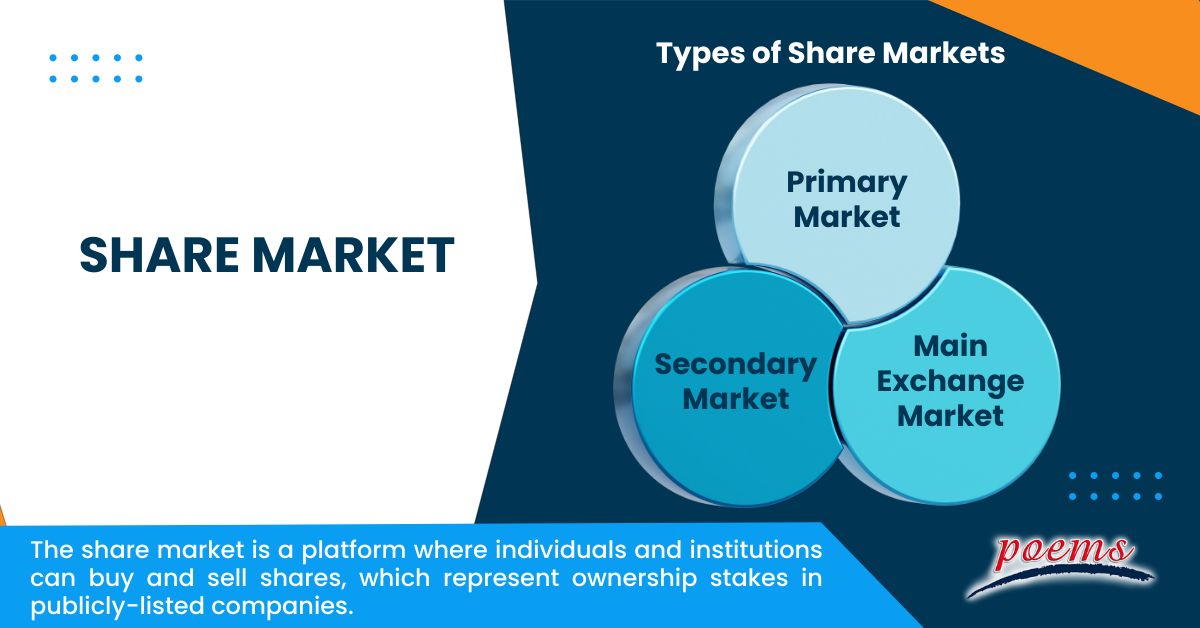
Governments and their appointed regulatory bodies do not directly trade in the market (except for state-owned enterprises or sovereign funds), but they establish the framework within which all other participants operate. Their influence is profound through:
- Monetary Policy (Central Banks): Institutions like the U.S. Federal Reserve, the European Central Bank, or the Bank of England set interest rates, manage the money supply, and engage in quantitative easing or tightening. These actions directly impact borrowing costs for companies, the attractiveness of bonds versus stocks, and overall economic growth, thus exerting a powerful influence on market sentiment and valuation.
- Financial Regulatory Bodies: Agencies such as the Securities and Exchange Commission (SEC) in the U.S. or the Financial Conduct Authority (FCA) in the UK create and enforce rules to ensure fair and orderly markets, protect investors, and prevent fraud and manipulation. Their oversight provides a crucial layer of trust and stability, without which markets would likely devolve into chaos.
- Legislative Frameworks: Governments pass laws related to taxation, corporate governance, industry regulations, and international trade, all of which can significantly impact corporate profitability and investor confidence.
Forces Beyond Direct Human Control: Economic and Geopolitical Undercurrents
Beyond the actions of direct market participants, powerful macroeconomic and geopolitical forces constantly shape the share market, often acting as invisible currents that guide or disrupt its trajectory. These forces are largely beyond the direct control of any single individual or group, embodying the market’s inherent systemic complexity.
Economic Fundamentals: The Invisible Hand’s Grip
The health of the real economy is the bedrock upon which market valuations are built. Key economic indicators and trends exert a profound and pervasive influence:
- Gross Domestic Product (GDP) Growth: A measure of economic output, directly correlating with corporate revenues and earnings potential.
- Inflation: The rate at which prices rise, eroding purchasing power and potentially leading central banks to raise interest rates, which can dampen corporate profits and make equities less attractive.
- Interest Rates: Controlled by central banks, these affect the cost of borrowing for businesses, consumer spending, and the “discount rate” used to value future corporate earnings. Higher rates generally make stocks less appealing compared to fixed-income investments.
- Employment Data: Strong job growth signals a healthy economy with robust consumer spending, while rising unemployment can indicate recessionary pressures.
- Corporate Earnings and Revenue: The actual financial performance of companies, individually and collectively, is arguably the most fundamental driver of stock prices.
- Technological Innovation: Disruptive technologies can create entirely new industries, render existing ones obsolete, and shift vast amounts of capital, fundamentally altering market leadership.
These economic forces interact in complex ways, creating cycles of expansion and contraction that ripple through market valuations, often independently of any single investor’s actions.
Geopolitical Events: Shocks and Ripples Across Borders
Global events, often sudden and unpredictable, can send powerful shockwaves through financial markets. Their impact can be immediate and far-reaching, transcending national borders:
- Wars and Conflicts: Create uncertainty, disrupt supply chains, impact commodity prices, and divert resources, leading to investor caution and market downturns.
- Trade Disputes and Sanctions: Can hinder international commerce, impact corporate profitability, and lead to tariffs that alter cost structures for businesses.
- Political Instability and Elections: Uncertainty surrounding leadership changes, policy shifts, or civil unrest can deter investment and cause market volatility.
- Global Health Crises (e.g., Pandemics): Can shut down economies, disrupt supply chains, change consumer behavior, and trigger widespread economic downturns, as seen during COVID-19.
- Natural Disasters: While often localized, major disasters can have broader economic impacts through insurance claims, supply chain disruptions, and reconstruction efforts.
These events introduce an element of external randomness that no market participant, however powerful, can truly control, forcing a constant re-evaluation of risk and opportunity.
Market Sentiment and Psychology: The Human Element of Fear and Greed
Despite all rational analysis of fundamentals and policies, the share market is ultimately driven by human decisions, and those decisions are often influenced by powerful emotions:
- Behavioral Economics: This field highlights how cognitive biases, heuristics, and emotional responses often lead investors away from purely rational decision-making.
- Irrational Exuberance: Periods of excessive optimism, often fueled by rising asset prices, can lead to speculative bubbles where valuations detach from underlying fundamentals.
- Market Panics and Fear: Conversely, widespread fear and pessimism can trigger rapid sell-offs, creating market crashes even when underlying economic conditions are not catastrophically bad.
- Herd Mentality: Investors often follow the crowd, buying when others buy and selling when others sell, exacerbating market trends in both directions.
These psychological dynamics create a feedback loop that can amplify trends, leading to periods of significant overvaluation or undervaluation, demonstrating that even with all the data and sophisticated models, the human element remains a potent, if unpredictable, force.
The Interplay of Control and Chaos: Navigating Market Dynamics
Ultimately, the share market is a complex adaptive system, constantly evolving through the interplay of all these diverse forces. There is no central command; rather, it’s a dynamic arena where various forms of “control” coalesce, creating periods of relative calm and intense chaos.
Dynamic Equilibrium: A Constant State of Flux
The market exists in a state of dynamic equilibrium, where buying and selling pressures are constantly balancing, leading to ever-changing prices. Each participant, from the individual retail investor to the largest institutional fund, acts based on their own information, analyses, and motivations, collectively determining price discovery. While there are moments of clear trend, often driven by a dominant narrative or economic shift, these are always subject to challenge and reversal as new information emerges, sentiments shift, or other forces gain prominence. This continuous adjustment is what makes the market robust yet inherently unpredictable in the short term.
The Role of Information and Technology
Modern technology has fundamentally transformed how these forces interact. Real-time data dissemination, global communication networks, and algorithmic trading have compressed time horizons and increased the interconnectedness of markets worldwide. Information, whether economic data, corporate news, or geopolitical updates, now travels almost instantaneously, allowing for rapid reactions. Algorithmic trading, representing a significant portion of market activity, processes this information at speeds far beyond human capability, executing trades based on pre-programmed rules. This technological layer amplifies both the efficiency of price discovery and the potential for rapid, cascading movements in response to unexpected events.
Empowering the Individual Investor
For the individual investor, understanding that no one “controls” the market is not a cause for despair but an invitation to informed participation. It means focusing on what can be controlled:
- Education: Understanding market fundamentals, economic indicators, and investment principles.
- Strategy: Developing a clear investment plan aligned with personal financial goals and risk tolerance.
- Diversification: Spreading investments across different assets and sectors to mitigate risk.
- Long-Term Perspective: Recognizing that short-term volatility is inherent and focusing on long-term growth.
- Emotional Discipline: Resisting the urge to make impulsive decisions based on fear or greed.
By appreciating the multi-faceted nature of market influence, investors can move beyond the search for an elusive controller and instead focus on building resilient portfolios and making rational decisions within this complex ecosystem.
In conclusion, the question “who controls the share market?” ultimately reveals a fundamental misunderstanding of its nature. There is no single puppet master. Instead, the share market is a sprawling, self-organizing system, a grand arena where millions of individuals and institutions, driven by a spectrum of motives, interact amidst an ever-present backdrop of economic realities, political shifts, and human emotions. It is precisely this intricate, decentralized web of influence that gives the market its dynamism, its resilience, and its profound impact on global finance. For any participant, true understanding comes not from identifying a controller, but from appreciating the myriad forces that collectively guide its journey.
aViewFromTheCave is a participant in the Amazon Services LLC Associates Program, an affiliate advertising program designed to provide a means for sites to earn advertising fees by advertising and linking to Amazon.com. Amazon, the Amazon logo, AmazonSupply, and the AmazonSupply logo are trademarks of Amazon.com, Inc. or its affiliates. As an Amazon Associate we earn affiliate commissions from qualifying purchases.