
Spirit Airlines has become a familiar name in the North American aviation landscape, instantly recognizable for its distinctive yellow planes and, more notably, its incredibly low advertised fares. For many travelers, the question inevitably arises: “How can Spirit Airlines be so cheap?” This isn’t a simple trick of marketing; it’s the result of a meticulously engineered financial strategy known as the Ultra-Low-Cost Carrier (ULCC) model. Far from being arbitrary, Spirit’s pricing is a calculated business decision designed to tap into a specific segment of the travel market, prioritizing price above all else. Understanding this model requires a deep dive into its financial philosophy, operational efficiencies, and strategic choices that collectively enable these rock-bottom base fares.
The Core Financial Philosophy: Unbundling Fares
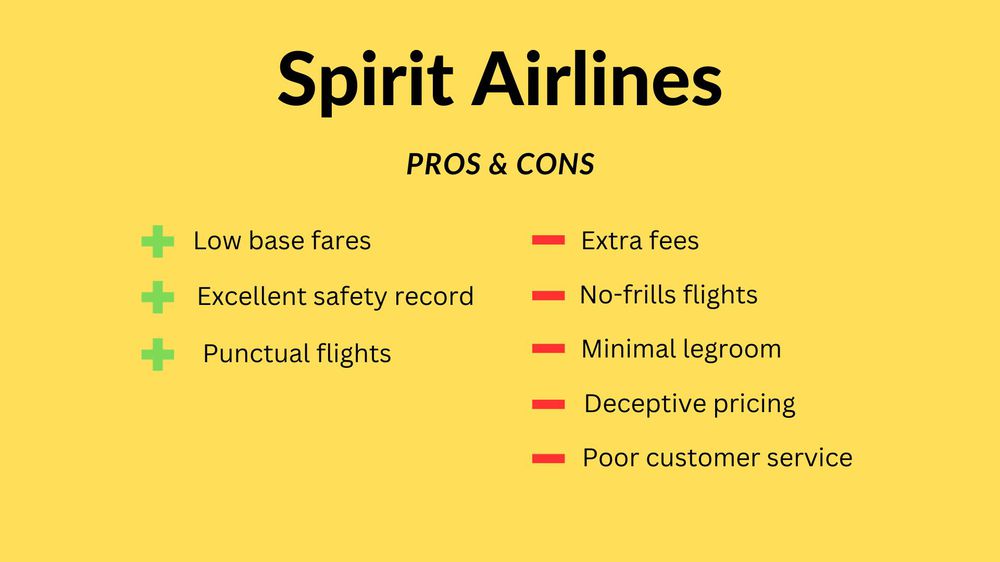
At the heart of Spirit’s ability to offer exceptionally low prices lies its revolutionary approach to fare structuring: unbundling. Traditional airlines bundle a host of services—such as checked bags, seat selection, in-flight refreshments, and even printing a boarding pass at the airport—into the base ticket price. Spirit, conversely, strips everything away, offering what is essentially a “bare bones” fare. This strategy allows them to advertise incredibly attractive prices, which then serve as a powerful draw for price-sensitive consumers.
A La Carte Pricing: Deconstructing the Ticket Price
The unbundling model means that the advertised fare you see for a Spirit flight covers only the absolute essentials: transportation from point A to point B, and a small personal item that fits under the seat in front of you. Every additional amenity or service that most travelers take for granted with full-service airlines becomes an optional add-on, each with its own separate charge. This includes everything from carry-on bags and checked luggage to specific seat assignments, priority boarding, in-flight snacks and beverages, and even the convenience of having an agent print your boarding pass at the airport.
This “a la carte” pricing structure serves multiple financial purposes. Firstly, it allows Spirit to capture a wide audience by presenting an unbeatable entry price point. For passengers who travel light, don’t need a specific seat, and can bring their own snacks, the cost can genuinely remain very low. Secondly, it cleverly shifts the perception of value. While the final price with all add-ons might approach or even exceed a traditional airline’s fare, the initial “cheap ticket” anchors the consumer’s perception of Spirit as a budget-friendly option. This psychological anchoring is a potent marketing tool, even if the total cost isn’t always dramatically lower for all travelers. From a financial perspective, it empowers customers to customize their travel experience based on their specific needs and budget, effectively paying only for what they use.
Maximizing Ancillary Revenue
The true genius and financial backbone of the ULCC model, exemplified by Spirit, is its reliance on ancillary revenue. While the base fares are low, these add-on fees are where Spirit generates a significant portion, often more than half, of its total revenue. This model starkly contrasts with legacy carriers, where the majority of revenue still comes from the sale of the initial ticket. For Spirit, ancillary fees aren’t just extra income; they are an integral and highly profitable component of their overall financial health.
Spirit meticulously analyzes passenger behavior to optimize these charges. For instance, knowing that many travelers will eventually need to check a bag or select a seat, they price these services strategically. The prices for these add-ons can vary depending on the route, demand, time of booking, and even whether they are purchased online in advance or at the airport. This dynamic pricing model maximizes yield from each optional service. By transforming every conceivable amenity into a revenue stream, Spirit diversifies its income, making its financial model more resilient and allowing it to absorb fluctuations in fuel prices or other operational costs more effectively than airlines solely reliant on ticket sales. This strategic emphasis on ancillary revenue is a fundamental differentiator and a key reason why Spirit can offer such compelling base fares while remaining a profitable enterprise.
Lean Operational Structure and Cost Efficiencies
Beyond the revenue-generating side of unbundling, Spirit’s low costs are also a direct result of an extremely lean and efficient operational structure. Every aspect of their business model is designed to minimize expenses, from their aircraft fleet to ground operations and staffing. This relentless pursuit of cost efficiency is critical for maintaining profitability in the ultra-competitive low-fare segment.
Fleet Homogeneity and Maintenance Savings
One of Spirit’s most significant cost-saving strategies is its commitment to fleet commonality. Spirit operates a predominantly Airbus A320 family fleet (A319, A320, A321). This single-type fleet strategy offers profound financial benefits. For starters, it simplifies pilot training, as pilots are qualified to fly any aircraft within the family with minimal additional instruction. Maintenance crews also become highly specialized in a single aircraft type, leading to faster repairs and fewer errors. Inventory management for spare parts is vastly streamlined, requiring fewer unique components and allowing for bulk purchasing discounts.
Furthermore, a homogeneous fleet simplifies scheduling and aircraft utilization. If one aircraft is grounded for maintenance, another of the same type can easily take its place without significant operational disruption. This reduces the need for a diverse inventory of specialized tools and equipment, further driving down costs associated with maintenance, repairs, and operations (MRO). The financial implications are substantial, contributing directly to lower overheads per flight and enabling cheaper ticket prices.
High Aircraft Utilization and Quick Turnarounds
Spirit’s operational model is also characterized by maximizing the time its aircraft spend in the air, rather than sitting on the ground. This is achieved through exceptionally high aircraft utilization rates and a relentless focus on quick turnarounds. Traditional airlines might have planes parked for several hours between flights, allowing for more leisurely loading, cleaning, and maintenance. Spirit, however, aims for the quickest possible turnaround times, often as little as 30-40 minutes for a standard domestic flight.
This rapid turnaround strategy means that Spirit’s planes are flying more routes per day, generating more revenue hours per aircraft. Every minute an aircraft is on the ground, it’s an expense without generating income. By minimizing ground time, Spirit effectively squeezes more productivity out of its expensive assets. This requires highly coordinated ground crews, efficient boarding and deplaning processes, and a streamlined approach to cleaning and refueling. While this contributes to a fast-paced airport experience, it is a critical financial lever that allows Spirit to spread its fixed costs (like aircraft depreciation and financing) over a greater number of flights, thereby reducing the per-passenger cost.
Staffing and Labor Productivity
Labor costs are a significant expense for any airline, and Spirit employs strategies to ensure high productivity and efficiency in its workforce. While direct comparisons of salary scales can be complex and sensitive, Spirit focuses on optimizing staffing levels and maximizing output per employee. This includes efficient crew scheduling to minimize layovers and maximize flight hours for pilots and flight attendants, which is easier to achieve with a standardized fleet and point-to-point network.
Additionally, some tasks that might be handled by multiple personnel at legacy carriers are streamlined or consolidated at ULCCs. This isn’t about cutting corners on safety, but rather about optimizing workflows and leveraging technology to empower employees to handle a broader range of responsibilities. The goal is to achieve more with fewer resources, translating directly into lower operational overheads per flight and, consequently, lower fares for consumers.
Strategic Airport Choices and Network Design
Spirit’s financial model also extends to its strategic choices regarding where and how it flies. Their network design and airport selection are carefully calibrated to minimize costs, even if it means sacrificing some of the convenience associated with major hub airports. This disciplined approach ensures that every route contributes positively to the bottom line by keeping operational expenses as low as possible.
Utilizing Secondary and Smaller Airports
A defining characteristic of Spirit’s network strategy is its preference for secondary, less congested, and often cheaper airports. Instead of flying into the busiest and most expensive terminals at primary international hubs, Spirit frequently operates out of smaller, regional airports or less-utilized terminals at major city airports. This strategic choice offers several financial advantages.
Landing fees, gate rental charges, and other operational costs are significantly lower at these secondary facilities compared to prime slots at bustling hub airports. Reduced congestion at these airports also means less time spent taxing, which saves on fuel and reduces the risk of costly delays. While this might mean a slightly longer commute for some passengers to reach the airport, or less access to comprehensive public transport networks, the trade-off for Spirit is substantial cost savings that can be passed on to the consumer in the form of lower fares. This focus on cost-efficient infrastructure is a critical component of their ability to maintain their low-fare promise.
Point-to-Point Network Model
Unlike the traditional “hub-and-spoke” model favored by legacy carriers (where passengers often connect through a central hub to reach their final destination), Spirit primarily operates on a point-to-point network. This means flights often go directly from one city to another, bypassing a central connecting hub. This model offers several financial and operational efficiencies.
Firstly, it reduces the complexity and cost associated with managing a massive hub operation, including fewer ground staff, less complex baggage handling systems, and reduced infrastructure investment in large connecting facilities. Secondly, point-to-point flights are inherently less susceptible to cascading delays. A delay in one flight at a hub can ripple through dozens of connecting flights, leading to significant costs in rebooking passengers, accommodating stranded travelers, and paying crew overtime. By minimizing connections, Spirit reduces its exposure to these costly operational disruptions, contributing to overall reliability and cost savings. This streamlined network design supports the quick turnaround times and high aircraft utilization that are essential to their financial success.
Technology, Sales, and Marketing Efficiency
Beyond the physical operations and financial structuring, Spirit Airlines also leverages technology and a distinctive marketing approach to maintain its low-cost advantage. Their focus is on direct sales, efficient customer acquisition, and a brand identity that embraces its budget positioning.
Direct-to-Consumer Sales and Online Focus
Spirit heavily relies on direct-to-consumer sales, primarily through its own website and mobile app. This strategy significantly reduces distribution costs. Traditional airlines often pay commissions to online travel agencies (OTAs) and global distribution systems (GDSs) for bookings made through third-party channels. By encouraging passengers to book directly, Spirit avoids these intermediary fees, preserving more revenue from each ticket sale.
Their website and app are designed for efficiency, guiding customers through the booking process and clearly presenting all the optional add-ons. Furthermore, Spirit utilizes sophisticated revenue management and dynamic pricing algorithms. These systems continuously analyze demand, competitor pricing, and historical data to adjust fares in real-time, optimizing revenue for every seat on every flight. This technological prowess in sales and pricing is crucial for maintaining profitability within their tight margins.
Minimalist Marketing and Brand Positioning
Spirit’s marketing strategy is as lean as its operations. They don’t invest heavily in traditional, broad-appeal advertising campaigns that focus on luxury or premium experiences. Instead, their marketing primarily revolves around promoting their core value proposition: ultra-low fares. Their distinctive yellow livery and often cheeky slogans reinforce their brand as the “cheap” option, appealing directly to price-sensitive travelers who prioritize cost above all else.
In essence, their “cheapness” is their marketing. They embrace their position as a no-frills airline, which sets clear expectations for consumers. This transparency, even if sometimes misinterpreted by those accustomed to traditional carriers, allows them to avoid costly campaigns aimed at presenting a premium image. By focusing on a highly targeted market segment and leveraging the power of their price point, Spirit minimizes its marketing expenditure while effectively reaching its target audience, further contributing to its overall cost efficiency.
Conclusion
The question “Why are Spirit Airlines so cheap?” is ultimately answered by a cohesive and ruthlessly efficient business model meticulously designed for profitability in the ultra-low-cost carrier segment. Spirit doesn’t just offer low fares by chance; it achieves them through a deliberate financial strategy centered on radical unbundling of services, maximizing ancillary revenue, maintaining a lean and homogeneous operational structure, leveraging efficient airport and network choices, and optimizing its sales and marketing channels. Every decision, from fleet commonality to quick turnarounds and direct booking, is aimed at reducing costs and generating income from non-ticket sources.
While this model often involves trade-offs in terms of traditional amenities and sometimes leads to consumer frustration over perceived “hidden fees,” it undeniably provides a valuable service to a vast segment of travelers for whom price is the primary determinant. Spirit’s success demonstrates that by engineering every facet of its business around extreme cost efficiency and a clear financial strategy, an airline can thrive by making air travel accessible at price points that legacy carriers often cannot match. Their cheap fares are not an anomaly, but a testament to a highly refined and financially astute business model.
aViewFromTheCave is a participant in the Amazon Services LLC Associates Program, an affiliate advertising program designed to provide a means for sites to earn advertising fees by advertising and linking to Amazon.com. Amazon, the Amazon logo, AmazonSupply, and the AmazonSupply logo are trademarks of Amazon.com, Inc. or its affiliates. As an Amazon Associate we earn affiliate commissions from qualifying purchases.