
Spirit Airlines, Inc. is a prominent American ultra-low-cost carrier (ULCC) that has carved out a distinct and often debated niche within the highly competitive airline industry. From a brand perspective, understanding “what is Spirit Airlines” necessitates delving into its unique business model, its bold corporate identity, its strategic marketing approach, and the often polarized customer perceptions it cultivates. At its core, Spirit positions itself as the most budget-friendly option, a brand promise delivered through an aggressively unbundled fare structure and a vibrant, albeit sometimes provocative, communication style.
The Core Identity: Ultra-Low-Cost Carrier (ULCC)
Spirit’s brand identity is inextricably linked to its operational model as an Ultra-Low-Cost Carrier (ULCC). This is not merely a pricing strategy but a fundamental philosophy that shapes every aspect of its corporate identity, from service delivery to marketing communications. Unlike traditional full-service carriers or even standard low-cost airlines, Spirit has meticulously engineered its brand around the principle of offering the absolute lowest possible base fare, with nearly all amenities available as optional, à la carte purchases.

Pioneering the Unbundled Fare Model
The concept of “unbundling” is Spirit’s brand cornerstone. Historically, airline tickets included a suite of services: checked bags, seat selection, in-flight refreshments, and sometimes even entertainment. Spirit revolutionized this by breaking down the traditional fare into its most basic component—the “Bare Fare”—which covers only the seat and the personal item allowed under the seat in front. This strategic unbundling allows Spirit to advertise incredibly low headline prices, immediately distinguishing its brand from competitors. The brand message here is clear: you pay only for what you need. This approach appeals directly to price-sensitive travelers who prioritize cost savings above all else, positioning Spirit as a disrupter to the conventional airline experience. It’s a bold brand move that shifts the perceived value proposition from an all-inclusive package to a customizable, cost-efficient journey.
The “Bare Fare” Philosophy Explained
The “Bare Fare” is more than just a product; it’s a brand philosophy that underpins Spirit’s entire identity. It’s about empowering the customer to control their spending by explicitly detailing the costs of various services. From reserving a specific seat to bringing a carry-on bag into the overhead bin, printing a boarding pass at the airport, or even requesting a bottle of water onboard – each comes with an additional charge. While this model is frequently a source of customer frustration for those unfamiliar with it, for Spirit’s target audience, it represents transparency and choice. The brand intentionally communicates this philosophy, often with a cheeky tone, ensuring that customers are aware of what is and isn’t included in the base price. This clarity, despite its controversial nature, is a deliberate brand strategy to manage expectations and attract a specific demographic that values radical affordability over bundled convenience.
Distinctive Brand Experience and Customer Perception
Spirit’s brand experience is a direct reflection of its ULCC model. The cabin interiors are often described as utilitarian, designed for maximum efficiency rather than luxurious comfort. This minimalist approach extends to its service style, which is efficient and direct, again emphasizing cost savings. Customer perception of the Spirit brand is therefore highly polarized. For some, it is a brilliant solution for affordable travel, allowing them to visit family or explore new destinations on a tight budget. For others, it is associated with a “no-frills” experience that can feel restrictive or even punitive, especially if they fail to understand the unbundled nature of the service beforehand. Managing these diverse perceptions through consistent brand messaging and customer education is a continuous challenge and a crucial aspect of Spirit’s brand strategy.
Brand Strategy in Action: Marketing the Value Proposition
Spirit Airlines’ brand strategy is exceptionally direct, focusing relentlessly on its primary value proposition: low prices. Its marketing efforts are designed to penetrate the market with this message, often employing unconventional and memorable tactics to cut through the noise.
Communication of Cost Savings
The cornerstone of Spirit’s marketing strategy is the clear and often aggressive communication of cost savings. Its advertisements consistently highlight incredibly low lead-in fares, using bold typography and often playful imagery. The brand consistently uses slogans like “Less Money, More Go” or “Home of the Bare Fare” to reinforce its identity as the affordable travel option. This communication isn’t just about prices; it’s about positioning Spirit as enabling travel that might otherwise be inaccessible due to cost. The brand seeks to create an emotional connection with travelers by empowering them to fly more frequently or to places they thought were out of reach. This distinct focus avoids trying to compete on traditional metrics like comfort or premium service, instead carving out a unique space based purely on economic advantage.
Embracing Controversy and Distinctive Advertising
Spirit has never shied away from controversial or attention-grabbing advertising, a key element of its distinct brand personality. From tongue-in-cheek promotions referencing current events or pop culture phenomena to ads that directly mock competitors, Spirit uses humor and audaciousness to generate buzz and stand out. This calculated risk-taking in its brand messaging allows Spirit to garner significant media attention, often amplifying its core message of affordability without massive traditional advertising spend. While these campaigns sometimes draw criticism for being crude or insensitive, they undeniably reinforce Spirit’s edgy, no-nonsense brand identity and solidify its position as a challenger brand. This willingness to be provocative is a deliberate strategy to be memorable and to resonate with a segment of the audience that appreciates directness and a break from conventional corporate speak.
Targeting a Specific Demographic
Spirit’s brand strategy is highly effective because it targets a very specific demographic: the hyper-price-sensitive traveler. This includes students, budget-conscious families, small business owners looking to save on travel expenses, and individuals for whom the cost of a flight is the primary decision-making factor. The brand’s messaging, fare structure, and customer experience are all tailored to appeal to this segment. Spirit doesn’t attempt to be everything to everyone; instead, it proudly serves its niche. By clearly defining its target audience, Spirit can optimize its marketing channels, pricing strategies, and service offerings to meet the specific needs and expectations of those who prioritize the “Bare Fare.” This focused brand positioning allows it to operate profitably by maximizing load factors and minimizing non-essential costs.
Corporate Identity and Visual Branding
The visual and verbal elements of Spirit Airlines’ corporate identity are as bold and unambiguous as its business model. Every aspect, from its aircraft livery to its slogan, is designed to reinforce its brand personality and differentiate it in a crowded market.

The Iconic Yellow and Purple Livery
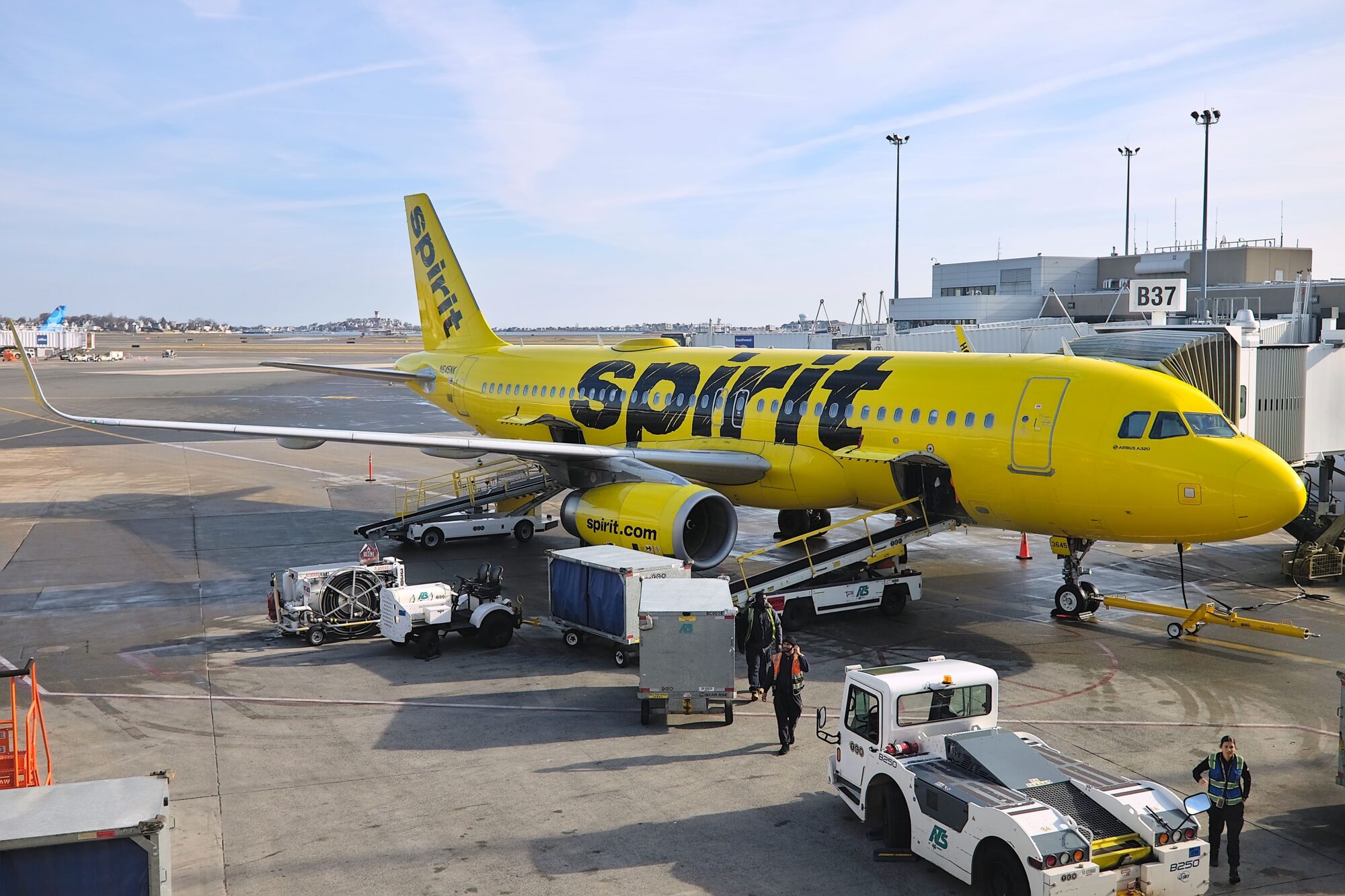
Perhaps the most recognizable aspect of Spirit’s visual brand is its distinctive aircraft livery. The vibrant yellow fuselage, accented with bold purple lettering and tail, is impossible to miss on an airport tarmac. This bright, almost playful color scheme intentionally breaks from the more conservative, often muted palettes of many legacy airlines. The choice of yellow, a color often associated with optimism, energy, and value, combined with the quirky purple, creates a memorable and attention-grabbing presence. This livery is more than just paint; it’s a powerful, non-verbal communication of the Spirit brand: energetic, youthful, and unpretentious. It stands as a visual metaphor for the brand’s willingness to be different and to challenge industry norms, instantly conveying a sense of departure from the traditional.
Brand Messaging: “Less Money, More Go”
Spirit’s official slogan, “Less Money, More Go,” perfectly encapsulates its brand promise and value proposition. This concise, active statement clearly articulates the core benefit of flying Spirit: the ability to travel more frequently or to more destinations because of the money saved on airfare. The simplicity and directness of the slogan resonate with its target audience, immediately conveying the brand’s commitment to affordability and accessibility. It’s a message that avoids jargon and speaks directly to the desires of budget-conscious travelers. This slogan, frequently integrated into all marketing materials, serves as a consistent reminder of what Spirit stands for, reinforcing its brand identity as the enabler of affordable travel.
Digital Presence and Customer Touchpoints
In an increasingly digital world, Spirit Airlines’ online presence is a critical component of its corporate identity. Its website and mobile app are designed for clarity and efficiency, prioritizing the booking process and the clear presentation of its unbundled fare options. While the user interface might be minimalistic, it effectively communicates the costs of various add-ons, reinforcing the “Bare Fare” philosophy. Social media channels are used not only for customer service but also as a platform for its distinctive, often humorous, brand messaging and promotions. Every digital touchpoint, from booking confirmations to email newsletters, maintains the consistent tone and visual identity of the brand, ensuring a cohesive and recognizable experience that reinforces its core value proposition and brand personality.
Navigating Brand Challenges and Evolving Perceptions
Operating a brand built on radical affordability and an unbundled model comes with inherent challenges, particularly in managing customer expectations and public perception. Spirit’s brand strategy involves continuously navigating these complexities.
Balancing Affordability with Service Expectations
One of Spirit’s most significant brand challenges is managing the delicate balance between promising extreme affordability and meeting fundamental customer service expectations. While the brand clearly communicates its “Bare Fare” model, some travelers, particularly first-time flyers or those accustomed to full-service carriers, may still feel surprised or dissatisfied by the additional charges for what they consider standard amenities. This can lead to negative brand sentiment, which then needs to be addressed through a combination of clear pre-purchase communication and efficient, albeit no-frills, in-flight service. Spirit’s brand management actively works to educate the market, aiming to foster a clear understanding of its value proposition to mitigate these expectation gaps. The goal is to ensure customers who choose Spirit do so with full awareness of its unique brand experience.
Public Relations and Crisis Management
Given its disruptive business model and occasionally controversial marketing tactics, Spirit’s public relations team plays a crucial role in shaping and protecting its brand image. Negative press, social media backlash, or operational disruptions (common in the airline industry) can quickly erode brand trust. Spirit’s approach often involves owning its brand identity, unapologetically defending its model, and sometimes engaging with critics directly, often with a touch of its characteristic humor. In crisis situations, the brand focuses on transparency and direct communication, aiming to reassure customers while reiterating its commitment to safe, affordable travel. This proactive and reactive PR strategy is essential for a brand that, by its very nature, invites strong opinions and constant scrutiny.
Adapting to Market Dynamics and Competition
The airline industry is constantly evolving, with new competitors, changing fuel prices, and shifting consumer preferences. Spirit’s brand must demonstrate agility to remain relevant and competitive. This includes adapting its network, exploring new routes that align with its target demographic, and continuously refining its pricing algorithms. The brand also monitors how other airlines, including legacy carriers, begin to adopt elements of the ULCC model (e.g., basic economy fares). Spirit’s challenge is to ensure its brand continues to stand out as the definitive leader in the ultra-low-cost segment, proving its value proposition even as the market shifts around it. This adaptation is not just operational; it’s a continuous reinforcement and refinement of its core brand promise to maintain its unique market position.
The Future of the Spirit Brand
As Spirit Airlines matures and the market for ultra-low-cost travel expands, the brand faces opportunities and challenges in maintaining its distinct identity and growing its customer base.
Strategic Partnerships and Network Expansion
The future of the Spirit brand likely involves strategic partnerships and continued network expansion, all while staying true to its ULCC identity. Expanding its route map to new cities and increasing frequencies on popular routes will allow the brand to reach a broader segment of its target audience. Any partnerships, whether with other airlines for limited connections or with travel agencies, would need to align seamlessly with Spirit’s brand promise of affordability and its unbundled model, avoiding any dilution of its core identity. These growth strategies are about scaling the “Less Money, More Go” promise, making affordable travel accessible to even more people without compromising the brand’s fundamental tenets.
Enhancing Customer Loyalty within the ULCC Framework
For an ultra-low-cost carrier, building customer loyalty can be particularly challenging, as the primary driver for many customers is price rather than brand affinity. However, Spirit has begun to cultivate loyalty through its “Free Spirit” loyalty program, which focuses on earning points that can be redeemed for future travel, still within the brand’s unbundled framework. The future will see Spirit further refine this program and explore other ways to incentivize repeat business, perhaps through exclusive deals for loyal members or personalized offers. The goal is to move beyond purely transactional relationships to foster a sense of community among its frequent flyers, demonstrating that while the fare is bare, the rewards for loyalty can be substantial within its niche. This careful cultivation of loyalty, while adhering to its brand identity, will be key to long-term success.
aViewFromTheCave is a participant in the Amazon Services LLC Associates Program, an affiliate advertising program designed to provide a means for sites to earn advertising fees by advertising and linking to Amazon.com. Amazon, the Amazon logo, AmazonSupply, and the AmazonSupply logo are trademarks of Amazon.com, Inc. or its affiliates. As an Amazon Associate we earn affiliate commissions from qualifying purchases.