
In the world of personal finance and wealth management, few acronyms carry as much weight as “VOO.” For the novice investor, the landscape of the stock market can appear as a chaotic sea of fluctuating numbers and complex jargon. However, the Vanguard S&P 500 ETF (ticker symbol: VOO) has emerged as one of the most significant tools for long-term wealth creation. It represents a cornerstone of modern indexing, a philosophy pioneered by John Bogle that prioritizes low costs and broad market exposure over the risky pursuit of “beating the market.” To understand VOO is to understand the engine of the American economy and how individual investors can harness its power for their own financial independence.

Understanding the Fundamentals of VOO
At its core, VOO is an Exchange-Traded Fund (ETF) managed by Vanguard, one of the world’s largest and most respected investment management companies. Unlike a traditional stock, which represents ownership in a single company, an ETF is a basket of securities. When you buy a share of VOO, you are essentially buying a small piece of 500 of the largest publicly traded companies in the United States.
What Does the Ticker VOO Represent?
The ticker VOO specifically tracks the S&P 500 Index. This index is widely regarded as the best single gauge of large-cap U.S. equities. It includes 500 leading companies and covers approximately 80% of available market capitalization. Because VOO is an ETF, it trades on an exchange just like an individual stock, meaning its price fluctuates throughout the trading day, and it can be bought or sold at any time during market hours. This provides a level of liquidity and flexibility that traditional mutual funds—which only price at the end of the day—cannot match.
The Passive Management Strategy
VOO operates under a “passive” management strategy. In active management, a fund manager tries to pick specific stocks that they believe will outperform the market. This often leads to higher fees and, statistically, lower returns over the long term. Passive management, on the other hand, seeks only to replicate the performance of a specific index. VOO does not try to guess which company will be the next big winner; it simply holds the companies that the S&P 500 dictates. By eliminating the need for expensive research teams and frequent trading, VOO can pass those savings on to the investor.
Vanguard’s Unique Corporate Structure
One cannot discuss VOO without mentioning Vanguard’s unique structure. Unlike other investment firms that are owned by outside shareholders or are publicly traded, Vanguard is owned by its member funds, which are in turn owned by the investors. This “client-owned” structure means the company’s interests are inherently aligned with those of its investors. This is the primary reason why Vanguard has been a leader in driving down the cost of investing, a factor that has a massive impact on an individual’s total returns over decades.
Key Features and Benefits for Investors
For the average person looking to build a “Money” niche portfolio, VOO is often the first recommendation from financial advisors. Its popularity is not due to marketing hype, but rather to its structural advantages that make it an incredibly efficient vehicle for capital appreciation.
Low Expense Ratios and Cost Efficiency
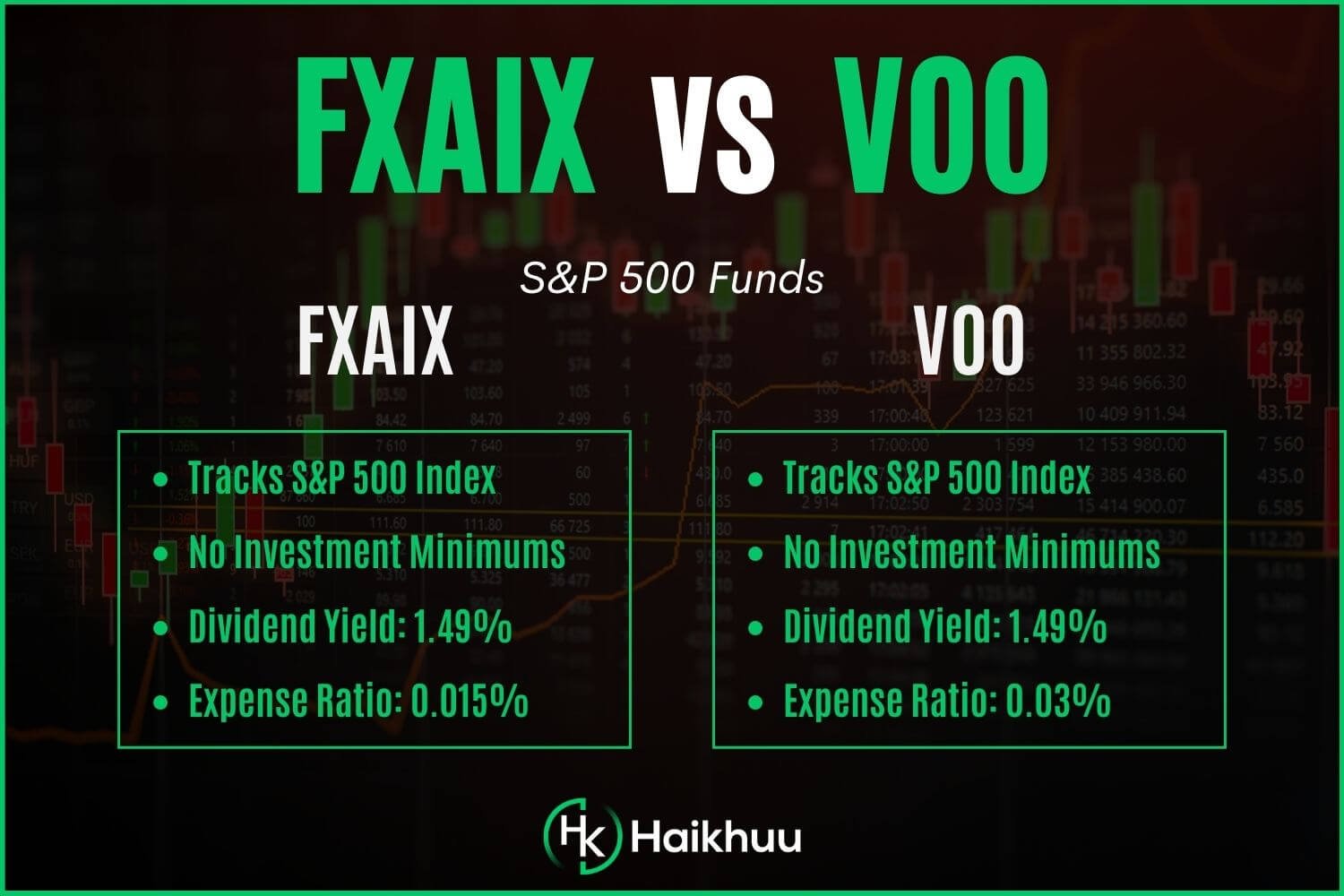
The most compelling argument for VOO is its expense ratio. As of recent filings, VOO boasts an expense ratio of just 0.03%. To put that into perspective, for every $10,000 you invest, you pay only $3 per year in management fees. In contrast, many actively managed funds charge 1.00% or more, which would cost you $100 per year for that same $10,000 investment. Over a 30-year horizon, that 0.97% difference can result in hundreds of thousands of dollars in lost gains due to the erosion of compound interest. By keeping costs at a absolute minimum, VOO ensures that more of the market’s return stays in your pocket.
Diversification Across the U.S. Economy
While VOO only invests in 500 companies, those companies span every major sector of the economy—from Information Technology and Healthcare to Consumer Discretionary and Financials. When you own VOO, you own a piece of Apple, Microsoft, Amazon, Berkshire Hathaway, and UnitedHealth Group. This broad diversification protects you from the “idiosyncratic risk” of a single company failing. If one company in the S&P 500 goes bankrupt, it represents only a tiny fraction of your total portfolio, likely offset by the growth of others within the index.
Dividend Yield and Reinvestment Potential
In addition to capital appreciation (the increase in the share price), VOO also pays out dividends. The companies within the S&P 500 often distribute a portion of their profits to shareholders. As an owner of VOO, you receive these dividends quarterly. For investors focused on long-term growth, “DRIP” (Dividend Reinvestment Programs) allow these payouts to be automatically used to purchase more shares of VOO. This creates a powerful feedback loop where you own more shares, which pay more dividends, which buy even more shares, accelerating the growth of your wealth.
Risks and Considerations for Your Portfolio
Despite its many advantages, VOO is not a “risk-free” investment. In the realm of finance, higher potential returns are always accompanied by some level of risk. Understanding these risks is crucial for maintaining the emotional discipline required to stay invested during market downturns.
Market Volatility and Systematic Risk
VOO is subject to “systematic risk,” also known as market risk. This is the risk inherent to the entire market or market segment. If the U.S. economy enters a recession or a global event triggers a sell-off, VOO will go down in value. During the 2008 financial crisis or the 2020 COVID-19 crash, the S&P 500 saw significant drawdowns. Investors must be prepared for the reality that their portfolio value will fluctuate, sometimes violently, in the short term. VOO is best suited for those with a time horizon of five years or longer.
Concentration in Large-Cap Equities
Because the S&P 500 is a market-capitalization-weighted index, the largest companies have the biggest impact on the fund’s performance. In recent years, the index has become increasingly “top-heavy,” with a handful of massive technology companies making up a significant percentage of the total fund. If the tech sector experiences a specific downturn, VOO will be more affected than a more equally weighted index. Furthermore, VOO focuses exclusively on large-cap U.S. companies, meaning it provides no exposure to small-cap companies or international markets, which are also vital components of a fully diversified portfolio.
Comparing VOO to Other S&P 500 Funds (SPY, IVV)
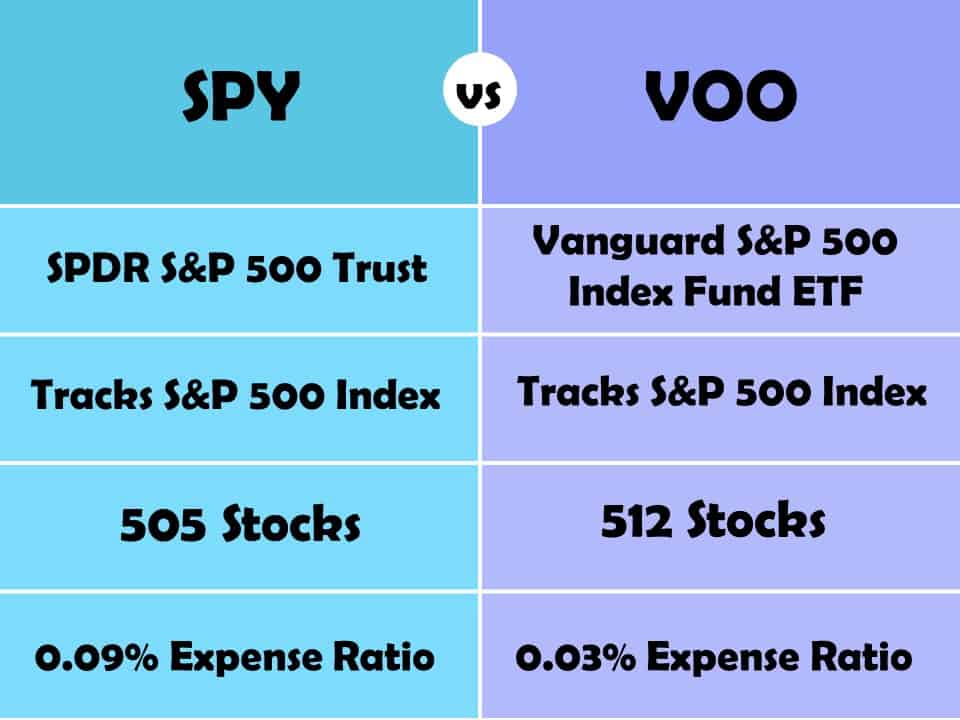
Investors often ask how VOO differs from other S&P 500 ETFs like State Street’s SPY or BlackRock’s IVV. While all three track the same index and have nearly identical performance, there are subtle differences. SPY is the oldest and most liquid, making it the preferred choice for day traders and institutional investors who need to move millions of dollars instantly. However, SPY has a slightly higher expense ratio (0.09%). IVV and VOO are more similar, both offering the ultra-low 0.03% expense ratio. For the long-term “buy and hold” investor, VOO is often favored due to Vanguard’s unique corporate structure and commitment to low-cost indexing.
How to Incorporate VOO into a Long-Term Financial Strategy
Wealth is rarely built through a single “lucky” trade. Instead, it is the result of a consistent, disciplined strategy applied over many years. VOO is perhaps the most effective “building block” for such a strategy.
Dollar-Cost Averaging into an Index Fund
One of the most effective ways to invest in VOO is through Dollar-Cost Averaging (DCA). Instead of trying to “time the market” and waiting for a dip that may never come, DCA involves investing a fixed amount of money at regular intervals (e.g., $500 every month). When the price of VOO is high, your $500 buys fewer shares; when the price is low, your $500 buys more shares. Over time, this lowers your average cost per share and removes the emotional stress of worrying about whether “now” is the right time to buy.
Tax-Efficiency of ETFs vs. Mutual Funds
From a financial management perspective, VOO is highly tax-efficient. Due to the way ETFs are structured, they trigger fewer capital gains distributions than traditional mutual funds. In a mutual fund, when other investors sell their shares, the manager may have to sell underlying stocks to provide cash, which can trigger taxes for everyone in the fund. ETFs like VOO use an “in-kind” creation and redemption process that avoids many of these taxable events. This makes VOO an excellent choice for taxable brokerage accounts, not just tax-advantaged accounts like IRAs or 401(k)s.
The “Set It and Forget It” Philosophy
The ultimate strength of VOO lies in its simplicity. It allows an individual to capture the growth of the American economy without needing to read balance sheets, follow earnings calls, or monitor stock charts. For the person who wants to focus on their career, their family, or their hobbies while still building a multi-million dollar nest egg, VOO offers a “set it and forget it” solution. History has shown that the S&P 500 has returned an average of roughly 10% annually over long periods. While past performance is no guarantee of future results, the compounding of those returns, combined with VOO’s ultra-low fees, remains one of the most reliable paths to financial freedom in the history of capitalism.
aViewFromTheCave is a participant in the Amazon Services LLC Associates Program, an affiliate advertising program designed to provide a means for sites to earn advertising fees by advertising and linking to Amazon.com. Amazon, the Amazon logo, AmazonSupply, and the AmazonSupply logo are trademarks of Amazon.com, Inc. or its affiliates. As an Amazon Associate we earn affiliate commissions from qualifying purchases.