
In an increasingly complex financial landscape, mastering the art of budgeting is no longer just a recommendation – it’s an essential skill for anyone aspiring to financial stability, freedom, and growth. Budgeting is often misconstrued as a restrictive practice, a dreary exercise in deprivation. In reality, it is the most empowering financial tool at your disposal, a meticulously crafted roadmap that guides your money, rather than letting your money guide you. It provides clarity, control, and confidence, transforming abstract financial aspirations into tangible, achievable goals.
This comprehensive guide will demystify the budgeting process, offering practical strategies, insightful perspectives, and actionable steps to help you not only create a budget but sustain it, making it a cornerstone of your ongoing financial success. Whether you’re grappling with debt, saving for a down payment, planning for retirement, or simply seeking to understand where your money goes each month, a well-structured budget is the compass that will point you in the right direction. It’s about making conscious choices today that lead to a more secure and prosperous tomorrow, enabling you to build a resilient financial future that can withstand life’s inevitable challenges and seize its abundant opportunities.
The Imperative of Budgeting: Why It Matters More Than You Think
Budgeting, at its core, is the process of creating a plan for your money, outlining how you will spend, save, and invest it. Far from being a punitive measure, it is a strategic exercise that offers profound benefits, shaping not just your financial trajectory but your overall well-being. Understanding these foundational advantages is the first step towards embracing budgeting as an indispensable financial habit.
Gaining Control Over Your Financial Destiny
Without a budget, your money often dictates your actions, leaving you feeling reactive and overwhelmed. Expenses accumulate, bills arrive, and sudden purchases deplete your accounts, often leaving you wondering where it all went. A budget flips this dynamic, putting you firmly in the driver’s seat. It provides a crystal-clear picture of your income and outflow, revealing patterns and illuminating areas where your money might be leaking away unknowingly. This awareness is the bedrock of financial control, empowering you to make deliberate decisions about how every dollar is allocated, ensuring it serves your priorities and goals. This newfound control translates into confidence, replacing anxiety with a sense of mastery over your economic life.
Achieving Short-Term and Long-Term Financial Goals
Every significant financial milestone, from saving for a new gadget to buying a home or funding retirement, begins with a budget. A budget transforms vague desires into concrete objectives by allocating specific funds towards them. If you want to save for a vacation, your budget will show you exactly how much you need to set aside each month and where that money will come from. For long-term goals like retirement or a child’s education, budgeting helps you establish a consistent savings rate and identify opportunities to accelerate your progress. By integrating these goals directly into your monthly spending plan, you move from aspiration to execution, making steady, measurable progress that keeps you motivated and on track. It acts as a continuous feedback loop, demonstrating the tangible results of your financial discipline.
Reducing Financial Stress and Enhancing Peace of Mind
Financial worries are a leading cause of stress and anxiety for many individuals and families. The uncertainty of not knowing if you have enough money to cover unexpected expenses, or simply feeling perpetually behind, can be mentally exhausting. A robust budget alleviates much of this stress by replacing uncertainty with clarity. When you know precisely how much you earn, how much you spend, and how much you’re saving, you gain a sense of security. You can anticipate upcoming bills, plan for irregular expenses, and build an emergency fund that acts as a financial safety net. This proactive approach means fewer unwelcome surprises and a significant reduction in the gnawing worry associated with money, fostering a greater sense of peace and stability in your daily life.
Identifying and Eliminating Wasteful Spending
One of the most immediate and impactful benefits of budgeting is its ability to highlight areas of unnecessary expenditure. Often, we are unaware of small, recurring costs that, over time, add up to substantial amounts. Subscription services we no longer use, daily coffees, impulse buys, or inefficient utility usage – a budget brings these hidden costs to light. Once identified, you can consciously decide whether these expenses align with your values and priorities. This isn’t about cutting out all enjoyment, but rather making intentional choices. By redirecting funds from wasteful spending to more meaningful goals, you maximize the impact of every dollar, ensuring your money works harder for you instead of slipping through the cracks. It’s a journey of self-discovery about your spending habits and how they can be optimized.
Laying the Foundation: Essential Steps to Create Your Budget
Building an effective budget doesn’t require complex financial wizardry; it requires discipline, honesty, and a clear understanding of your financial inflows and outflows. The initial setup is the most crucial phase, as it establishes the framework upon which your financial plan will operate.
Understanding Your Income: The Starting Point
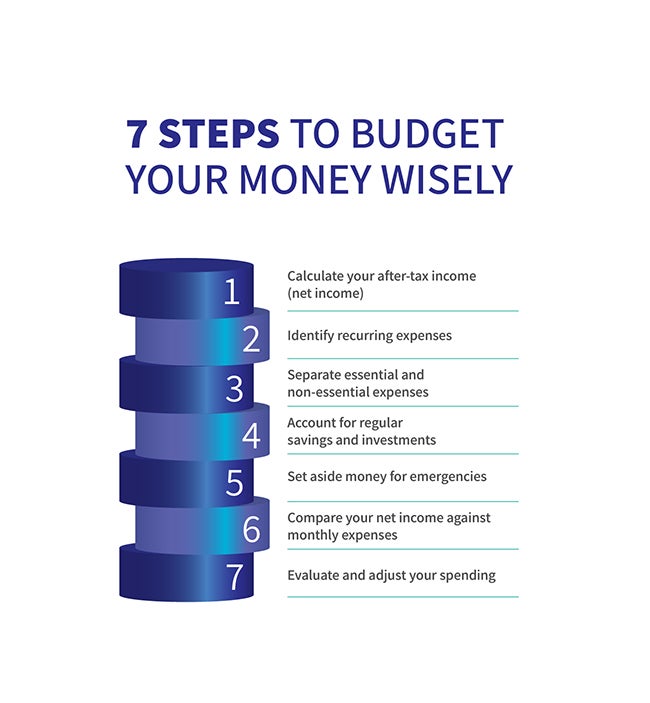
The first, and perhaps most straightforward, step in budgeting is to get a precise handle on your total income. This means calculating all money that regularly comes into your household. For most people, this is their take-home pay (after taxes, insurance, and retirement contributions). If you have multiple income streams – a side hustle, freelance work, rental income, or benefits – ensure you account for all of them. It’s generally best to budget based on your net income (what actually hits your bank account) rather than your gross income, as this reflects the real money you have available to spend and save. Be conservative in your estimates if your income fluctuates, budgeting based on your lowest expected monthly income to avoid shortfalls.
Categorizing Your Expenses: Fixed vs. Variable
Once you know your income, the next critical step is to identify and categorize every single expense. This requires a thorough review of your bank statements, credit card statements, and receipts from the past one to three months. Expenses generally fall into two broad categories:
- Fixed Expenses: These are costs that remain relatively constant each month and are typically non-negotiable. Examples include rent/mortgage, loan payments (car, student), insurance premiums, and subscription services.
- Variable Expenses: These costs fluctuate month-to-month and offer more flexibility for adjustment. Examples include groceries, utilities (which can vary), entertainment, dining out, clothing, and transportation (fuel, public transport).
Breaking down expenses this way allows you to see where your money is committed and where you have room to make changes. Don’t forget irregular expenses like annual memberships, car maintenance, or holiday gifts; it’s wise to set aside a small amount each month for these.
Choosing a Budgeting Method: From Pen & Paper to Digital Tools
There isn’t a one-size-fits-all budgeting method. The best approach is one you can stick with consistently. Modern financial tools and traditional methods offer diverse options:
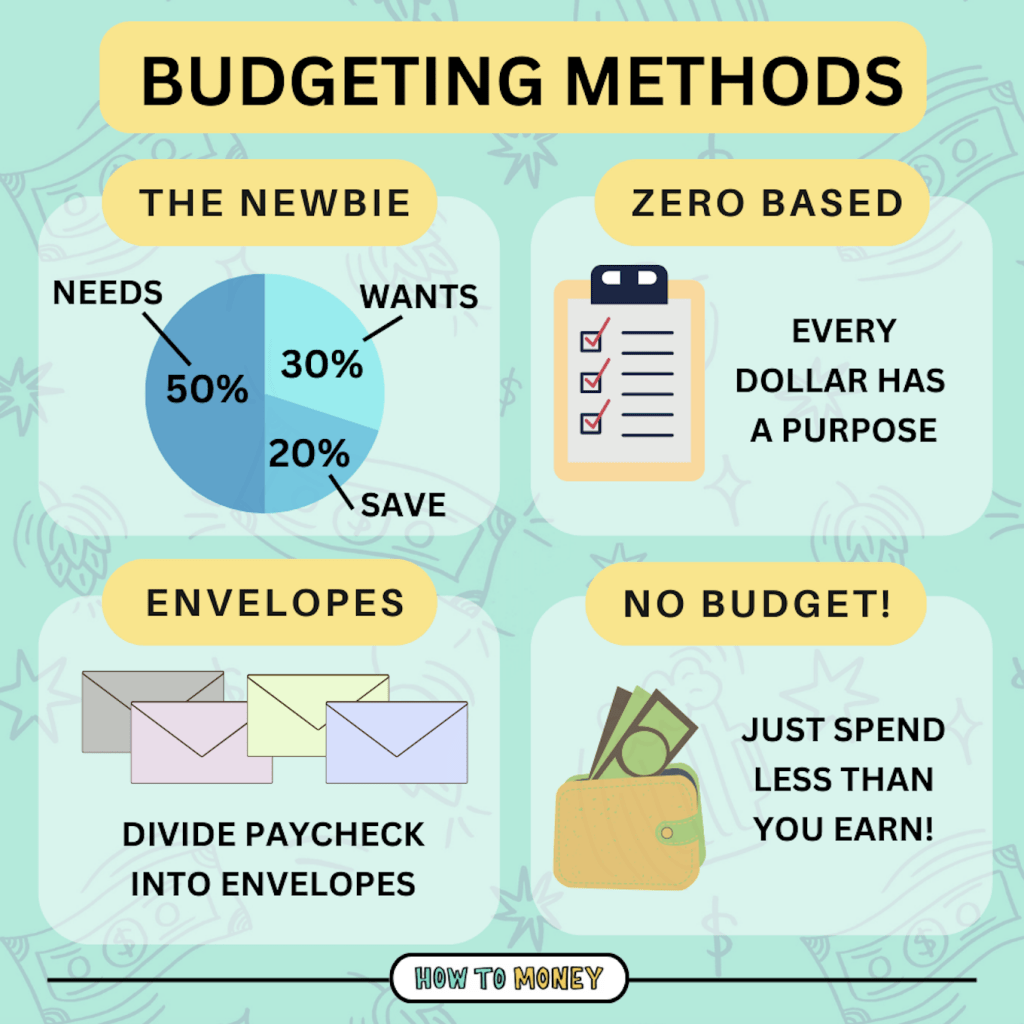
- The 50/30/20 Rule: This popular and straightforward method suggests allocating 50% of your after-tax income to Needs (housing, utilities, groceries, transportation), 30% to Wants (dining out, entertainment, hobbies, travel), and 20% to Savings and Debt Repayment (emergency fund, retirement, extra debt payments). It offers a flexible framework that’s easy to implement and monitor.
- Zero-Based Budgeting: With this method, you assign every dollar of your income a specific job (spending, saving, investing) until your income minus your expenses equals zero. This ensures that no money is unaccounted for, providing maximum control. It requires more meticulous tracking but can be incredibly effective for those who want absolute clarity on their money’s destination.
- Envelope System: A classic method, particularly effective for variable expenses. You allocate a set amount of cash for specific categories (e.g., groceries, entertainment) into separate physical envelopes. Once the cash in an envelope is gone, you stop spending in that category until the next budgeting cycle. This tangibly limits spending and prevents overspending in discretionary areas.
- Digital Tools and Apps: For tech-savvy individuals, numerous financial tools and apps like Mint, YNAB (You Need A Budget), Personal Capital, or even simple spreadsheets (Excel, Google Sheets) can automate tracking, categorize transactions, and provide visual insights into your spending. These tools often link directly to your bank accounts, offering real-time updates and powerful analytical capabilities, significantly simplifying the process of monitoring and adjusting your budget.
Setting Realistic Financial Goals
A budget without goals is like a ship without a destination. Before finalizing your budget, define what you want your money to achieve. These goals should be SMART: Specific, Measurable, Achievable, Relevant, and Time-bound. Examples include: building an emergency fund of three months’ living expenses within a year, paying off a specific credit card debt in six months, or saving X amount for a down payment in two years. Integrating these goals directly into your budget by allocating specific amounts to them ensures that your financial plan is always aligned with your broader aspirations.
Implementing and Maintaining Your Budget: Strategies for Success
Creating a budget is merely the first step; the real challenge and reward lie in its consistent implementation and diligent maintenance. A budget is a living document, requiring regular attention and adaptation to remain effective.
Regular Monitoring and Tracking

The most critical aspect of maintaining a budget is consistently monitoring your spending. This means regularly checking your bank accounts, credit card statements, and reviewing your budget categories. Whether you use a spreadsheet, a budgeting app, or a notebook, dedicate specific time each week or month to compare your actual spending against your budgeted amounts. This practice allows you to identify discrepancies early, understand where you might be overspending, and make timely adjustments before small issues escalate into larger problems. Consistent tracking transforms budgeting from a static plan into an active, dynamic process. Many financial tools offer automated tracking by linking to your bank accounts, greatly simplifying this process and providing real-time insights, often with alerts for unusual spending or when nearing budget limits.
Adjusting and Adapting Your Budget Over Time
Life is rarely static, and neither should your budget be. Income changes, unexpected expenses arise, and your financial goals evolve. A rigid budget that doesn’t adapt is destined to fail. Review your budget periodically – monthly, quarterly, or annually – to ensure it still aligns with your current financial situation and objectives. Did you get a raise? Did a major expense disappear (e.g., a car loan paid off)? Have your priorities shifted? These are all opportunities to reallocate funds, increase savings, or adjust spending limits. Be flexible and willing to iterate. The goal isn’t perfection, but continuous improvement and relevance. This adaptability is key to a sustainable financial plan.
Automating Savings and Bill Payments
One of the most powerful strategies for budgeting success is automation. Set up automatic transfers from your checking account to your savings and investment accounts on payday. Even small, consistent transfers add up significantly over time and ensure you “pay yourself first.” Similarly, automate bill payments for fixed expenses like rent/mortgage, utilities, and loan payments. This prevents missed payments, avoids late fees, and frees up mental energy, ensuring your financial obligations are met without constant manual intervention. Most banks and financial institutions offer robust online banking platforms that facilitate these automated processes, making financial discipline effortless.
Handling Unexpected Expenses: The Emergency Fund
No matter how carefully you budget, life will inevitably throw curveballs: a car repair, a medical emergency, or a sudden job loss. An emergency fund is your critical defense against these unforeseen events, preventing them from derailing your budget and plunging you into debt. Aim to save at least three to six months’ worth of essential living expenses in an easily accessible, high-yield savings account. Treat your emergency fund like a non-negotiable expense in your budget, contributing to it regularly until it reaches your target. This dedicated fund provides a vital buffer, allowing you to weather financial storms without having to raid your long-term savings or accrue high-interest debt.
Beyond the Basics: Advanced Budgeting for Financial Growth
Once you’ve mastered the fundamentals of creating and maintaining a budget, you can begin to leverage it as a strategic tool for accelerated financial growth and long-term wealth building. Advanced budgeting integrates more sophisticated financial planning elements, transforming your budget from a mere spending tracker into a dynamic financial optimizer.
Integrating Debt Repayment Strategies
For many, managing debt is a significant financial burden. A well-constructed budget is instrumental in accelerating debt repayment. By clearly identifying your disposable income, you can strategically allocate extra funds towards high-interest debts. Popular methods like the “debt snowball” (paying off the smallest debt first for psychological wins) or the “debt avalanche” (paying off the highest-interest debt first to save money) can be integrated into your budget. Your budget shows you exactly how much extra you can afford to put towards debt each month, turning a slow trickle into a powerful current that rapidly reduces your obligations and frees up more money for future investments. Many financial tools also offer debt payoff calculators and trackers to visualize progress and maintain motivation.
Budgeting for Investments and Wealth Building
Beyond saving for an emergency, a mature budget explicitly includes allocations for investments. This means setting aside funds regularly for retirement accounts (401k, IRA), brokerage accounts, or other wealth-building vehicles. Budgeting for investments ensures that you’re consistently contributing to your long-term financial independence, taking advantage of compound interest over time. Treat your investment contributions as a non-negotiable “expense” in your budget, prioritizing them alongside your essential needs. This systematic approach ensures that wealth building becomes an automatic and integral part of your financial life, rather than an afterthought.
The Role of Financial Planning in Budgeting
Budgeting is a tactical tool, but it fits into a larger strategic framework of financial planning. Financial planning considers your entire financial life: your goals, risk tolerance, estate planning, insurance needs, and tax strategies. Your budget provides the granular data for this broader plan. For instance, if your financial plan is to retire early, your budget shows how much you need to save and invest each month to achieve that. Engaging with a certified financial planner can help you align your budget with comprehensive long-term goals, offering expert guidance on optimizing cash flow, managing taxes, and making smart investment decisions that complement your monthly spending plan. Financial tools like Personal Capital can also offer a holistic view of your net worth, investments, and cash flow, bridging the gap between daily budgeting and long-term financial planning.
Utilizing Technology: Apps and Software for Smarter Budgeting
The digital age has revolutionized budgeting, making it more accessible and efficient than ever before. Modern financial tools and software can significantly enhance your budgeting efforts.
- Mint: A popular free app that connects to your bank accounts and credit cards, automatically categorizing transactions and providing an overview of your spending, budget alerts, and bill reminders.
- You Need A Budget (YNAB): This paid software emphasizes a “zero-based budgeting” philosophy, helping users give every dollar a job. It’s known for its robust features, active community, and powerful educational resources aimed at changing users’ relationship with money.
- Personal Capital: While more focused on investment tracking and net worth analysis, Personal Capital also offers excellent cash flow tracking and budgeting tools, providing a holistic view of your finances.
- PocketGuard: Designed to simplify budgeting, it tracks income, bills, and subscriptions, showing you how much is “safe to spend” at any given moment.
- Custom Spreadsheets: For those who prefer a more hands-on approach, Excel or Google Sheets templates offer complete customization. You can design your budget exactly how you want it, integrating complex calculations or specific tracking metrics that commercial apps might not offer.
These financial tools automate tedious tasks, provide insightful analytics, and make it easier to stick to your plan, transforming budgeting from a chore into an empowering financial habit. They often include features for goal tracking, net worth calculation, and even investment monitoring, offering a comprehensive suite for managing your money.
Overcoming Obstacles: Common Budgeting Challenges and Solutions
Even with the best intentions, budgeting can present its fair share of challenges. Recognizing these common pitfalls and equipping yourself with strategies to overcome them is crucial for long-term success.
The Pitfall of Inconsistency
One of the most common reasons budgets fail is a lack of consistency. After an initial burst of enthusiasm, the daily or weekly tracking can feel tedious, leading to sporadic updates and eventual abandonment.
Solution: Make budgeting a regular habit. Schedule dedicated time each week (e.g., 15-30 minutes every Sunday) to review your spending and adjust your categories. Automate as much as possible, from savings transfers to bill payments. Use budgeting apps that automatically categorize transactions, reducing the manual effort. Start small and don’t aim for perfection immediately; consistency trumps intensity.
Dealing with Budget Burnout
Strict, overly restrictive budgets can lead to “budget burnout,” where the feeling of deprivation becomes overwhelming, causing you to abandon your plan entirely.
Solution: Build flexibility and “fun money” into your budget. Ensure your budget allows for occasional treats, hobbies, and entertainment. The goal isn’t to eliminate all discretionary spending, but to make conscious choices about it. If you’re consistently feeling deprived in a certain category, reassess if your allocated amount is realistic or if you need to find more cost-effective alternatives. Remember, a sustainable budget is one you can live with comfortably.
Avoiding Unrealistic Expectations
Setting a budget based on ideal scenarios rather than actual habits can lead to frustration. If you budget $50 for groceries when you consistently spend $100, you’ll constantly exceed your limit and feel like a failure.
Solution: Base your initial budget on your actual past spending for a few months before making drastic cuts. Be honest with yourself about your habits. Once you have a realistic baseline, then look for small, sustainable areas to reduce spending. Start with incremental changes rather than an immediate overhaul. Your budget should be a reflection of reality, with aspirational adjustments woven in gradually.
Seeking Professional Guidance When Needed
Sometimes, despite your best efforts, your financial situation might be too complex, or you might be facing significant challenges that feel insurmountable alone. This could include substantial debt, major life transitions, or complex investment decisions.
Solution: Don’t hesitate to seek help from a qualified financial professional. A financial advisor, credit counselor, or financial coach can provide personalized advice, help you create a realistic plan, and offer strategies tailored to your unique circumstances. While there may be a cost involved, the long-term benefits of professional guidance can far outweigh the initial investment, providing clarity and accelerating your path to financial well-being.
Budgeting is a journey, not a destination. It’s a skill that improves with practice, patience, and persistence. By embracing the principles outlined in this guide and adapting them to your personal financial landscape, you will not only gain control over your money but unlock a future of greater financial freedom, reduced stress, and the confidence to achieve your most ambitious financial dreams. Start today, and watch your financial destiny transform.
aViewFromTheCave is a participant in the Amazon Services LLC Associates Program, an affiliate advertising program designed to provide a means for sites to earn advertising fees by advertising and linking to Amazon.com. Amazon, the Amazon logo, AmazonSupply, and the AmazonSupply logo are trademarks of Amazon.com, Inc. or its affiliates. As an Amazon Associate we earn affiliate commissions from qualifying purchases.