
The sight of red across your investment portfolio or in financial news headlines can be unsettling, sparking immediate questions and often, a sense of panic. When it seems like “all stocks are down today,” it’s natural to seek answers for this widespread market correction. While the immediate instinct might be to pinpoint a single culprit, the reality is that broad market downturns are complex phenomena, typically driven by a confluence of interconnected economic, geopolitical, psychological, and corporate factors. Understanding these underlying dynamics is crucial for investors seeking to navigate volatility with a clear head and a long-term perspective.
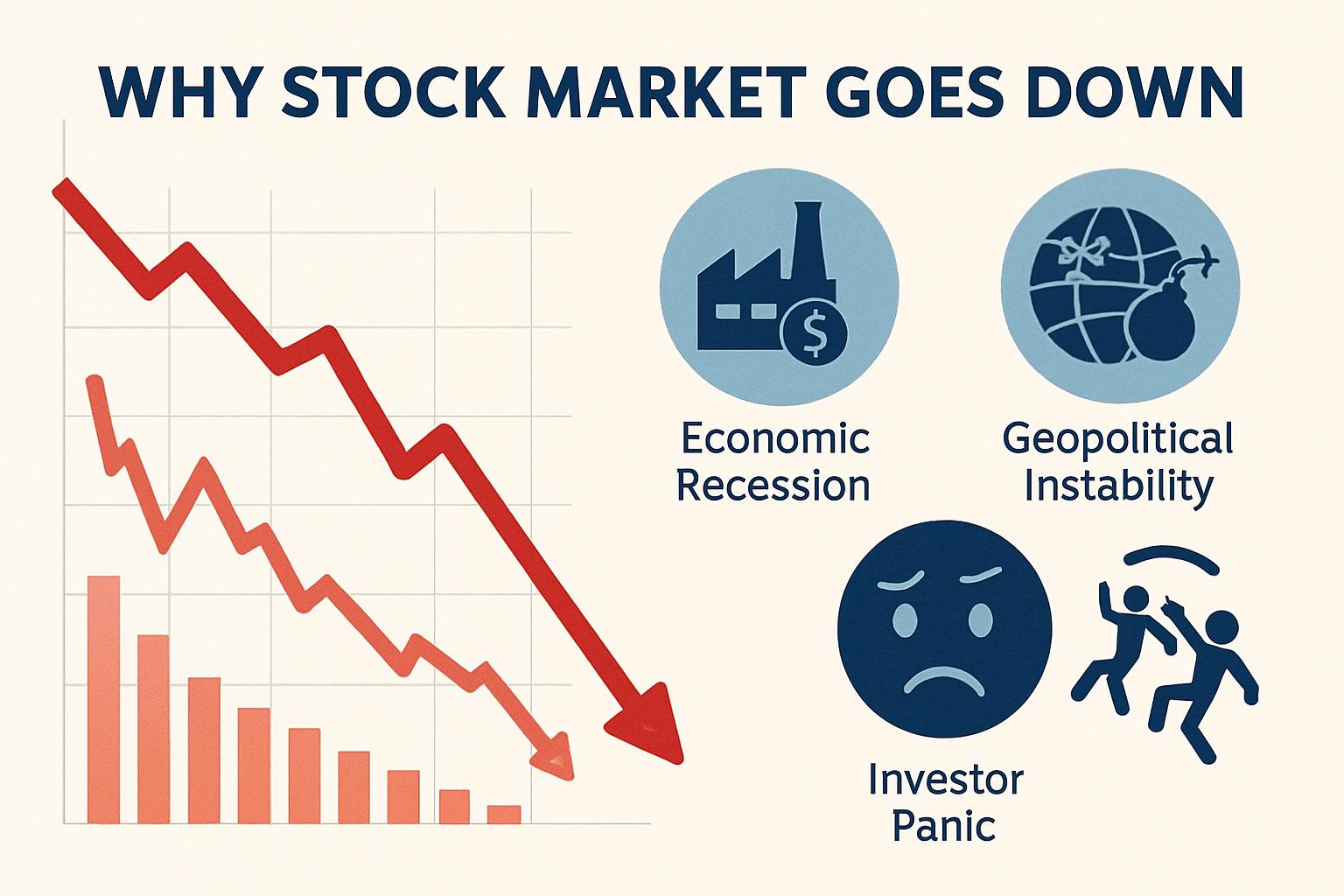
Today’s widespread market decline is rarely an isolated incident, but rather a symptom of deeper currents in the global financial landscape. From the boardroom decisions of central banks to the geopolitical chessboard and the collective sentiment of millions of investors, numerous forces exert pressure on asset prices. This article will delve into the primary drivers behind such market movements, offering an insightful look into the intricate web of cause and effect that can lead to a universal dip in stock valuations.
Unpacking the Macroeconomic Headwinds
One of the most significant forces driving broad market movements is the overarching macroeconomic environment. When the fundamental conditions of the global economy face challenges, the reverberations are felt across virtually all sectors and asset classes.
Inflationary Pressures and Interest Rate Hikes
Perhaps the most potent macroeconomic factor impacting markets recently has been persistent inflation. When the cost of goods and services rises steadily, it erodes the purchasing power of consumers and increases operational costs for businesses, ultimately squeezing profit margins. To combat soaring inflation, central banks around the world, such as the U.S. Federal Reserve, typically resort to tightening monetary policy, primarily through raising interest rates.
Higher interest rates make borrowing more expensive for businesses looking to expand and for consumers financing purchases like homes and cars. This increased cost of capital can dampen economic activity, slow growth, and make future corporate earnings look less attractive to investors, especially for companies reliant on debt or those whose valuations are predicated on future growth. Consequently, the prospect of prolonged high-interest rates often leads to a broad re-evaluation of stock values, driving them downwards. Growth stocks, which rely heavily on future earnings potential, are particularly vulnerable in such an environment, as higher discount rates diminish the present value of those anticipated profits.
Geopolitical Tensions and Supply Chain Disruptions
The interconnected nature of the global economy means that geopolitical events, even those seemingly distant, can have immediate and profound impacts on financial markets. Conflicts, trade wars, sanctions, or significant political instability in key regions can introduce immense uncertainty and disrupt the delicate balance of international commerce.
These tensions frequently manifest as supply chain disruptions. For example, a conflict affecting major oil-producing regions can send energy prices skyrocketing, increasing costs for nearly every industry, from transportation to manufacturing. Similarly, restrictions on trade or blockades can limit the availability of critical components, raw materials, or finished goods, leading to production bottlenecks and higher consumer prices. The unpredictability inherent in geopolitical instability makes companies less confident in their future outlook, deters investment, and prompts investors to shift towards safer assets, leading to a sell-off in riskier equities. The resulting uncertainty premium often weighs heavily on overall market sentiment.
Economic Slowdown Concerns and Recession Fears
The natural consequence of persistent inflation, rising interest rates, and geopolitical turmoil is a growing concern about an economic slowdown, or even an outright recession. A recession is characterized by a significant decline in economic activity spread across the economy, lasting more than a few months, normally visible in real GDP, real income, employment, industrial production, and wholesale-retail sales.
When economists and financial analysts project a deceleration in economic growth, it directly translates into weaker earnings expectations for corporations. Lower consumer spending, reduced business investment, and decreased exports all contribute to a less favorable operating environment for companies. Investors, anticipating these challenges, often begin to sell stocks in preparation for a downturn, fearing that corporate profits will shrink and dividends may be cut. Indicators such as an inverted yield curve (where short-term bond yields are higher than long-term yields), declining consumer confidence, and a contraction in manufacturing indices often serve as early warning signs, fueling recession fears and triggering broad market declines.
Market Psychology and Investor Behavior
While macroeconomic factors provide the fundamental backdrop, the day-to-day fluctuations and the speed of market downturns are often amplified by the collective psychology and behavioral patterns of investors.
The Contagion Effect and Herd Mentality
Financial markets are not purely rational mechanisms; human emotions play a critical role, especially during periods of stress. The “contagion effect” describes how a localized problem or negative sentiment can spread rapidly throughout the market, pulling down unrelated assets or sectors. This is often exacerbated by “herd mentality,” where investors, seeing others sell, feel compelled to follow suit, even if their fundamental analysis hasn’t changed.
Fear and panic are powerful motivators. When fear grips the market, investors become risk-averse, prioritizing the preservation of capital over potential gains. This can lead to indiscriminate selling, where even fundamentally sound companies are dumped alongside weaker ones. Media headlines, social media trends, and financial punditry can further amplify these sentiments, creating a self-fulfilling prophecy where widespread selling drives prices down, validating initial fears and prompting further selling. This emotional feedback loop can turn a moderate dip into a significant market correction or even a crash.
Algorithmic Trading and Market Volatility
In today’s high-tech financial markets, human decision-making is increasingly intertwined with advanced computational power. Algorithmic trading, where computer programs execute trades based on pre-programmed criteria and market signals, accounts for a substantial portion of daily trading volume. While these algorithms can enhance market efficiency, they can also contribute to heightened volatility during downturns.
When certain negative triggers are met – perhaps a specific percentage drop in an index, a surge in selling volume, or unfavorable economic data – these algorithms can simultaneously execute massive sell orders across various assets. This rapid, automated selling can accelerate market declines much faster than human-driven trading, making downturns appear more severe and less predictable. The speed and scale of algorithmic trading mean that small negative shifts can quickly cascade into significant market movements, contributing to the perception that “all stocks are down” simultaneously.
Profit-Taking and Rebalancing
Another, often less emotionally charged, reason for widespread selling is systematic profit-taking and portfolio rebalancing. After a period of sustained market gains, some investors, particularly institutional ones like pension funds and hedge funds, may decide to lock in profits. This involves selling off assets that have performed well to realize gains and reduce overall portfolio risk.
Similarly, many large investors follow pre-defined asset allocation strategies. If, for example, equities have performed exceptionally well and now represent a larger percentage of their portfolio than initially planned, they might sell off some stocks to bring their allocation back in line with their target percentages (e.g., 60% stocks, 40% bonds). This rebalancing act, especially when undertaken by numerous large funds simultaneously, can contribute significantly to selling pressure across the market. While not driven by panic, these strategic moves can still manifest as a broad downturn, especially if they coincide with negative macroeconomic news or investor sentiment.
Corporate Performance and Earnings Outlook
Ultimately, the value of a stock is tied to the performance and future prospects of the underlying company. When the collective outlook for corporate earnings darkens, it inevitably pulls down market valuations.
Weaker Earnings Reports and Guidance
A primary catalyst for stock market movements is corporate earnings. Each quarter, publicly traded companies report their financial results, including revenues, profits, and future guidance. When a critical mass of companies reports weaker-than-expected earnings or, more significantly, issues cautious or negative guidance for future quarters, it signals a challenging operating environment.
Disappointing earnings across multiple sectors can quickly erode investor confidence in the broader economy. If companies are struggling to generate profits, it directly impacts their ability to grow, invest, and return value to shareholders. This widespread downward revision of earnings expectations leads investors to re-price stocks lower, as their perceived intrinsic value decreases. The market is forward-looking, so even the anticipation of weaker earnings can trigger a sell-off well before official reports are released.
Sector-Specific Vulnerabilities
While the title suggests “all stocks” are down, it’s often the case that certain sectors are more vulnerable to prevailing economic conditions than others, and their significant weight in overall market indices can drag the entire market down. For instance, in a rising interest rate environment, growth stocks (often in the technology sector) that derive their valuation from distant future earnings are particularly susceptible to re-pricing. Their high price-to-earnings ratios become harder to justify when borrowing costs are high and economic growth is uncertain.
Similarly, during periods of high inflation and reduced consumer spending, consumer discretionary stocks (companies selling non-essential goods and services) tend to suffer more than consumer staples (essential goods). If major sectors that constitute a large portion of market indices (like tech or financial services) face headwinds, their poor performance can disproportionately affect the broader market, making it appear as though all stocks are declining.
Valuations and Correction
After extended periods of economic growth and robust corporate profits, stock market valuations can sometimes become stretched. This means that stock prices might be trading at historically high multiples relative to their earnings, sales, or book value. When valuations appear expensive, the market becomes more vulnerable to a “correction.”
A market correction is typically defined as a 10% or greater drop in a market index from its most recent peak. Such corrections are a normal and healthy part of market cycles, serving to bring prices back down to more sustainable and reasonable levels. If a broad market downturn occurs after a period of significant gains, it can often be interpreted as the market recalibrating, shedding excess froth, and adjusting to more realistic growth expectations in light of new economic realities. While painful in the short term, corrections can create opportunities for long-term investors.
Navigating the Downturn: A Long-Term Perspective
Experiencing a broad market downturn can be daunting, but it’s crucial for investors to maintain a strategic, long-term perspective rather than reacting emotionally to daily market swings.
The Importance of Diversification
One of the most fundamental principles of investing, diversification, becomes even more critical during volatile periods. A well-diversified portfolio spreads investments across various asset classes (stocks, bonds, real estate), different industries, geographies, and company sizes. While a broad market downturn can affect nearly everything, diversification helps to cushion the blow by ensuring that no single asset class or sector causes irreparable damage to your entire portfolio. Some assets (like certain types of bonds) may even perform relatively better during stock market downturns, providing a degree of stability.
Dollar-Cost Averaging
Dollar-cost averaging is a powerful strategy, especially during a declining market. It involves investing a fixed amount of money at regular intervals, regardless of whether the market is up or down. When prices are high, your fixed amount buys fewer shares; when prices are low (as in a downturn), it buys more shares. Over time, this averages out your purchase price, potentially reducing your overall risk and allowing you to benefit more significantly when the market eventually recovers. It removes the emotional element of trying to time the market, which is notoriously difficult even for seasoned professionals.
Focus on Long-Term Goals, Not Daily Swings
Historical data unequivocally shows that financial markets, despite numerous downturns, bear markets, and crises, have always recovered and reached new highs over the long term. Short-term market fluctuations, even significant ones, are a normal and inevitable part of the investment landscape. For investors with long-term goals – retirement, education funding, or wealth accumulation – daily or even monthly market movements are less relevant than the overall trend over decades. Remaining invested, avoiding panic selling, and sticking to a well-thought-out financial plan are paramount. Downturns can be unsettling, but they often represent opportunities to buy quality assets at reduced prices, which can lead to substantial gains during the subsequent recovery.
Reassessing Risk Tolerance and Financial Planning
Market downturns are also an opportune time for self-reflection and a review of your financial plan. Reassess your personal risk tolerance: are you genuinely comfortable with the level of volatility you’re experiencing? Ensure you have an adequate emergency fund to cover several months of living expenses, so you’re not forced to sell investments at a loss to meet short-term needs. This period also allows you to re-evaluate your investment objectives, ensure your asset allocation aligns with your time horizon and goals, and perhaps consult with a financial advisor to fine-tune your strategy. A solid financial plan built on realistic expectations is your best defense against market volatility.

Conclusion
The question “why are all stocks down today?” is a frequent refrain during periods of market stress, reflecting a natural concern over financial well-being. The answer, however, is rarely simple. Today’s widespread market declines are typically the result of a complex interplay between challenging macroeconomic conditions—such as inflation, rising interest rates, and geopolitical instability—amplified by market psychology and investor behavior, including fear-driven selling and algorithmic trading. These forces combine with evolving corporate performance and market valuation adjustments to create the “sea of red” seen across portfolios.
While the immediate impact of a broad downturn can be alarming, it is crucial for investors to remember that market cycles are a fundamental aspect of investing. Downturns, though painful, are historically followed by periods of recovery and growth. By understanding the multifaceted reasons behind these movements, focusing on long-term goals, maintaining diversified portfolios, and practicing disciplined strategies like dollar-cost averaging, investors can navigate market volatility with greater confidence and strategically position themselves for future opportunities. Rather than a signal for panic, a broad market decline can, for the patient and informed investor, represent a moment for recalibration and potential future gain.
aViewFromTheCave is a participant in the Amazon Services LLC Associates Program, an affiliate advertising program designed to provide a means for sites to earn advertising fees by advertising and linking to Amazon.com. Amazon, the Amazon logo, AmazonSupply, and the AmazonSupply logo are trademarks of Amazon.com, Inc. or its affiliates. As an Amazon Associate we earn affiliate commissions from qualifying purchases.