
For millions of investors, economists, and keen observers worldwide, the question “Where did the Dow close?” isn’t just a simple inquiry; it’s a daily ritual, a snapshot of market health, and often, a leading indicator of global economic sentiment. The Dow Jones Industrial Average (DJIA), often simply called “the Dow,” stands as one of the most iconic and frequently cited stock market indices. Its daily closing value reverberates across news headlines, influences investment decisions, and provides a tangible measure of the previous day’s trading activity. Understanding where the Dow closed involves more than just noting a number; it requires delving into the mechanics of market operations, the myriad factors influencing its movements, and the broader implications for personal finance and global economics. This article will explore the daily significance of the Dow’s close, offering insights into how this crucial piece of financial data is generated, interpreted, and utilized by those navigating the complex world of investing.
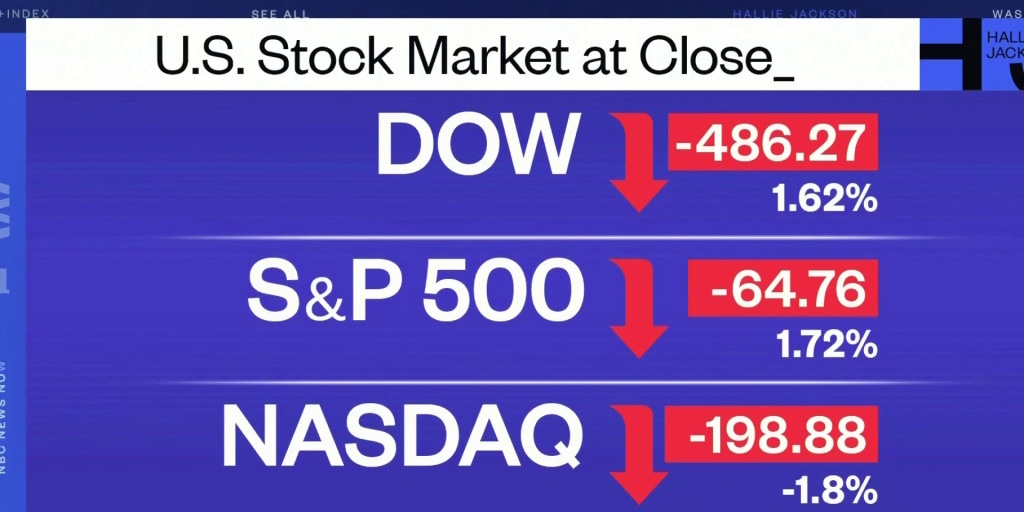
The Dow Jones Industrial Average: A Pillar of Market Insight
The Dow Jones Industrial Average is a price-weighted average of 30 significant stocks traded on the New York Stock Exchange (NYSE) and the NASDAQ. Founded by Charles Dow in 1896, it has evolved from an index tracking the performance of burgeoning industrial companies to one that reflects a diverse array of sectors, including technology, healthcare, finance, and consumer goods. Its enduring legacy and widespread recognition make it a central point of discussion in any financial discourse.
What is the Dow and Why Does it Matter?
At its core, the Dow aims to serve as a proxy for the overall health of the U.S. stock market and, by extension, the broader American economy. Unlike the S&P 500, which is weighted by market capitalization and includes 500 companies, or the Nasdaq Composite, which focuses heavily on technology and growth stocks, the Dow’s selection of 30 “blue-chip” companies represents well-established, financially sound enterprises with a long history of performance. These companies are often leaders in their respective industries, and their collective performance offers a concise yet impactful barometer for investors. A strong upward movement in the Dow often signals investor confidence and economic expansion, while significant declines can suggest impending economic headwinds or market anxiety. For individual investors, the Dow’s movement can influence portfolio valuations, inform investment strategies, and serve as a quick reference point for comparing their own investments against a widely recognized benchmark. While it’s crucial not to view the Dow in isolation, its historical significance and ongoing relevance make it an indispensable tool for gauging market sentiment.
The Mechanics of Market Closure
When we ask “where did the Dow close?”, we’re referring to its final recorded value at the end of the official trading day. For U.S. stock markets, including the NYSE and NASDAQ, the standard trading session concludes at 4:00 PM Eastern Time (ET) on weekdays. The closing price of the Dow is calculated based on the last traded price of its 30 constituent stocks at or immediately around this official closing time. It’s important to understand that this isn’t necessarily the absolute last trade that occurs for all securities on that day. Instead, it reflects the culmination of millions of buy and sell orders executed throughout the day, providing a definitive end-of-day snapshot. While the market officially closes at 4:00 PM ET, a concept known as “after-hours trading” exists, allowing institutional investors and sometimes individual traders to execute trades outside regular market hours. However, these after-hours movements do not affect the official closing price of the Dow for that specific day but can influence the opening sentiment for the following day. The formal closing price provides a clear, unambiguous reference point that helps standardize reporting and allows for consistent historical comparison.
Decoding Daily Market Movements: More Than Just a Number
The daily close of the Dow is not merely an arithmetic calculation; it’s a rich data point that encapsulates the collective decisions, anxieties, and optimisms of market participants over an entire trading day. Interpreting this number goes beyond simply noting whether it was up or down; it involves understanding its immediate implications for investors and its broader role as an economic barometer.
Immediate Implications for Investors
For investors, the Dow’s closing value has several immediate implications. Firstly, it directly impacts the perceived value of their portfolios. While most individual investors don’t hold all 30 Dow stocks, the index’s movement often correlates with the broader market, influencing the value of diversified mutual funds, ETFs, and individual stocks. A significant positive close can instill confidence, while a sharp decline might trigger anxiety and a reassessment of holdings. Secondly, the closing price acts as a critical sentiment gauge. A strong close can set a positive tone for the next trading day, encouraging further buying, whereas a weak close might signal continued selling pressure. Short-term traders, in particular, pay close attention to closing prices as they often inform their strategies for the following morning. Long-term investors, while less reactive to daily swings, still use the closing Dow to understand market trends and confirm their fundamental investment theses. It serves as a constant feedback loop, influencing both psychological outlook and practical trading decisions.
Broader Economic Barometer
Beyond individual portfolios, the Dow’s closing value serves as a powerful economic barometer, reflecting and reacting to a multitude of forces. Government reports, such as inflation figures (CPI), employment statistics, Gross Domestic Product (GDP) growth, and manufacturing data, frequently trigger significant shifts in the Dow. For instance, a higher-than-expected inflation report might lead to a sell-off as investors anticipate higher interest rates from the Federal Reserve, which can slow economic growth. Conversely, strong job growth might boost confidence, leading to an upward trajectory. Corporate earnings reports and forward guidance from individual companies also play a crucial role. When key Dow components announce robust earnings, it can lift the entire index, signaling health within specific sectors and the economy at large. Global events, including geopolitical tensions, international trade agreements, and commodity price fluctuations (like oil), can also send ripples through the Dow, demonstrating the interconnectedness of the global economy. Thus, the Dow’s close is a composite reflection of both microeconomic realities and macroeconomic narratives.
Accessing and Analyzing Dow Closure Data
In the digital age, obtaining the Dow’s closing price is remarkably easy, but effective analysis requires more than just glancing at a headline. Investors need to know where to find reliable data and how to interpret it within a broader financial context.
Reliable Sources for Real-Time and Historical Data

Numerous platforms provide up-to-the-minute and historical data for the Dow Jones Industrial Average. Leading financial news websites such as Bloomberg, Reuters, The Wall Street Journal, and CNBC are indispensable resources. They not only report the closing price but also offer detailed analysis, contributing factors, and expert commentary. Most online brokerage platforms also provide comprehensive market data, allowing users to track the Dow’s performance, view charts, and often integrate it with their personal portfolio tracking. Specialized financial data providers, like Yahoo Finance, Google Finance, and TradingView, offer robust charting tools, historical data downloads, and community forums for discussion. For those seeking deeper academic or historical research, official exchange websites or reputable financial archives can provide validated historical data. The key is to use sources known for their accuracy and timely updates, as even slight discrepancies can lead to misinformed decisions.
Interpreting the Numbers: Beyond Up or Down
While the headline number – whether the Dow closed up or down by a certain number of points – captures immediate attention, a more nuanced interpretation is vital. Firstly, considering the percentage change is often more insightful than the raw point change. A 100-point move when the Dow is at 10,000 is a 1% change, whereas a 100-point move when the Dow is at 35,000 is less than a 0.3% change. Understanding the relative magnitude provides a clearer picture of market volatility. Secondly, volume analysis offers additional context. A significant price move on high trading volume suggests strong conviction behind the move, whether positive or negative. Conversely, a large price swing on low volume might be less indicative of a sustained trend. Thirdly, it’s crucial to compare the Dow’s performance with other indices like the S&P 500, Nasdaq, and Russell 2000. If the Dow is up significantly but the Nasdaq is down, it might indicate a rotation from growth stocks to value stocks or a sector-specific event rather than a broad market rally. Analyzing sector performance within the Dow’s components can also highlight underlying trends, such as strong performance in industrial stocks versus weak performance in financial stocks, providing a more granular understanding of market dynamics.
Factors Influencing the Dow’s Daily Performance
The daily closing price of the Dow is a mosaic of countless inputs, ranging from overarching economic policies to the minute-by-minute decisions of individual traders. Understanding these influencing factors is crucial for anyone seeking to make sense of market movements.
Macroeconomic Drivers
At the highest level, macroeconomic forces exert a profound influence on the Dow. Interest rates and Federal Reserve policy are paramount. When the Fed signals a hawkish stance (e.g., higher interest rates), borrowing costs for businesses increase, potentially stifling growth and leading to market declines. Conversely, dovish policies (e.g., lower interest rates) can stimulate investment and boost the market. Inflationary pressures erode purchasing power and can impact corporate profits, often leading to market volatility. High, persistent inflation can prompt the Fed to raise rates, creating a double whammy for equity markets. GDP growth and recession fears also play a critical role. A strong GDP report indicates a healthy economy, generally bolstering investor confidence and the Dow. Conversely, signs of an impending recession, such as inverted yield curves or sustained negative GDP growth, often trigger significant market downturns as investors brace for reduced corporate earnings. These large-scale economic indicators set the fundamental backdrop against which daily market decisions are made.
Microeconomic and Sector-Specific Events
While macro factors paint the broad picture, microeconomic and sector-specific events drive much of the daily fluctuations. Individual company news, especially from the Dow’s 30 constituents, can have a notable impact. Robust earnings reports, announced mergers or acquisitions, new product launches, or positive regulatory decisions for a major Dow company can often push the entire index higher. Conversely, weaker-than-expected earnings, management scandals, or significant product recalls can pull the Dow down. Beyond individual companies, sector trends are also vital. For example, if the technology sector (which includes Dow components like Apple and Microsoft) is experiencing a boom due to innovation or increased consumer spending, it will significantly contribute to the Dow’s upward movement. Similarly, shifts in commodity prices, such as oil, can impact energy companies within the Dow (e.g., Chevron) and have broader implications for industrial and transportation sectors, influencing their stock performance. These granular events explain much of the day-to-day volatility and directional bias.
Investor Sentiment and Market Psychology
Beyond fundamental data and news, investor sentiment and market psychology often play an outsized role in the Dow’s daily performance. Markets are not purely rational; they are driven by collective human emotions. Fear and greed are powerful motivators. A sudden surge in fear, perhaps triggered by an unexpected geopolitical event or a pessimistic economic forecast, can lead to widespread selling, even if the underlying fundamentals haven’t drastically changed. Conversely, excessive greed during boom times can lead to overvaluation and speculative buying. Herd mentality, where investors follow the crowd rather than conducting independent analysis, can amplify market movements, creating self-fulfilling prophecies. Furthermore, technical analysis, which involves studying past market data, primarily price and volume, to forecast future price movements, also influences sentiment. Chart patterns, support and resistance levels, and moving averages, while not directly tied to fundamentals, are closely watched by traders and can trigger buying or selling waves, contributing to the Dow’s daily close. Understanding these psychological currents is key to grasping the often-unpredictable nature of market movements.
The Long-Term Perspective: Daily Closes in Context
While the daily close of the Dow provides an immediate pulse of the market, it’s crucial for investors to place these daily fluctuations within a broader, long-term perspective. Over-reacting to short-term movements can be detrimental to financial goals.
The Forest, Not Just the Trees
Focusing exclusively on daily closes can lead to myopia, obscuring the larger trends that truly drive wealth creation. The history of the Dow, despite numerous crashes and corrections, shows a consistent upward trajectory over decades. This emphasizes the importance of looking at long-term trends over daily fluctuations. A single day’s 500-point drop might seem alarming, but in the context of a 30-year investment horizon, it’s often a mere blip. The power of compounding returns means that consistent, long-term investment, even through periods of volatility, typically outperforms short-term trading strategies. Investors with a long-term mindset understand that market corrections are a normal part of the economic cycle and can even present opportunities to buy quality assets at a discount. Patience and a focus on fundamental growth drivers, rather than ephemeral daily headlines, are hallmarks of successful long-term investing.

Diversification and Risk Management
The emphasis on the Dow’s daily close can sometimes overshadow the importance of sound diversification and risk management. While the Dow provides a significant benchmark, a diversified portfolio should extend beyond its 30 components. Investing across different asset classes (stocks, bonds, real estate), geographical regions, and industry sectors helps mitigate risk. If one sector or market segment faces headwinds, others might perform well, cushioning the overall impact on the portfolio. Asset allocation strategies, tailored to an individual’s risk tolerance and financial goals, are far more critical than reacting to every daily market close. For example, a younger investor might allocate a larger portion to equities, while someone nearing retirement might opt for a more conservative mix of bonds and income-generating assets. Understanding the Dow’s daily performance is informative, but it should feed into a well-thought-out, long-term investment strategy rather than dictating reactive decisions that deviate from a disciplined approach.
In conclusion, “Where did the Dow close?” is far more than a simple query; it’s a daily barometer reflecting the intricate interplay of economic forces, corporate performance, and human psychology. While each day’s closing price offers a valuable snapshot of market sentiment and activity, sophisticated investors understand that it is but one data point in a much larger, long-term investment journey. By delving into the mechanics of its calculation, analyzing the factors that drive its movements, and most importantly, maintaining a disciplined, long-term perspective, individuals can leverage this ubiquitous financial metric to better inform their investment decisions and navigate the complex, ever-evolving landscape of global finance. The daily close of the Dow is a guide, not a dictator, for the prudent investor.
aViewFromTheCave is a participant in the Amazon Services LLC Associates Program, an affiliate advertising program designed to provide a means for sites to earn advertising fees by advertising and linking to Amazon.com. Amazon, the Amazon logo, AmazonSupply, and the AmazonSupply logo are trademarks of Amazon.com, Inc. or its affiliates. As an Amazon Associate we earn affiliate commissions from qualifying purchases.