
For investors, traders, and even curious onlookers, understanding the operational hours of the stock market is far more than a trivial detail; it’s a foundational element of successful financial engagement. The question “What time stock market open today?” encapsulates a fundamental need to synchronize with the pulse of global commerce. Whether you’re a day trader meticulously tracking intraday movements, a long-term investor looking to place an order, or a business owner monitoring economic indicators, market hours dictate the landscape of opportunity and risk. The stock market is not a static entity; it’s a dynamic, interconnected network of exchanges around the world, each with its unique schedule, holidays, and conventions. This article will delve into the intricacies of stock market hours, exploring why they matter, how they vary globally, and the tools available to keep you informed, all within the framework of savvy financial management and investing.
Understanding Standard Market Hours in the U.S.
The United States boasts two of the world’s largest and most influential stock exchanges: the New York Stock Exchange (NYSE) and the NASDAQ. These exchanges set the pace for much of global finance, and their regular trading hours are a benchmark for many participants.
New York Stock Exchange (NYSE) and NASDAQ: The Core Trading Day
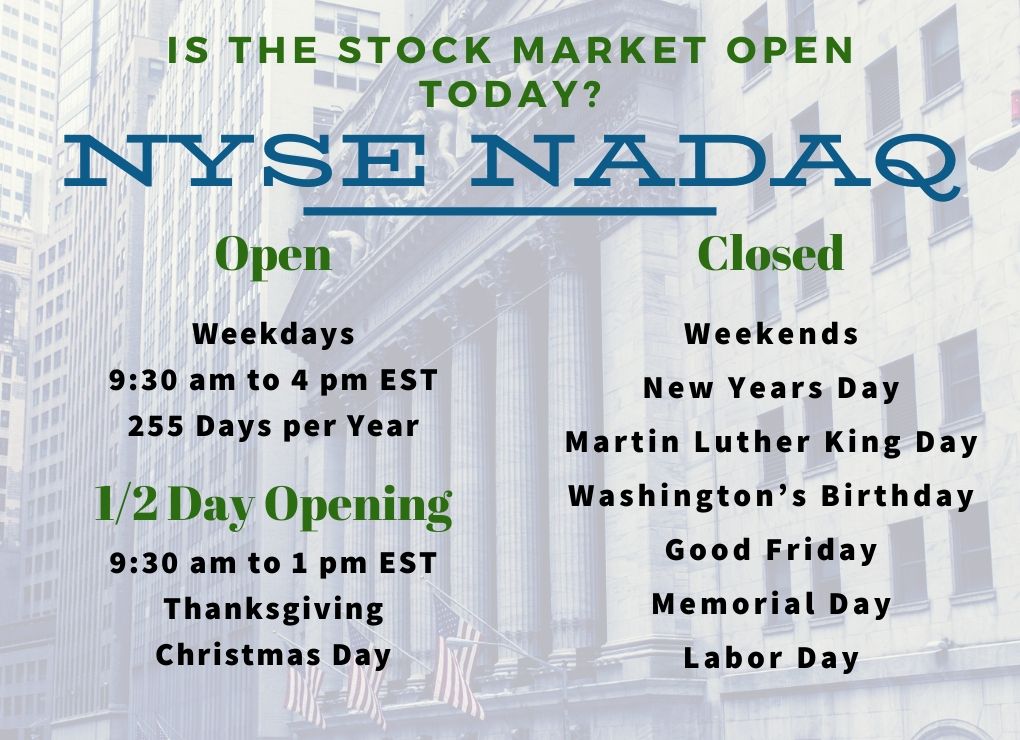
The primary regular trading session for both the NYSE and NASDAQ operates from 9:30 AM Eastern Time (ET) to 4:00 PM ET on weekdays. This seven-and-a-half-hour window is when the vast majority of trading volume occurs, characterized by high liquidity and tighter bid-ask spreads. During these hours, investors can execute trades with relative ease, confident that there is ample buyer and seller interest to absorb their orders without significantly impacting prices. This period is often seen as the most reliable for price discovery, reflecting the collective wisdom and sentiment of a broad spectrum of market participants. Decisions made during these hours are typically based on publicly available information, company news, and broader economic trends, contributing to the perceived efficiency of the market.
Pre-Market and After-Hours Trading: Extending the Day
While 9:30 AM to 4:00 PM ET defines the regular session, the stock market’s activity isn’t confined to these hours. Pre-market trading typically begins as early as 4:00 AM ET and extends until the market opens at 9:30 AM ET. Conversely, after-hours trading commences immediately after the 4:00 PM ET close and can run as late as 8:00 PM ET. These extended hours allow investors and institutions to react to news that breaks outside the regular session, such as quarterly earnings reports, major economic data releases, or geopolitical developments.
However, trading during these periods comes with distinct characteristics. Liquidity is generally much lower, meaning fewer buyers and sellers are present. This reduced liquidity can lead to wider bid-ask spreads, making it more expensive to execute trades, and increased price volatility. A relatively small order can have a disproportionately large impact on a stock’s price. Furthermore, not all brokers offer pre-market and after-hours trading, and those that do may have restrictions or require specific order types. It’s crucial for investors considering extended-hours trading to understand these nuances and the amplified risks involved. For the average retail investor, careful consideration and often a preference for regular hours are advisable due to these factors.
Market Holidays and Early Closures: When the Market Rests
The stock market does not operate every weekday. It observes several federal holidays in the U.S., during which both the NYSE and NASDAQ remain closed. Common market holidays include New Year’s Day, Martin Luther King, Jr. Day, Presidents’ Day, Good Friday, Memorial Day, Juneteenth National Independence Day, Independence Day, Labor Day, Thanksgiving Day, and Christmas Day. If a holiday falls on a weekend, the market typically observes it on the nearest weekday.
In addition to full closures, there are instances of early closures, usually preceding or following a major holiday. For example, the market often closes early on the day before Independence Day or Thanksgiving. These reduced trading days typically end at 1:00 PM ET. It is paramount for investors to be aware of these holidays and early closures, as they can impact trade execution, settlement periods, and the overall liquidity of their holdings. Missing a holiday can lead to missed opportunities or unexpected delays in accessing funds. Most brokerage platforms and financial news sites provide updated calendars for market holidays well in advance.
The Global Mosaic: International Market Hours
The term “stock market” is a misnomer if it implies a single, monolithic entity. In reality, it’s a network of interconnected exchanges spanning continents, each operating within its local time zone and cultural context. This global tapestry of trading ensures that somewhere in the world, a stock market is almost always open, creating a continuous, albeit staggered, flow of economic activity.
Major European Markets: London, Frankfurt, Paris
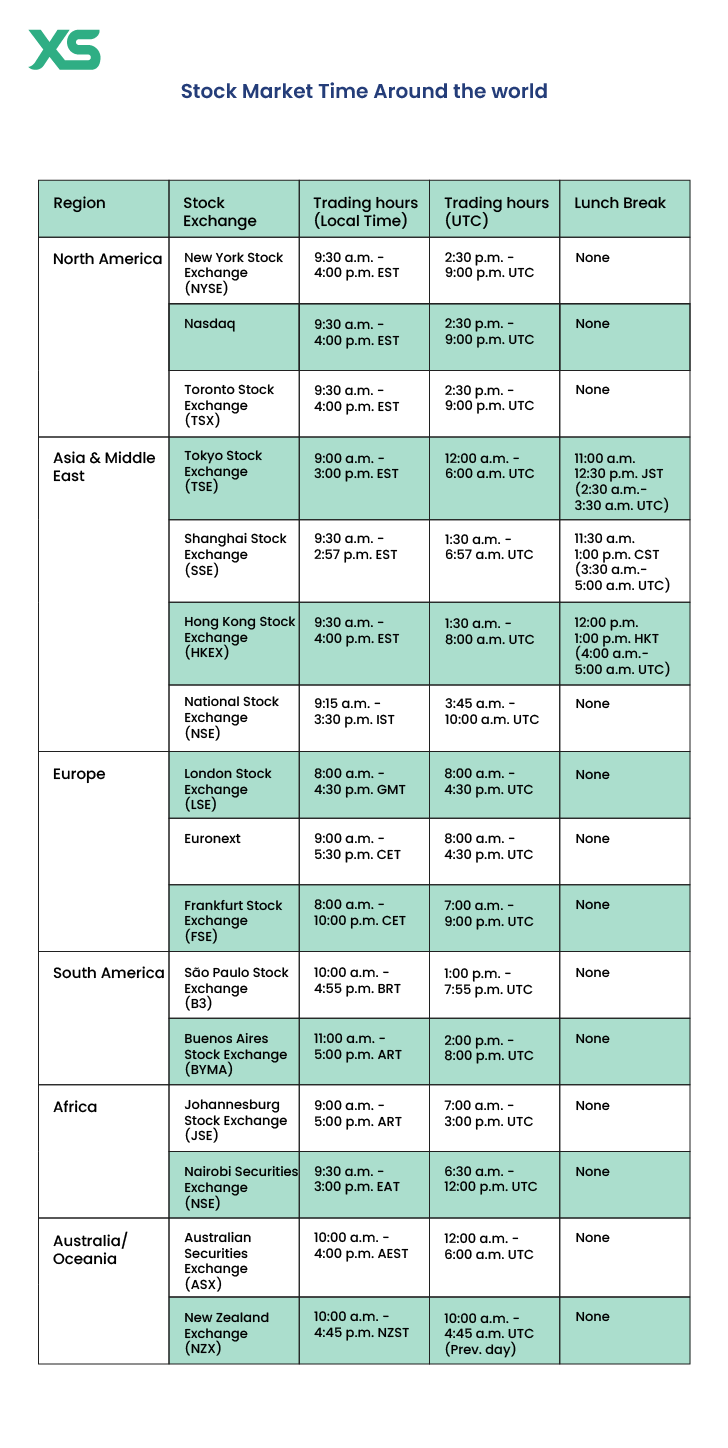
Europe hosts several of the world’s most significant financial centers. The London Stock Exchange (LSE), for instance, operates from 8:00 AM to 4:30 PM Greenwich Mean Time (GMT). Given London’s historical role and strategic time zone, its opening and closing often influence sentiment in both Asian markets winding down and American markets preparing to open.
Further east, the Deutsche Börse (Xetra) in Frankfurt, Germany, trades from 9:00 AM to 5:30 PM Central European Time (CET). Similarly, Euronext, which includes exchanges in Paris, Amsterdam, and Brussels, operates from 9:00 AM to 5:30 PM CET. These European markets offer a critical bridge between the trading day in Asia and North America, often reacting to overnight news from Asia and setting the tone for the U.S. markets. Their hours provide significant overlap with both Asian morning sessions and U.S. pre-market hours, facilitating a continuous global conversation on financial assets.
Asian Powerhouses: Tokyo, Shanghai, Hong Kong
Asia’s financial markets are often the first to open the global trading day. The Tokyo Stock Exchange (TSE) typically runs from 9:00 AM to 11:30 AM, breaks for lunch, and then reopens from 12:30 PM to 3:00 PM Japan Standard Time (JST). The TSE is a major indicator of Asian market sentiment and often provides the initial reaction to overnight global news.
The Shanghai Stock Exchange (SSE) and Shenzhen Stock Exchange (SZSE) in mainland China operate from 9:30 AM to 11:30 AM and 1:00 PM to 3:00 PM China Standard Time (CST). These markets are increasingly influential due to China’s economic might, though they are subject to unique regulatory controls. The Hong Kong Stock Exchange (HKEX), a gateway to China for many international investors, follows a similar pattern: 9:30 AM to 12:00 PM and 1:00 PM to 4:00 PM Hong Kong Time (HKT). The closing hours of these major Asian markets often coincide with the pre-market activity in European markets, creating a continuous hand-off of global trading momentum.
The Interconnectedness of Global Markets: A 24-Hour Cycle
The staggered opening and closing times across continents create a near 24-hour trading cycle for some assets, particularly currencies and certain commodities, and an influence cascade for equities. News or significant economic data released during Asian trading hours can impact European markets, which then influence North American markets. For instance, a major inflation report from China could trigger a sell-off in Tokyo, which might then be reflected in lower futures prices for European indices, and potentially lead to a weaker open for the NYSE.
This interconnectedness underscores the importance of a global perspective for investors. While you might only trade during U.S. hours, being aware of what happened in London or Tokyo overnight can significantly inform your strategy for the upcoming domestic trading day. Understanding these global rhythms is crucial for managing risk and identifying opportunities in an increasingly integrated world economy.
Why Market Hours Matter to Investors
Knowing when the stock market opens and closes is not just about logistics; it profoundly impacts investment strategy, risk management, and even an investor’s lifestyle. It’s a fundamental piece of financial literacy that separates informed decisions from impulsive reactions.
Impact on Trading Strategy and Execution
For day traders and short-term investors, market hours are the very fabric of their operations. The volatility and liquidity characteristics vary significantly throughout the day. The first and last hours of the regular trading session (often called “the open” and “the close”) typically see the highest trading volumes and price fluctuations. News and economic data released before the open often lead to strong directional moves in the first few minutes, which experienced traders might try to capitalize on. Conversely, some traders prefer the calmer, more predictable mid-day hours.
Long-term investors, while less concerned with minute-by-minute price movements, still benefit from understanding market hours. Placing buy or sell orders during low-liquidity periods (like pre-market or after-hours) can result in less favorable execution prices. Moreover, understanding market hours helps in planning when to place limit orders versus market orders, especially around the open or close when prices can gap significantly. It also informs when an investor can expect their trade to be settled and reflected in their portfolio.
Managing Risk and Volatility
Market hours are directly linked to risk management. As discussed, pre-market and after-hours trading are characterized by lower liquidity and higher volatility. This means that a stock’s price can move dramatically on relatively thin trading volume. A piece of news, such as a company announcing disappointing earnings after the bell, can send its stock plummeting in after-hours trading, and that loss could be locked in before the regular session even begins the next day.
Investors need to be aware that their portfolios are exposed to these movements even when they aren’t actively trading. Understanding when major news is likely to break (e.g., earnings announcements often occur after the market close) allows investors to anticipate potential volatility and adjust their positions or risk exposure accordingly. For example, some investors might reduce their position in a stock before a key earnings report if they anticipate a negative reaction, rather than waiting for the regular session and potentially facing a significant gap down.
Work-Life Balance and Accessibility
For many retail investors, especially those with full-time jobs that conflict with regular market hours, participating in the stock market can be a challenge. Understanding when markets are open globally provides options. For instance, someone on the West Coast of the U.S. might find that the U.S. market opens at 6:30 AM Pacific Time, allowing some morning trading before work. Alternatively, they might focus on Asian markets, which are active during their evening hours.
Modern brokerage platforms, mobile apps, and the ability to place various order types (like limit orders that execute only at a specified price or better) also alleviate some of these constraints. Investors can place orders outside of regular hours, which will then be queued for execution once the market opens. This allows individuals to manage their investments without needing to be glued to a screen during the exact trading window, promoting a healthier work-life balance while still remaining engaged in their financial goals.
Tools and Resources for Tracking Market Hours
In today’s interconnected financial world, staying informed about market hours, holidays, and real-time status is easier than ever. A variety of tools and resources are available to help investors navigate the complexities of global trading schedules.
Reputable Financial News Outlets
Major financial news sources are indispensable for real-time market information, including current market status and upcoming holiday schedules.
- CNBC: Offers live market coverage, breaking news, and detailed market calendars that include regular hours, extended hours, and holiday schedules for major global exchanges.
- Bloomberg: Provides comprehensive financial data, news, and analytics, often including real-time updates on market openings, closures, and holiday alerts through its terminal and online platforms.
- The Wall Street Journal (WSJ): Known for its in-depth reporting, the WSJ also publishes market holiday schedules and commentary on how these closures might impact trading and economic activity.
These outlets not only tell you when the market is open but also provide the crucial context of why certain movements are occurring, drawing on global economic news and corporate announcements.
Brokerage Platforms and Apps
Perhaps the most direct and convenient source of market hour information for individual investors is their own brokerage platform.
- Integrated Display: Most reputable online brokers (e.g., Fidelity, Charles Schwab, E*TRADE, Interactive Brokers, Robinhood) clearly display the current status of the market (open, closed, pre-market, after-hours) directly on their trading dashboards or within their mobile apps.
- Order Placement Logic: These platforms are designed to manage orders based on market hours. If you try to place a market order outside regular hours, the system will typically alert you, explain that it will be queued for the next open, or suggest using a limit order.
- Holiday Notifications: Brokerage platforms also send out notifications or display alerts regarding upcoming market holidays and early closures, ensuring their clients are well-informed.
Using your brokerage’s integrated tools is often the simplest way to stay updated on the market’s operational status relevant to your specific investments.
Dedicated Market Calendar Websites
Beyond general financial news, several websites specialize in providing detailed market calendars, which can be invaluable for planning.
- World Federation of Exchanges (WFE): The WFE website often provides a consolidated list of exchanges and their operational details, including holidays, though it might be more high-level.
- Investing.com / MarketWatch / Nasdaq.com: These financial portals typically have dedicated “market holidays” sections that list closures for various global exchanges, sometimes months in advance. They can be filtered by country or region, making it easy to check the schedule for specific international markets.
- Exchange-Specific Websites: For precise and definitive information, always refer to the official website of the specific stock exchange you are interested in (e.g., NYSE.com, NASDAQ.com, LSE.co.uk). These sites will have the most accurate and up-to-date holiday schedules and trading hours.
These resources empower investors to proactively plan their trading and investment activities, avoiding surprises and ensuring they operate within the appropriate market windows.
Conclusion
The question “What time stock market open today?” is a gateway to a deeper understanding of financial markets. It underscores the fundamental importance of market hours not just for executing trades, but for comprehending market dynamics, managing risk, and aligning investment strategies with the rhythms of global commerce. From the standard trading day of the NYSE and NASDAQ to the extended hours of pre-market and after-hours sessions, and across the diverse schedules of international exchanges, each operational window presents unique opportunities and challenges.
Savvy investors recognize that staying informed about market hours and holidays is not merely a formality but a critical component of their financial toolkit. By leveraging the abundance of reliable financial news, intuitive brokerage platforms, and dedicated market calendar resources, investors can confidently navigate the complex, interconnected world of stock trading. Whether you are aiming for short-term gains or building long-term wealth, knowing when the market opens today, and every other day, is the first step towards making informed, timely, and successful investment decisions.
aViewFromTheCave is a participant in the Amazon Services LLC Associates Program, an affiliate advertising program designed to provide a means for sites to earn advertising fees by advertising and linking to Amazon.com. Amazon, the Amazon logo, AmazonSupply, and the AmazonSupply logo are trademarks of Amazon.com, Inc. or its affiliates. As an Amazon Associate we earn affiliate commissions from qualifying purchases.