
Understanding the operational hours of financial markets is a fundamental aspect of effective investing and trading. While often simplified to a single “market close,” the reality is far more nuanced, encompassing various asset classes, global time zones, and specific holiday schedules. For any serious participant in the financial world, knowing precisely when different markets open and close is not merely a piece of trivia, but critical intelligence that impacts liquidity, volatility, and the execution of investment strategies.
The Standard Bell: US Stock Market Hours
The most commonly referenced market hours pertain to the major US stock exchanges: the New York Stock Exchange (NYSE) and the NASDAQ. Both operate on a consistent schedule, underpinning the daily rhythm of millions of investors and traders.
Core Trading Sessions
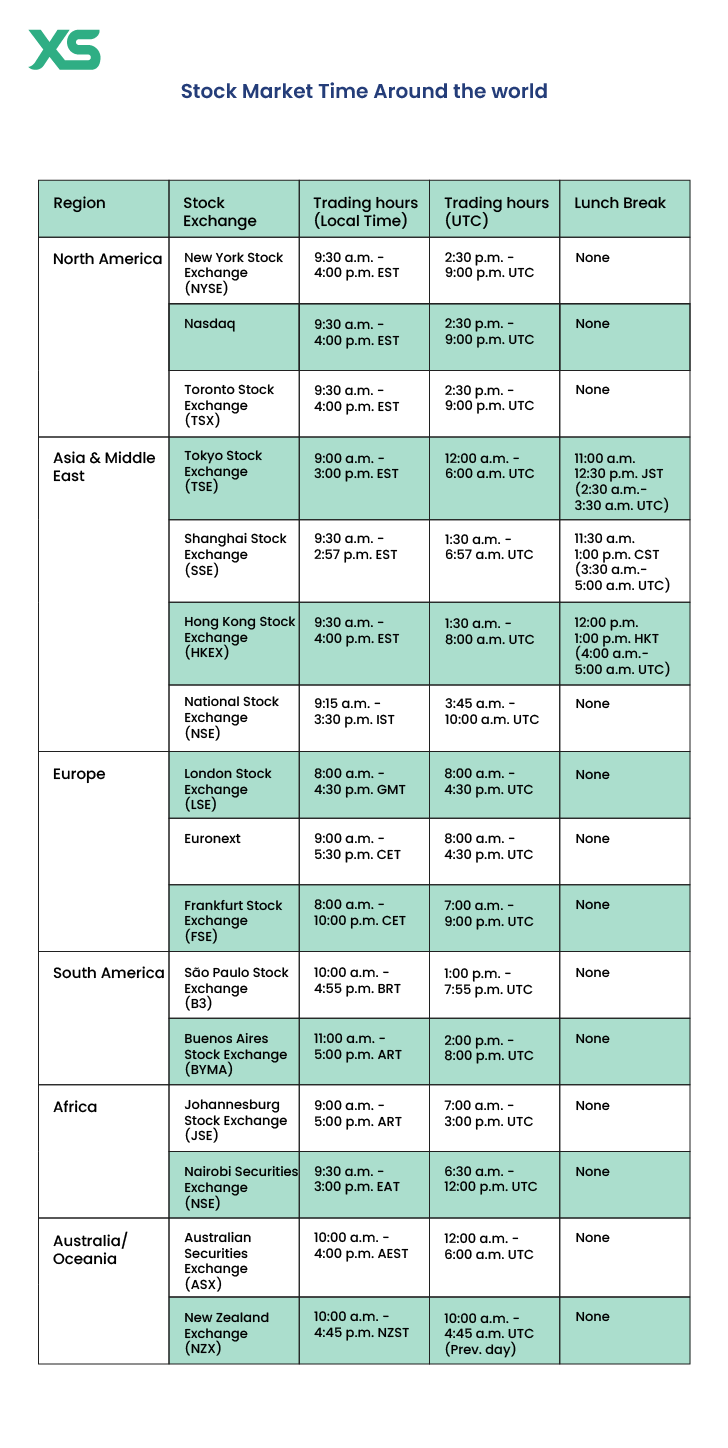
For the NYSE and NASDAQ, the standard trading session runs from 9:30 AM to 4:00 PM Eastern Time (ET), Monday through Friday. This seven-and-a-half-hour window is when the vast majority of trading volume occurs, characterized by high liquidity and regulated price discovery. During these core hours, market makers are actively facilitating trades, and bid-ask spreads are typically at their tightest.
Options and Futures Markets
Options contracts, which derive their value from an underlying asset like a stock or index, generally follow a similar schedule to the equities they are based on. However, there can be slight variations. Equity options typically close at 4:00 PM ET, aligning with the stock market. Index options, like those on the S&P 500 (SPX), often have a slightly later closing time, sometimes extending to 4:15 PM ET.
Futures markets, which deal with contracts to buy or sell an asset at a predetermined price on a future date, operate on a significantly extended schedule compared to equities. Many popular futures contracts, such as those for stock indexes (e.g., E-mini S&P 500), commodities (e.g., crude oil, gold), and currencies, trade nearly 24 hours a day, five days a week. For instance, CME Group equity index futures often begin trading Sunday evening and run through Friday afternoon, with short breaks daily. While the “close” for these markets isn’t a single definitive point like the stock market, specific daily closing times (e.g., 5:00 PM ET for some CME products) dictate when the next trading day officially begins, and often influence margin calls and daily settlement processes.
Bond Markets
The bond market, primarily trading in US Treasuries and corporate bonds, operates on a different timetable. The Securities Industry and Financial Markets Association (SIFMA) typically recommends a closing time of 3:00 PM ET for the trading of most US dollar-denominated bonds. This earlier close reflects the often over-the-counter (OTC) nature of bond trading, which involves direct transactions between financial institutions rather than through a centralized exchange with a continuous auction mechanism. On certain days, such as the day before a holiday or early release of economic data, the bond market may have an even earlier close, sometimes at 2:00 PM ET.
Beyond the Bell: Extended Hours Trading
The concept of “market close” primarily applies to the standard trading session. However, technological advancements have introduced extended hours trading, allowing participants to trade before the market opens (pre-market) and after it closes (after-hours).
Pre-Market Trading
Pre-market trading typically begins as early as 4:00 AM ET and runs until the standard market opening at 9:30 AM ET. This period allows investors and traders to react to news and earnings reports released overnight or early in the morning before the main market opens.
After-Hours Trading
After-hours trading picks up immediately after the 4:00 PM ET close and can extend as late as 8:00 PM ET. Similar to pre-market, this period allows reactions to late-breaking news or analyst reports published after the regular session. Many major brokerage firms offer access to these extended hours sessions.
Risks and Opportunities in Extended Hours
While extended hours trading offers flexibility, it comes with significant caveats. The most prominent is reduced liquidity. With fewer participants, bid-ask spreads tend to widen, making it more challenging to execute trades at desired prices and potentially leading to greater price volatility. Furthermore, the price action during extended hours may not always reflect the direction the market will take during the next regular session. Volume is often considerably lower, and larger institutions or sophisticated traders might dominate activity. For retail investors, engaging in extended hours trading requires a heightened awareness of these risks.
Navigating Global Market Schedules
The financial world is interconnected, and “what time markets close today” also depends on which market one is referring to. Different global markets operate on their respective local time zones, creating an almost continuous cycle of trading activity around the clock.
Major Asian Markets
- Tokyo Stock Exchange (JPX): Typically opens at 9:00 AM JST and closes at 3:00 PM JST, with a lunch break from 11:30 AM to 12:30 PM JST. This translates to 8:00 PM to 2:00 AM ET for US investors (excluding lunch break).
- Shanghai Stock Exchange (SSE) & Shenzhen Stock Exchange (SZSE): Operates from 9:30 AM to 3:00 PM CST, with a lunch break from 11:30 AM to 1:00 PM CST. In ET, this is roughly 9:30 PM to 3:00 AM ET (excluding lunch).
- Hong Kong Stock Exchange (HKEX): Trading hours are 9:30 AM to 4:00 PM HKT, with a lunch break from 12:00 PM to 1:00 PM HKT. For US investors, this means 9:30 PM to 4:00 AM ET (excluding lunch).
European Markets
- London Stock Exchange (LSE): A major financial hub, the LSE trades from 8:00 AM to 4:30 PM GMT. This translates to 3:00 AM to 11:30 AM ET.
- Deutsche Börse (Frankfurt, XETRA): Operates from 9:00 AM to 5:30 PM CET. In ET, this is 3:00 AM to 11:30 AM ET.
- Euronext (Paris, Amsterdam, Brussels, Lisbon): Similar to Frankfurt, trading is generally from 9:00 AM to 5:30 PM CET, corresponding to 3:00 AM to 11:30 AM ET.
The 24/5 Forex Market
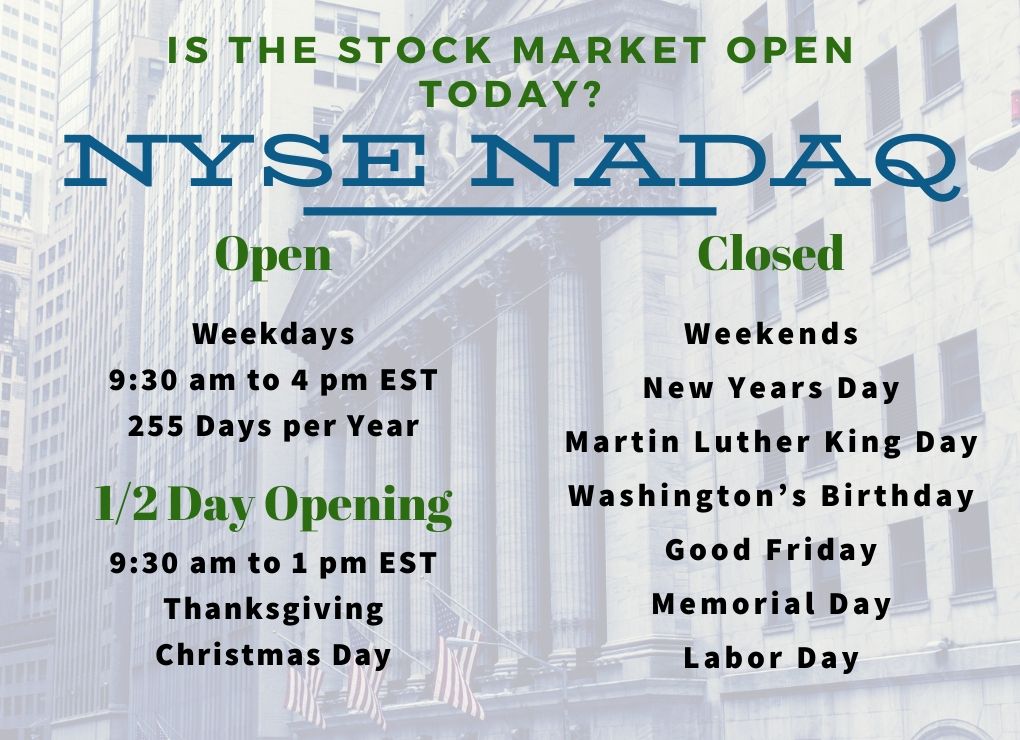
The foreign exchange (forex) market, where currencies are traded, stands out for its nearly continuous operation. It opens on Sunday evening ET (Monday morning in Asia) and closes on Friday afternoon ET. While there isn’t a single “close” time daily, the market moves through various sessions corresponding to the major financial centers: Sydney, Tokyo, London, and New York. As one region’s market closes, another is opening, ensuring liquidity and trading opportunities almost around the clock. Key overlaps between sessions (e.g., London and New York) are often characterized by higher volatility and trading volume.
Impact of Market Closures on Investment Strategies
The timing of market closures has profound implications for how investors and traders manage their portfolios, execute orders, and respond to economic events.
Order Execution and Liquidity Management
Understanding market close is critical for order placement. A market order placed just before the close might be executed at an undesirable price if a sudden surge of activity occurs. Limit orders provide more control, but they risk not being filled if the price target isn’t met by the closing bell. For active traders, knowing when liquidity dwindles in extended hours helps in deciding whether to hold positions overnight or close them out. Similarly, long-term investors need to consider if they want to make trades during times of lower liquidity or stick to core hours for better price discovery.
News Reactions and Overnight Risk
Significant economic data, corporate earnings, and geopolitical news are often released outside of regular market hours. These announcements can trigger substantial price movements in pre-market or after-hours trading, and the full impact is frequently realized at the next day’s opening bell. Investors holding positions overnight are exposed to “gap risk,” where the market opens significantly higher or lower than the previous day’s close due to overnight news. This overnight risk is a primary consideration for portfolio managers and retail investors alike.
Portfolio Rebalancing and Strategic Planning
For long-term investors, market closing times primarily influence the timing of rebalancing decisions or large-scale portfolio adjustments. While daily fluctuations might not prompt immediate action, an awareness of closing times prevents missed opportunities for executing trades that require full market liquidity. Strategic planning also involves anticipating holiday closures, which can disrupt trading patterns and sometimes lead to increased volatility in the days leading up to or following a holiday.
Holiday Market Closures and Special Circumstances
Beyond the daily rhythm, financial markets observe various holidays, leading to full-day or half-day closures. These are crucial for investors to monitor as they completely halt trading activity.
US Federal Holidays
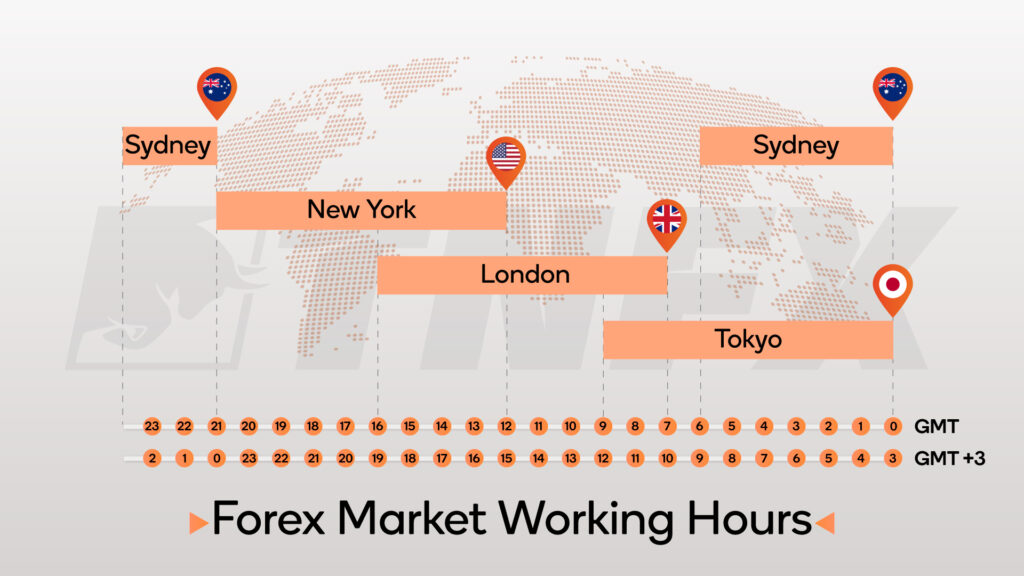
US stock and bond markets typically close for all federal holidays, including:
- New Year’s Day
- Martin Luther King, Jr. Day
- Presidents’ Day
- Good Friday (not a federal holiday, but observed by markets)
- Memorial Day
- Juneteenth National Independence Day
- Independence Day
- Labor Day
- Thanksgiving Day
- Christmas Day
On occasions like the day after Thanksgiving (Black Friday) or Christmas Eve, the market might have a half-day session, often closing at 1:00 PM ET. Bond markets, as mentioned, may also have earlier closes preceding major holidays.
International Holiday Impact
For investors with international holdings or those trading global products, being aware of closures in other countries is equally important. For example, a major holiday in China or the UK will impact the trading of securities on those exchanges and can have ripple effects on global markets, especially for currency and commodity trading.
In conclusion, “what time markets close today” is a dynamic and multifaceted question. It requires a detailed understanding of specific asset classes, global time zones, and scheduled breaks. Armed with this knowledge, investors can make more informed decisions, manage risk effectively, and optimize their trading and investment strategies within the complex, interconnected world of finance.
aViewFromTheCave is a participant in the Amazon Services LLC Associates Program, an affiliate advertising program designed to provide a means for sites to earn advertising fees by advertising and linking to Amazon.com. Amazon, the Amazon logo, AmazonSupply, and the AmazonSupply logo are trademarks of Amazon.com, Inc. or its affiliates. As an Amazon Associate we earn affiliate commissions from qualifying purchases.