
For investors and market observers, understanding the precise closing times of financial markets is not merely a matter of trivia; it’s a critical component of strategic trading, risk management, and portfolio monitoring. While the question seems straightforward, the answer can be nuanced, depending on the specific market, the day of the week, and any exceptional circumstances. Grasping these details is essential for anyone engaged in the world of finance, from individual retail investors to institutional fund managers.
Understanding Standard Market Hours for Major Exchanges
The backbone of global finance relies on a structured schedule for its primary trading venues. These established hours provide predictability and liquidity, allowing participants to transact with confidence.
NYSE and NASDAQ: The U.S. Powerhouses
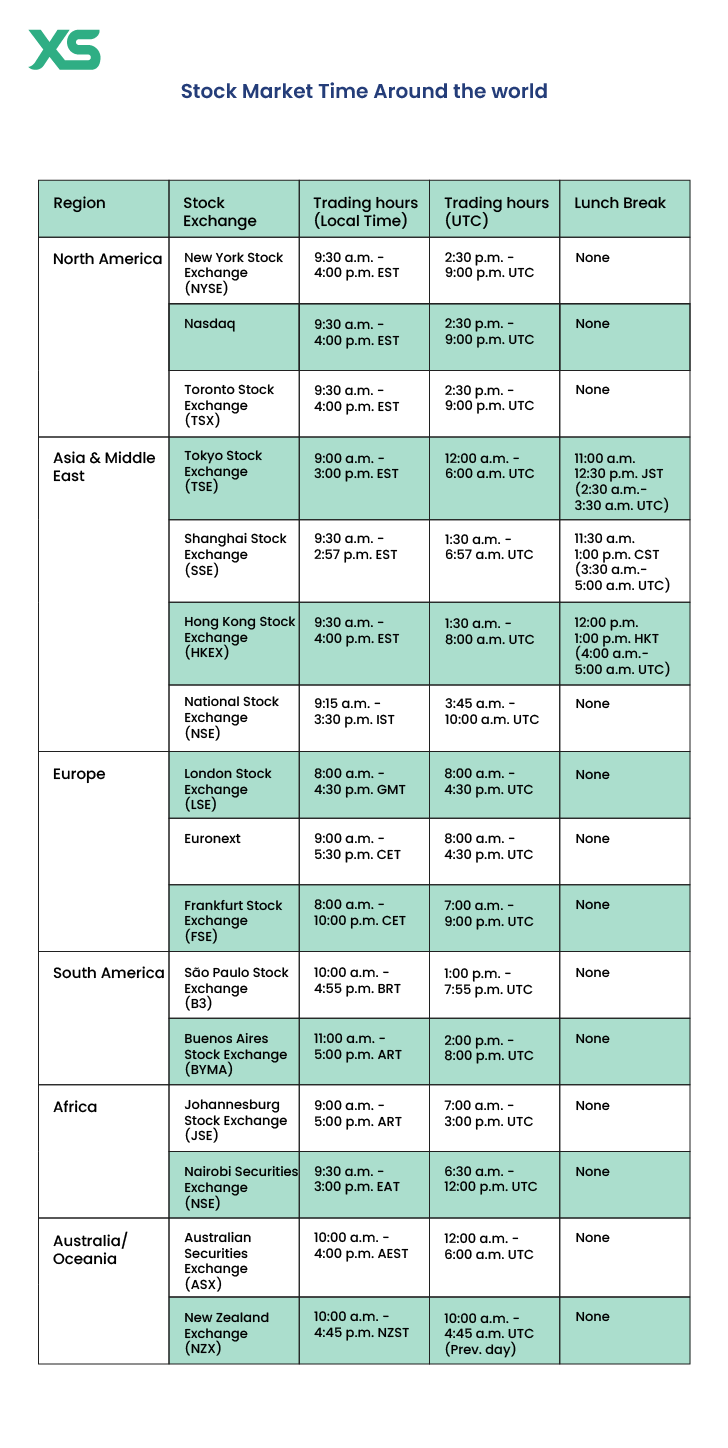
In the United States, the two most prominent stock exchanges, the New York Stock Exchange (NYSE) and the NASDAQ Stock Market, operate on a consistent schedule for their regular trading sessions. Both exchanges typically open at 9:30 AM Eastern Time (ET) and close at 4:00 PM ET, Monday through Friday. This 6.5-hour window is when the vast majority of trading volume occurs, characterized by high liquidity and tight bid-ask spreads. These hours are deeply ingrained in financial culture, defining the standard workday for countless professionals and influencing global market sentiment. While the 4:00 PM ET close marks the end of regular trading, it’s important to remember that the day’s activity doesn’t necessarily cease entirely, as explored in extended trading sessions. However, for most practical purposes, the 4:00 PM bell signifies the official conclusion of that day’s main trading period, locking in closing prices that are widely reported and analyzed.
Global Markets: A 24/7 Perspective
While U.S. markets have defined hours, the global nature of finance means that somewhere in the world, a market is always open. This creates a continuous, albeit geographically dispersed, trading environment. When U.S. markets are closed, European, Asian, or other regional exchanges are often active, influencing future U.S. market sentiment. For instance, the London Stock Exchange typically closes at 4:30 PM GMT (or BST), while the Tokyo Stock Exchange generally closes at 3:00 PM JST. Futures markets, particularly for commodities and indices, also operate on extended schedules, often providing a leading indicator for equity market movements. This interconnectedness means that significant economic news or geopolitical events occurring outside U.S. trading hours can still have a profound impact when the NYSE and NASDAQ reopen. Astute investors track these global movements to anticipate potential market shifts and adjust their strategies accordingly, recognizing that market activity is a perpetual cycle across different time zones.
Beyond Standard Hours: After-Hours and Pre-Market Trading
The concept of a definitive market closing time becomes more complex when considering the extended trading sessions that have become standard practice in modern finance. These periods, occurring both before the opening bell and after the closing bell, offer opportunities but also present unique challenges.
The Mechanics of Extended Trading
Pre-market trading typically begins as early as 4:00 AM ET, extending until the regular market open at 9:30 AM ET. After-hours trading, conversely, commences immediately after the 4:00 PM ET close and can continue until 8:00 PM ET. These extended sessions are facilitated by Electronic Communication Networks (ECNs), which bypass the traditional floor-based or specialist-driven systems of regular hours. ECNs match buyers and sellers electronically, allowing trades to execute outside the main market window. While access to these sessions is widely available through most brokerage platforms, it’s crucial to understand that they operate under different dynamics than regular hours, primarily due to significantly lower liquidity. This reduced liquidity can lead to wider bid-ask spreads and increased price volatility, making it a different environment for order execution and price discovery.
Risks and Opportunities in After-Hours Trading
Engaging in after-hours or pre-market trading comes with both potential advantages and inherent risks. On the opportunity side, extended hours allow investors to react promptly to breaking news, such as earnings reports released after the market close or major economic announcements made before the open. This immediate reaction can be crucial for capitalizing on short-term price movements or mitigating potential losses. Furthermore, it provides flexibility for those whose schedules prevent them from actively trading during regular hours.
However, the risks are substantial. The most significant concern is the dramatically lower liquidity. With fewer buyers and sellers participating, it’s often harder to execute trades at desired prices, and large orders can disproportionately move the market. This decreased liquidity leads to wider bid-ask spreads, meaning the difference between the price a buyer is willing to pay and a seller is willing to accept is greater, translating into higher transaction costs for traders. Price volatility is also amplified, as a smaller number of trades can cause larger price swings. Furthermore, institutional participation is generally lower, leading to less efficient price discovery compared to regular trading hours. Investors must exercise heightened caution and utilize limit orders to manage the risks associated with these less liquid and more volatile periods.
Factors Influencing Market Closure and Trading Pauses
While standard trading hours provide a general framework, markets are dynamic entities that can deviate from their routine schedules due to various predefined events or unforeseen circumstances.
Holidays and Special Observances
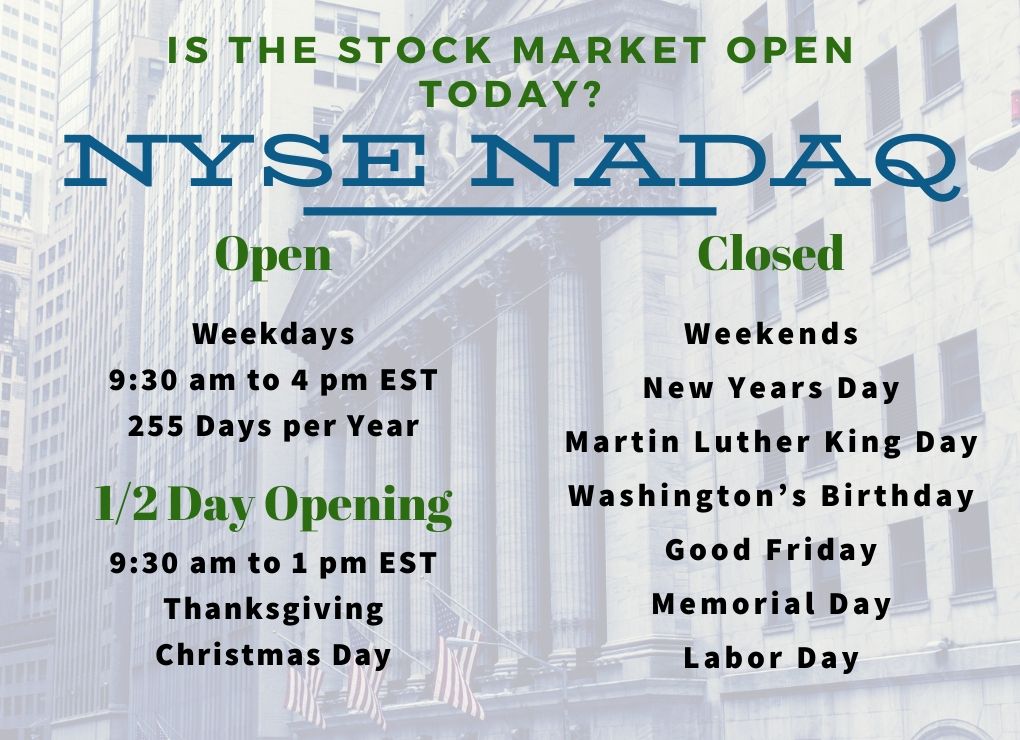
Financial markets observe a specific calendar of holidays, during which they remain closed. In the U.S., these typically include New Year’s Day, Martin Luther King, Jr. Day, Presidents’ Day, Good Friday, Memorial Day, Juneteenth National Independence Day, Independence Day, Labor Day, Thanksgiving Day, and Christmas Day. On certain days preceding or following a major holiday, markets may operate on a shortened schedule, closing early, often at 1:00 PM ET. This practice is common on days like the day after Thanksgiving (Black Friday) or Christmas Eve. These shortened sessions are important to note for investors planning trades or monitoring portfolios around holiday periods, as liquidity can also be reduced even during these limited hours. Each country has its own distinct set of market holidays, reflecting national observances and traditions, further emphasizing the need for global investors to consult specific exchange calendars.
Circuit Breakers and Volatility Halts
Beyond scheduled closures, markets are equipped with mechanisms designed to curb extreme volatility and prevent panic selling or buying. These are known as circuit breakers or trading halts. A circuit breaker, triggered by significant percentage declines in a broad market index (like the S&P 500), can halt trading across the entire market for a specified period. These are tiered halts: a 7% drop from the previous day’s closing price before 3:25 PM ET triggers a 15-minute halt; a 13% drop before 3:25 PM ET triggers another 15-minute halt; and a 20% drop at any time results in a market closure for the remainder of the day. Individual stocks can also experience volatility halts if their price moves too rapidly within a short timeframe, as defined by “limit up-limit down” rules. These halts typically last for five minutes and are designed to give participants a moment to process information and prevent disorderly trading. While rare, these mechanisms are crucial for maintaining market integrity during periods of extreme stress.
Technical Glitches and Unforeseen Events
Less common but equally impactful are market closures or disruptions caused by technical glitches, natural disasters, or other unforeseen events. In the digital age, the smooth operation of exchanges relies heavily on robust technology infrastructure. A significant software bug, hardware failure, or cyberattack could potentially lead to trading halts or even a full market closure until the issue is resolved. Historically, events like the September 11th attacks led to multi-day closures of U.S. markets. While such instances are infrequent due to extensive contingency planning and redundant systems, they underscore the fact that market operations are not entirely immune to external disruptions. These events highlight the importance of diversified portfolios and robust risk management strategies that account for unexpected market downtime.
Practical Implications for Investors and Traders
Understanding market closing times and the factors that influence them has significant practical implications for anyone involved in investing. It directly impacts decision-making, order management, and overall strategy.
Order Execution and Liquidity Considerations
The timing of an order can dramatically affect its execution. During regular market hours, high liquidity ensures that buy and sell orders are typically filled quickly and at prices close to the current market rate, especially for highly traded stocks. However, placing market orders close to the opening or closing bell, or during extended hours, can expose investors to increased volatility and wider spreads, leading to less favorable execution prices. Limit orders become particularly valuable in these less liquid periods, allowing investors to specify the maximum or minimum price at which they are willing to trade, thereby controlling execution risk. Understanding when liquidity is highest (mid-day during regular hours) versus lowest (pre-market, after-hours, or near close) is paramount for optimizing trade entry and exit points.
Impact on Portfolio Monitoring and Strategy
For long-term investors, the precise closing time might seem less critical than for day traders. However, knowing when the market closes is still vital for portfolio monitoring. End-of-day reports, portfolio valuations, and performance calculations are all based on closing prices. Significant news released after the market closes can drastically alter the opening price the next day, necessitating a review of one’s portfolio and strategy before the next trading session begins. For active traders, the closing bell marks the point at which positions are finalized for the day, and any open positions are subject to overnight risk. Market closures due to holidays or other events also require strategic planning, as they represent periods of potentially increased uncertainty where investors cannot react to new information.
Leveraging Technology for Market Awareness
Modern financial tools and platforms play a crucial role in helping investors stay informed about market hours and related events. Most brokerage platforms provide real-time market data, often displaying market status (open, closed, pre-market, after-hours) directly on their interfaces. Customizable alerts can notify investors of market opens, closes, or any trading halts. Financial news services and dedicated market data providers offer comprehensive calendars of market holidays and early closures, often integrating these into charting software. Utilizing these technological resources allows investors to remain aware of market timings, plan their trading activities more effectively, and avoid costly mistakes due to misinformation about when the market is operational.
Looking Ahead: The Future of Trading Hours
The financial world is constantly evolving, and the concept of fixed market hours is not immune to change. Debates and technological advancements are continually pushing the boundaries of when and how trading occurs.
Debates on Extended Trading
There’s an ongoing discussion within the financial industry about whether to further extend or even move towards 24/7 trading for traditional equity markets. Proponents argue that longer hours would increase convenience for global investors, allow for immediate reaction to international news, and potentially boost liquidity. They point to the success of futures markets and certain cryptocurrency exchanges that operate around the clock. Conversely, opponents raise concerns about the impact on market integrity, the potential for increased volatility, the strain on human resources (traders, analysts, support staff), and the possible erosion of work-life balance for financial professionals. The complexity of regulatory oversight across different time zones also presents a significant hurdle. Any major shift would require extensive planning and consensus from exchanges, regulators, and market participants.
The Rise of Digital Assets and Continuous Trading
The emergence and growth of the cryptocurrency market offer a glimpse into a potential future for asset trading. Cryptocurrency exchanges largely operate 24 hours a day, seven days a week, with no fixed closing times. This continuous trading model allows for constant price discovery and immediate liquidity, reflecting the global and decentralized nature of digital assets. While traditional equities markets face different regulatory and structural challenges, the success of continuous trading in the digital asset space fuels speculation about whether mainstream financial markets will eventually adopt similar models. The implications for market infrastructure, liquidity provision, and investor behavior would be profound, potentially redefining what “market close” even means in an increasingly interconnected and always-on financial ecosystem.
aViewFromTheCave is a participant in the Amazon Services LLC Associates Program, an affiliate advertising program designed to provide a means for sites to earn advertising fees by advertising and linking to Amazon.com. Amazon, the Amazon logo, AmazonSupply, and the AmazonSupply logo are trademarks of Amazon.com, Inc. or its affiliates. As an Amazon Associate we earn affiliate commissions from qualifying purchases.