
The question of when the stock market closes is a fundamental one for investors, traders, and anyone tracking financial news. While seemingly straightforward, the answer carries significant implications for trading strategies, portfolio management, and understanding market dynamics. For the major U.S. exchanges—the New York Stock Exchange (NYSE) and Nasdaq—the standard closing time on a regular trading day is 4:00 PM Eastern Time (ET). However, this seemingly simple fact is surrounded by nuances, including extended trading hours, holiday schedules, and global market variations, all of which are crucial for a comprehensive understanding of today’s financial landscape.
Understanding Standard Market Hours
The backbone of U.S. stock market operations rests on its defined trading hours, which govern when the bulk of buy and sell orders are executed and when the market is most liquid.
The New York Stock Exchange (NYSE) and Nasdaq
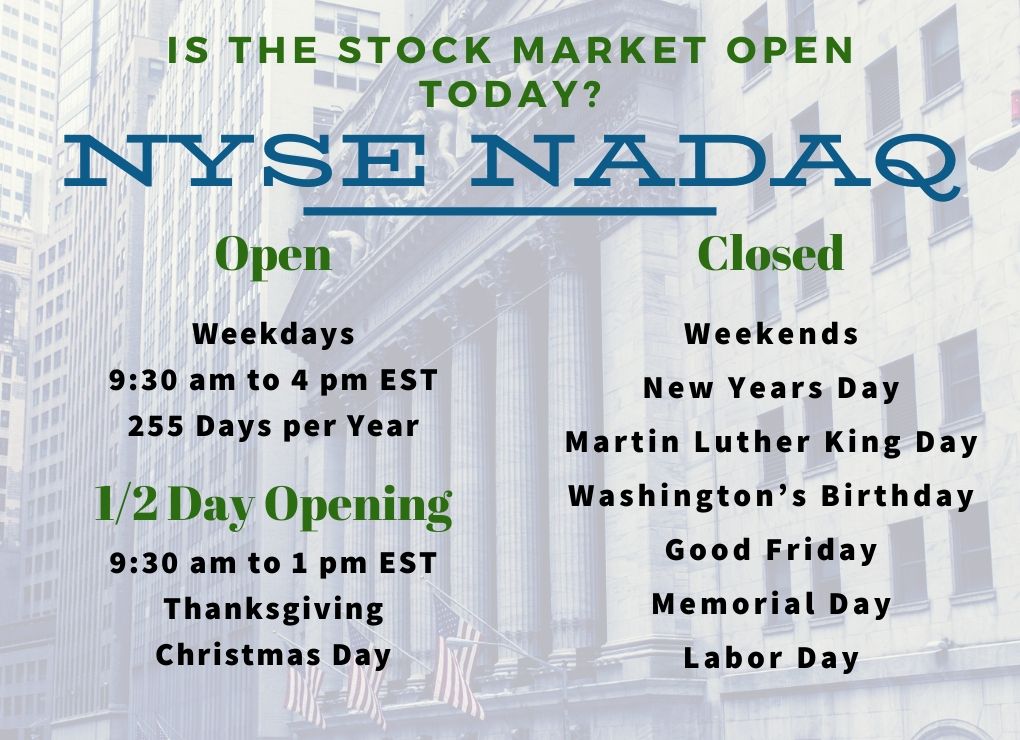
Both the NYSE and Nasdaq, the two largest stock exchanges in the United States, adhere to identical standard trading hours. These exchanges are open from 9:30 AM ET to 4:00 PM ET, Monday through Friday. This 6.5-hour window is often referred to as “regular trading hours” or “cash market hours.” During this period, most individual and institutional trading occurs, resulting in the highest volumes and generally the tightest bid-ask spreads. The closing bell at 4:00 PM ET signifies the end of the official trading day for these primary markets. Understanding these core hours is the first step for any participant in the financial markets, as activity outside this window operates under different rules and conditions.
Extended Trading Sessions (Pre-Market and After-Hours)
While 4:00 PM ET marks the end of regular trading, it doesn’t mean all trading activity ceases. Modern financial markets facilitate trading outside these standard hours through what are known as extended trading sessions: pre-market and after-hours trading.
Pre-market trading typically begins as early as 4:00 AM ET and runs until the market opens at 9:30 AM ET. After-hours trading, conversely, commences right after the 4:00 PM ET close and can extend as late as 8:00 PM ET. These extended sessions are crucial for investors who need to react quickly to news that breaks outside regular hours, such as earnings reports released after the close or economic data published early in the morning. However, it’s important to note that extended hours trading often involves lower liquidity and wider bid-ask spreads compared to regular hours. This can lead to increased volatility and potentially less favorable execution prices for trades, making it a realm typically frequented by more experienced traders or those with urgent market reactions. The lower volume means that fewer buyers and sellers are present, and a single large order can have a disproportionate impact on a stock’s price, potentially leading to significant price swings.
Time Zones and Their Impact
The concept of “closing time” is always anchored to a specific time zone. For the U.S. stock markets, this is Eastern Time (ET). Investors and traders operating from different time zones must adjust their schedules accordingly. For instance, someone on the West Coast of the United States (Pacific Time) would see the market close at 1:00 PM PT, while an investor in London would be well into their evening when the U.S. market closes. This time zone difference becomes particularly relevant for international investors or those trading global instruments, as it dictates when they can actively participate in or respond to U.S. market movements. Misunderstanding time zones can lead to missed opportunities or, worse, ill-timed trades.
Market Closures: Holidays and Special Events
The stock market does not operate every single weekday of the year. There are specific days when the markets remain closed or operate on a reduced schedule.
Federal Holidays Affecting Trading
The U.S. stock market observes several federal holidays, during which it remains fully closed. These include New Year’s Day, Martin Luther King, Jr. Day, Presidents’ Day, Good Friday, Memorial Day, Juneteenth National Independence Day, Independence Day, Labor Day, Thanksgiving Day, and Christmas Day. When one of these holidays falls on a weekend, the market typically observes it on the nearest weekday (e.g., if Christmas falls on a Saturday, the market might close on Friday, December 24th, or Monday, December 27th, depending on how the holiday is officially observed). These closures are planned well in advance and are critical for investors to note, as no trading can occur on these days, regardless of breaking news or market events. Financial exchanges publish their holiday schedules months in advance, allowing market participants to plan accordingly.
Half-Day Trading Sessions
In addition to full-day closures, the stock market sometimes operates on a truncated schedule, typically closing early at 1:00 PM ET. These half-day sessions usually occur on the day before or the day after certain holidays, such as the day after Thanksgiving (Black Friday) or on Christmas Eve. While trading does occur, the liquidity tends to be lower and volatility can be higher due to reduced participation, particularly from institutional traders who may take extended breaks around holidays. These shortened days still require careful attention from traders, as significant price movements can still occur in a condensed timeframe.
Unscheduled Closures and Circuit Breakers
While rare, there can be unscheduled closures or trading halts. Extreme events, such as national tragedies, severe weather that impacts infrastructure, or major technical glitches, can prompt exchanges to halt trading or close entirely. More common are “circuit breakers,” which are automatic trading halts triggered by severe, rapid market declines. These mechanisms are designed to provide a cooling-off period during extreme volatility, allowing investors to process information and prevent panic selling from cascading uncontrollably. For instance, if the S&P 500 drops by 7% during regular trading hours, a 15-minute market-wide trading halt is triggered. Further declines can trigger additional halts, including a full market closure for the day if the drop reaches 20%. These mechanisms, while disruptive, are integral to maintaining market stability and investor confidence in times of crisis.
Why Market Closing Times Matter for Investors

The precise timing of market closures has profound implications for how investors manage their portfolios and execute their strategies.
Impact on Order Execution and Volatility
Knowing when the market closes is paramount for order execution. Any market order placed after the closing bell will generally not be executed until the market reopens, either in pre-market or during regular hours the next day. This delay means that market conditions can change substantially overnight, potentially leading to a different execution price than what was anticipated. This is particularly true for volatile stocks or during periods of significant news flow. Limit orders, however, may remain active if their parameters are set to extend into extended hours or the next trading day.
The closing minutes of the trading day can often see heightened volatility and increased volume, sometimes referred to as the “power hour.” Many institutional investors attempt to balance their portfolios or execute large block trades before the close, leading to price swings. Retail investors need to be aware of this dynamic, as placing orders too close to the closing bell without proper consideration could result in less favorable outcomes.
Risk Management and Position Sizing
Effective risk management is deeply intertwined with market hours. Holding positions overnight, especially over weekends or holidays, exposes an investor to “gap risk”—the risk that a stock’s price will open significantly higher or lower than its previous close due to news or events that occurred when the market was shut. By knowing market hours, investors can decide whether to close positions before the end of the day to mitigate this risk or to strategically hold them, accepting the potential overnight volatility. This informs decisions about position sizing and whether to use stop-loss orders, which, while useful, may not protect against large overnight gaps.
The Role of News and Economic Data Releases
Much critical financial news and economic data are strategically released outside of regular market hours. Companies often announce earnings after the closing bell or before the opening bell to allow investors ample time to digest the information without immediate, panicked reactions during active trading. Similarly, key economic reports (e.g., jobs reports, inflation data) are frequently released an hour before the market opens (e.g., 8:30 AM ET). Investors who are aware of these release schedules and the market’s opening and closing times can better anticipate price movements and formulate their strategies, whether it involves trading in extended hours or waiting for the official market open.
Navigating Global Markets and Their Schedules
The interconnectedness of global finance means that while the U.S. market might be closed, other major exchanges worldwide are open and actively trading.
Major International Exchanges
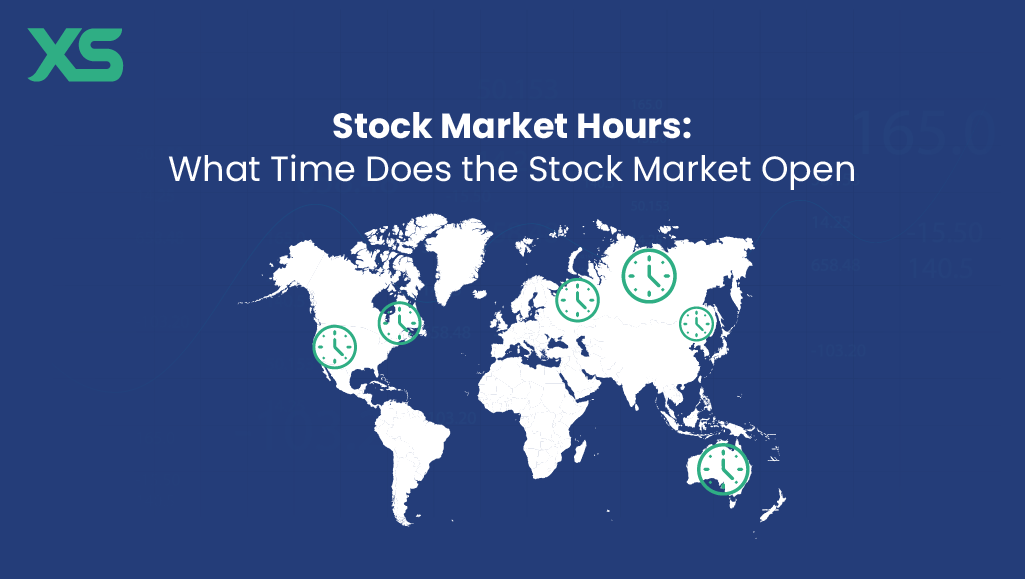
Understanding the closing times of the U.S. market also helps place it in the context of the 24-hour global trading day. When the NYSE and Nasdaq close, exchanges in Asia (e.g., Tokyo Stock Exchange, Shanghai Stock Exchange) are typically well into their next trading day, and European markets (e.g., London Stock Exchange, Euronext) are either nearing their close or have already closed. For investors with internationally diversified portfolios, awareness of these overlapping and sequential market hours is vital. News from one major global market can significantly influence the opening sentiment and prices in another, even if it’s thousands of miles and several time zones away.
Implications for Diversification and Arbitrage
Knowledge of global market schedules is particularly important for international diversification strategies and potential arbitrage opportunities. Investors holding assets across different regions can monitor how their foreign holdings perform even when their domestic market is closed. Furthermore, sophisticated traders might look for arbitrage opportunities that arise from price discrepancies for the same asset traded on different exchanges in different time zones, although such opportunities are often fleeting and require high-frequency trading capabilities. For the average investor, the key takeaway is that global events are constantly shaping the financial landscape, even when their local market’s doors are shut.
Tools and Resources for Tracking Market Hours
In today’s digital age, investors have a plethora of tools and resources at their disposal to stay informed about market hours and closures.
Financial News Outlets and Websites
Reputable financial news websites (e.g., Wall Street Journal, Bloomberg, Reuters, CNBC) are excellent resources. They consistently publish articles, alerts, and detailed schedules for market holidays and special trading hours. Most major financial portals have dedicated sections for market calendars, making it easy to see upcoming closures or shortened trading days. Subscribing to their newsletters or setting up notifications can ensure that critical updates are received promptly.
Trading Platforms and Mobile Apps
Virtually all modern brokerage trading platforms and mobile apps incorporate real-time market status indicators. These platforms often display whether the market is open, closed, or in an extended trading session. Many also provide pop-up alerts or integrate market calendars directly into their interface, making it seamless for users to track current and upcoming market hours without needing to navigate to external sites. These integrated tools are invaluable for active traders who rely on precise timing for their executions.
In conclusion, knowing “what time did the stock market close today” is far more than a trivial piece of information. It is a fundamental element of financial literacy that underpins effective investing, risk management, and strategic decision-making in the dynamic world of capital markets. From understanding standard hours and extended sessions to navigating holiday closures and global market interdependencies, a comprehensive grasp of market timing empowers investors to participate more intelligently and confidently.
aViewFromTheCave is a participant in the Amazon Services LLC Associates Program, an affiliate advertising program designed to provide a means for sites to earn advertising fees by advertising and linking to Amazon.com. Amazon, the Amazon logo, AmazonSupply, and the AmazonSupply logo are trademarks of Amazon.com, Inc. or its affiliates. As an Amazon Associate we earn affiliate commissions from qualifying purchases.