
In the dynamic world of finance, timing is not just important; it is everything. For investors, traders, and businesses alike, knowing which markets are operational at any given moment is fundamental to making timely decisions, executing strategies, and managing risk effectively. The global financial landscape is a sprawling network of interconnected exchanges, each with its unique operating hours, influenced by time zones, local holidays, and specific asset classes. A lack of awareness can lead to missed opportunities, unexpected liquidity challenges, or even detrimental trades.
From the bustling equity exchanges of New York and London to the ceaseless flow of the foreign exchange market and the digital frontier of cryptocurrencies, the concept of “open markets” is far from singular. Understanding this complex ballet of opening and closing bells, pre-market and after-hours trading, and 24/7 operations is crucial for anyone looking to navigate the financial world with confidence and precision. This article delves into the specifics of global market hours across various asset classes, offering a comprehensive guide to staying informed and agile in an always-on financial ecosystem.
The Criticality of Knowing Market Hours for Investors
For both seasoned professionals and nascent individual investors, the seemingly simple question, “What markets are open right now?” carries profound implications. It underpins virtually every strategic decision, influencing everything from trade execution to risk assessment. A clear understanding of market schedules is not merely a logistical detail; it’s a cornerstone of effective financial management and successful investing.
Why Timing is Everything in Trading
The financial markets are sensitive ecosystems, reacting instantaneously to news, economic data releases, and geopolitical events. These reactions often manifest as surges in volatility and liquidity, presenting both immense opportunities and significant risks. Knowing market hours allows investors to anticipate these periods of heightened activity. For instance, major economic reports from the U.S. typically cause substantial price movements around the opening of the New York trading session. Similarly, trading during periods of low liquidity, such as after-hours or during lesser-known market overlaps, can lead to wider bid-ask spreads and increased slippage, impacting profitability. Strategic timing ensures traders can capitalize on optimal conditions and avoid unfavorable ones.
The Global Interconnectedness of Markets
While each market operates on its own schedule, they are far from isolated. The global financial system is deeply interconnected, with events in one region often rippling across continents. For example, a significant economic announcement from Japan can influence European and American equity markets later in their respective trading days. This interconnectedness creates opportunities for arbitrage – profiting from price differences of the same asset across different markets – but it also necessitates a global perspective on market hours. Investors tracking multinational corporations, for instance, must consider the operating hours of both their home exchange and any other exchanges where the company is listed or significantly impacted.
Risk Management and Strategic Planning
Effective risk management hinges on foresight and preparation, and understanding market hours is integral to this. Unexpected market closures due to public holidays, bank holidays, or even extraordinary events can halt trading and lock up capital, preventing investors from reacting to new information. Awareness of these pre-scheduled or potential closures allows for better strategic planning, such as adjusting portfolio allocations or ensuring liquidity is accessible. Furthermore, understanding pre-market and after-hours trading windows, which typically offer lower liquidity but allow for early reactions to news, enables investors to strategically position themselves or manage exposure outside of regular trading hours, albeit with higher inherent risks.
Navigating the World of Equity Markets
Equity markets are arguably the most recognizable component of the financial world, providing platforms for companies to raise capital and for investors to trade shares. These markets are profoundly impacted by local time zones and national holidays, creating a staggered global trading day that rotates across continents.
North American Powerhouses: NYSE and NASDAQ
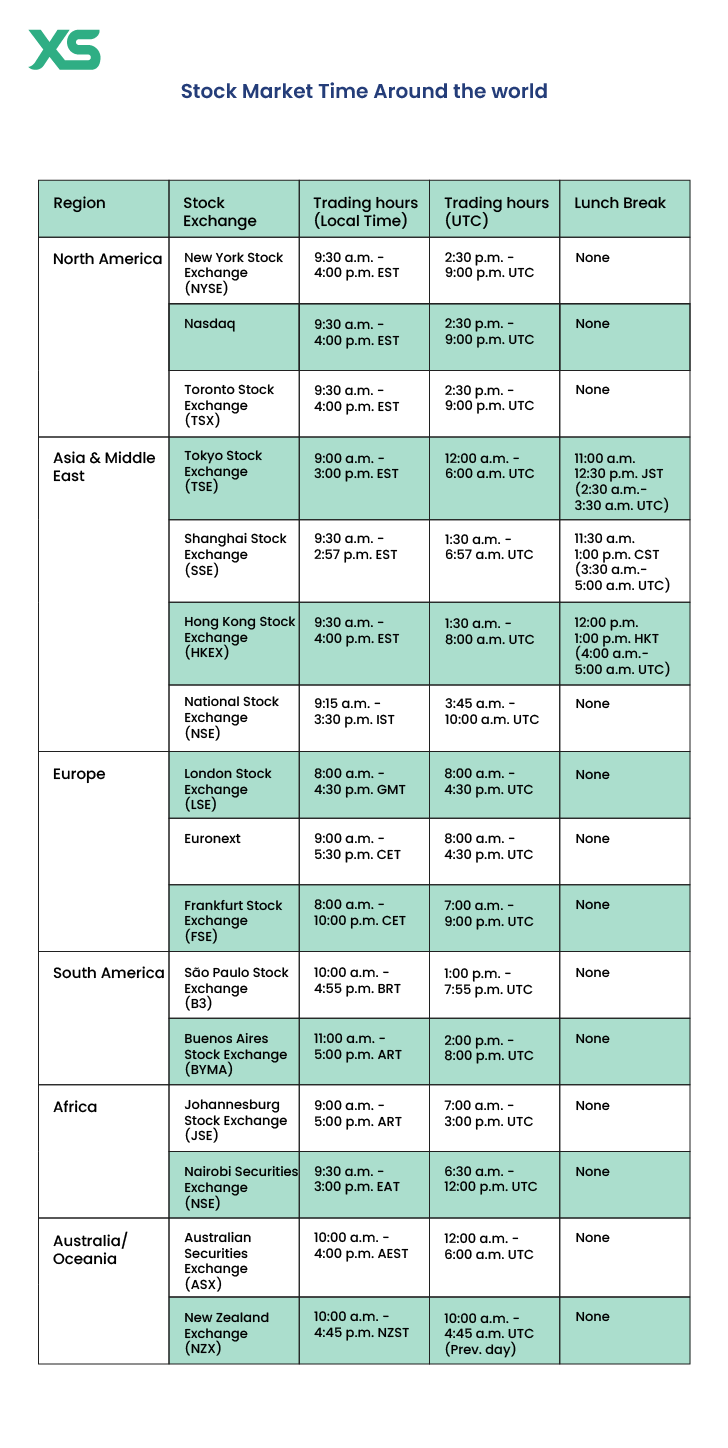
The New York Stock Exchange (NYSE) and the NASDAQ are arguably the most influential equity markets globally. Both exchanges generally operate from 9:30 AM to 4:00 PM Eastern Time (ET), Monday through Friday. However, the trading day effectively extends beyond these core hours. Pre-market trading typically begins at 4:00 AM ET, and after-hours trading can continue until 8:00 PM ET. While these extended hours offer flexibility, they often come with reduced liquidity and increased volatility, making them suitable for experienced traders reacting to specific news events rather than routine transactions.
European Exchanges: London, Frankfurt, Paris
As the North American markets wind down, Europe’s major exchanges often overlap with the later hours of Asian trading and the early hours of North American trading, creating a bridge in the global cycle.
- London Stock Exchange (LSE): Operates from 8:00 AM to 4:30 PM Greenwich Mean Time (GMT). London serves as a crucial hub, facilitating trades between Eastern and Western markets.
- Frankfurt Stock Exchange (Xetra): Trading hours are typically from 9:00 AM to 5:30 PM Central European Time (CET).
- Euronext (Paris, Amsterdam, Brussels, Lisbon): Generally operates from 9:00 AM to 5:30 PM CET.
These European markets are critical for investors tracking companies with significant European operations or those looking for exposure to the Eurozone economy.
Asian Giants: Tokyo, Shanghai, Hong Kong
The global trading day traditionally kicks off in Asia, setting the initial tone for subsequent market sessions.
- Tokyo Stock Exchange (TSE): Trading hours are from 9:00 AM to 3:00 PM Japan Standard Time (JST), with a lunch break from 11:30 AM to 12:30 PM JST. Tokyo is a bellwether for technology and automotive sectors.
- Shanghai Stock Exchange (SSE) and Shenzhen Stock Exchange (SZSE): Main trading hours are from 9:30 AM to 3:00 PM China Standard Time (CST), also with a lunch break from 11:30 AM to 1:00 PM CST. Access to these markets for foreign investors often involves specific mechanisms like the Stock Connect programs.
- Hong Kong Stock Exchange (HKEX): Operates from 9:30 AM to 4:00 PM Hong Kong Time (HKT), with a lunch break from 12:00 PM to 1:00 PM HKT. HKEX is a vital gateway to mainland Chinese companies.
These markets are crucial for understanding global manufacturing, technology, and emerging market trends.
Understanding Market Holidays and Early Closures
Beyond standard daily hours, investors must remain vigilant about market holidays and early closures. Nearly every country observes national holidays during which their stock exchanges close completely. Examples include Thanksgiving and Christmas in the U.S., Lunar New Year in many Asian countries, and various public holidays across Europe. Additionally, some exchanges may have half-day trading sessions before major holidays. Failing to account for these can lead to an inability to trade, trapped capital, and an inability to react to market-moving news, underscoring the importance of consulting official exchange calendars.
The Non-Stop World of Forex and Cryptocurrencies
While traditional equity markets adhere to fixed daily schedules, two major asset classes operate on fundamentally different timeframes, offering continuous trading opportunities that span virtually every hour of the day and week: foreign exchange (Forex) and cryptocurrencies.
Forex: The 24/5 Global Currency Exchange
The foreign exchange market is the largest and most liquid financial market in the world, with trillions of dollars exchanged daily. Unlike stock markets, Forex operates in a decentralized, over-the-counter (OTC) manner, meaning there’s no single exchange or physical location. Instead, it’s a network of banks, financial institutions, and brokers. This structure allows the Forex market to operate 24 hours a day, five days a week, from Sunday evening ET to Friday afternoon ET.
The 24/5 schedule is possible because trading activity seamlessly shifts between major financial centers as business days begin and end in different time zones. The four primary Forex trading sessions, often overlapping, are:
- Sydney Session: Kicking off the trading week.
- Tokyo Session: Overlapping with Sydney, representing Asian trading.
- London Session: The busiest and most liquid session, overlapping with Tokyo and New York.
- New York Session: Overlapping with London, concluding the trading day for North America.
The overlapping hours, particularly between London and New York, are typically characterized by the highest liquidity and volatility, offering prime trading opportunities.
Cryptocurrencies: The True 24/7 Market
Cryptocurrencies represent the vanguard of continuous trading. Designed on decentralized blockchain networks, cryptocurrencies like Bitcoin and Ethereum are traded on exchanges that operate 24 hours a day, 7 days a week, 365 days a year. There are no opening or closing bells, no market holidays, and no specific time zones that dictate trading activity. This perpetual availability is a defining characteristic of the crypto market.
Implications for Traders: Liquidity and Volatility
The continuous nature of Forex and cryptocurrency markets has significant implications for traders.
- Constant Opportunity: The absence of market closures means traders can react to news and execute trades at any time, which is particularly appealing to those seeking flexible trading schedules or looking to capitalize on immediate global developments.
- Global Access: These markets are inherently global, accessible to participants from anywhere in the world, fostering diverse trading strategies and market dynamics.
- Varying Liquidity: While 24/7, liquidity in crypto markets can fluctuate significantly, especially during periods of low activity. Similarly, in Forex, certain hours or session overlaps offer far greater liquidity than others. Traders must be mindful of these variations to ensure efficient trade execution.
- Elevated Risk: The constant activity means markets can move rapidly even while a trader is not actively monitoring. This necessitates robust risk management strategies, including stop-loss orders and a disciplined approach to position sizing, to mitigate potential losses from sudden price swings during off-peak personal hours.
Commodity and Bond Markets: Distinct Schedules
Beyond equities, Forex, and cryptocurrencies, commodity and bond markets represent crucial segments of the global financial landscape, each with its own set of unique trading hours and operational nuances that investors must understand. These markets often respond to different drivers—geopolitical events, supply-demand dynamics, and central bank policies—making their schedules equally important for diversified portfolios.
Commodity Futures: Energy, Metals, Agriculture
Commodity markets primarily involve the trading of futures contracts for raw materials such as crude oil, natural gas, gold, silver, copper, wheat, corn, and livestock. Many of these futures contracts are traded on major exchanges like the Chicago Mercantile Exchange (CME) Group (which includes the NYMEX and COMEX divisions) and the Intercontinental Exchange (ICE).
- Energy Futures (e.g., Crude Oil, Natural Gas): These are often traded almost 24 hours a day, five days a week, with short breaks. For instance, WTI Crude Oil futures on NYMEX/CME Globex trade from Sunday 6:00 PM ET to Friday 5:00 PM ET, with a daily break from 5:00 PM to 6:00 PM ET.
- Precious Metals (e.g., Gold, Silver): Similar to energy, gold and silver futures on COMEX/CME Globex also offer near 24-hour trading from Sunday evening to Friday afternoon, with a short daily pause.
- Agricultural Commodities: These typically have more restricted trading hours, often aligning with standard business hours in their respective time zones, reflecting the physical nature of their underlying assets. For example, corn futures on the CME trade from 8:30 AM to 1:15 PM CT, with an electronic trading session extending these hours.
The continuous nature of some commodity futures allows traders to react swiftly to global events like political unrest impacting oil supplies or weather patterns affecting crop yields, providing round-the-clock risk management and speculative opportunities.
Bond Markets: OTC and Exchange-Traded Bonds
Bond markets are distinct in their operational structure. While some bonds are exchange-traded, a significant portion of bond trading, particularly for government bonds and corporate bonds, occurs over-the-counter (OTC) between large institutional investors and brokers.
- U.S. Treasury Market: The most liquid bond market globally, it primarily operates OTC. While not strictly an exchange, the market typically sees active trading from 8:00 AM to 5:00 PM ET, though some electronic trading platforms can facilitate trades outside these hours. Economic data releases, particularly those related to inflation and employment, can cause significant volatility during these core hours.
- European and Asian Bond Markets: These follow their respective regional business hours, influenced heavily by central bank announcements and sovereign debt news. The market for Japanese Government Bonds (JGBs) and German Bunds will be active during their local daytime hours.
Special Considerations for Futures and Options
Futures and options contracts, regardless of the underlying asset (commodities, equities, or indices), have additional timing considerations beyond daily trading hours:
- Expiration Dates: Futures and options have set expiration dates and times. Missing these deadlines can lead to forced settlements or loss of premium, making it crucial to track them diligently.
- Rolling Contracts: Traders in futures markets often “roll over” their positions from an expiring contract to a new one to maintain exposure, a process that must be timed carefully around expiry to avoid unexpected costs or gaps in coverage.
- Settlement Times: Different contracts have different daily settlement times, which can affect margin requirements and cash flows.
Understanding these specific characteristics is vital for anyone engaging with derivatives, as their complexity adds another layer of timing-related importance to the overall market schedule.
Leveraging Technology to Stay Informed and Trade Smart
In today’s fast-paced financial world, relying solely on manual checks for market hours is not only inefficient but also risky. Modern technology provides an array of tools and resources that enable investors to stay continuously informed about market openings, closures, and critical financial events, facilitating smarter and more timely trading decisions.
Essential Financial News Platforms and Data Providers
Staying current with market hours often goes hand-in-hand with staying informed about market-moving news. Reputable financial news platforms and data providers are indispensable.
- Bloomberg Terminal and Refinitiv (formerly Thomson Reuters Eikon): These are industry standards for professionals, offering real-time data feeds, comprehensive news coverage, economic calendars, and customizable market hour displays for virtually every exchange and asset class globally.
- Specialized Financial News Websites: Websites like The Wall Street Journal, Financial Times, Reuters, and Bloomberg.com provide extensive coverage, often including dedicated sections for market hours and upcoming economic events. Many offer premium subscriptions for real-time alerts and deeper analysis.
- Economic Calendars: Dedicated economic calendars (available on many financial news sites or standalone platforms) are crucial for tracking not only market hours but also the release times of key economic indicators (e.g., CPI, NFP, interest rate decisions) that can significantly impact market sentiment and asset prices.
Trading Platforms with Real-Time Market Data
Most modern online brokerage platforms and trading software integrate sophisticated tools to help users track market hours and execute trades efficiently.
- Brokerage Apps: Many major brokers (e.g., Interactive Brokers, Charles Schwab, TD Ameritrade, Fidelity) provide mobile apps and desktop platforms that display current market status (open/closed), upcoming holiday closures, and often integrate real-time quotes and charting capabilities.
- Charting Software (e.g., TradingView, MetaTrader): These platforms offer advanced charting tools, technical analysis indicators, and often integrate market session markers directly onto charts, visually representing when different global markets are active. They also provide customizable watchlists and alerts.
- Direct Market Access (DMA) Platforms: For institutional traders, DMA platforms offer direct connectivity to exchanges, providing the most granular control and real-time information on order flow and market depth across various trading venues.
Automation and Alerts for Market Openings/Closures
To avoid missing critical market movements or unexpected closures, automation and alert systems are invaluable.
- Customizable Alerts: Most trading platforms, financial apps, and even some email services allow users to set up custom alerts for market openings, specific economic announcements, or price targets. These notifications can be delivered via email, SMS, or push notifications.
- Algorithmic Trading (Algo Trading): For advanced traders, algorithmic systems can be programmed to monitor market hours and execute trades automatically based on predefined rules. This can include entering or exiting positions at specific market opens, optimizing for liquidity, or even pausing trading during volatile pre-market or after-hours sessions.
- Time Zone Converters: Simple online tools or integrated features within platforms can convert market hours to your local time zone, reducing errors and simplifying routine checks for global market participants.
Building a Global Trading Routine
Ultimately, leveraging technology helps in establishing a disciplined and informed trading routine. This might involve:
- Starting the day with a quick review of Asian market performance before European openings.
- Monitoring economic calendars for high-impact news releases.
- Using alerts to be notified when critical markets open or when specific assets reach desired price levels.
- Utilizing portfolio management tools that account for different market hours to assess exposure across various time zones.
By combining powerful financial information resources with smart trading tools and automated alerts, investors can effectively manage the complexities of global market hours, ensuring they are always in the know and positioned to make the most informed decisions.
Navigating the labyrinthine schedules of global financial markets is a foundational skill for any investor or trader. From the regimented daily cycles of equity exchanges in New York and Tokyo to the perpetual motion of Forex and cryptocurrency markets, each segment of the financial world operates under distinct temporal rules. Understanding these nuances—be it the standard trading hours, the extended pre-market and after-hours sessions, or the impact of regional holidays—is not merely about logistics; it is about strategic advantage, risk mitigation, and optimizing performance.
In an increasingly interconnected world, where news travels at the speed of light and markets react instantaneously, leveraging technology has become indispensable. Financial data platforms, real-time trading software, and automated alert systems empower individuals and institutions alike to stay abreast of market openings, anticipate key economic events, and execute trades with precision. By embracing this knowledge and the tools available, market participants can transform the challenge of managing global trading hours into a robust framework for making informed, timely, and ultimately successful financial decisions. The question “what markets are open right now” becomes less a query of simple fact and more a gateway to a world of opportunity.
aViewFromTheCave is a participant in the Amazon Services LLC Associates Program, an affiliate advertising program designed to provide a means for sites to earn advertising fees by advertising and linking to Amazon.com. Amazon, the Amazon logo, AmazonSupply, and the AmazonSupply logo are trademarks of Amazon.com, Inc. or its affiliates. As an Amazon Associate we earn affiliate commissions from qualifying purchases.